When people talk about warehouse break room rest area design, they usually picture the kind of lounge you see at big companies: couches, an espresso machine, a wall of green plants. We run a 3,000-square-meter warehouse with 12 people on the floor. We cannot afford that kind of money, and frankly, every square meter we give up is a square meter that stops holding stock. But something happened last summer that completely changed my mind about break areas.
What Our "Break Area" Used to Be
Our old break area was barely an area at all. Two folding tables and a few plastic stools by the loading dock, one big floor fan fighting the summer heat, and in winter, everyone just shivered. At lunch, people ate squatting next to the racks or sitting on the steps outside the dock door. I used to think that was normal. People doing physical work, I told myself, do not need pampering.
Then came the hottest week of last July. The warehouse floor went past 100 degrees Fahrenheit in the afternoon, and one of our pickers, Xiao Chen, went pale and sweaty around two in the afternoon and had to sit against a rack for half an hour before he could stand up straight. That day I did a calculation I had never done before: if someone actually collapses, the medical bill, the lost shifts, and the cost of hiring a replacement would add up to ten times what a decent break area costs. I had been saving money in exactly the wrong place.
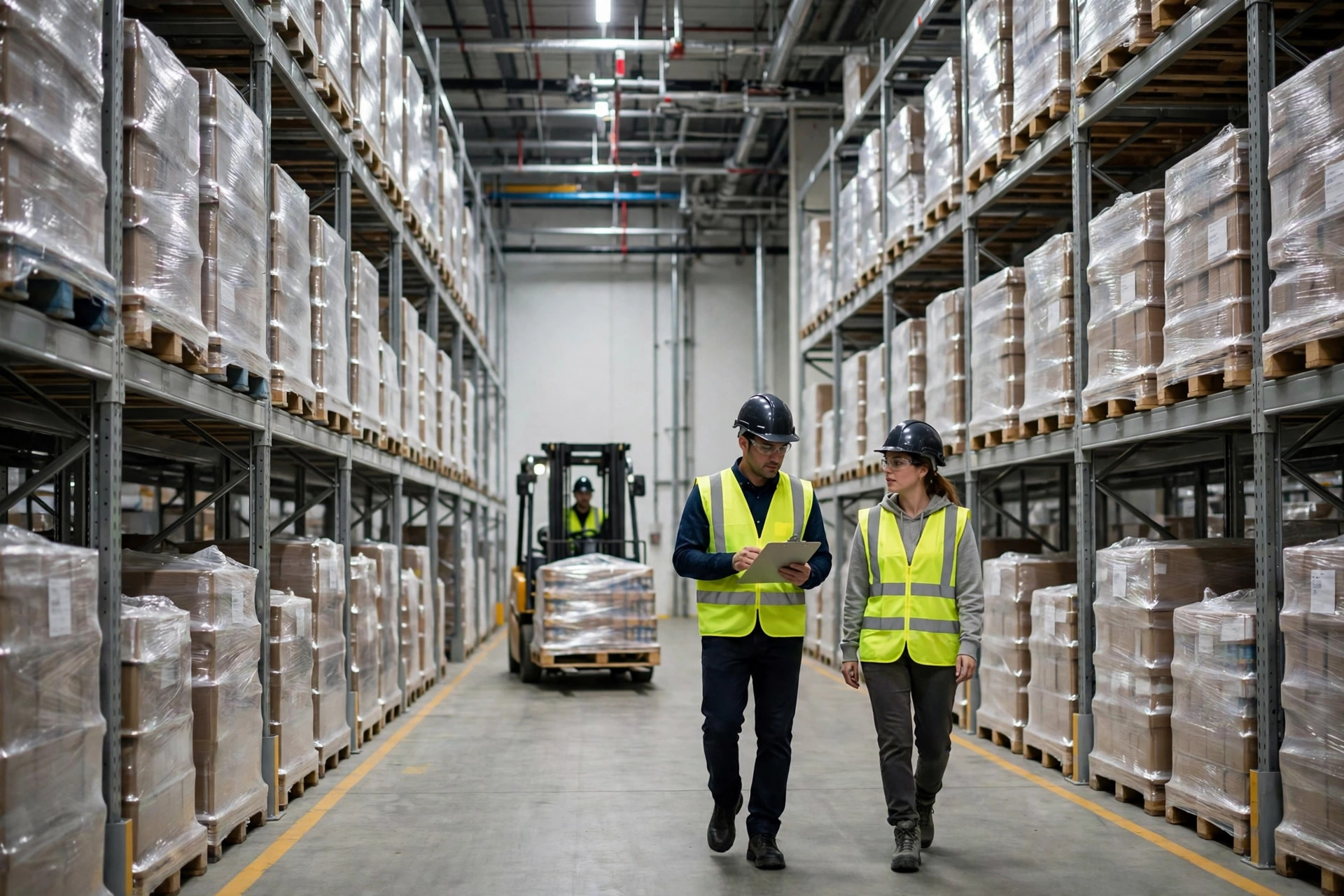
Something else opened my eyes around the same time. The warehouse next door to us is more than twice our size, and last year its owner spent close to $15,000 building a proper break room — sofa, coffee table, TV, the works. The problem? He put it two aisles away from the work floor, so nobody wants to make the trip. His workers would rather squat by the dock and smoke. That beautiful room mostly sits empty. Copying the big-company playbook, I realized, does not work for a small operation like ours.
How We Rebuilt It on a Shoestring
Once I understood the problem, I set myself three rules: no construction, no walls, and a total budget under $1,000. Here is what we actually did:
| Item | What we did | What it cost | What big companies usually do |
|---|---|---|---|
| Tables and chairs | Bought secondhand sets from a restaurant that had just closed down | About $120 | Brand-new custom furniture, thousands of dollars |
| Partition | Used spare racking plus a light-blocking cloth to fence off the corner — no walls built | Almost nothing | Steel frame and drywall room |
| Cooling | Two secondhand industrial fans plus one old air conditioner | About $300 | Full central air conditioning |
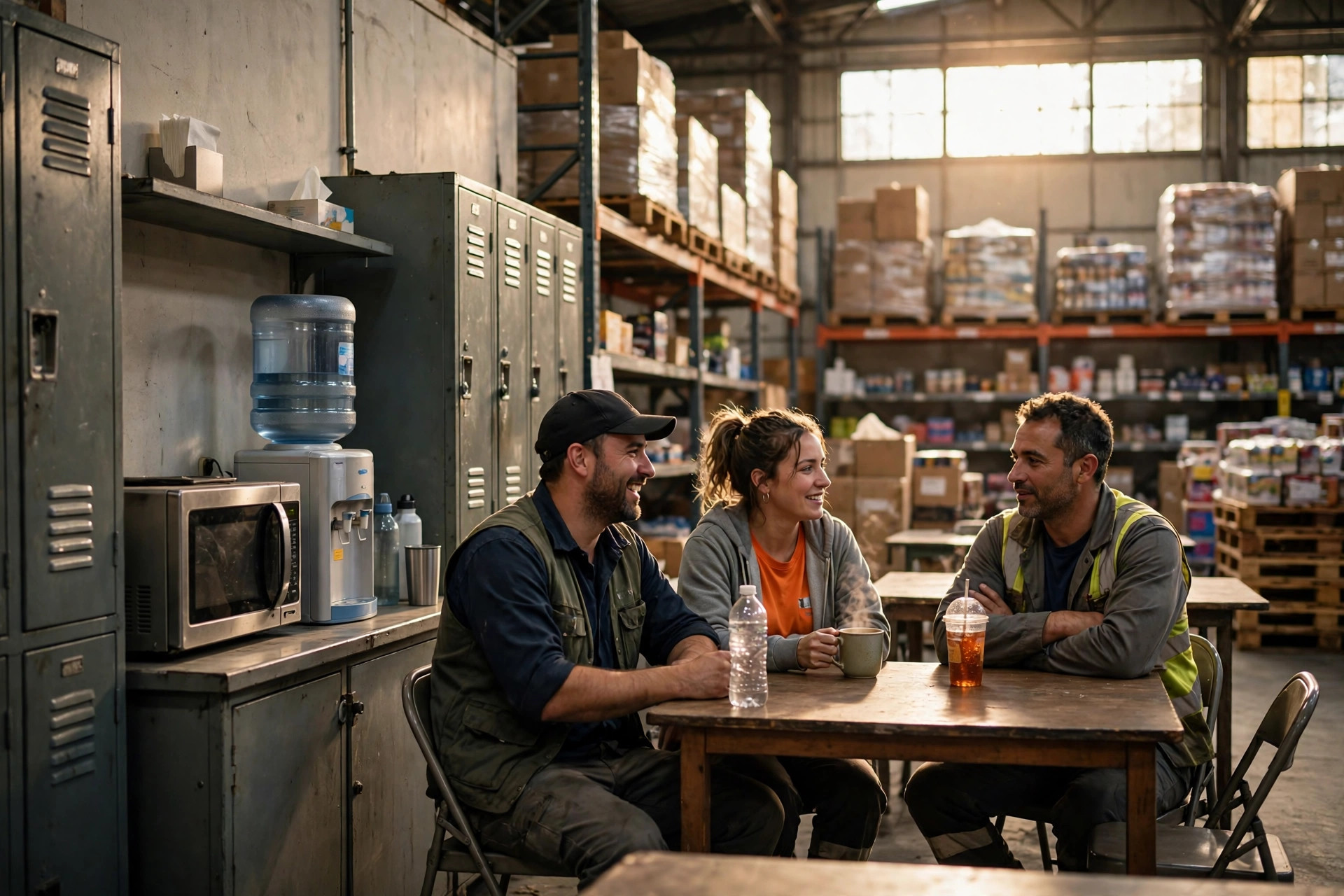
| Food setup | One microwave, one water dispenser, one electric kettle | About $200 | Espresso machine, fridge, full kitchen |
| Storage | Secondhand metal lockers, one compartment per person | About $90 | Custom-built changing rooms |
The whole thing came in under $900. We put it right next to the picking zone, separated only by a row of racking — close enough that anyone can see it from the work floor, about thirty steps away. Pull the cloth across and it blocks most of the dust and noise, so people can actually hear each other talk.
The layout details took some learning. Outlets matter more than you think: more than half of our 12 people want to charge their phones at lunch, and if there are not enough outlets, someone drags a charger cable out onto the work floor, which is a tripping hazard. We put in two trash bins, one for food containers and one for everything else, or lunch hour leaves a mess. And we posted a cleaning rota on the wall, one person per day wiping tables and sweeping. Set the rules up front and you never have to nag anyone.
Here is the counterintuitive part, and I got it backwards at first too: I originally wanted the break area as far from the work floor as possible, somewhere quiet. Reality turned out the opposite. The farther away it is, the less people use it. The closer it is, even if it is shabby, the more people actually sit down, eat a real meal, and rest properly. A break area's value is measured by how often it gets used, not by how nice it looks. An empty luxury lounge loses to a battered old table that people actually sit at.
What Changed After the Rebuild
I watched the first month closely. At lunch, 10 or more of our 12 people now sit in the break area; before, it was two or three. Picking errors in the sleepy two-to-three-o-clock stretch dropped noticeably — we used to average two or three mis-picks a week, and in that first month we had exactly one.
Hiring got easier too, which I did not expect. In March this year we hired two new pickers, and both of them visibly relaxed when they walked past a place where they could sit down, heat up lunch, and take a real break. One of them said it straight: this place looks like it treats people like people. That stings a little to hear, but it is honest. Small warehouses do not lose people over a few dollars of pay difference — they lose people because nobody feels looked after.
I also ran the full math. The rebuild cost under $900. Before, a single mis-pick cost us anywhere from a few dollars to over ten dollars in rework and compensation, and ten of those in a month added up to real money. Hiring one replacement through an agency costs thousands. Put together, the break area paid for itself within a few months through fewer errors and less turnover. I used to think of it as spending money on comfort. Now I see it as spending a little money to save a lot of money.
It is not maintenance-free, to be fair. The cloth collects dust and needs washing every couple of months, and the old air conditioner struggles on the very hottest days — on those afternoons I just extend lunch by half an hour so nobody works through the worst heat. Shoestring solutions save money, but they ask for a bit more attention in return.
Honest Advice for Other Small Warehouse Owners
If you run a small warehouse and you are wondering whether a break area is worth it, here is what I would say:
First, do not compete with big companies on decoration. In warehouse break room rest area design, spending money in the right place beats spending a lot of money. A microwave that heats up lunch beats a decorative plant wall ten times over.
Second, location beats luxury. Pick the corner closest to the work floor, even if it is only fifteen square meters. If people can sit down, eat, and close their eyes for a few minutes, that is enough.
Third, do not squeeze lunch breaks too tight. We extended ours from 40 minutes to a full hour, and afternoon error rates went down, not up. An extra half hour of rest buys you fewer reworks and fewer payouts — that trade is profitable.
Fourth, budget for upkeep. Whatever you save on the build, do not give it all back on neglect. Regular cleaning and a quick equipment check beat one big splurge every time.
Small warehouses have their own way of surviving, and good warehouse break room rest area design for a small operation follows the same rule: it does not need to be fancy, but it cannot be nothing. A few hundred dollars for a place where the people who carry your goods every day can sit down and catch their breath — that is money well spent.
By Xiao Ma, Small Warehouse Owner