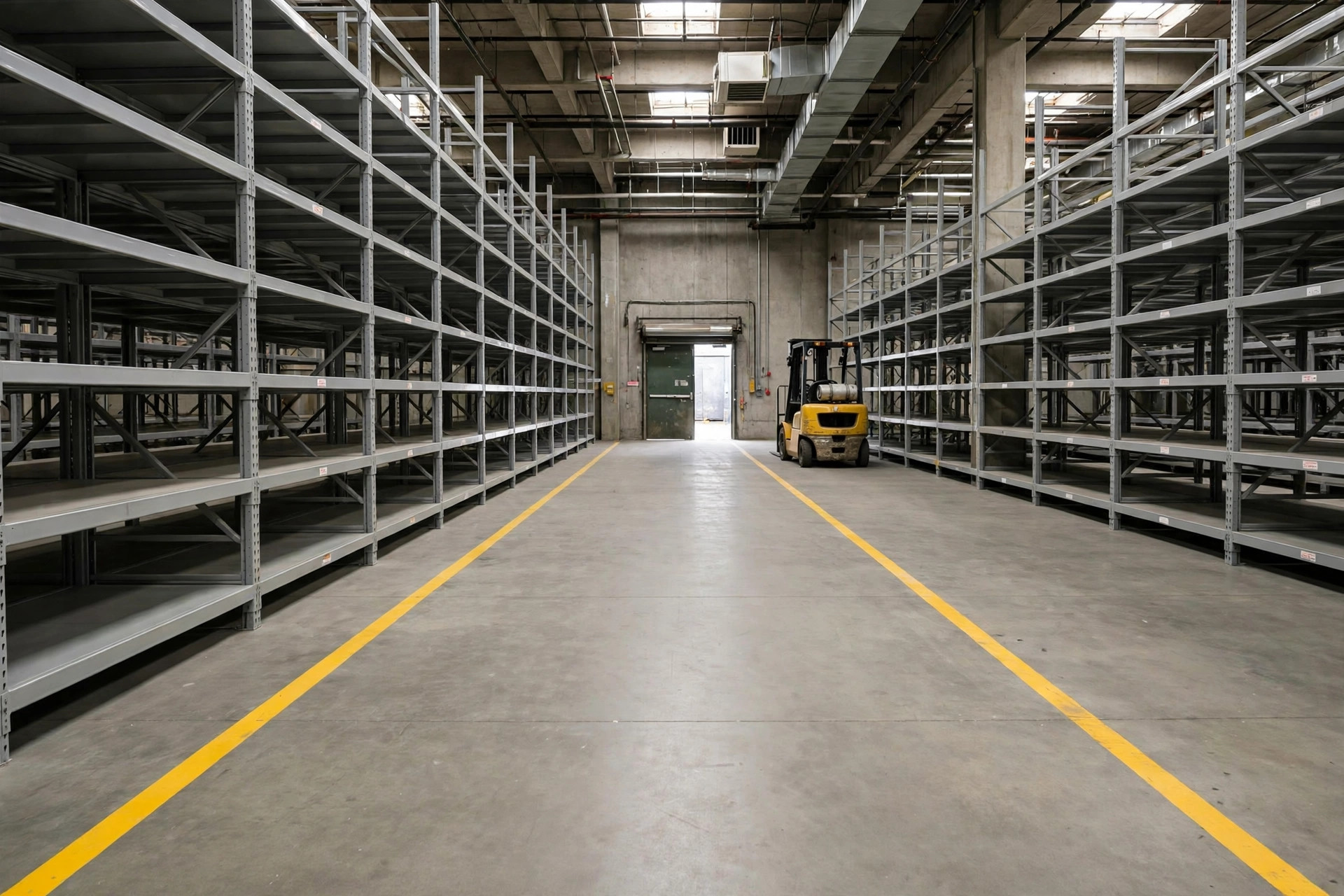
Put plainly, every warehouse knows a fire lane must stay clear, and almost every warehouse has blocked one anyway. I have seen too many operations where the lane is marked, the yellow lines are freshly painted, and then peak season arrives and pallets start creeping onto the lane, row by row. Everyone on the floor is thinking the same thing: just for this afternoon, we will move it tomorrow. Then tomorrow becomes three days, and the inspector happens to arrive inside those three days.
That is exactly what happened one Tuesday morning in the fall two years ago at a home-goods warehouse in the American Midwest. A fire inspector walked in, saw six pallets sitting on the main lane with a stack of unbroken cartons beside them, measured the clear width, took photographs, and went back to write a citation. I will not quote a specific dollar figure here — check the official policy for the latest figure — but the order of magnitude was five figures, and the owner still shook his head telling me about it afterward. What hurt more, in his telling, was the cleanup bill that followed: same-day labor to move the freight, fresh line marking, and a gate reminder at the door. The disruption cost him more, in lost rhythm, than the citation itself.
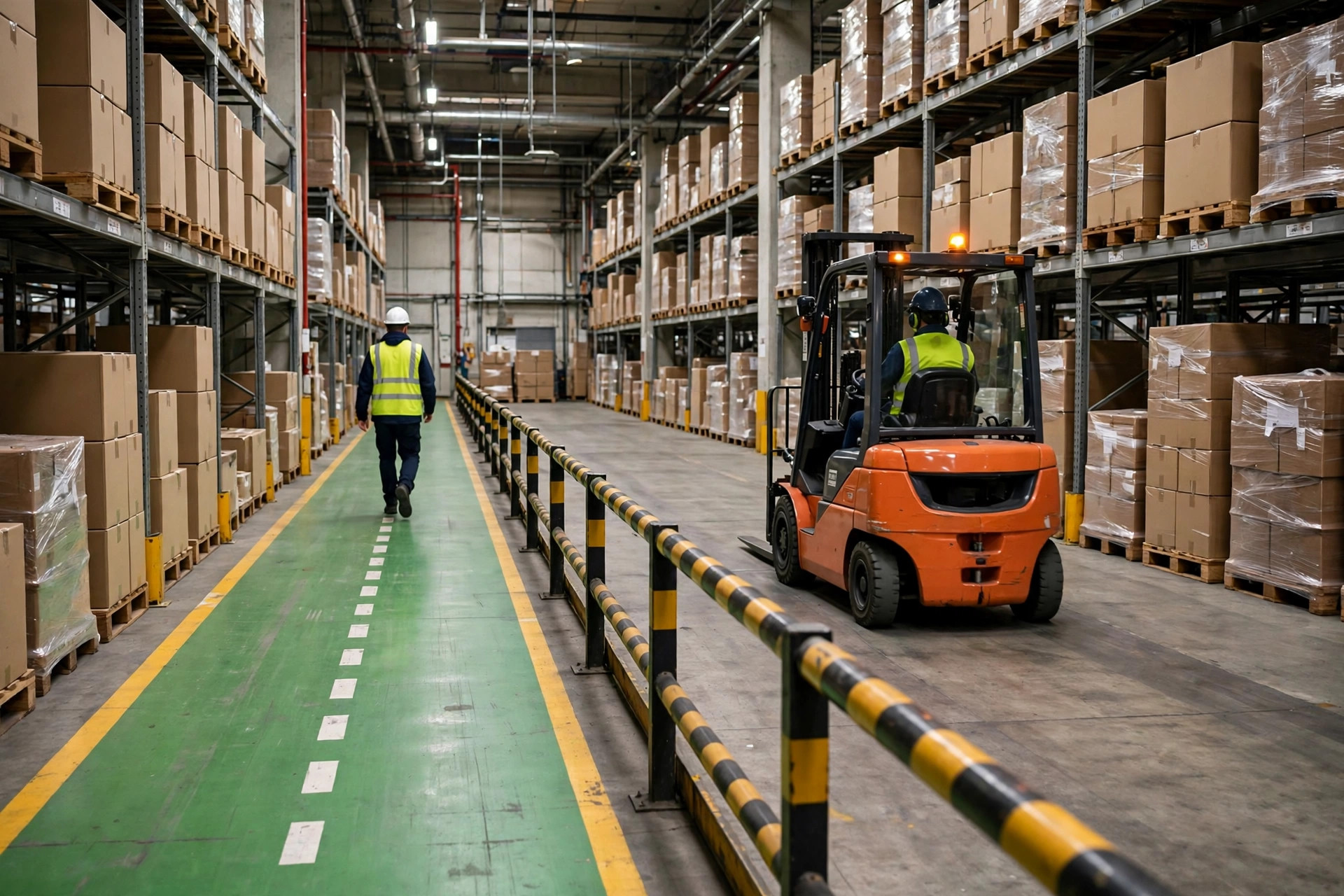
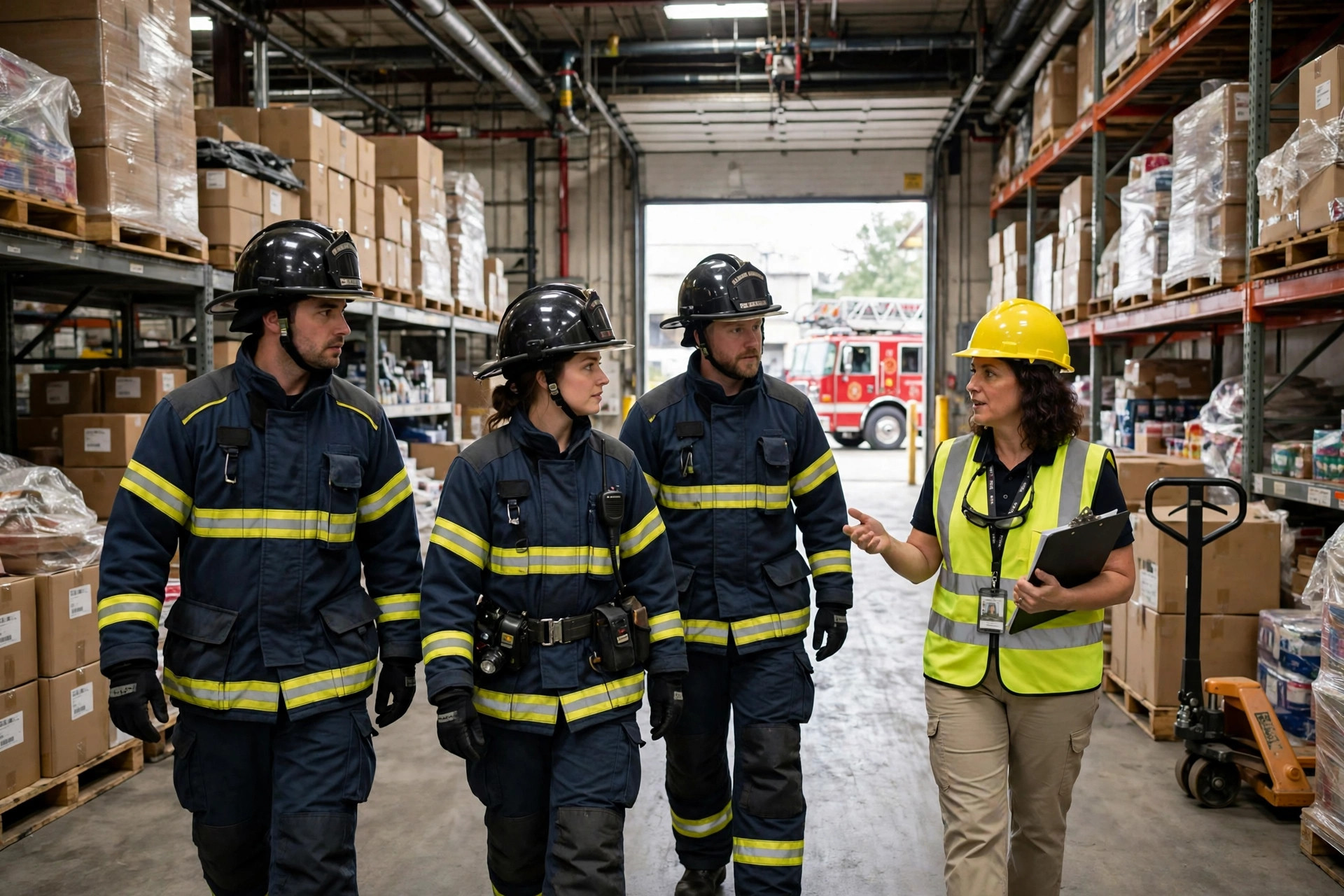
There are two sides to this problem. One is how an inspector finds a blocked fire lane. The other is why a warehouse that knows better still blocks one. Start with the inspection. Blocked fire lanes are rarely found because someone reported them. They are usually found on a routine visit. What the inspector looks at is practical, not technical: does the lane run clear from end to end, are pallets, cartons, forklifts, or staged freight sitting on the line, can the exit door swing fully open, and is anything stacked in front of it. Some warehouses believe that stacking neatly, or leaving a narrow gap a person can squeeze through, counts as compliance. It does not. The standard is not whether a person can squeeze past. It is whether the lane itself is clean, complete, and usable at any moment. A narrow gap does not count, and half-blocked does not count.
Now the other side: why it happens. The root cause is usually not lazy staff. It is a space budget that does not add up. When peak volume hits, staging fills up, the putaway area fills up, and a forklift driver holding a pallet has nowhere to put it. The nearest open, flat, convenient ground is the lane. The lane is empty, smooth, and close to the dock, so it is the easiest place to set freight down. The policy manual says never occupy the lane, but the floor offers no outlet for overflow, so people vote with their feet and put freight on the lane. That is not one person's shortcut. It is a system pushing all of its pressure onto the lane.
Blocked Fire Lanes Are Impossible to Hide Once an Inspector Walks In
The way to protect a lane is to kill the idea of "temporary" storage on it. Temporary is the most dangerous word in a warehouse, because temporary has no deadline, no owner, and nobody comes back the next day to collect it on their own. My rule is to keep staging and lane budgets fully separate: when staging is full, freight stays on the truck rather than going onto the lane; when the pick area is full, the wave waits rather than spilling overflow onto the lane. One citation plus one round of stop-work cleanup wipes out a month of small efficiency gains.
There is another spot people forget: the doors at both ends of the lane. A warehouse can keep the lane itself empty while returns pile up in front of an exit door, so the door opens halfway and jams. An inspector judges the whole escape route, not just the straight middle section. Doors, the space behind them, stairwells, and corners all belong in the patrol. Checking only the main straight run leaves the ends exposed.
A second warehouse taught me this in a quieter way. Last winter, an auto-parts warehouse in the American West was rushing year-end shipments, its returns area overflowed, and a supervisor had staff line return pallets along a side lane, saying the returns truck would take them away. The truck ran two days late, and the pallets sat there for two days. On the third day, the fire department came for a routine walk-through and the side-lane pallets went straight into the record. That warehouse did not end up with a citation that time; the inspector gave a deadline to fix it. The supervisor told me later that for two days, his first job every morning was checking the lane, afraid another visit would come, and the whole team's attention was pulled off shipping. Once a lane problem enters an official record, every later visit starts at that same spot. Keeping a lane clear is not only about saving one fine. It is about staying off that list.
What a Blocked Fire Lane Really Costs to Fix
The cleanup bill breaks into three parts. The first is moving labor: how many people, how many hours, and whether a forklift is needed to shift freight off the lane into a compliant spot. The second is marking and signage: repainting worn yellow lines, replacing fallen signs, and adding a "no staging" reminder at the door. The third is process change: how much bigger staging needs to be, how wave timing changes, and who owns the daily patrol. That third part is the easiest to skip and the least skippable. Move the freight without changing the process, and the next peak will block the lane again, which means the fine was paid for nothing.
Work it out with one warehouse's numbers as an illustrative example. A surprise cleanup took four workers and a forklift most of a day to move more than twenty pallets, and repainting the lines took another shift. That labor and lost rhythm already added up to a serious sum, before counting the citation itself or the management time spent handling the process. Compare that with a daily patrol of about fifteen minutes, catching a lane problem while it is still small. The cheap daily habit and the expensive emergency fix differ by far more than a little. In compliance work, prevention is cheap and the accident is expensive, and the gap between them is the whole argument.
The decision table below puts it in one view. Its numbers are illustrative, but the logic holds across warehouses.
| Approach | Cost today | Cost if caught | Lane condition | | Daily patrol plus spare staging room | About fifteen minutes of labor a day | Low | Steadily clear | | Temporary lane use at peak | Looks like saved space | Citation plus cleanup plus stoppage | At risk any day | | Emergency cleanup after a visit | Large one-time labor | Citation already paid and unrecoverable | Fixed once, not fixed for good |
Read that table and the conclusion barely needs stating. Those fifteen minutes a day are among the highest-value minutes in the whole building.
A Fire Lane Patrol Checklist You Can Post at the Lane
A checklist only works if people actually use it, so keep it short. Walk it once before the shift starts and once after lunch, sign it, fix what you find on the spot, and escalate anything you cannot fix the same day. Post it at the lane entrance so the patroller can work through it in one pass.
The list covers these points: is the main lane fully clear of pallets, cartons, and forklifts on the line; can every exit door swing fully open, with nothing in front of or behind it; are corners and stairwells free of staged freight; are the yellow floor lines worn to the point of being unreadable; have any signs fallen or been hidden behind freight; and is staging already so full that it is about to spill, in which case the supervisor hears about it before anyone moves freight toward the lane. Finish the walk with no issues, sign off. Find an issue, write down the location and the owner, and close it the same day.
I will leave it with one piece of advice, not a slogan. When a lane sits empty, it looks like the most useless stretch of floor in the building. On the day it is actually needed, it is the most valuable stretch of floor in the building. Do not trade that stretch for half a day of convenience. The fine is only the visible part of the price.
By Lao Mi, Supply Chain Veteran (20 yrs)