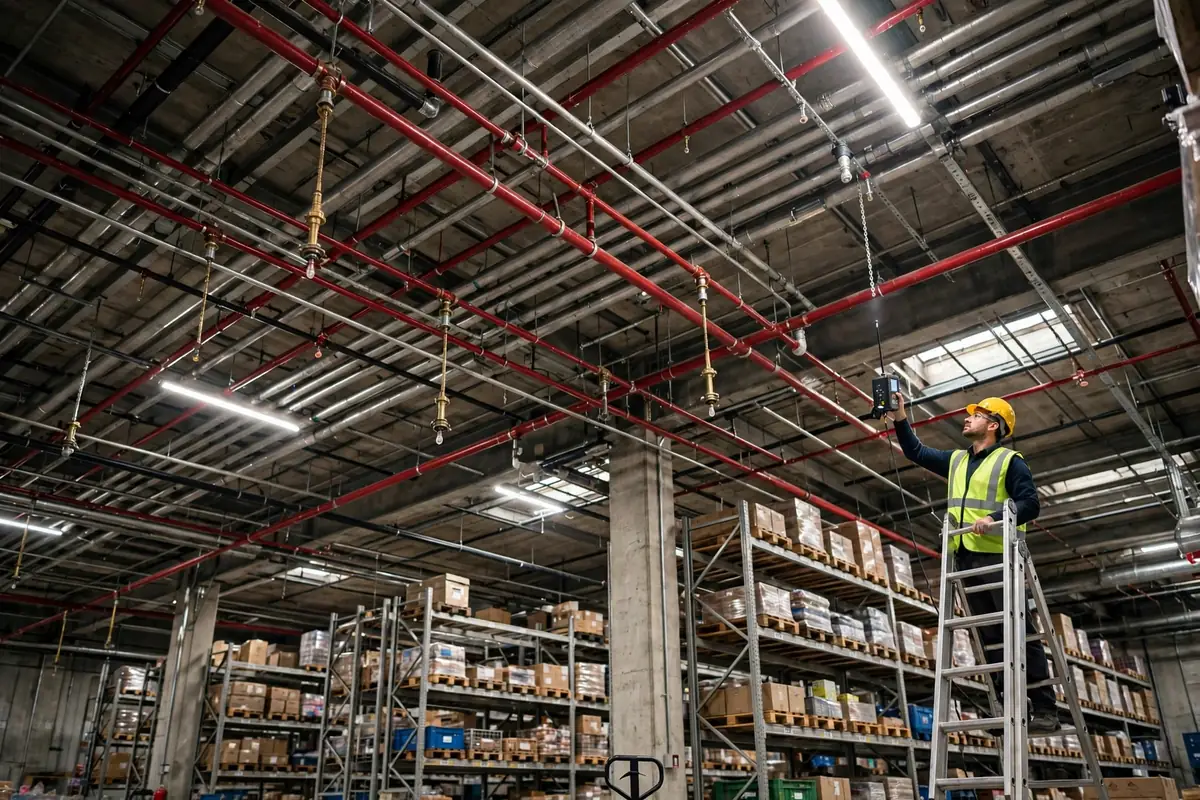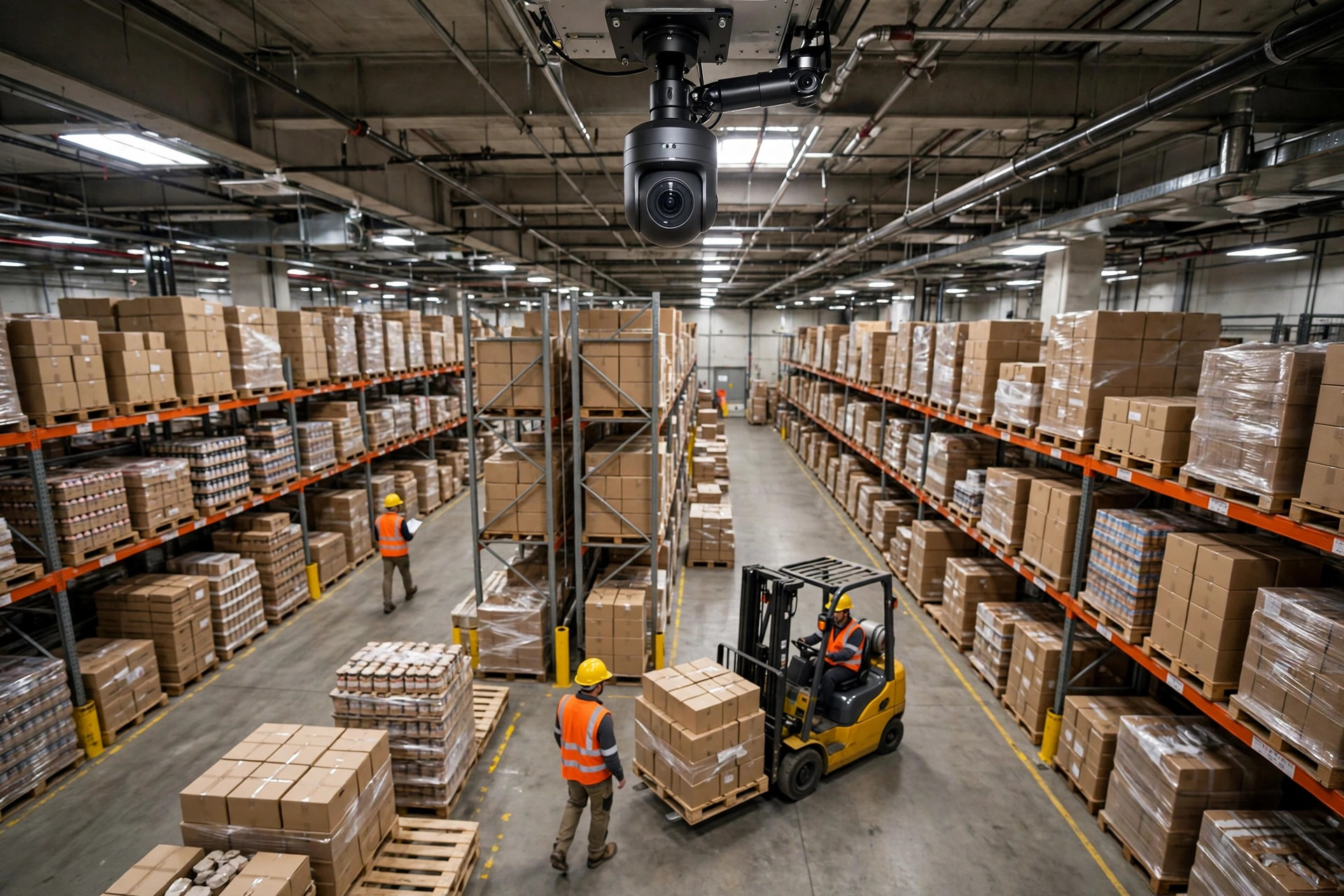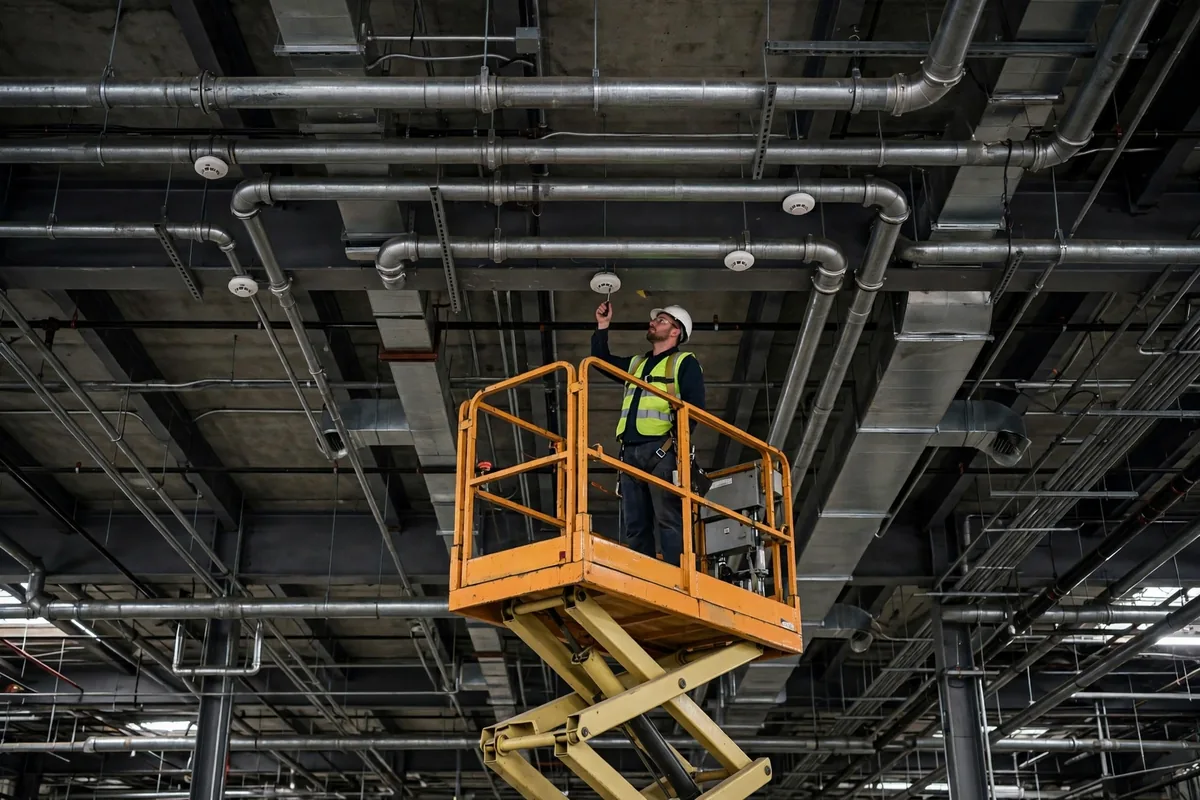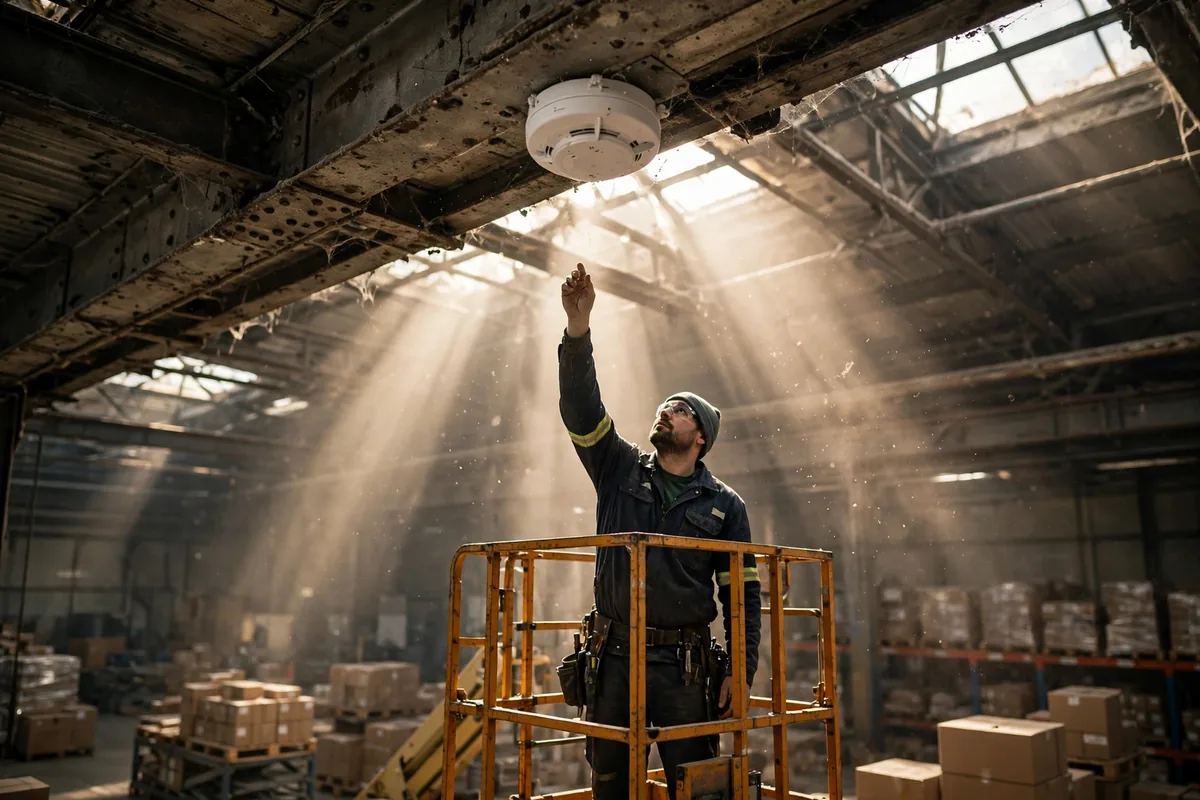
In October 2025, my little rented warehouse in Ontario, California had a warehouse smoke detector false alarm three times in one week. The third time, a fire truck pulled up outside, half the street came out to watch, and I stood there explaining to the firefighters: no fire, just dust. That day I made up my mind — these detectors were going, one way or another.
Nobody tells you about smoke detectors when you rent a warehouse. The landlord hands over the keys, the detectors are already on the ceiling, and they look fine. Mine were the cheapest ordinary photoelectric kind. The problem is my warehouse: home goods, unboxing all day, cutting cardboard, packing orders. The air is full of paper scraps and dust from wooden pallets. A regular detector can't tell dust from smoke, so every afternoon during the packing rush, it went off. Each alarm meant the whole warehouse stopped, everyone walked out, orders sat there, and customers kept asking where their stuff was. Worse, people got numb to it. On the third alarm, one of my packers didn't even look up. He just said, "dust again, probably." That scared me more than the alarm did. On the day there's a real fire, who is going to run?
I didn't rush to buy new equipment. I spent a week watching exactly when the alarms went off. The pattern was obvious: every false alarm happened between 2 and 5 in the afternoon, during the packing peak, and within half an hour of the cardboard cutting station starting up. Once I found the dust source, the job split into two parts: cut the dust down first, then replace the detectors that didn't belong there.
The dust part was three small moves. First, I moved the cutting station to the far corner, more than 10 meters from the nearest detector. Second, I put a movable partition between the cutting area and the packing area so dust didn't drift across the whole warehouse. Third, we spent 20 minutes at the end of each day vacuuming the floor and clearing paper scraps off the cutting table on the spot. None of that cost much. In a week, false alarms dropped from three to one. But one was still too many. I wasn't going to keep gambling.
The firefighters who showed up that third time had a few extra words for me: warehouses like mine that cry wolf too often get flagged, repeat false alarms can mean fines, and the landlord will come knocking. So I went to the landlord and laid it out: you installed these detectors, the false alarm problem isn't all mine. He didn't want to pay at first. We went back and forth for two weeks. The deal we finally landed on: I paid for the new equipment, he gave written approval, and the models went to the local fire department for confirmation first. Don't skip that step. A verbal "sure, go ahead" is worth nothing. Get it in writing.
Why a Regular Detector Keeps Crying Wolf in a Dusty Warehouse
A standard photoelectric detector works on a simple idea: smoke particles block a beam of light, and the alarm goes off. The trouble is that dust particles look almost the same as smoke particles to it. Once the concentration is high enough, it alarms. Put one in a dusty environment and you haven't installed a smoke detector — you've installed a dust detector. That is the warehouse smoke detector false alarm trap in a dusty environment: the device works exactly as designed and still gets it wrong. The device isn't broken. The selection was wrong from day one. Plenty of small warehouses have detectors the landlord picked with a home in mind. Homes don't have dust like this. Warehouses do.
Here's a second story that still bothers me. In January this year I visited a fellow seller's warehouse in Chino, and his crew had it worse than mine. Tired of the alarms, someone had put plastic bags over the detectors. Problem solved, right? I told him on the spot: you didn't solve the problem, you killed the alarm. On the day of a real fire, smoke can't get in, nothing sounds, and good luck explaining that to your insurer. He took every bag off that night, and the next day he started doing what I did — find the dust source first, then talk about swapping equipment.
Picking a Detector for a Dusty Environment
| Detector type | False alarm risk in dust | Fire detection speed | Maintenance | Relative cost |
|---|---|---|---|---|
| Standard photoelectric smoke detector | High | Fast | Monthly cleaning | Low |
| Heat detector | Low | A beat slower | Low, barely needs cleaning | Low |
| Aspirating smoke detector | Medium | Fast | Filter changes on schedule | High |
| Beam smoke detector | Medium | Medium | Lens wiping on schedule | Medium |
How to read this table: two questions matter. First, how bad is your dust? If you're cutting cardboard, sanding, or handling loose bulk goods that kick up dust all day, a standard photoelectric detector is out. Second, can you live with "a beat slower"? A heat detector only reacts to temperature, so dust never sets it off — but it finds a fire later than a smoke detector does. That's the trade-off, and there is no option that wins on everything. The aspirating unit is the priciest, but it has a filter that catches dust before it reaches the sensor, so it false-alarms far less. It fits high racking areas where nobody can reach up to clean a detector every month. For specific models and compliance requirements, check the manufacturer's official guidance and your local fire department's latest requirements.
What I Installed, and What It Cost
My final setup was a mix: heat detectors in the packing and cutting zones where dust is worst, photoelectric detectors kept in the main aisles and the office, plus one aspirating unit covering the high racking area. Four months since the swap, the false alarm count is zero.
Let's do the math. The equipment plus installation cost a few thousand dollars. That stung. But one false alarm used to shut the whole warehouse down for about 40 minutes, orders piled up through peak season, and a fire department visit can bring fines and a warning from the landlord. A few of those add up to far more than the swap cost. And the part you can't put a price on: my crew actually runs when the alarm sounds now. That's what a detector is supposed to do. A detector that goes off three times a week is the same as having no detector at all.
A few blunt warnings before you touch anything. First, never bag a detector, and never swap detector types on your own. Ask the landlord first, then the local fire department, and get written confirmation before you start. Otherwise your insurance and your inspection can both come back to bite you. Second, don't assume the swap is the end of it. A heat detector barely needs cleaning, but it still needs regular testing. Third, if you don't fix the dust source, swapping equipment is only half a fix. If the cutting station stays put and the floor never gets vacuumed, even the most expensive detector will eventually give up.
Here's the counterintuitive part: the dustier your warehouse, the less you want the most sensitive detector. In a dusty environment, sensitivity isn't a feature — it's a liability. A detector's first job isn't to find smoke the fastest. It's to sound an alarm people actually believe.
This one I tested myself, and it works. Four months, zero false alarms. My crew trusts the alarm again, and I sleep better at night. If you're dealing with a warehouse smoke detector false alarm in a dusty environment, don't start by blaming the device. Go find where the dust is coming from, then pick the right detector from the table above.
By Ah K, E-commerce Seller (5 yrs)