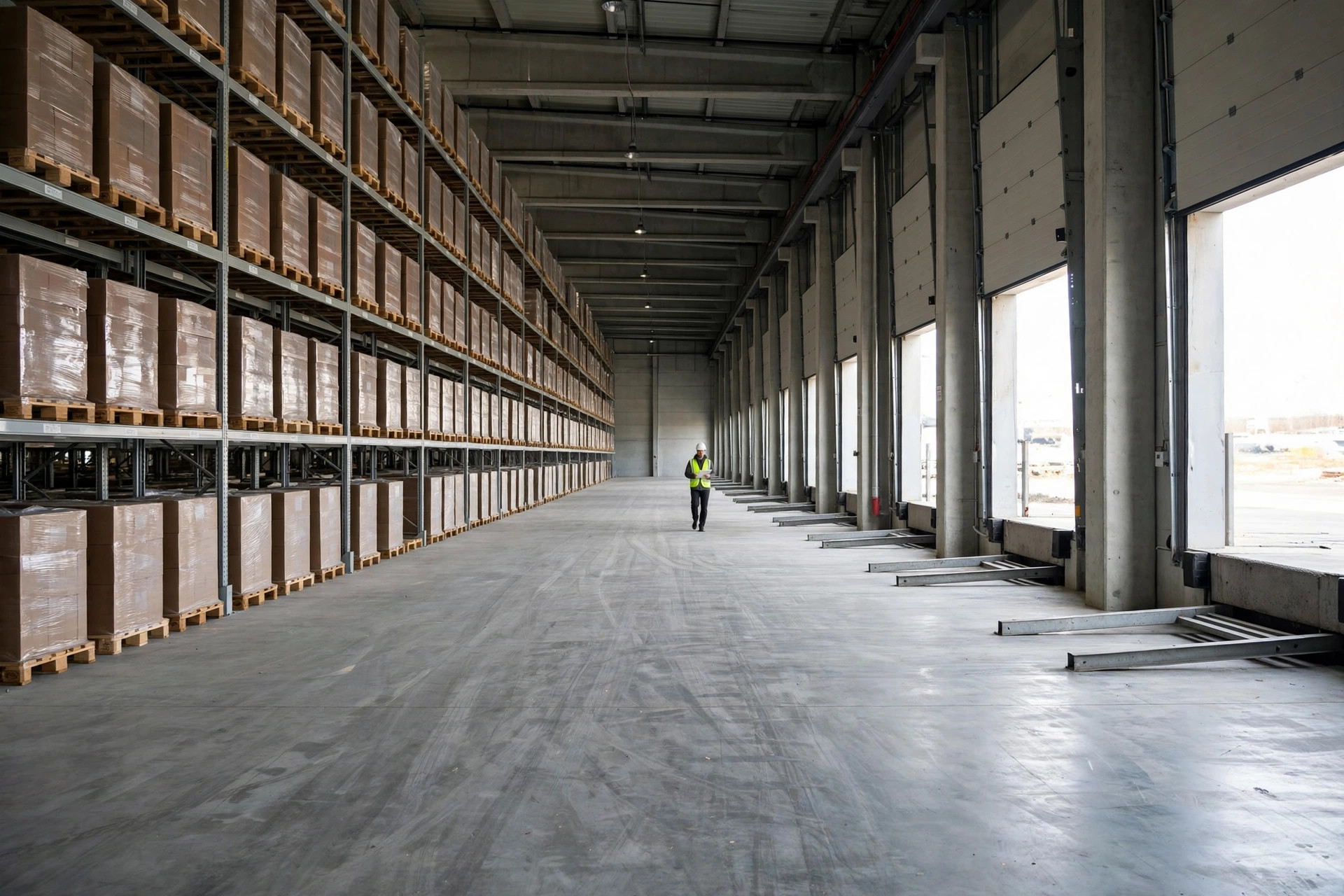
I've driven trucks for fifteen years and been inside well over eighty warehouses. A buddy who sells pet supplies online dragged me along to tour a 3PL warehouse two falls ago. "The sales rep sounds great," he said, "but I don't trust any of it. You deal with these places every day — tell me what to look for when touring a 3PL warehouse." He asked the right guy: a driver sees a warehouse completely differently than a seller does.
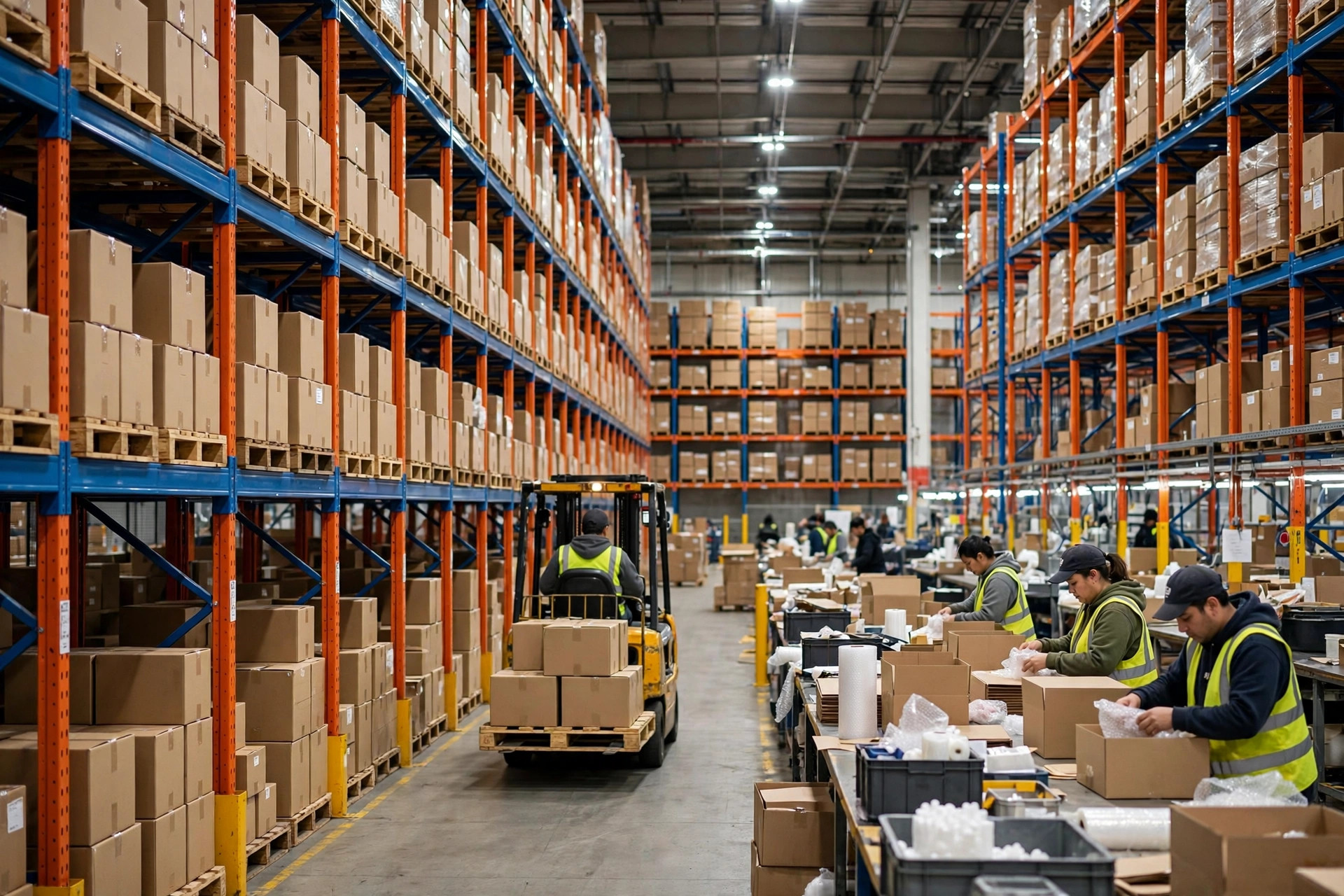
We toured two in the Inland Empire the same day. The first: a freshly remodeled office, a picture-perfect sample room, coffee — forty minutes, and we never set foot in the warehouse. The second: the rep didn't talk much, just walked us to the dock. Forklifts were unloading trailer after trailer, receivers scanning every carton, a big screen on the wall ticking through the day's inbound and outbound numbers. My buddy picked the second one. "The first felt like a realtor," he said. "The second felt like people who actually work." A year and a half later, his freight has never had a real problem there — not even in peak season.
What does that tell you? A tour has two routes: the sales route, and your route. You're signing a one- or two-year contract — betting every day of next peak season on it. Don't just look at what they want you to see.
Touring a 3PL Warehouse: The Sales Route vs. My Route
What sales shows you: the lobby, the office, the sample room, the wall of fame, one aisle of the neatest racks. The route is planned, the timing rehearsed, and even the "random" forklift driver might be staged. I'm not saying salespeople lie — their job is to show the best side. But you're signing for a year or two. You need to see a normal day.
What you should look at: the dock, the aisles, the receiving area, the workers' faces, the screens on the wall. My trick: don't follow the planned route — ask to walk extra areas yourself, and go around eight or nine in the morning, in the middle of the receiving rush. That's when the truth comes out.
| What sales shows you | What you should look at | Why it matters |
|---|---|---|
| How nice the office looks | How many dock doors, and whether trucks are lined up | Not enough doors means your freight bakes in the sun during peak |
| How neat the sample room is | Whether aisles are blocked by pallets | Blocked aisles mean sloppy floor management — your freight gets sloppy treatment too |
| A quote a few cents cheaper | Whether fire hydrants are blocked by freight | A warehouse that ignores safety will make you cry over damage claims |
| A promise of "same-day shipping" | Whether receivers use scanners or paper sheets | Paper means the system runs on memory — you'll never know when it's wrong |
| How big their client list is | Whether workers hustle or drag their feet | Low morale means your orders are the first to fall apart in peak season |
What to Look for When Touring a 3PL Warehouse: Five Things From the Driver's Seat
What to look for when touring a 3PL warehouse? I've boiled it down to five checks — every one of them paid for with time and diesel.
1. Count the dock doors. Watch the line.
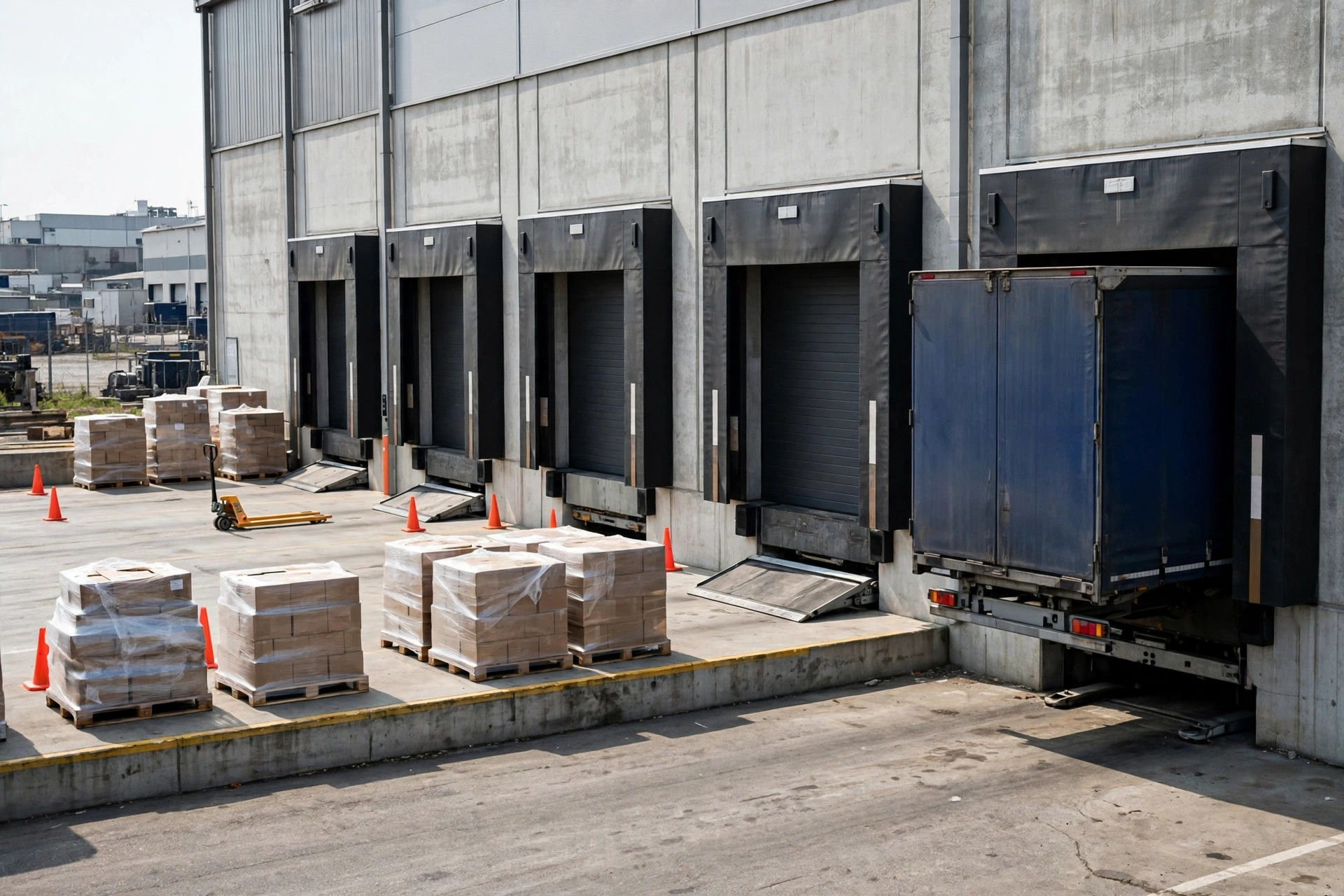
June 2024, Ontario. A 3PL that advertised "same-day outbound." I'd delivered there twice — four dock doors, and at the morning rush there were seven trucks lined up ahead of me. I waited three and a half hours to get a door. My buddy later told me his orders sat for two days during Black Friday week, and his customer service team got roasted by buyers. The number of doors is fixed. Peak-season volume isn't. Do the math yourself.
The math that matters: say you do 500 orders a day in peak season, and your freight sits two extra days — cancellations and bad reviews alone can cost you months of warehousing fees. On tour day, count the doors, check the time, count the trucks. A line at ten a.m. on a regular weekday means trouble in peak season.
2. Look at the aisles and the floors.
You can't fake a clean warehouse. Are the aisles clear? Are pallets stacked straight? Is the returns area a mountain of chaos? That's a mirror of floor management. A well-run warehouse has floors you can see your reflection in. A sloppy one makes forklifts weave around junk.
November 2023, Rancho Cucamonga. I went to pick up a load, and the aisles were jammed with unprocessed returns. Worse, two pallets sat right in front of the wall fire hydrant, and the extinguisher cabinet was buried behind cartons. I told my buddy: don't touch this place, no matter how cheap. Three months later he told me it failed a fire inspection and shut down for a week. If his freight had been inside, his whole peak season would have gone up in smoke.
3. Check the fire and safety details.
Most people never think to look at this on a tour. Remember three things: are the hydrants blocked, are the extinguishers in place, and do the forklifts drive like maniacs. If the forklift drivers tear around corners, your freight getting smashed is just a matter of time. Safety looks like a cost on a normal day. On a bad day, it's your freight that burns.
Here's the counterintuitive part: people assume bigger means more reliable. Fifteen years on the road taught me the opposite — the worst messes I saw were big warehouses that expanded faster than their management could keep up. Small and tidy beats big and sloppy. Don't let the size number fool you.
4. Read the workers' faces.
You can see morale. Are people hustling or dragging? Are receivers polite to drivers, or do they act like you're invisible? Half an hour tells you whether the crew's heart is in it. In a warehouse where nobody cares, your orders collapse first in peak season — because nobody's watching out for you.
5. Check whether the system is real.
Is there a live dashboard on the wall? Do receivers carry scanners or paper? My trick: ask one straight up, "Can you look up this shipment in the system?" A warehouse on paper won't know when something's wrong — counts run on shouting. Every rep claims a WMS. Whether it's real shows in whether the floor people use it.
Five Questions to Ask Before You Sign a 3PL Contract
You've looked around, you've got a read on the place. Before you sit down with sales, ask these five questions out loud. Don't be shy — it's your contract, your money.
- Last peak season (October through December), how big did your biggest client's surge get — and how many days late did shipments run? Don't ask "can you ship same-day." Ask about a peak that actually happened.
- When I need freight rushed, what does expedited outbound cost, and how fast? Get the rush rules clear now — don't learn after signing that the rush fee costs more than the freight.
- When freight goes missing or gets damaged, how do claims work — what's the process, and how long until the money lands? A verbal promise means nothing. In the contract, or it didn't happen.
- What's the shortest contract term, and what does early termination cost? Negotiate the exit before you need it, so everyone parts friendly.
- Can I walk into the warehouse unannounced? A warehouse with nothing to hide says yes on the spot. If they hesitate, you can draw your own conclusions.
And here's a scorecard. Five things to check — two red flags, and you walk:
| What to check | How to check it | Red flag |
|---|---|---|
| Dock doors | Count the doors, watch the line | A line of trucks on a normal weekday morning |
| Cleanliness | Look at aisles and the returns area | Aisles blocked by freight |
| Safety | Hydrants, extinguishers, forklift behavior | Safety equipment blocked by freight |
| Morale | Spend half an hour watching the crew | People dragging, nobody talks to drivers |
| Systems | Scanners or paper sheets | The floor still runs on handwriting |
Two red flags: walk away. One red flag: push the price down, or go look at another place. All green? Sign fast — good warehouses don't wait around for you.
There's an old saying: the seller always knows more than the buyer. But with a warehouse tour, looking beats not looking, and asking beats not asking. Make the extra trip before you sign, and you'll shed fewer tears after. Worth it.
By Shifu Zhao, Trucking Veteran (15 yrs)