slug: warehouse-site-inspection-8-red-flags-guide lang: en title: 10 Minutes to Judge a Warehouse: 8 Red Flags Before You Sign the Lease excerpt: Before signing a warehouse lease, spend 10 minutes checking 8 red flags: cracked slabs, inflated clear height, tight column grids, dock mismatch, sprinkler gaps, weak power, roof leaks, and bad truck access. Each comes with a field test and the price of getting it wrong. section: ops subcategory: pitfalls region: common tags: ['warehouse-lease','site-inspection','red-flags','warehouse-selection'] author: 小马
I signed the lease on my first warehouse after a 10-minute tour with the broker.
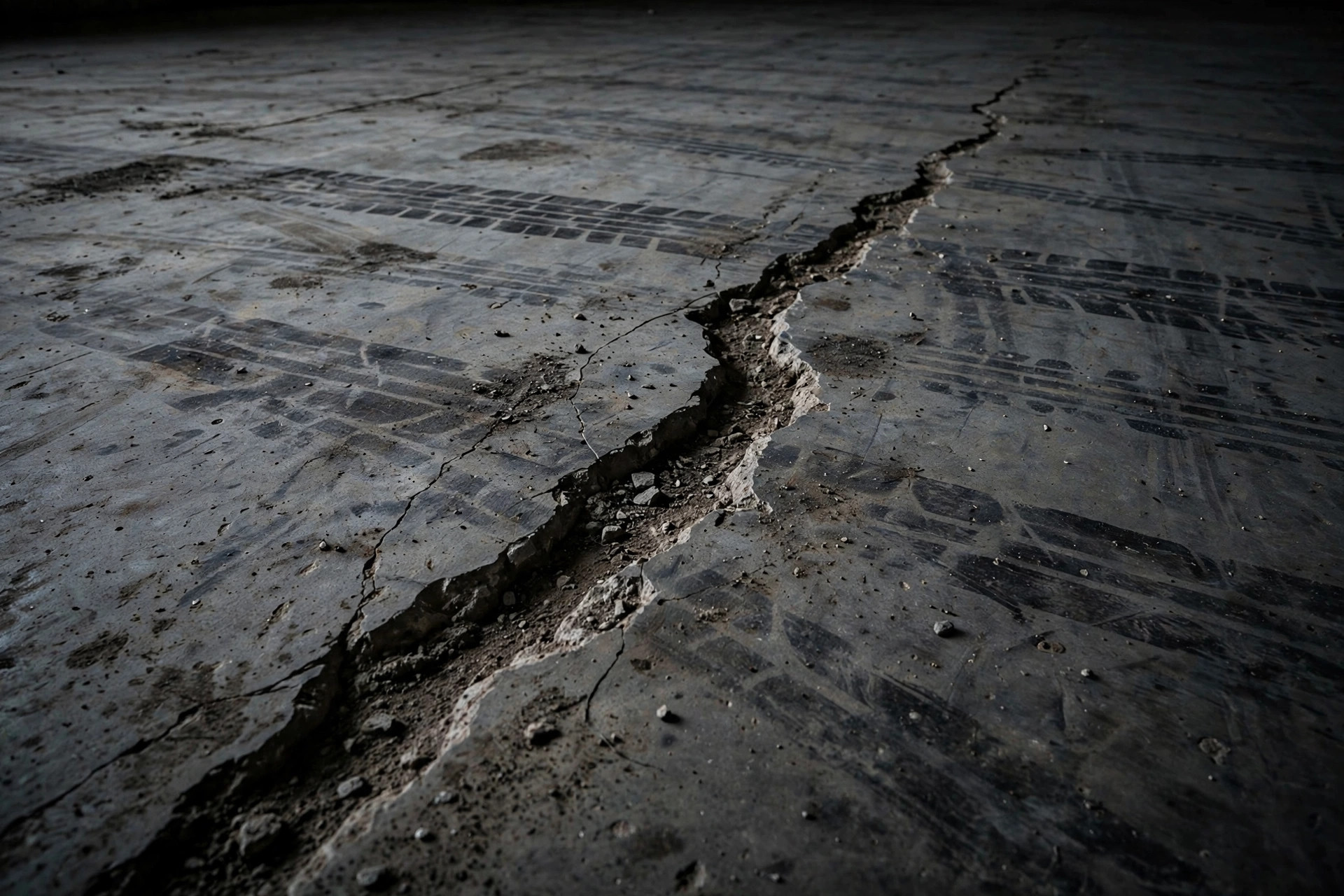
3,000 square meters, 15% cheaper than anything nearby — I thought I'd found a steal. Then the second rainy season came. A forklift rolled over a hairline crack in the floor I'd barely noticed, and crack — it went from hairline to finger-wide. Floor repairs cost me tens of thousands, plus three days of downtime with customer freight queued at the door. Squatting next to that crack, I learned the golden rule of warehouse leasing: cheap is rarely good, good is rarely cheap — and expensive doesn't mean problem-free either.
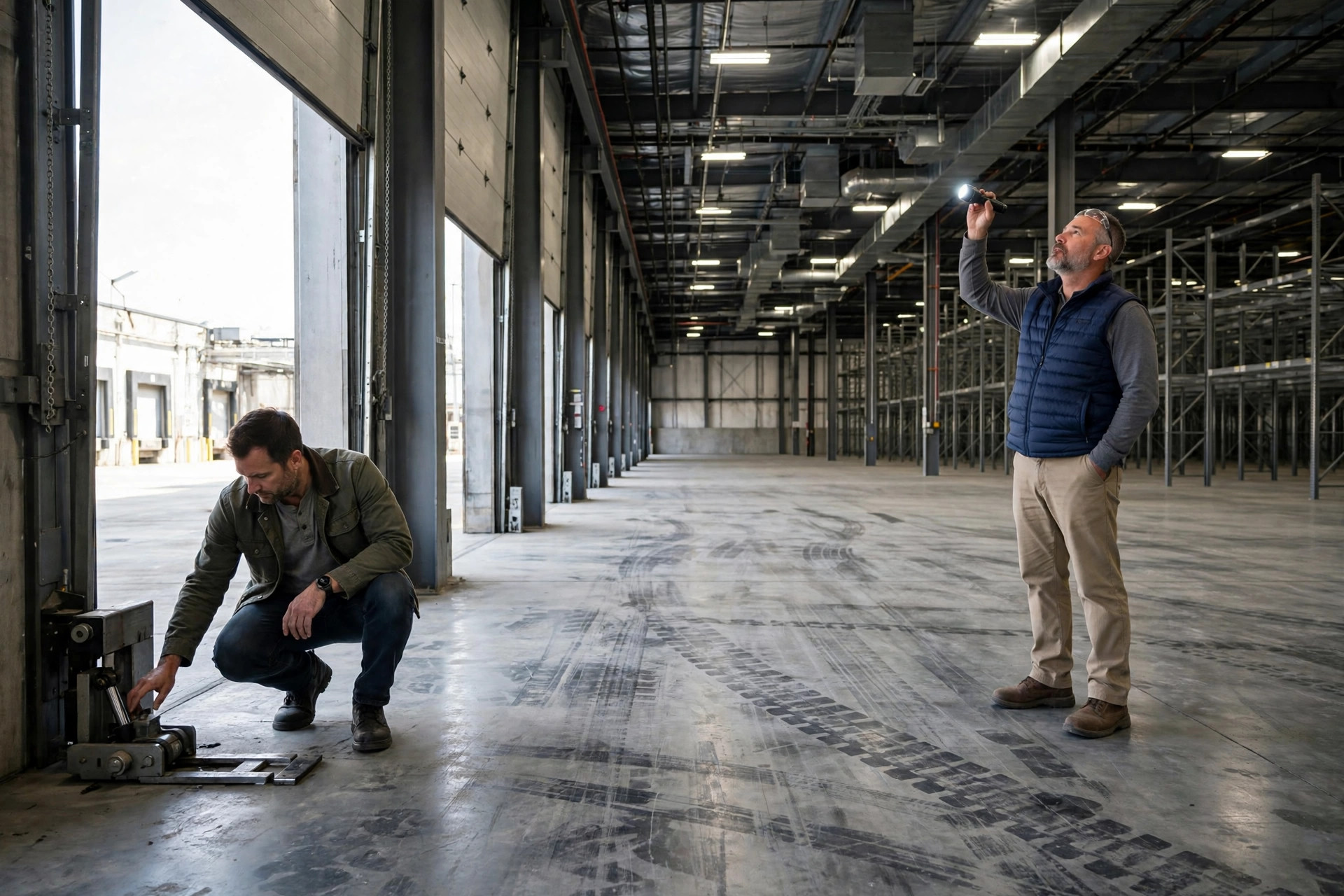
Since then, I've developed my own site-visit kit: a bottle of mineral water, a laser distance measurer, and shoes I don't mind getting dirty. Ten minutes, eight red flags, one by one. Here's the checklist — because small warehouses like mine can't afford tuition paid in mistakes.
Before you sign a warehouse lease: 8 red flags in 10 minutes
The full checklist first, details below:
| # | Red flag | 10-minute field test | Cost of getting it wrong |
|---|---|---|---|
| 1 | Cracked, settling floor slab | Pour water, watch which way it flows; check cracks for patch marks | Floor repair starts in the tens of thousands, plus downtime |
| 2 | Inflated clear height | Laser-measure from the floor to the lowest point (sprinklers, lights) | Racking design scrapped, design fees wasted |
| 3 | Columns too close together | Count them, tape-measure the spacing | Racking never fits right, usable space quietly wasted |
| 4 | Dock height mismatch, no canopy | Back a truck up and compare; visit on a rainy day | Slow loading, rain-damaged cartons on your dime |
| 5 | Sprinklers don't match racking plans | Look up at sprinkler type and density; ask about high-pile storage | Sprinkler retrofit starts at six figures — we can't afford that |
| 6 | Not enough electrical capacity | Check the main breaker, ask the landlord for power bills | Utility upgrade queues run 3–5 months; freight arrives, chargers don't |
| 7 | Roof leak stains | Look for water marks on the ceiling; always visit after rain | Soaked inventory that insurance may not cover |
| 8 | Truck access and turnarounds | Drive the loop: can a 53-footer get in and turn around? | Half an hour wasted daily, and drivers complain first |
1. The floor slab. This is where I paid my tuition, so I'll dwell on it. Bring a bottle of water, pour a little on the floor, and watch which way it runs — one-directional flow means uneven settling. Then look at the cracks: hairline shrinkage cracks are normal; anything you can fit a finger into, or cracks with patch compound on them, means the slab is still "moving." Forklifts rolling over it daily only make it worse. Repairs start in the tens of thousands — and for a small warehouse, three days of downtime means customers blowing up your phone.
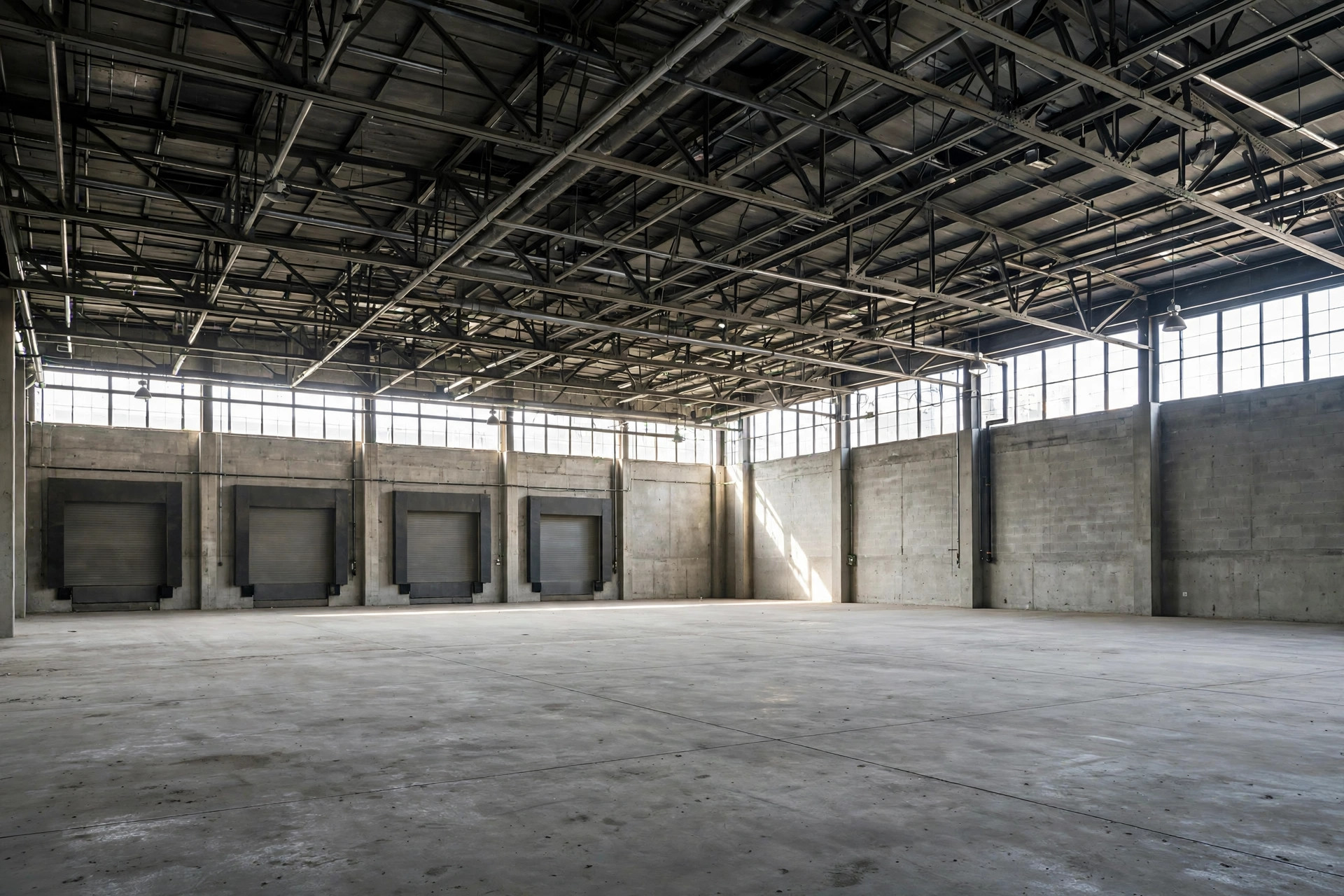
2. Clear height. The broker says "28-foot clear." You take your laser measurer and shoot from the floor to the lowest point — usually a sprinkler head or a light fixture. In my first warehouse, the broker's 28 feet was the eave height; under the sprinklers it was barely 24. The racking vendor designed for 28, the uprights arrived, and the top level simply didn't fit. Design scrapped, fees wasted. Remember: clear height means the lowest point, not the highest.
3. Column spacing. Columns are the most honest space-killers in a warehouse. Tape-measure the distance between two columns — small warehouses typically start around 40 feet (about 12 meters) of spacing; any tighter and your racking rows land with a column dead in the aisle, and forklifts can barely turn. I once toured a 5,000-square-meter box with columns like a maze — the usable space was worse than someone else's 4,000.
4. The dock. Back a truck up to the dock and compare the trailer floor to the dock level — a few inches of difference means forklifts bouncing up and down, and that's cargo damage plus tire wear. Then check for a canopy: a dock with no canopy is open-air loading in the rain. Who pays for soaked cartons? Tour on a rainy day if you can — it's the only honest look at a building's waterproofing.
5. Fire sprinklers. Look up at the heads: dense little standard heads won't cut it if you plan high-pile storage — fire code typically requires ESFR high-output heads above certain storage heights, and a retrofit is a six-figure project plus re-permitting. Small warehouses like mine can't burn that kind of money. Before signing, ask: how high can I stack with the existing sprinklers? Get the landlord's answer in writing.
6. Electrical capacity. Open the panel and read the main breaker; ask the landlord for recent power bills — a power-hungry building can't hide it. Forklifts all need charging now, and any future automation wants more. If the service is undersized, a utility upgrade queues for three to five months. A friend of mine signed his lease, then couldn't install chargers — his forklifts drove off-site to charge every day. Hilarious, unless it's you.
7. The roof. Look up for water stains on the ceiling and mildew at the wall bases. A stain means it leaked — whether "once five years ago" or "every time it rains," you can't tell. So tour right after rain; an active leak is unmistakable. Soaked inventory, and the insurer may not even pay. You'll want to cry, and it'll be too late.
8. Surrounding roads. Finally, drive a loop around the building: can a big rig get in? Turn around? Any low bridges or truck restrictions by time of day? Brokers never volunteer this. My first warehouse sat on a narrow lane — during rush hour, trucks simply couldn't get in, drivers waited until noon, and I paid for it in both money and goodwill.
My warehouse site-visit kit
Mineral water, laser measurer, dirty-proof shoes — under a hundred bucks total. Oh, and one more item: schedule the tour after rain. Touring on a sunny day is like dating someone's filtered photos — after rain, you see the building with no makeup on.
One more tip: when you find "the one," don't rush to sign. Spend a couple hundred bucks treating a warehousing friend to dinner and bring them along — the problems they spot in one glance pay for the meal ten times over. We small operators can't afford consultants, but we can afford dinner.
Three tips before you sign the warehouse lease
First: 10% cheaper rent means nothing if two of these eight red flags bite — the savings come back as repair bills, plus your time. Second: get the landlord's promises in writing — sprinkler compatibility with high-pile storage, electrical upgrade rights, who's responsible for slab settling. Verbal promises don't count. Third: don't skimp on the tour. Ten minutes with this checklist buys you peace of mind for the next three to five years.
Squatting next to that crack, my first thought was: what a wasteful tuition payment. Then again — which small-warehouse owner hasn't paid tuition? The difference is, some of us learn after paying once, and some fall into the same pit three times.
Small warehouses have their own way of surviving — ours is simple: spend every dollar where it counts, and spot every pitfall before it finds you.
By Xiao Ma, Small Warehouse Owner