My phone lit up at 2:40 a.m. The night-shift lead was whispering: two cartons gone from the high-value cage, the packing tape still intact, the boxes just… gone. After that theft, our warehouse security assessment checklist became a fixed quarterly routine. But that night, sitting on the edge of my bed, my first thought wasn't to call the police. It was: the doors were fine, the cameras were on, headcount was full — so how did the product walk out?
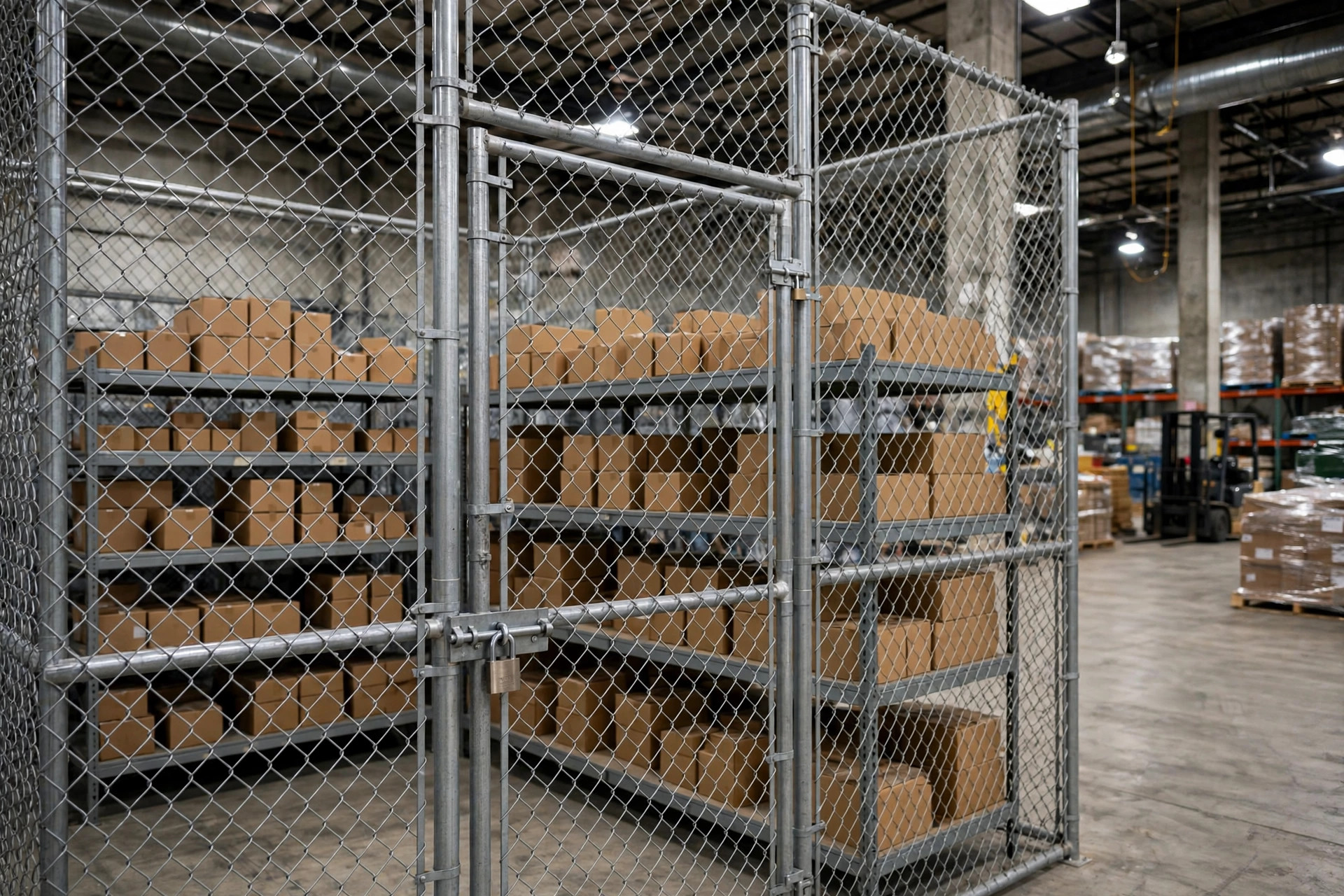
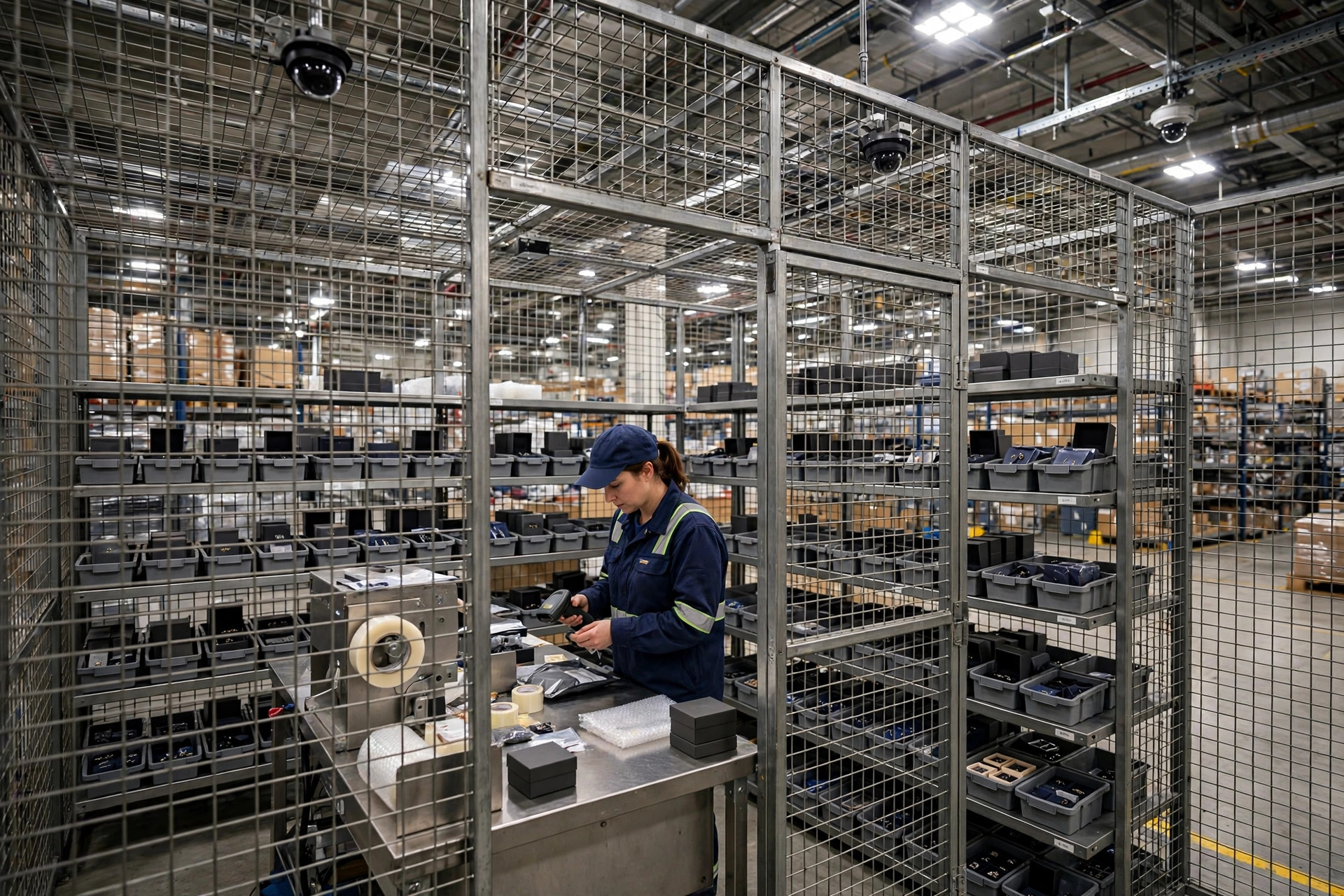
It was a Wednesday night, the week before Thanksgiving, two years ago. Our Ontario DC — 120,000 square feet, 200-plus people on the floor. The high-value cage held Bluetooth earbuds and smartwatches, 48 units a carton. Cycle count came back short: 6 cartons, 288 units, over $18,000 in product value. We pulled video for three days and landed on a dock unloader. Three straight weeks of night shifts, he'd been leaving through the employee entrance with something bulky under his jacket. The badge logs were perfectly clean — normal swipes, every one of them — because he'd been borrowing someone else's badge. "I'm swiping in for Lao Wang," the kind of thing people said in our building every single day back then. The camera over the employee door did catch him walking out. But the angle was off by about a foot, and you couldn't tell what he was carrying.
Here's the first thing I'll tell you, straight: theft is never a "we didn't have enough cameras" problem. It's a "nobody checked the places that mattered" problem. We spent two weeks turning that lesson into a warehouse security assessment checklist. We run it every quarter now, no exceptions. Everything below was paid for in real money and real headaches.
Warehouse Security Assessment: Start With the Cheapest Door
In our warehouse security assessment, item one is always the door. Not the fence. Not the cameras. The door.
Why? A better lock and an anti-tailgating sensor on the employee entrance costs a few hundred bucks. But that theft walked right out through that door. The badge system showed nothing but clean records — the problem was never the equipment, it was that nobody enforced the "no borrowed badges" rule.
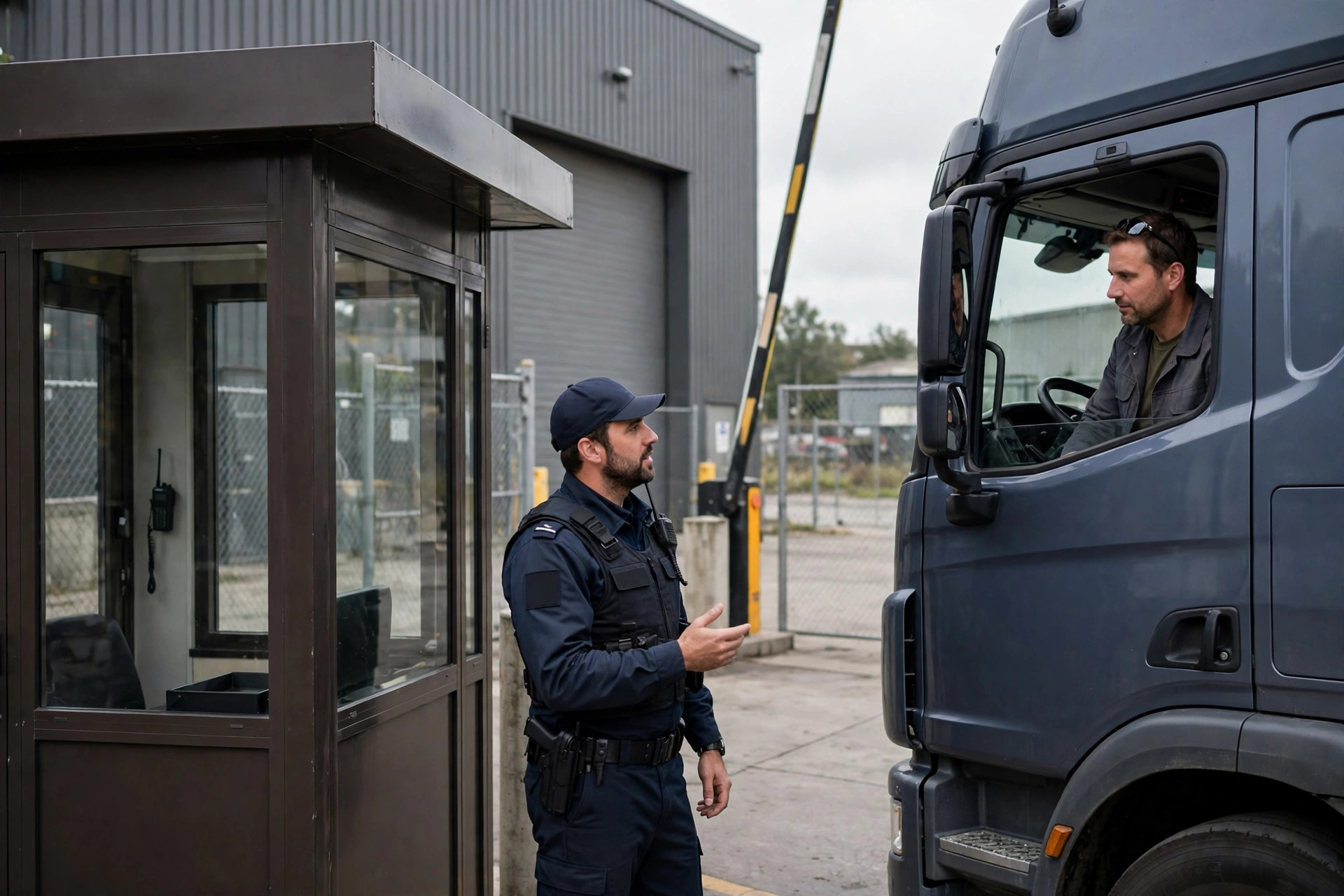
Our fixed routine now: badges are named, one per person, deactivated the day someone leaves. Lend your badge or swipe for someone else, and it's a written warning the first time — no debate. The employee entrance has anti-tailgating: one person per badge swipe. Dock doors get locked down after shift, and only the shift supervisor and the guard captain hold keys. All of it together cost under two thousand dollars. Cheapest line item in our whole security spend, and the highest return.
Honest truth: doors stop the crimes of convenience. Eight out of ten internal thefts in a warehouse are opportunistic, not planned — and opportunity needs convenience. Tighten the doors, and most of the opportunists disappear. Do the math yourself.
Theft-Prevention Self-Audit: Fences, Cameras — Cheap Fixes First vs. Expensive Fixes That Still Leak
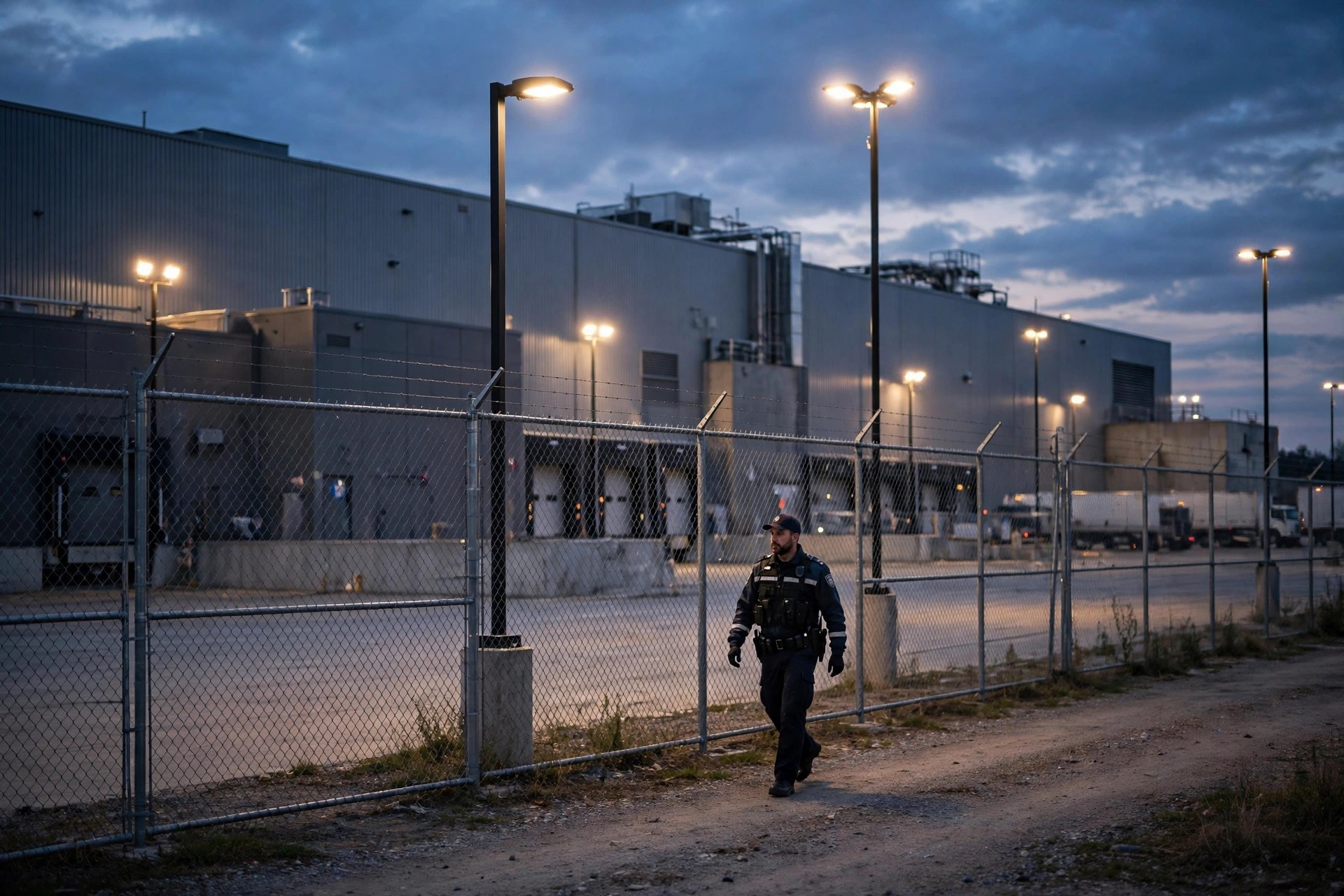
Item two is the fence. Last March, on a Saturday at 4 a.m., our patrol guard Lao Zhou found a cut in the southeast corner fence — about a 16-inch opening, the wire ends still fresh. Not a single carton missing. The cut was new; whoever made it hadn't come back yet. We welded it shut that same night and added a camera covering that corner.
That incident taught me the comparison I now hand to every peer who asks:
Cheap fixes that close the gaps first: door locks, named badges, anti-tailgating, fence repairs, dock door lockdown, one more inner door on the high-value cage. All of it together cost us under five thousand dollars — and it closed off more than ninety percent of the "grab and go" and "slip through the gap" scenarios.
Expensive fixes that still leak: cameras. I'll say it plainly — more cameras equals more security? We tested that theory, and it's just not true. Thirty-two cameras running, nobody watching the feeds on night shift — that's decoration. Our video retention was 30 days, and the inventory variance surfaced 47 days later. The footage that mattered was long gone. Every dollar spent, zero evidence. A camera is a tool for investigating after something happens, not for preventing it. Get that order backwards and you can spend any amount of money for nothing.
So in our theft-prevention self-audit, the camera section is exactly three checks: are the high-value cage cameras aimed right — can you actually see hands? Is retention at least 60 days? Does anyone on night shift spot-check the feeds? Enough coverage is enough. One more camera never beats a real patrol schedule.

People and Patrols: The Quarterly Routine That Stuck
Item three — and the one that matters most — is people.
Night patrols run two rounds now: one at 1 a.m., one at 4 a.m. The guard walks the entire building with a flashlight, hitting 15 check-in points, no skips. The supervisor reviews the check-in log at the morning huddle; one missed point and the guard captain owes me an explanation. Don't underestimate this — that cut fence I mentioned? The 4 a.m. round found it. If patrols had been sloppy, that opening could have sat there all weekend, and we'd be talking about a lot more than a few cartons.
Cycle counts are the other half. The high-value cage gets spot-counted monthly; the whole building gets a full count quarterly. Any variance over $500 needs an investigation report within 48 hours: where the product went, which step failed, who's accountable — in writing. Since that rule went in, the mysterious "variances" have dropped by more than half. Most people aren't thieves. They just knew nobody was checking, so they helped themselves.
Our warehouse security assessment checklist runs every quarter now, always in the same order: doors → fence → cameras → patrol logs → count variances → badge deactivations for departed employees. One sheet of paper, about twenty items. The supervisor walks it with the guard captain, half a day, then signs it and files it. Anything that fails gets fixed within seven days and re-checked. No exceptions, no delays.
One last thing for my fellow operators: don't start by buying cameras. Check the doors first, then the fence, then make the patrol schedule real. Security isn't won with equipment. It's won at 1 a.m. and 4 a.m., when somebody with a flashlight actually walks the aisles. One theft is lesson enough — don't wait for the second one.
By Chen Feng, Warehouse Operations Manager