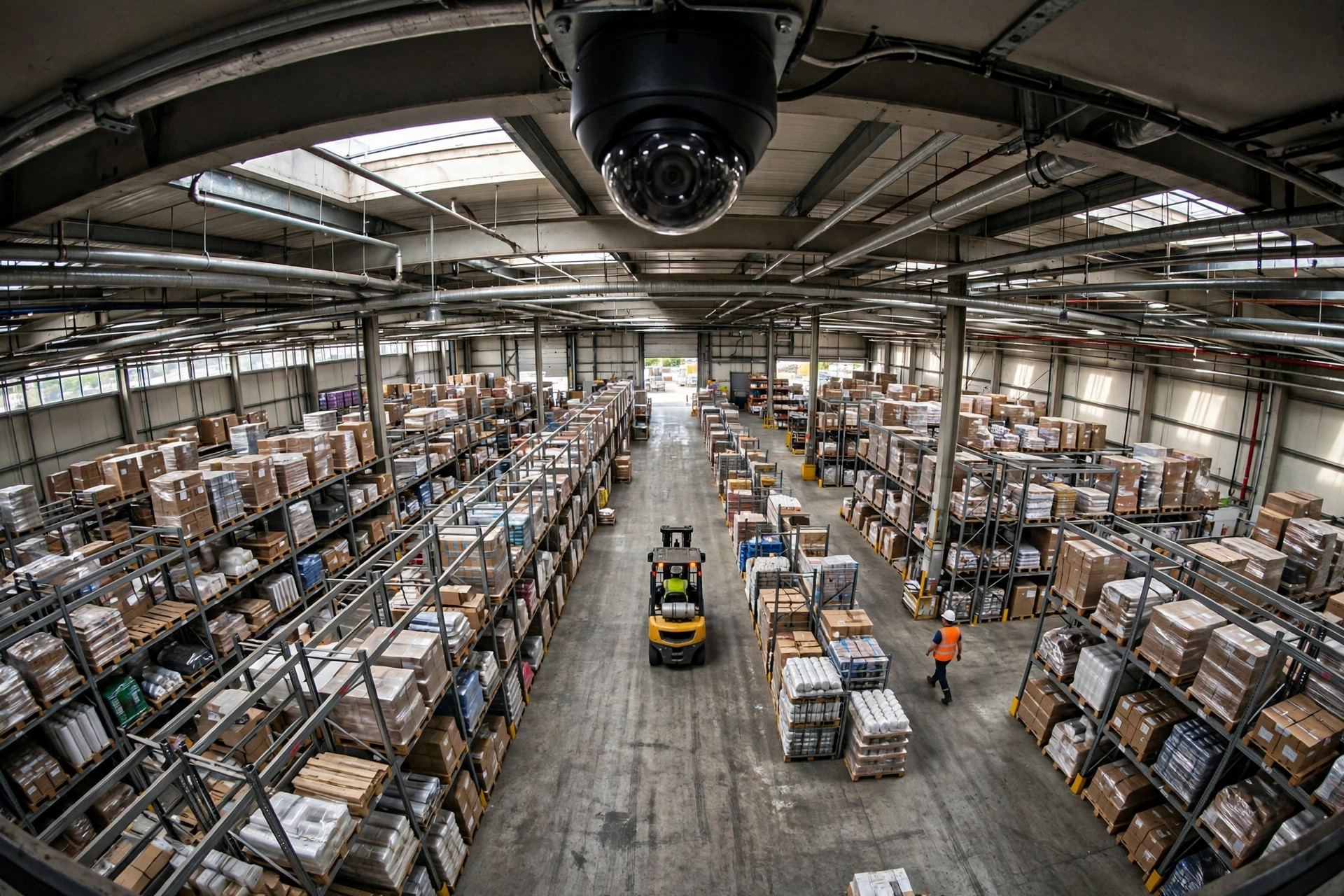
It was 1:40 a.m. on a Tuesday near the end of last November. I was walking past the warehouse office and the light was still on. Linda from billing was still there, eyes locked on her screen — the carrier's monthly invoice on the left, our WMS outbound detail on the right, off by more than a thousand dollars and she couldn't find why. That night I thought: if an RPA bot could do this job, people could finally go home on time.
Let me be straight with you. We've actually put RPA to work in our warehouse, and we started with the most boring job of all. Here's how we tried it, how many night shifts it saved, and the traps nobody tells you about.
Our first RPA job: invoice reconciliation
We run a mid-size 3PL warehouse in California. Peak season pushes us past ten thousand outbound orders a day. At the start of every month, Linda had one job: reconcile three sources — the monthly invoices from our three carrier partners, the outbound detail from our WMS, and the tracking numbers from our TMS.
Picture it: thousands of rows a month, matched by hand in Excel. VLOOKUPs everywhere, then line-by-line hunting for the rows that don't match. Once we were off by more than two thousand dollars, and it took Linda two days to find out the carrier had double-charged a fuel surcharge on one LTL shipment. That kind of work wrecks your eyes, eats your time, and kills morale. Nobody wants to do it, but somebody has to.
Last September we tried our first RPA bot. Plainly put, RPA is a "digital employee": you teach it where to click, what to copy, where to paste, and it works the night shift on its own. No sleep, no complaints.
We didn't go full auto on day one. Version one did exactly one thing: match the carrier invoice against WMS outbound records by tracking number, and only flag the lines where the amount differed by more than fifty dollars for Linda to review. The bot runs at 2 a.m.; Linda walks in to a discrepancy list already sitting in her inbox.
Three months in, month-end reconciliation went from three all-nighters to half a day of reviewing exceptions. Linda told me the first time she left work on time, it felt weird.

Second RPA job: the daily report builds itself
Our morning huddle starts at 8. It used to be that our shift lead, Lao Wang, had to be in by 7 — pulling inventory and in-transit numbers from the WMS, the outbound completion rate from the TMS, three exports stitched into one spreadsheet. Forty minutes minimum. In peak season, with bigger data sets, one broken formula meant starting over. He complained to me twice that he'd become a spreadsheet guy instead of a shift lead.
This process was even more regular than reconciliation: same steps, same format, every day. RPA loves that kind of work. Now the bot runs at 5 a.m. on its own, and by 7 the finished report is in the lead's inbox — fixed format, exceptions highlighted automatically. Lao Wang shows up at 7:40 now, and the first thing he does is look at the red flags instead of building the table.
Honestly, the daily report didn't save forty minutes. It saved the morning huddle. We used to spend the first fifteen minutes arguing about whose numbers were right. Now we talk about the actual problems.
The math: is warehouse RPA worth it?
I run a warehouse floor, so I talk numbers. Here's our real ledger — rough figures, but the logic is what matters:
| Item | Before (manual) | Now (RPA) |
|---|---|---|
| Month-end reconciliation | Linda pulled 3 all-nighters a month, overtime on top | Half a day reviewing the exception list |
| Daily report | 40 minutes of the lead's morning | Zero — it builds itself |
| Reconciliation errors | Two or three a year, each costing a few hundred to more than a thousand dollars | Only lines off by more than $50 reach a human; far fewer slip through |
| Investment | Zero | License in the tens of thousands of dollars a year + three weeks of implementation + four or five script tweaks a year |
We broke even in roughly eight months. But hear the condition on that: the math only works for repetitive work with a stable process. If your process changes every other week, this math doesn't compute.
A counter-intuitive warning: don't start with your most painful process
When people hear about RPA, the first instinct is to automate the most complicated, most painful process — like 3PL billing with multiple clients and rate tables. Let me be straight: that's a mistake.
The more painful a process, the more often its rules change. Client A changes rates today, Client B adds a surcharge tomorrow. RPA is allergic to change. It's an honest worker that only clicks where you told it to click. Change the process, and it goes blind.
We have a rule now: a process only goes to the bot if it hasn't changed in three months and its steps can be written down as an idiot-proof checklist. Start with the most boring job you have. Boring means stable, and stable means the bot won't embarrass you.
There's also a trade-off worth spelling out: RPA versus API integration. APIs are solid but expensive — you need developers, and legacy systems may not even offer one. RPA is fast and cheap but fragile. We picked RPA for a very practical reason: our TMS is a legacy system with no API at all. RPA is "the dumb solution for when there's no interface." A dumb solution that solves the problem is still a good solution.
The biggest RPA trap: change the process and the bot goes blind
This March we learned this the hard way. One of our carriers changed their invoice template — column order shifted, and nobody told us. The bot ran at night as usual, grabbed data from the old positions, and everything it produced was wrong. The next morning's discrepancy list was garbage, and Linda almost took the blame.
Since then we have a standing rule: any upstream system change gets a two-week heads-up, and the RPA owner updates the script before the change goes live. The bot also sends a short run log every morning — how long it ran, how many rows it matched, how many steps failed. One glance tells you if something's off.
Remember: RPA maintenance is a real cost. Four or five script tweaks a year, half a day each — that's the rent on your digital employee. If you only count the purchase price and not the rent, you'll regret it.
If someone in your warehouse pulls those same fixed all-nighters every month for reconciliation, don't rush to buy software. First, ask them to write the process down step by step. If it can be written as a checklist, a bot can do it. If it can't be written down, the bot will be a paperweight too.
By Chen Feng, Warehouse Operations Manager