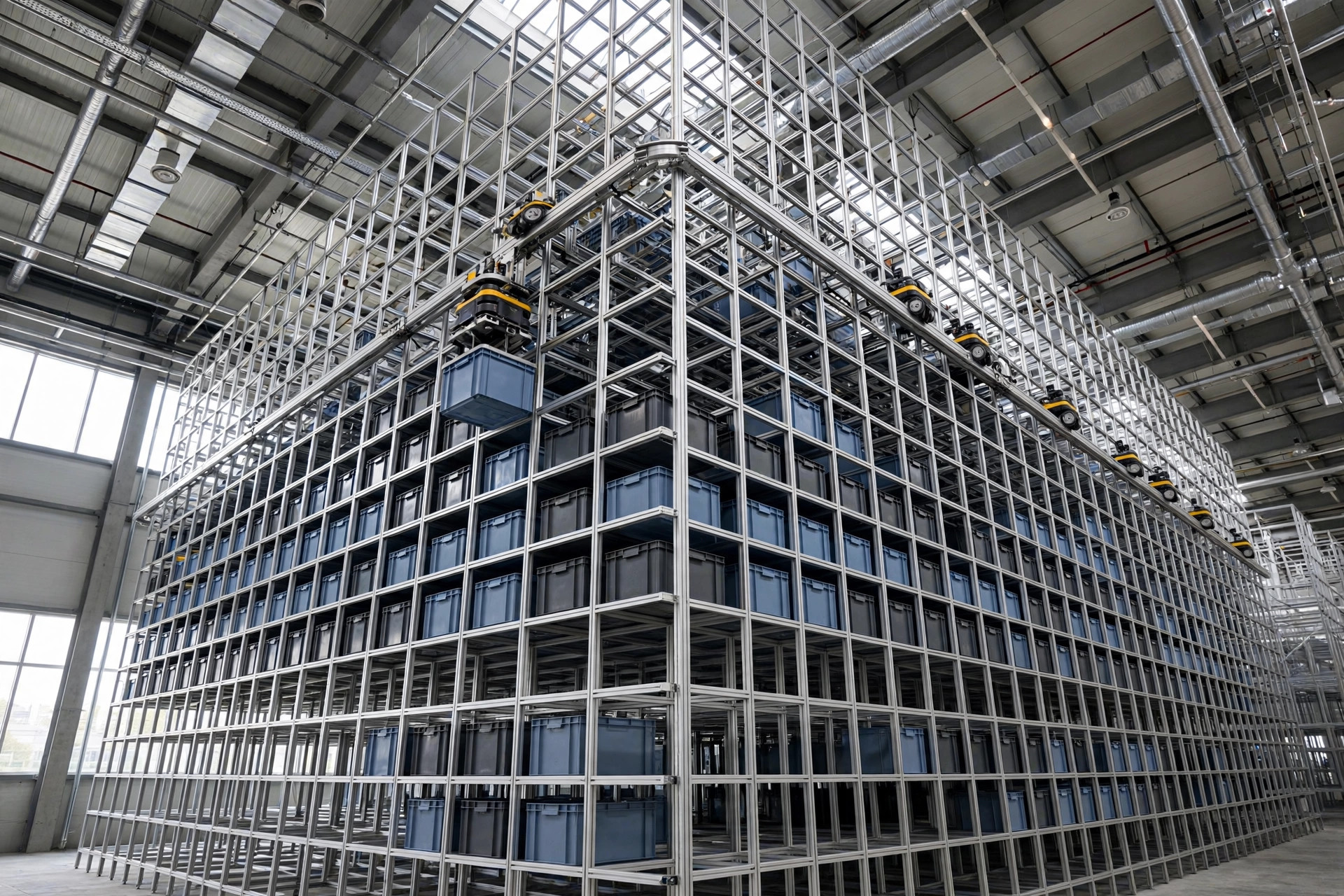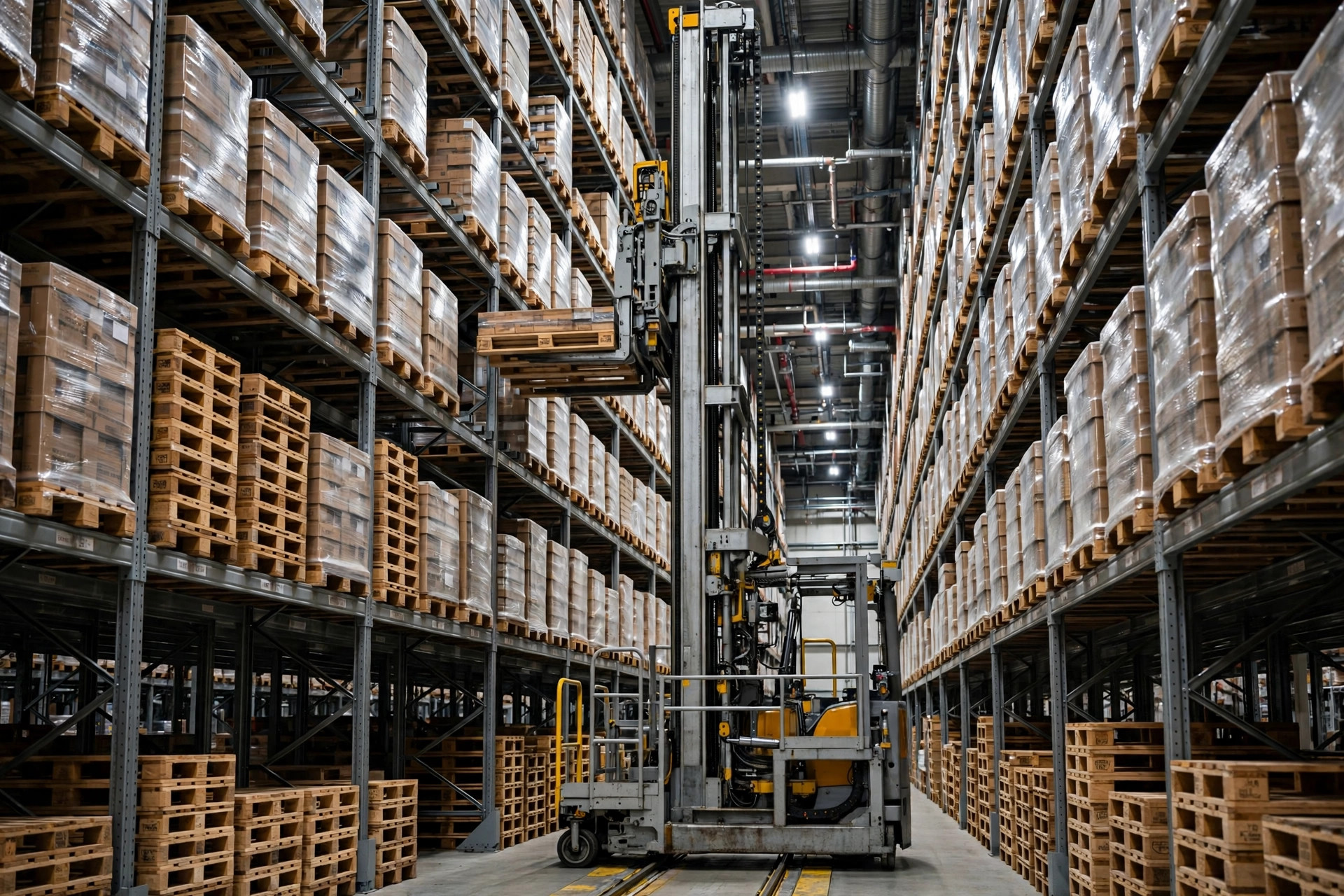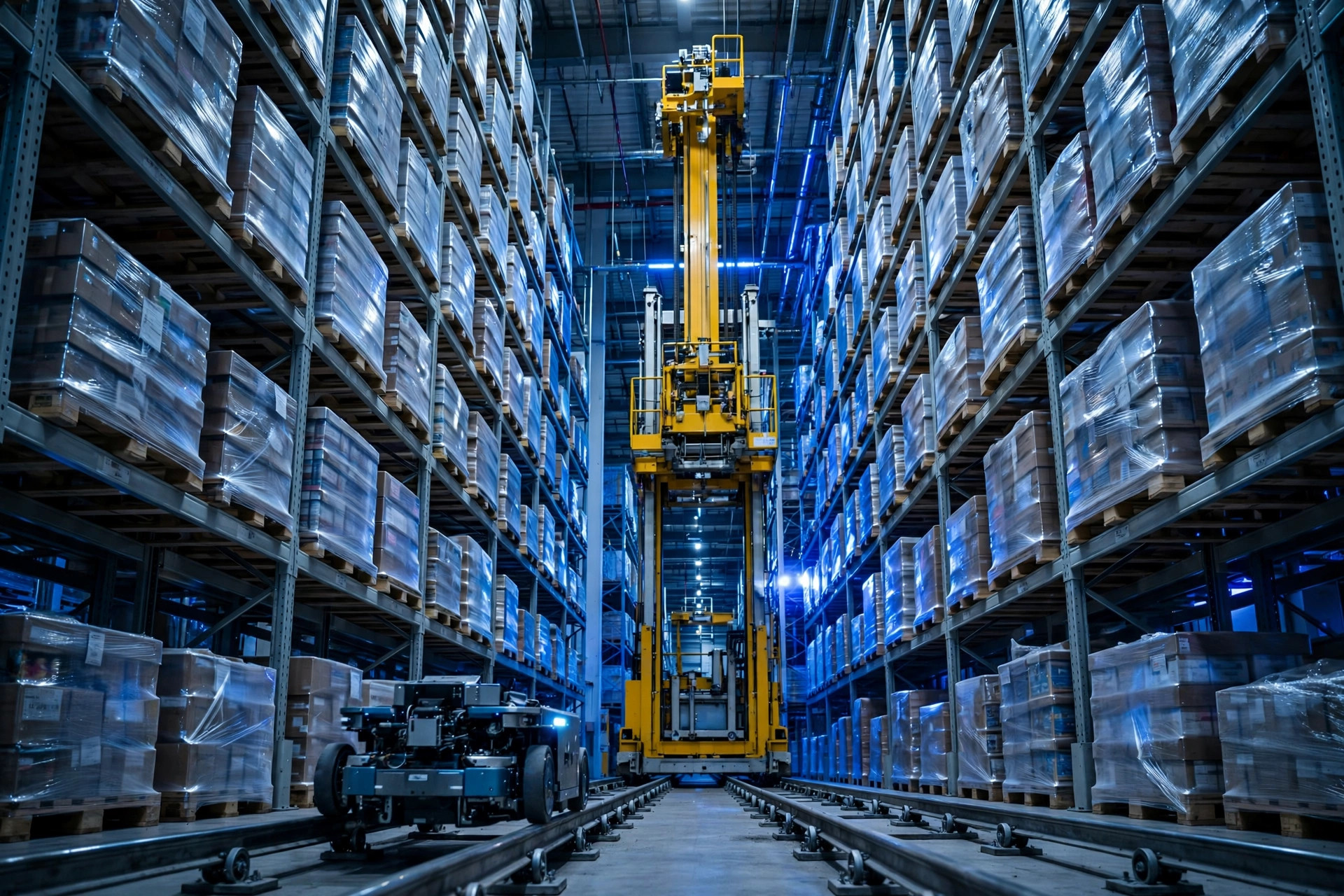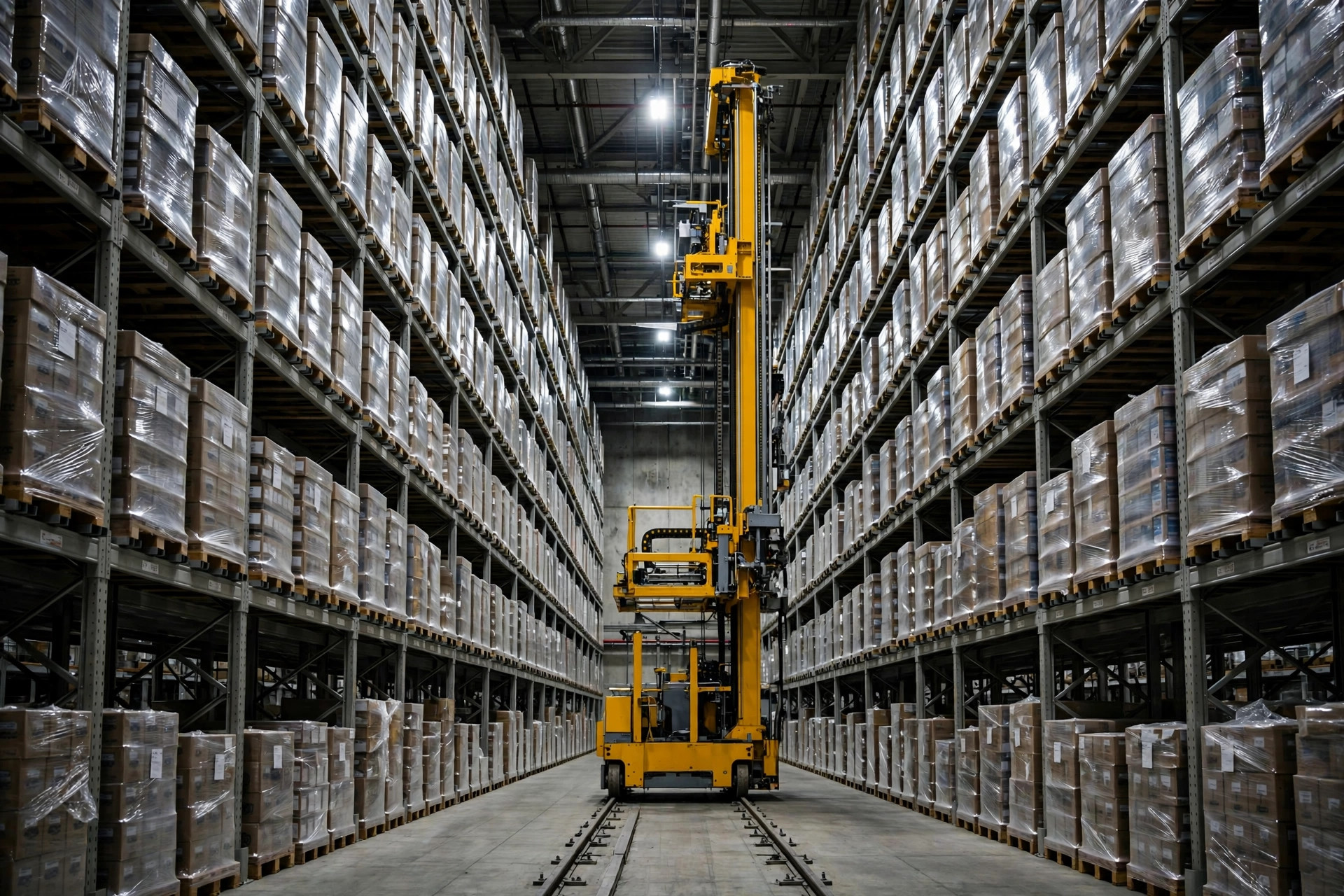
Ask me how much does an ASRS cost per pallet position, and I'll give you the answer every sales rep dodges: for a unit-load stacker-crane system, roughly $400 to $800 per pallet position. For mini-load, you're counting tote positions, which is a different spreadsheet entirely. But the number on the quote means nothing until you divide it by positions — and until you know whether your building, your SKU profile, and your throughput even qualify you to play.
The Principle: Total Price Is Meaningless, Cost Per Position Is Everything
Think of it like buying a house: you compare price per square foot, not the sticker price. A "$5 million ASRS" tells you nothing — is that 8,000 positions or 30,000? An integrator's quote bundles racking, cranes, conveyors, software, installation, and facility work into one number. Only cost per position lets you compare apples to apples.
And the "position" has to match your unit of work. Full-pallet operations: cost per pallet position. E-commerce piece picking: cost per tote position. MRO spares: cost per tray. Comparing a pallet system's per-position cost against a tote system's is like comparing a truck's fuel economy to an e-bike's — wrong unit, wrong conclusion.
One more principle-level point: equipment is the biggest line item, but it is not the whole project. Industry cost guides consistently show facility modifications — electrical, fire protection, floor work, software integration — adding 10% to 30% on top of hardware. So the first question for any quote: turnkey, or bare equipment? The gap between the two can swallow an entire stacker crane.
The Selection Boundary: ASRS Cost Per Pallet Position by System Type
Here is the table. Starting prices come from published industry sources; the per-position math is shown so you can check my work:
| Type | Published starting price | Cost per storage position | Notes |
|---|---|---|---|
| Unit-load (stacker crane) | $1M+ | ~$400–800 per pallet position | Published case: ~$13M for 25,000 pallet positions ≈ $520/position |
| Mini-load (totes/cartons) | $750K+ | ~$30–50 per tote position | Published case: $3M+ for 80,000 SKU positions ≈ $37.50/position; $800K–$2.5M per aisle |
| Multi-shuttle | $1M+ | Calculated per tote; higher throughput spreads it thinner | $1.5M–$4M per aisle, 1,000+ totes/hour |
| 4-way pallet shuttle | — | ~$40–100 per pallet position (Chinese rack-system pricing) | High-density logic; throughput is the weak spot — don't race it against cranes |
| VLM | $95K+ per unit | Not a pallet game | Small parts and spares; forcing full pallets into one is a pseudo-requirement |
| Robotic cube (AutoStore-type) | $1.5M+ | Calculated per bin | ~100W per robot; 120–500 bins/hour per workstation |
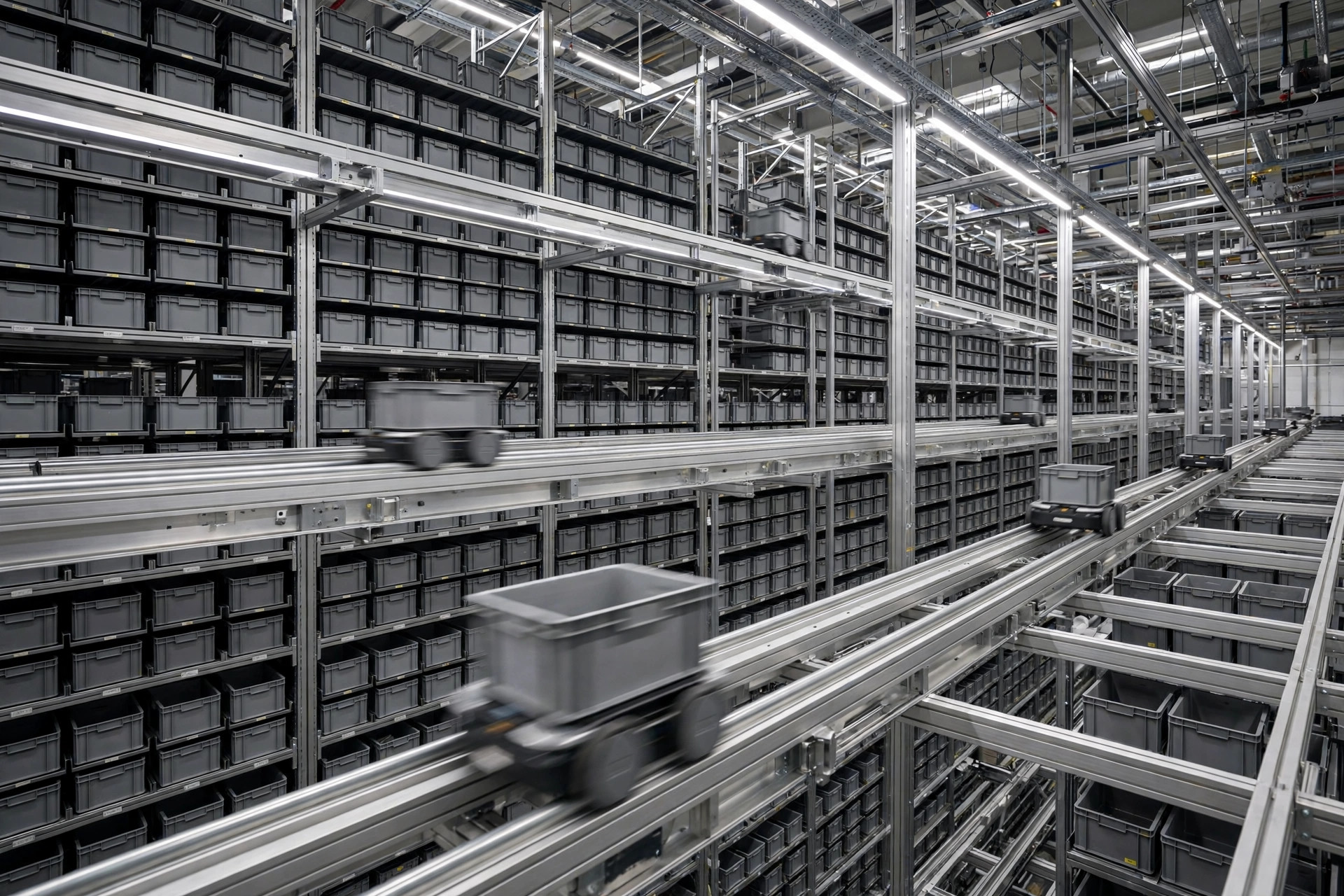
See the boundary? Same three letters — ASRS — and per-position cost spans an order of magnitude. The first dividing line is the load unit: pallet versus tote. The second is throughput: a mini-load aisle does 100–600 transactions an hour, shuttles push past 1,000 — double your throughput requirement and the equipment bill can more than double, because the bottleneck shifts from "how much you store" to "how fast you move." The third is ceiling height: unit-load wants 12 meters minimum and 20–40 to really pay; mini-load is happy at 8–15; a VLM fits a 3–8 meter box. Putting a high-bay crane in a 9-meter building is like dropping a V8 into a bicycle — it fits, sort of, and then nothing works.
Here is the counterintuitive part: the cheapest cost per pallet position usually pays back the slowest. Four-way pallet shuttles at tens of dollars per position look irresistible — but that is dense storage with a throughput ceiling, replacing the least labor. Unit-load at $500 a position looks expensive, yet it wipes out the forklift fleet, the night shift, and the high-bay rent — and in a freezer, it wipes out refrigeration electricity too. Unit price and payback speed run in opposite directions here. Comparing unit price without doing the payback math is the most common form of fake smartness in ASRS selection.
Two Real Project P&Ls
2021, Langfang, Hebei — a food company's cold-chain distribution center. Three aisles of 24-meter unit-load stacker cranes, 12,000 pallet positions, $6.8M turnkey — about $567 per position, squarely inside the table's range. Before: 46 forklift operators across three shifts. After: 12 people handling exceptions and tail-end work. The math: at roughly $50K fully loaded per operator-year (a US-backed project, dollar-denominated), 34 heads saved is $1.7M a year, plus part of a 20,000-square-foot high-bay lease given back. Payback in a little over three years — right on the industry's US expectation of about 3 years. The line item most people miss: at -25°C, the ASRS pushed cube utilization from 45% to over 80%, and the refrigeration bill went down. In cold storage, electricity is the hidden payback accelerator.
2023, Dongguan, Guangdong — a 3C accessories e-commerce warehouse. Mini-load plus shuttles, 60,000 tote positions, $2.9M system cost — about $48 per tote position. Before: 80 pickers, peak-season meltdowns. After: pick rate from 60 lines an hour to over 200, error rate from per-mille to basis points. The most expensive part wasn't the hardware — it was the WMS integration and process rework, nearly 30% of the total. Plenty of buyers budget to the equipment line and discover the software quote afterward. Which is why I said up front: ask whether the number is turnkey or bare equipment before you believe it.
Payback Math: ASRS Cost Per Pallet Position Is Only Half the Answer
So how much does an ASRS cost per pallet position? The quote gives you a number; the payback math gives you the answer. The formula is one line: total turnkey cost per position divided by annual labor + rent + error + energy savings per position. Industry data puts ASRS labor-cost reduction at 40–70%. US payback expectations run about 3 years, Europe 5–7 (where labor is expensive, payback is fast — close to a law of nature). If your number lands past five years, don't sign. Under three, it deserves a serious conversation.
Now the maintenance trap — the part I most want to rant about. Stacker crane specs look gorgeous: 787 feet per minute horizontal, 325 vertical, 11,000-pound payloads, 140-foot heights. But think it through: one crane goes down, and several thousand pallet positions in that aisle go dark simultaneously. However pretty the MTBF number is, it is still a single point of failure. Double-deep forks, shuttle redundancy, critical spares on site — everything that looks like an upsell on the quote is actually insurance. Save 10% on the purchase, lose more than that in a single day of downtime.
Pseudo-requirement shooting time. Three situations where you should not touch ASRS: one, a sub-12-meter old building asking about unit-load — floor reinforcement, roof work, and fire protection alone can cost more than the equipment. Two, under 500 SKUs and a few hundred pallets a day — spend the money on a WMS and ABC slotting first; the ROI is immediate. Three, hoping automation will fix messy management — automation is an amplifier; if the process is chaos, it just automates the chaos faster and more expensively.
Whether the money is worth it comes down to one inequality: annualized total cost per position < your current annual labor + rent + error + energy cost per position. If it holds, talk. If it doesn't, fix your WMS and your slotting first. An ASRS is a money printer — but only if you've done the math proving it prints enough to cover its own depreciation.
By Da Liu, Automation Engineer