Do the math first on warehouse returns fraud screening ecommerce, then design the process. Take a labelled hypothetical: a store handling a thousand returns a month, with even a small share of them fraudulent at a mid-range order value, is looking at a meaningful monthly goods loss. Now price the opposite error. Falsely accuse a normal customer and you do not lose one refund. You lose the repeat orders that customer would have placed. Any screening system that counts only the first number is lying to you.
Three warehouse returns fraud patterns at the bench
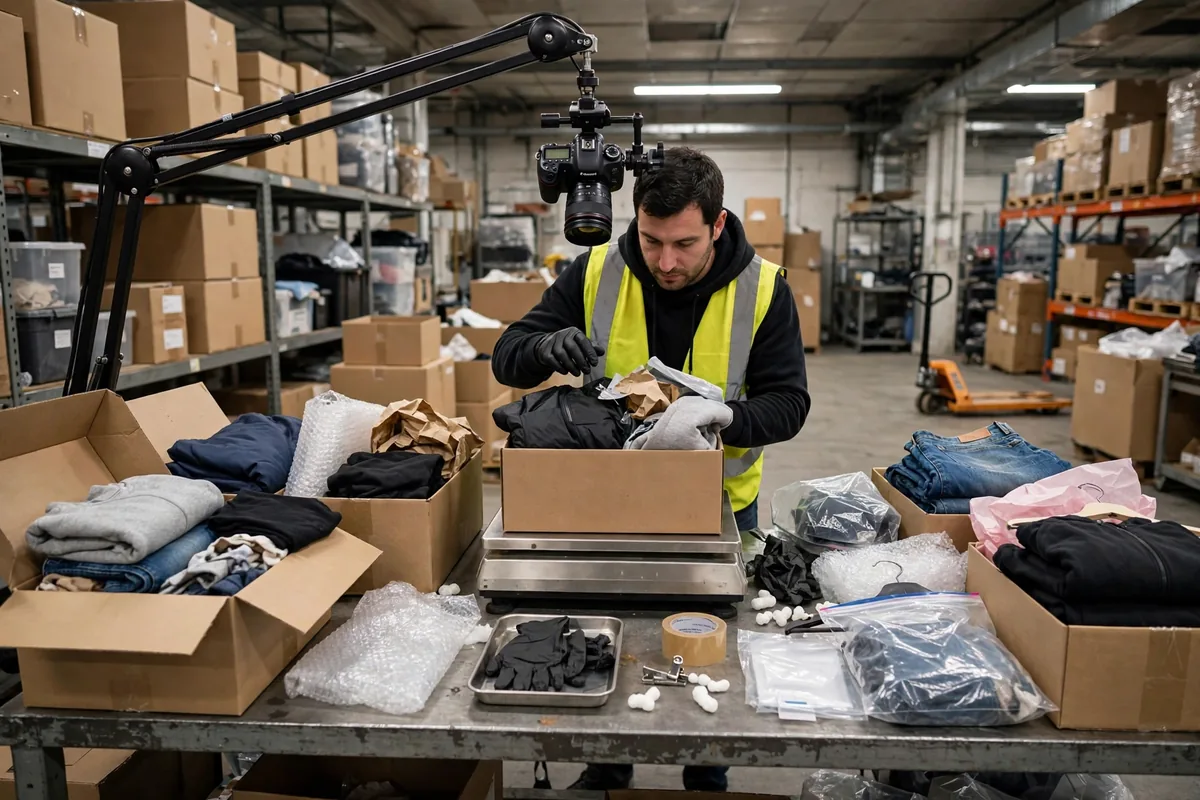
Most fraud at the returns bench falls into three buckets. Wardrobing: the item was used for an event, a photo, or a trip, then packed back with tags carefully hidden. Empty-box and swap returns: the carton comes back at roughly the right weight, but inside sits a substitute, an older model, or filler. Weight mismatch: the returned parcel weighs meaningfully less than the outbound record, and the missing grams are the main unit or its accessories.
Case one: in 2024 I reviewed returns records for an apparel seller where one coat came back looking perfect and weighing almost exactly right. The checker found a fragment of an event wristband in a pocket. No scale catches that. Inspection sequence catches it: exterior first, then accessories, then the detail points where use leaves traces.
Case two: a small-appliance seller nearly refunded an empty-box return because the weight was close to the outbound record. A checker thought the parcel felt wrong, opened it under the documented process, and found filler instead of the machine. That store moved high-value returns to fully documented opening, which later decided its platform disputes. One signal never catches fraud. A combination of cheap signals does.
Screening by tier, not by blanket rule
Blanket screening is the most expensive way to run warehouse returns fraud screening ecommerce operations. Deep-check every return and labor cost swallows the savings. Wave everything through and fraud walks past your bench. Tier the work by order value and risk instead; the thresholds below are an experience framework to adapt to your own value mix, and platform rules should always be checked in their current form.
| Return tier | Checks | Refund |
|---|---|---|
| Low value, repeat customer, clean history | Weigh, visual spot check | Fast, on receipt |
| Mid value, or first return | Weigh, open, check contents list | After contents pass |
| High value, or weight anomaly | Full open check, serial and accessories, documented | After full check passes |
| Repeat anomaly account | Manual review against return history | After review decision |
The logic is cost placement. Deep inspection on a low-value return can cost more in labor than the item is worth. That money is wasted. A shallow check on a high-value return risks a loss that wipes out the margin on dozens of good orders. Tiering is not leniency. It is aiming limited checker hours where the expected loss actually lives.
The false positive is a line item too
Here is the counter-intuitive conclusion: the goal of screening is not to catch every fraudster. The goal is to minimize total loss, and total loss has two sides. Side one is fraud that slips through. Side two is the false positive: delayed refunds, bad reviews, dispute-handling hours, and the repeat purchases that quietly never happen. Those costs scatter across several accounts in your books, which is exactly why teams underestimate them.
I have watched a store tighten its rules hard, cut obvious fraud, and then spend the following quarter paying for it in weaker repeat buying and ratings. I will not invent percentages for someone else's store. Use the method instead: pull your falsely flagged orders, compare their buying over the next ninety days with normally refunded customers, and the gap is your price per false accusation. Without that number, your screening threshold is a guess wearing a uniform.
Build the correction path before you need it. When you find a false positive, refund fast and apologize without making the customer argue twice. Then audit your blocked orders regularly and measure what share were legitimate. If that share climbs, your threshold is too tight, whatever the fraud chart says.
Evidence chains decide platform disputes
In warehouse returns fraud screening ecommerce work, disputes are won with evidence, not with certainty. Saying a customer returned an empty box proves nothing. A chain proves it: outbound weight and packing record, inbound weight on receipt, dated photos or video of the opening, serial number check result, and the checker's ID with a timestamp. With those five elements, a platform dispute is arguable. Missing two or more, the seller usually absorbs the loss.
Evidence has a cost too, and it belongs in the same calculation. Storage, labor, and slower throughput are real money. So tier the evidence as you tier the checks: full documentation for high-value and anomalous returns, weight plus exterior photos for low-value ones. Compare documentation cost against amounts actually recovered in disputes, tier by tier, and you will usually find full evidence pays clearly at the top tier and poorly at the bottom.
Close with three numbers, reviewed monthly: fraud loss per thousand returns, false accusations per thousand returns, and average inspection cost per return. Read them together. Change thresholds only when they move the wrong way together for two straight months. A warehouse that reacts to one number at a time will swing its rules forever, and the money leaks out in the swinging.
Staffing belongs in the same ledger. Deep inspection consumes your scarcest resource, which is not bench space but experienced checkers. A new hire cannot reliably spot wear, swapped accessories, or a resealed box. So route high-value and anomalous returns to experienced staff, let newer checkers run the standard low-tier flow at a fixed sampling rate, and forecast checker hours by tier before peak season, not after returns pile up at the dock.
Training cost is inspection cost too. The hours spent bringing a checker to the point where they can judge a high-value return alone, plus the errors made on the way there, should be amortized into your per-return check cost. When you do that honestly, some mid-value returns stop justifying a full inspection and are better served by weighing plus sampling. Revisit your tier thresholds quarterly against those three core numbers, and keep a written record of why each threshold moved. An adjustment with a record is optimization. An adjustment without one is just expensive guessing.
By Lao Zhou, Logistics Cost Analyst