Let me be honest about how our small warehouse returns grading bench layout happened. It was not a strategy. It was survival. Returns were piling up next to the packing bench, pickers were stepping around the boxes, packers were complaining, and customer service kept asking in the group chat whether a returned item could be resold. Nobody could answer, because opened, unopened, broken, and perfectly fine returns were all fermenting together in one giant carton. It was a mystery box, except every surprise inside was a headache.
We cannot afford the big-company version of this. I have toured a large returns center with a proper line, dedicated stations, scanners everywhere. Beautiful. Also completely useless as a shopping list for us. We run a small warehouse; we cannot burn that kind of money. So we built our bench out of an old table, a few plastic totes, and a desk lamp. It is not pretty. But returns stopped blocking the door, and in a small warehouse, that is what winning looks like.
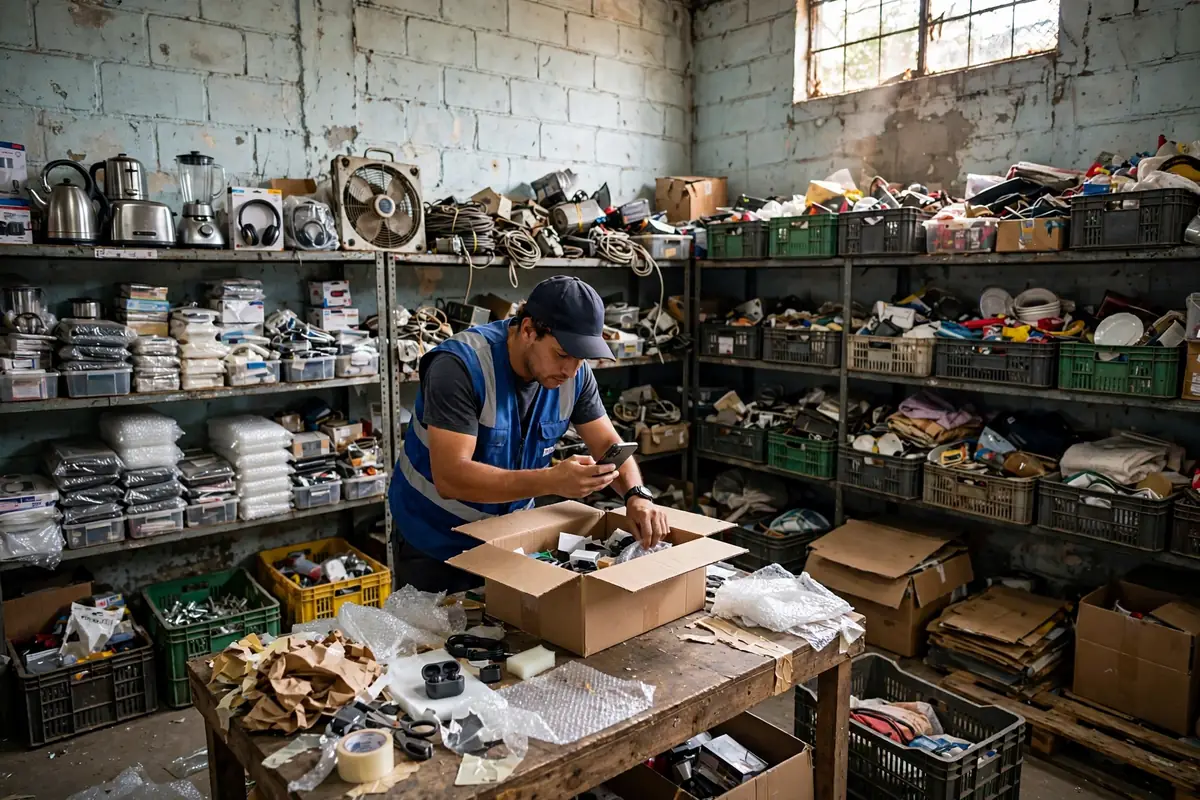
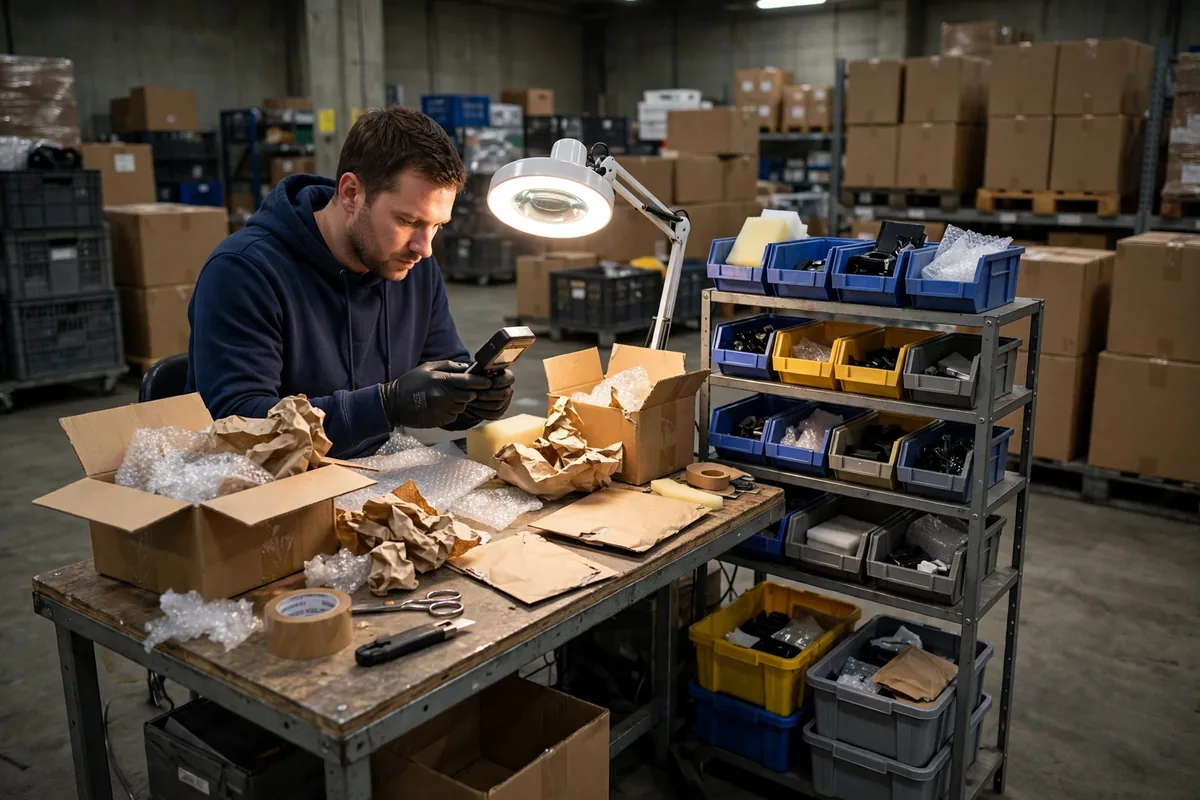
Returns grading zones on one beat-up table
Our predicament was embarrassingly specific. Take this illustrative example, built to look like a warehouse our size: returns arrive daily, two part-timers open them whenever they have a spare minute, and finished items land wherever there is space. When a customer asks what happened to their return, somebody has to dig through three boxes to answer. In another illustrative scene, a returned electronic gadget looked brand new, got tossed straight back into good stock, shipped out again, and came back with an angry complaint — because nobody had ever plugged it in to check whether it worked.
So the table, however small, gets divided into zones. Ours runs left to right, and the rule is painted right onto the surface:
| Bench zone | What happens there | Our low-budget gear |
|---|---|---|
| Unbox | Open, empty, match against the return paperwork | One end of the old table, a box cutter, trash bin within arm's reach |
| Photo | Document the item the moment it is opened | A phone, one desk lamp, a white board as backdrop |
| Test | Power it on, try it, check accessories | A power strip, a small bundle of common charging cables |
| Grade | Call it A, B, C, or scrap | A handwritten grading sheet taped to the wall |
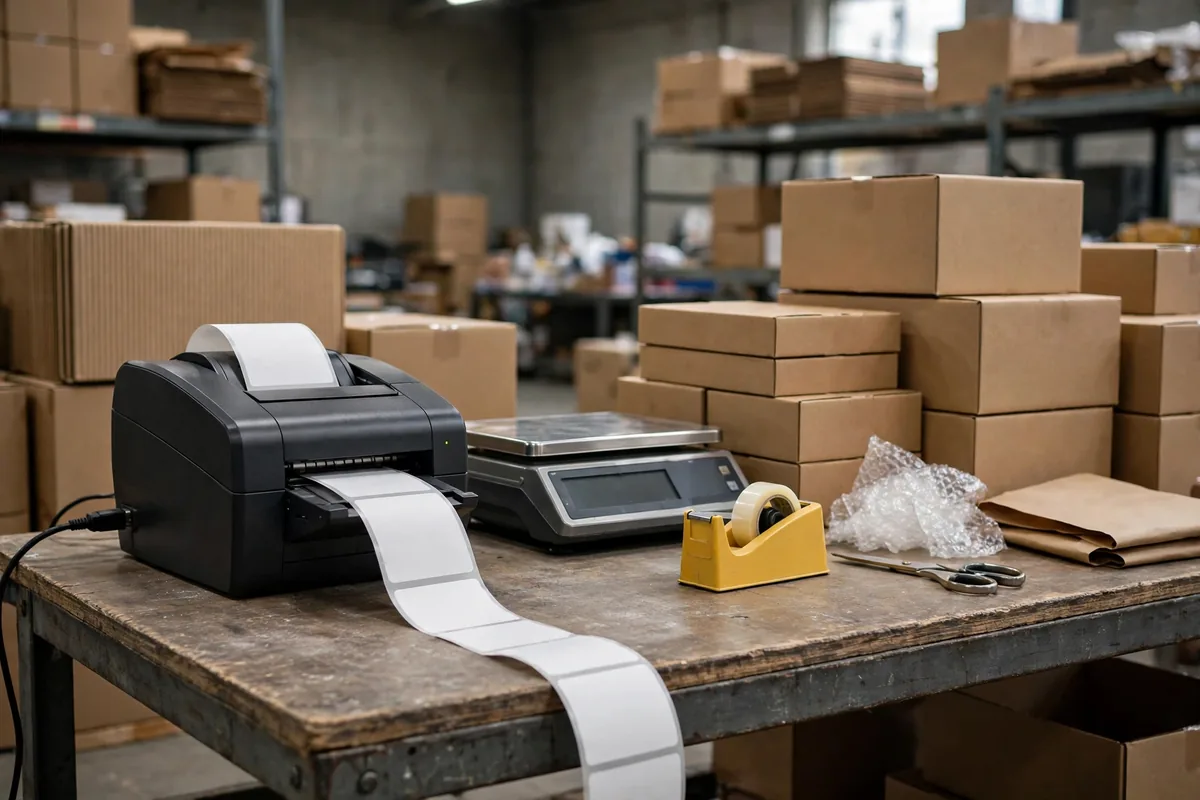
| Repack | Fresh bag, fresh label, into the right tote | Sealer bags, blank labels, a marker |
| Quarantine | Anything disputed gets benched here | One separate tote, lid on |
The whole point of a small warehouse returns grading bench layout is flow in one direction only. An item moves right, never wanders back. Open it, photograph it, test it, grade it, and it drops into its tote. Nothing sleeps on the bench overnight, because an item left overnight will be re-judged from scratch tomorrow, and re-judging is labor you pay for twice.
Lighting sounds trivial until it burns you. Our first corner was dim, scratches disappeared under bad light, and items graded as fine came boomeranging back. One brighter lamp fixed both the photos and the inspections. The photo rule is simple: one wide shot when the item comes out of the box, one close-up of any flaw, saved in a shared folder by order number. When customer service argues a case, those photos end the argument. No photos, no leverage — just two people insisting.
Bench layout is cheap, grading rules are not
The bench can be scrappy. The grading rules cannot be vague. Ours live on that handwritten sheet, argued over more than once before we settled:
Grade A means the product is whole — packaging may be damaged, but the item is new, complete, and resalable after repacking. Grade B means it works, with light use marks or a minor flaw; it goes to a discount shelf with the flaw stated honestly in the listing, never hidden. Grade C means something is wrong but the item still holds value for repair or parts; we batch those and deal with them together instead of one painful piece at a time. Scrap means dead, missing key parts, or anything with a hygiene or safety question. Scrap leaves. Do not get sentimental.
Here is the counter-intuitive part I learned by paying for it: the items a small warehouse should be quickest to throw away are the half-broken ones. A big operation has repair techs and a refurbishment line, so a half-broken item is inventory to them. To us it is rent-eating, time-eating liability. Every undecided item sitting around makes the bench messier and the next decision slower. So grade hard. Truly unsure? It goes in the quarantine tote with a deadline, and when the deadline passes with no answer, it drops a grade automatically. Indecision is what actually clogs a bench.
One more hard rule: nobody walks a return straight back to the stock shelves, no matter how busy the day is. Everything crosses the bench, gets photographed, graded, and labeled as a return before it re-enters inventory. It feels like an extra step. It prevents the far more expensive step of apologizing to a second customer.
We also keep a tiny whiteboard beside the bench with three lines only: how many returns arrived today, how many are fully cleared, and which few are still stuck, and why. One minute at closing to wipe and rewrite it. Whoever opens the next morning knows the state of returns without asking anyone. For a small team, that board replaced a surprising amount of group-chat chaos.
A small warehouse flow that never blocks outbound
Outbound makes money. Returns clean up messes. The mess, however important, does not get to block the money. We learned this the sweaty way when the returns bench borrowed a corner of the packing bench for one busy day, outbound cartons had nowhere to land, pickers took the long way around all afternoon, and we missed the carrier cutoff and paid for it in overtime. Since then the rule is iron: the returns bench lives against a wall, in a corner, and never touches the outbound path. On heavy return days we shift the work, not the furniture — mornings protect outbound, afternoons clear returns.
Here is an illustrative example with invented numbers, just to size the effect for fellow small operators, not anyone's real data. Suppose a warehouse like ours takes back around twenty items a day. Handled the old mixed-up way, each item might eat a dozen or more minutes of digging, guessing, and re-checking, with plenty of rework. With zones fixed and grades written on the wall, suppose that same item takes only a few minutes, one part-timer clears the day's returns in half a shift, and customer service answers questions by opening a photo folder instead of a tote. The saving is not life-changing money. It is something small warehouses value just as much: nobody arguing about returns anymore.
Now the do-not-buy list, paid for with our own tuition. Do not buy a photo studio setup; a phone, a lamp, and a white board do the job. Do not buy automated scanning and grading gear; at our volume, trained eyes are faster. Do not buy fancy storage cabinets; plastic totes with labels are replaceable without tears. And do not copy the big guys by creating a dedicated returns role — a small warehouse survives on people who can do three jobs, and a bench with clear rules lets anyone on the team run returns properly. Spend the little money you have on sturdy totes and a decent bag sealer, things touched every single day.
That is the whole philosophy behind our small warehouse returns grading bench layout: not scale, but order. One table divided into zones, one set of rules on the wall, one path that never blocks outbound. We cannot outspend the big warehouses, so we out-tidy them on the few square feet we have. Small warehouse, small bench — but the rules do not get to be small.
By Xiao Ma, Small Warehouse Owner