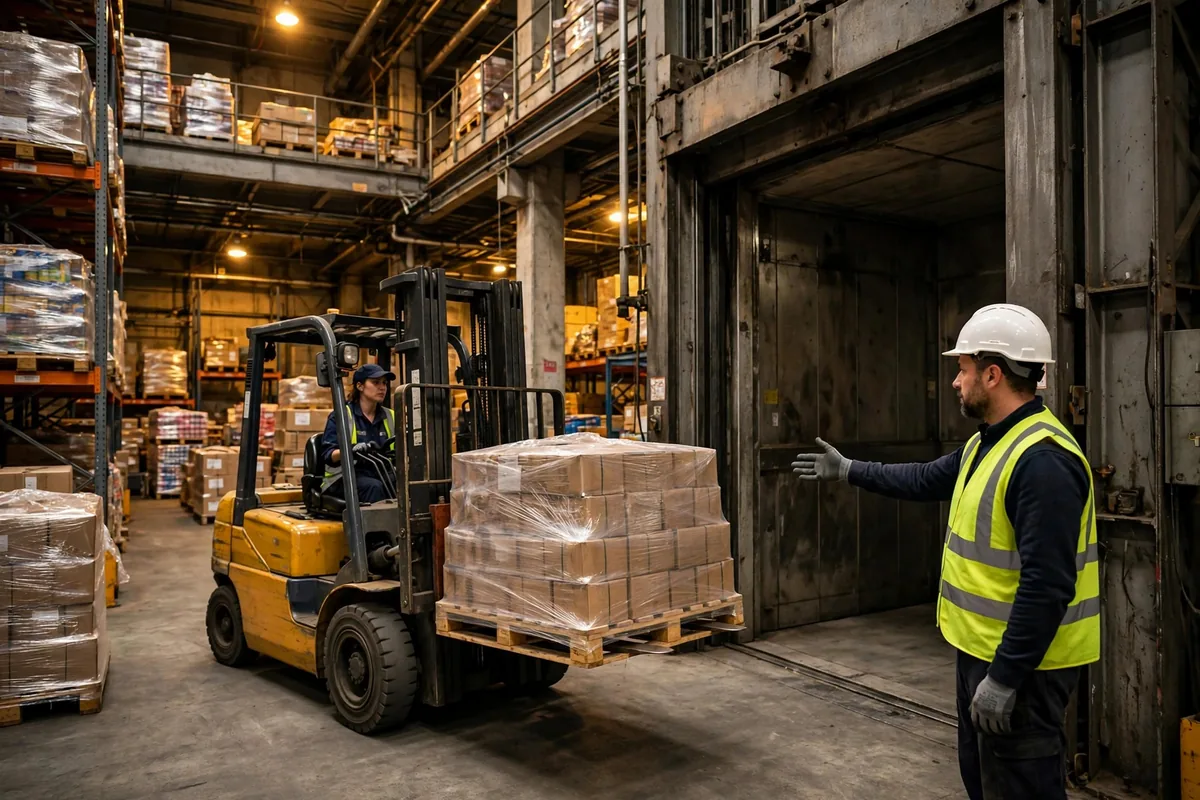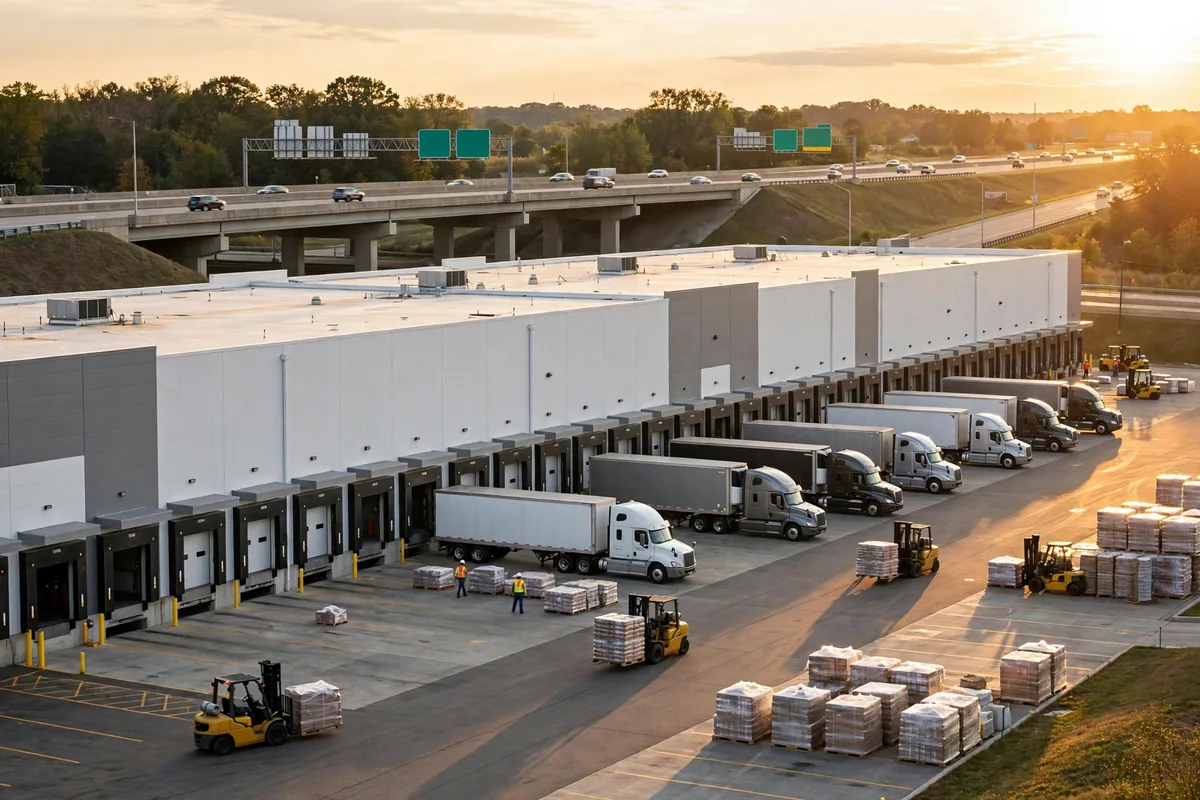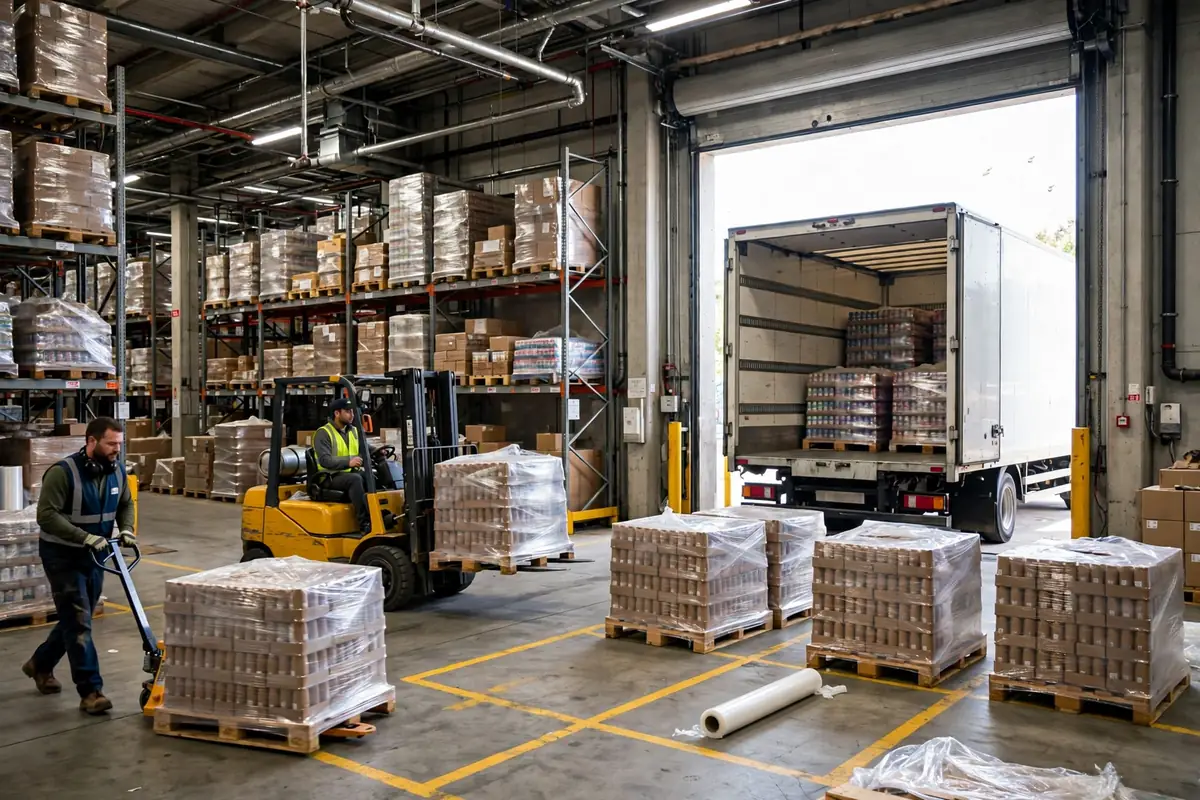
It was 6:15 on a Thursday morning in November, peak season, and I already knew the warehouse receiving staging area layout was failing again. Two trucks were backed into doors, a third was waiting at the gate, and 41 pallets sat in a space built for 60. Marcus had a pallet up on his forks with nowhere to put it down. Behind him, a driver leaned out of his cab and shouted that he had another pickup across town at nine. We spent the next three hours moving freight, making room, and moving it again.
Guys, if you run a dock, you know this morning. Our building is not big: six dock doors, a staging area that holds about 60 pallets, and on a normal day maybe 20 pallets come through. But between 7 and 10 in the morning during peak, 40-plus pallets can land in that same window. The staging area stops being a transfer point and turns into a parking lot. Freight gets in and cannot get out. The aisle chokes first, and then picking starts missing its times too.
To be honest, I used to think the answer was more space. I even asked the boss about taking over the empty patch next to the dock. He asked if I could promise it would never jam again. I could not, because a staging area fills whatever room you give it.
The jam is not too many trucks. It is a staging area with no rules.
After that Thursday I spent a full morning standing on the dock, just watching freight move. What I saw was simple: pallets were not stuck because trucks arrived too fast. They were stuck because no pallet had a place to go or a time limit. A pallet came off the truck, got set on the floor, and everyone walked away from it. The checker was waiting on paperwork. The putaway driver was waiting on the checker. The forklift was waiting on the putaway driver to clear a spot. Every step was waiting on the one before it, and the pile kept growing.
One detail from that morning still sticks with me. A pallet arrived with a crushed corner, small parts spilling out. It should have gone to the exceptions corner, but that corner was already full of freight. So the broken pallet sat in the middle of the main aisle for over two hours, and everybody drove around it. That is the killer in a staging area: the pallet that is only there for a minute. Put a dozen "just for a minute" pallets down in a day and half your aisle is gone.
The arguments with drivers started around then too. A driver waited two hours at the gate and told us our receiving was slow. I was angry right back — six doors, trucks lined up, what did he expect, an extra door? But after I cooled down, I had to admit he was right. He arrived at his appointment time. We had not cleared freight out of the building, so no door was free and his truck could not get in.
Warehouse receiving staging area layout: do the math first
That week I sat down with my shift leads and ran three numbers. The first was the cost of moving freight twice. A pallet should move two times: truck to staging, staging to the rack. During peak we were averaging three and a half moves. That extra move and a half was all "put it here for now." I timed it: one forklift round trip runs about two minutes. On a 120-pallet day, one and a half extra moves means 180 extra trips, six hours. One driver spending six hours of a shift just shuffling pallets back and forth. When I read that number out loud, Marcus went quiet. He already knew.
The second number was the aisle. Our main aisle is 13 feet wide, which sounds generous. But once staging filled up, freight started creeping out to the edges, one pallet on the left, one on the right, and 13 feet became 8. A forklift needs about 10 feet to turn, so drivers started reversing down the aisle instead of turning. Reversing is slow, and it is how pallets get clipped. That peak month we wrote off three pallets damaged along the aisle edge.
The third number was people. The 7-to-10 window is the busiest three hours of the day, but our roster was built on the daily average. At peak we had three people on the dock, trying to unload, check, and put away at the same time. That was when I understood that a warehouse receiving staging area layout is half floor markings and half roster. Paint the best lines in the world, and if you are short-handed at 8 a.m., you still jam.
We tested three ways of dividing the floor and kept score:
| Approach | Floor space | Finding freight | Aisle jams at peak | Our verdict | | By supplier | 12 zones, the most space | Fast, every supplier visible | Bad, one big supplier fills a whole zone | Tried it two weeks, dropped it | | By product type | 8 zones | Decent, but mixed pallets everywhere | Half-bad, big and small freight fight for room | Stopped after three days | | By status: to check, to put away, exceptions | 3 big zones, the least space | A beat slower, you read the paperwork | Rare, freight always has somewhere to go | This is what we run now |
The supplier trial taught me the most. We have 12 main suppliers. A big one drops 20 pallets at once; a small one drops 2. But we had drawn all 12 zones the same size. The small supplier's zone sat empty while the big supplier's zone overflowed into the aisle. The finer you slice the floor, the more likely one slice is empty while the next one bursts. Three zones by status fixed that: when a zone fills up, you can see at a glance which step is stuck.
What our warehouse receiving staging area layout looks like in practice
Today our staging area has three zones and nothing else. The to-check zone is the biggest and sits closest to the doors, so freight comes straight off the truck into it. The to-put-away zone is in the middle; checked freight moves there, and forklifts take it to the racks from there. The exceptions zone is the smallest, tucked against the wall, and it holds six pallets, no more. When it is full, receiving stops until exceptions are cleared. People hated that rule at first. But that small size forces us to deal with damage, shortages, and paperwork mismatches the same day.
Two rules are non-negotiable. First, no freight sleeps in staging. Before the shift ends, the to-check zone must be empty and the to-put-away zone holds ten pallets at most. If it is not clear, we stay until it is. Second, nothing ever sits in the aisle. Whoever put it there moves it, no discussion. Both rules are written on a whiteboard hanging by the dock doors.
The roster changed too. From 7 to 10 in the morning we add two people to the dock, and their only jobs are clearing the floor and checking freight in. The clearing person does not unload and does not check. They just keep freight moving to where it belongs. It looks like extra labor. It is not, once you run the numbers: three peak hours, no blocked aisle, no forklift reversing down the dock, no driver waiting two hours at the gate. Drivers stopped arguing. Marcus stopped staying late to reshuffle pallets.
Here is the part that sounds wrong: leaving part of the staging area empty is worth more than filling it. We keep about 20 percent of the to-check zone empty on purpose. A visitor looks at it and sees waste — room for 60 pallets holding only 48. But that empty fifth is what lets a truck unload, lets a forklift turn, lets freight keep flowing. A warehouse is about storing as much as possible. A staging area is about moving as fast as possible. Treat staging like storage and the bigger you make it, the worse it jams.
So if your dock jams again next week, do not start by asking the boss for more floor. Spend half a morning standing at the dock. Count how many times one pallet gets moved. Look at the "just for a minute" pallets along the aisle and check how long they have actually been there. Once you count it, you will see where the problem is. A warehouse receiving staging area layout comes down to this: freight with somewhere to go, and someone assigned to clear it. Not enough space is usually the wrong diagnosis.
By Chen Feng, Warehouse Operations Manager