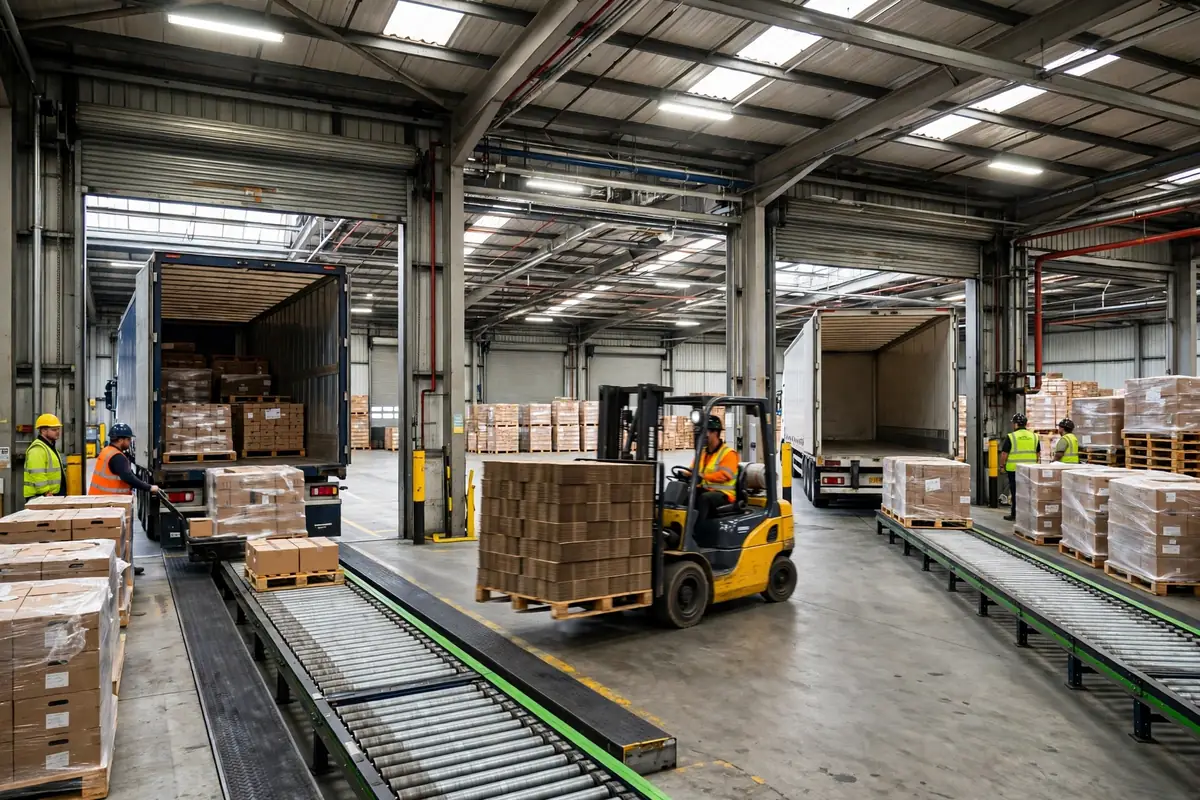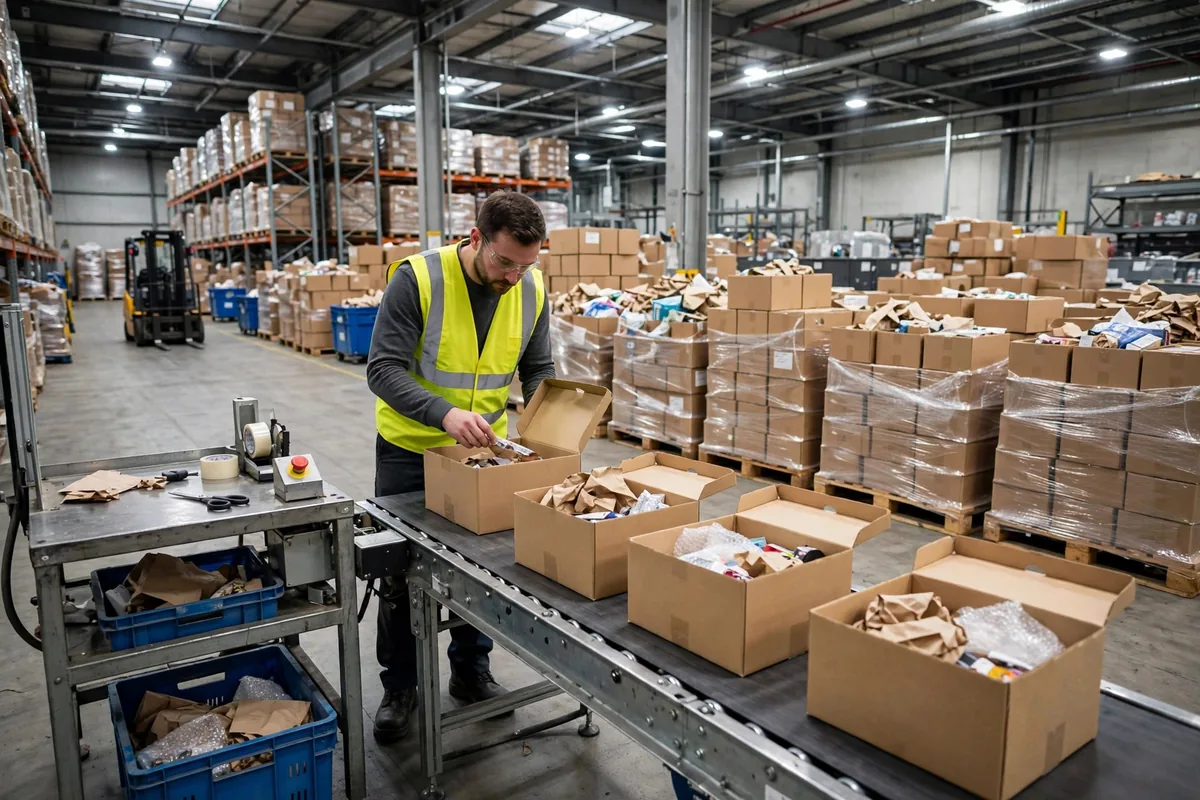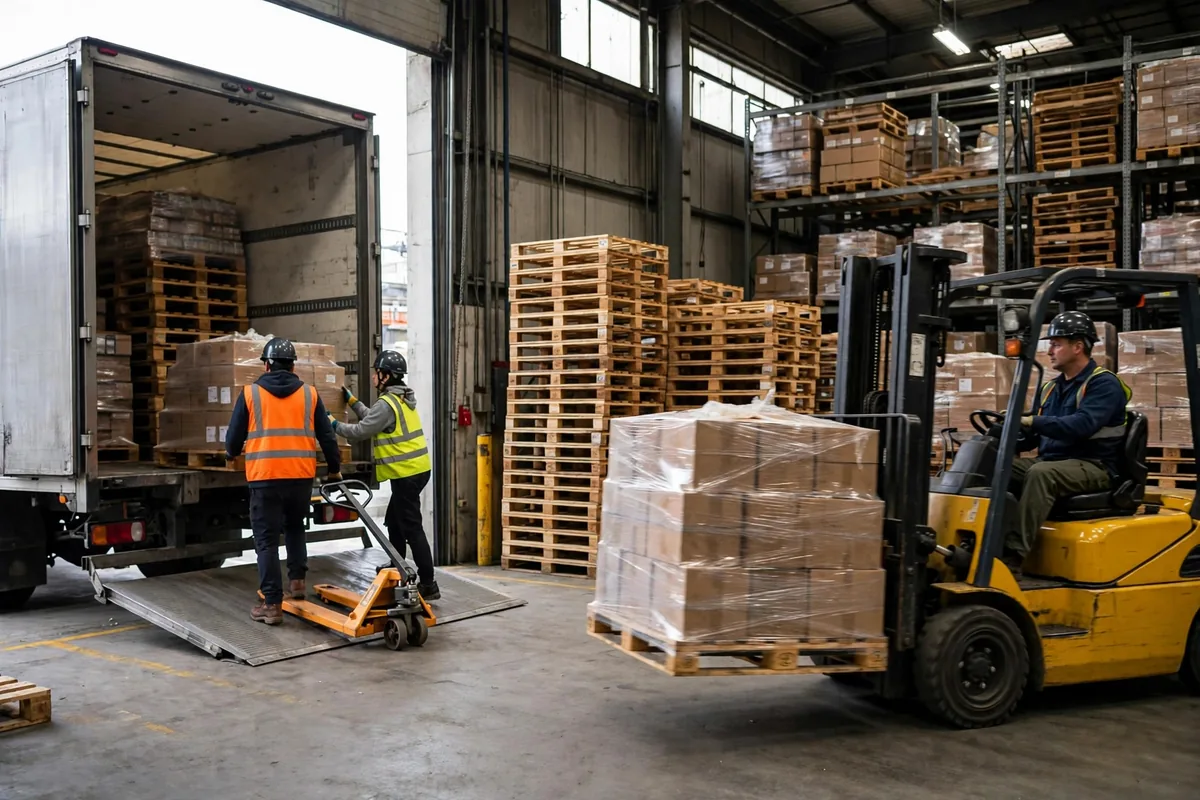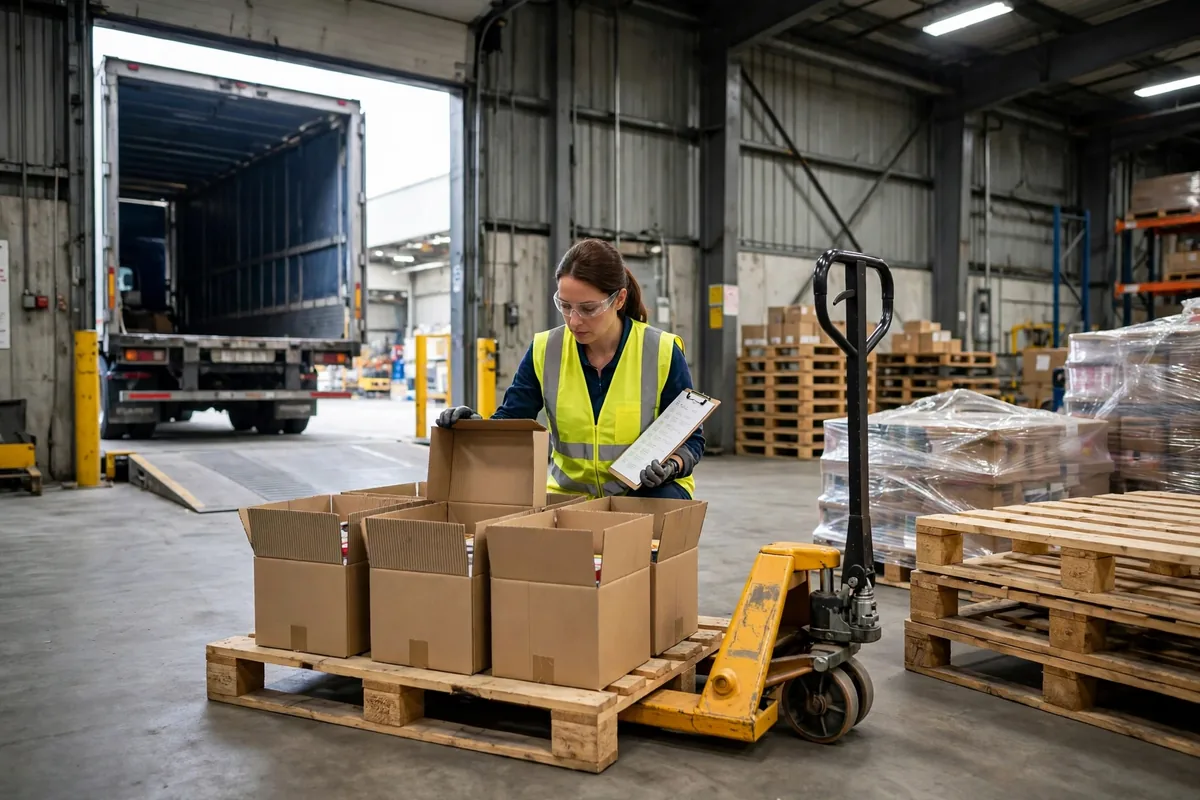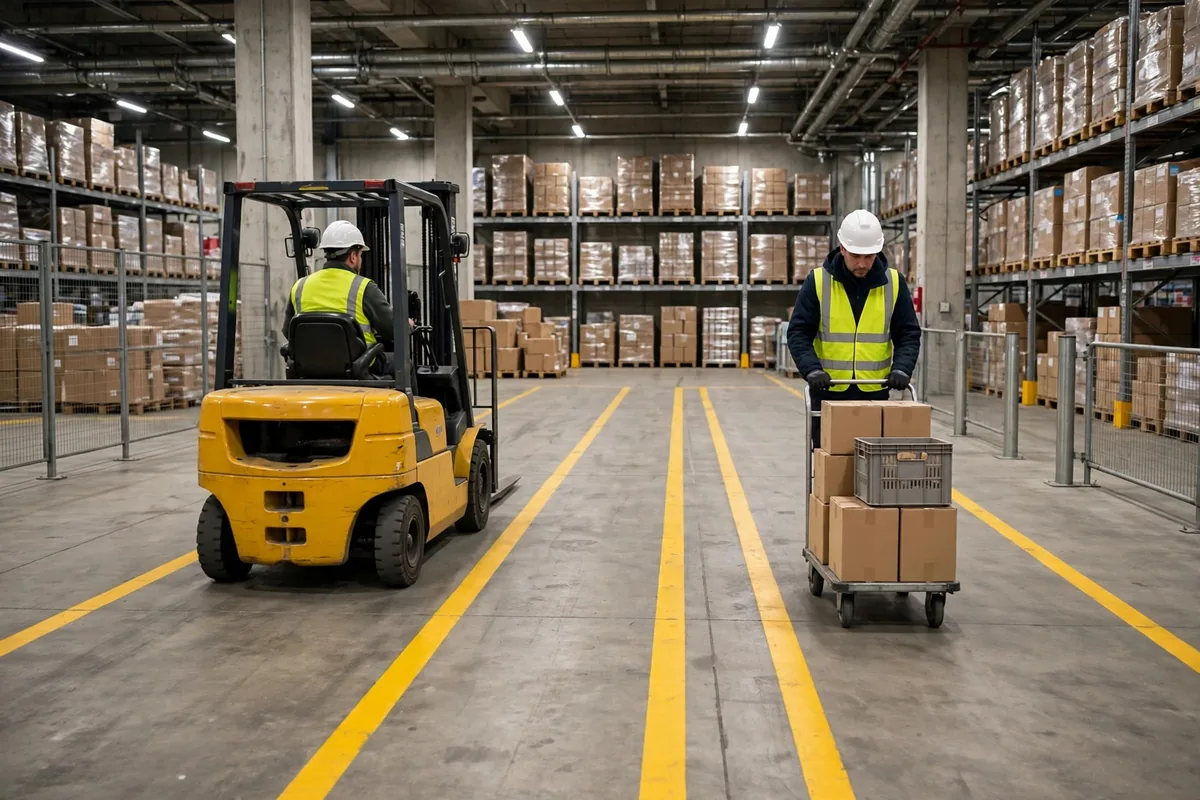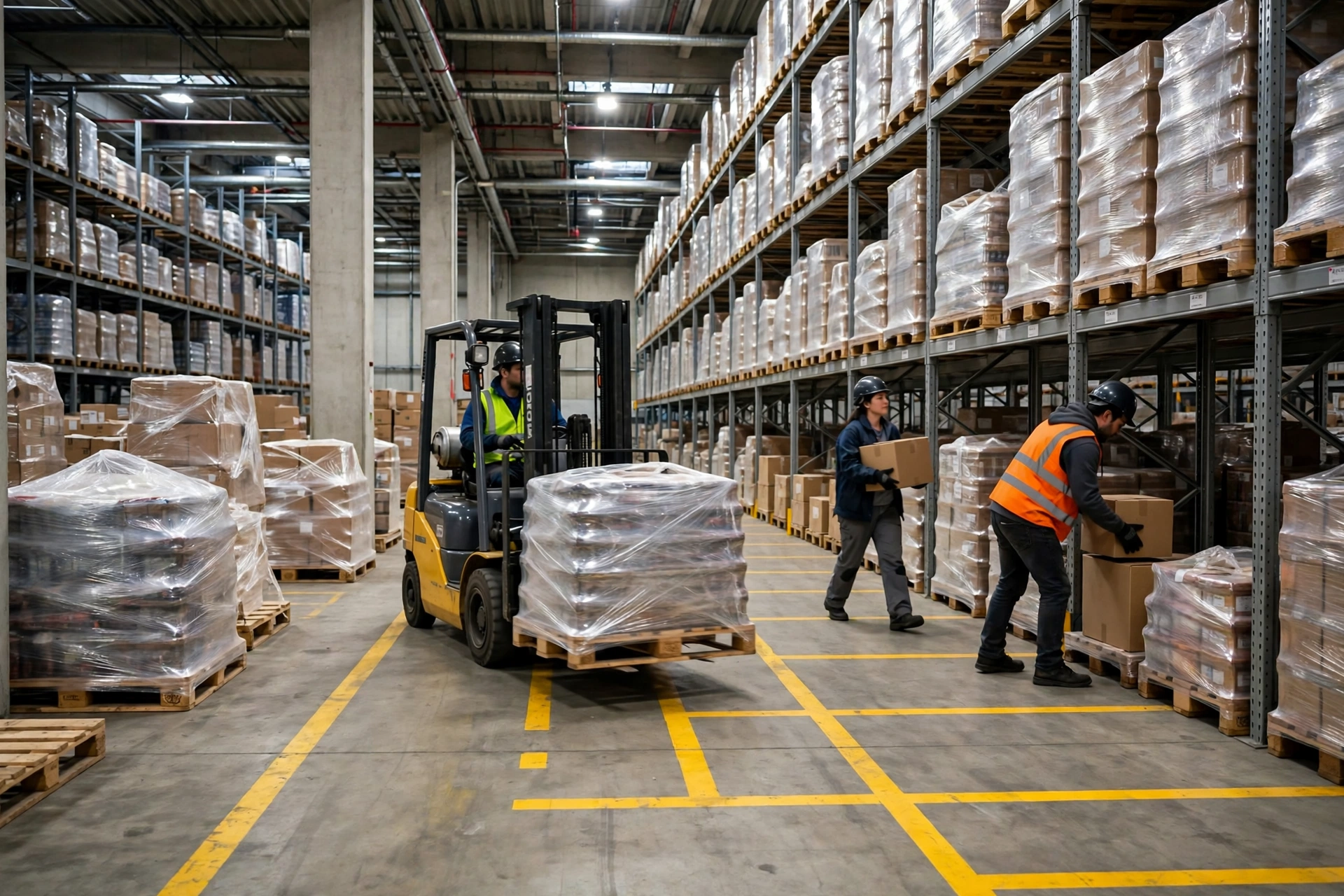
I will say it straight: when receiving and putaway teams are at each other's throats, it is almost never a people problem. It is a layout problem. I have seen too many warehouses fire the supervisor, rewrite the bonus rules, and run another round of team building, only to watch the same fight break out the next Monday. The receiving crew says putaway is too slow. Putaway says receiving dumps pallets everywhere. Both are right, because the flow forces them to fight over the same floor.
Receiving and Putaway Flow: The Conclusion Before the Story
Put the conclusion first, because the rest is just evidence. Receiving and putaway should never share one open staging area with no direction. Receiving needs a lane that only moves forward, and putaway needs a clear pull sequence with no backtracking. When the two teams meet head-on in the same aisle, with forklifts, pallet jacks, and people on foot all fighting for space, blame becomes the workflow. Fix the direction of travel first, then worry about headcount and targets.
This is a trade-off most managers get backwards. They want one big flexible floor because it looks efficient on a drawing. In practice, flexibility without direction means everyone improvises, and improvisation at a dock always costs time. A narrower, one-way flow looks less flexible, but it removes the daily negotiation over who moves first. You pay for the discipline once in the layout, and you stop paying for it every shift in arguments and double handling. One detail that gets overlooked is the shift handover. If the day shift leaves staging without a clear lane, the night shift starts its work by moving other people's pallets before it can do its own job, and resentment starts right there. I have seen a warehouse where the day crew, trying to save time, stacked unchecked pallets by the aisle entrance three days running. The night lead spent the first half hour of every shift clearing a path, and by the third day the two crews were arguing in the handover log. Flow problems do not only happen at peak hours. The half hour of handover is often when they explode.
Receiving and Putaway Teams: The Pit I Walked Into in Ohio
I walked into this pit myself in Ohio, in a mid-sized distribution warehouse handling consumer goods. The dock had four doors feeding one wide staging zone, and putaway started from the same zone toward the racks. On a busy Tuesday morning, three trucks arrived within an hour. Receiving checked goods fast and pushed pallets into the nearest empty square. Putaway drivers arrived to find their lanes blocked by pallets that had not been checked yet, so they circled, waited, and finally started moving other people's pallets just to reach their own. By noon, the floor looked like a parking lot after a storm, and the two team leads were shouting across the pallets.
The same pattern repeated in a California warehouse I advised later, only with a different trigger. There, putaway was measured on speed, so drivers grabbed the easiest pallets first and left heavy or awkward ones behind. Receiving kept feeding the front, and the awkward pallets piled up until they blocked the main aisle. Nobody was lazy. The layout rewarded grabbing the easy work and punished finishing the hard work, because there was no sequenced pull list and no separate lane for bulky goods. When the flow has no order, people invent their own order, and the two orders collide. There is also a systems trap that looks like a staffing problem. Receiving has finished its checks, but the system has not assigned locations yet, so putaway drivers wait, or they place goods on the nearest empty rack from experience. By the time the assigned location arrives, the goods are already in the wrong place and have to move again. I have seen too many warehouses blame headcount for that second move, when the real cause was information arriving slower than freight. When goods arrive and information does not, even a wide aisle will not help, because drivers will simply go wherever looks free.
Receiving and Putaway Flow: Three Fixes That Actually Hold
The fix has three parts, and the order matters. First, split the dock into a receiving lane and a putaway lane, even if it means painting lines and moving a few racks. Receiving pallets move in one direction only, from door to check to staging, and never turn back through incoming traffic. Putaway pulls from staging in the order the system gives, not in the order drivers prefer. A simple rule helps: no pallet leaves staging until its check is complete and its location is assigned. That one rule alone cut re-handling in the Ohio warehouse by a visible margin within two weeks.
Second, give the two teams different clocks. Receiving should be measured on accurate, complete checks, not on how fast pallets leave their hands. Putaway should be measured on completed putaways in sequence, not on cherry-picked easy pallets. When both teams chase speed on the same floor, speed wins and accuracy loses. When each team owns a different, honest metric, the fight loses its fuel. A short daily huddle at the staging line, five minutes, with yesterday's blocked lanes named out loud, does more than a monthly report.
Third, build a pressure valve for peaks. Every warehouse has a surge day, and the layout must say in advance where overflow goes. In practice, that means one marked overflow bay, away from the main aisle, with a clear rule for when it opens and who clears it first. Without that bay, overflow takes the aisle. With it, a surge becomes a planned detour instead of a turf war. If you are about to change a layout, do not start with demolition. Paint the two lanes, add temporary barriers, and run the new flow for one week, logging every blocked point each day. Any point blocked three times or more is where hardware has to move. A point blocked once can usually be fixed with paint alone. The worst way to change flow is to change everything at once, so old habits are broken and the new route still feels awkward, and both teams end up angry. Paint first, move racks second, change system sequence last, and the arguments fade on their own.
| Decision | Old habit | New flow rule |
|---|---|---|
| Staging | One shared open area | Receiving lane and putaway lane, one-way only |
| Pull order | Drivers pick the easy pallets | System sequence, no skipping without a reason code |
| Peak overflow | Pile it in the aisle | Marked overflow bay, cleared first next shift |
So here is my advice, plain and short: if your receiving and putaway teams are fighting again this week, do not start with a lecture. Walk the floor at peak hour and watch where their paths cross. Wherever they cross, that is your real problem, and painting a new direction there will do more than any new policy on paper. By Lao Mi, Supply Chain Veteran (20 yrs)