Ask warehouse managers what hurts most in peak season and many will point to the same problem, the warehouse receiving dock door count: the receiving area is never big enough. Trucks queue outside, pallets pile up on the dock, the team inside calls for more people, and the team outside calls for more doors. The usual response is to add doors. Yet in case after case, the queue survives the new doors, because the underlying arithmetic was never done. The warehouse receiving dock door count is not a question about square footage. It is a question about time: how many trucks arrive in the busiest hour, and how long each one holds a door.
The Morning Queue Is Not an Accident
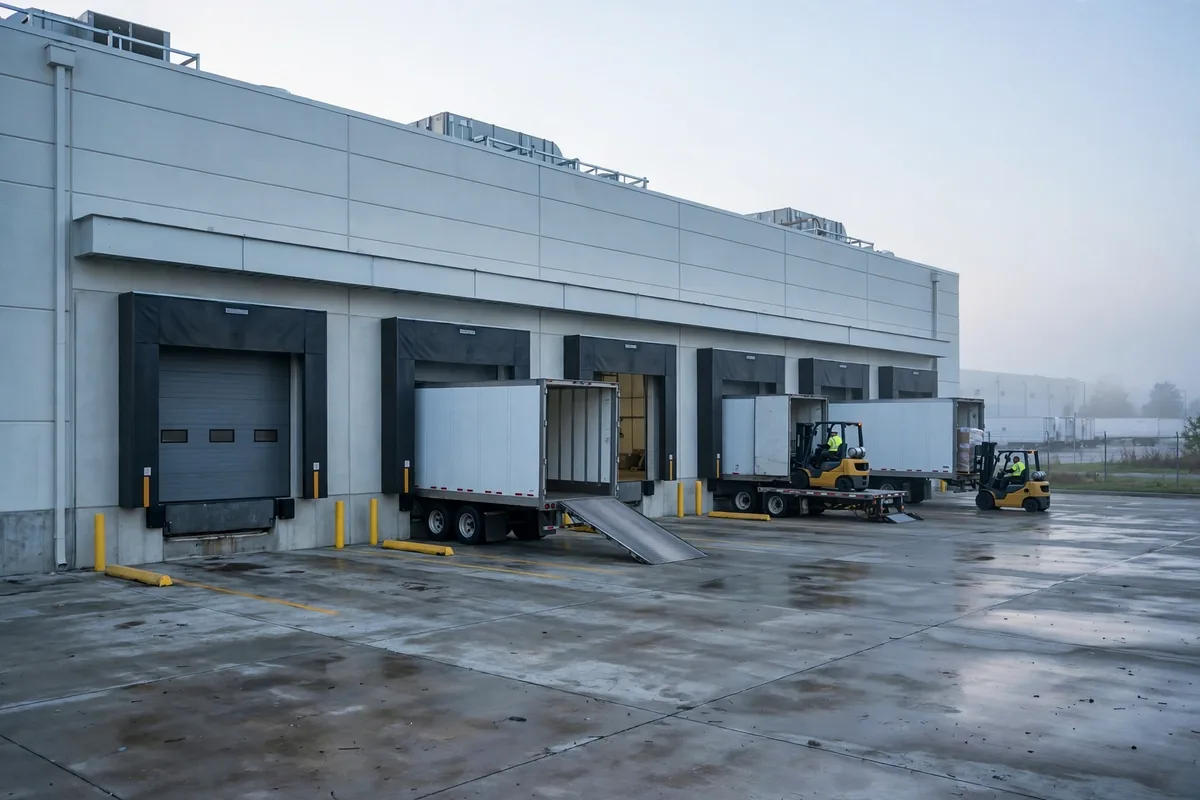
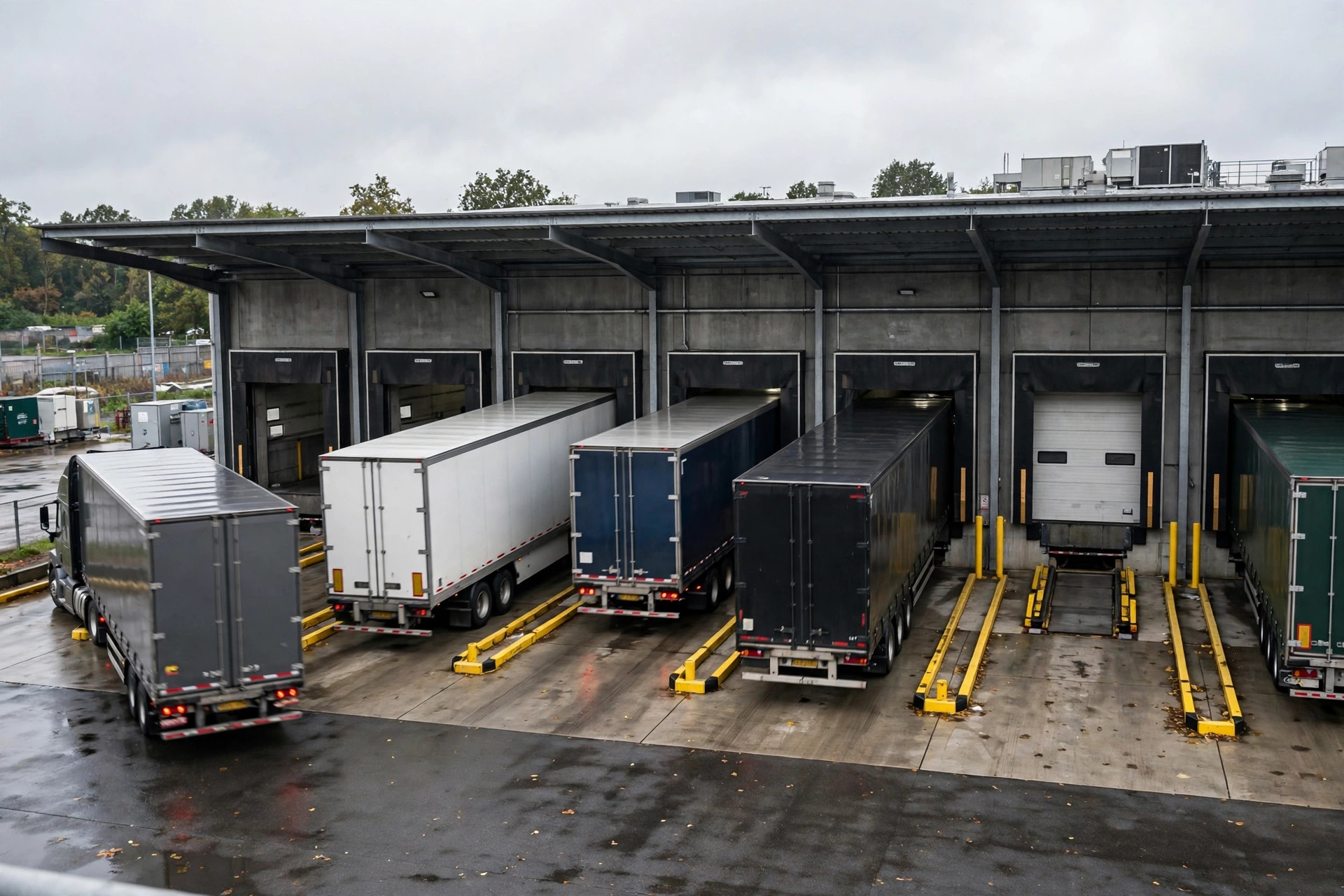
Consider a consumer goods warehouse I followed through a promotional peak. On a normal day it received roughly twenty trucks, spread across the day, and six dock doors felt comfortable. During the promotion week, arrivals more than doubled, and most of them landed between seven and ten in the morning. Three hours absorbed nearly a full day's volume, with the same six doors. The queue stretched from the dock to the gate. Management wanted more doors, but adding doors meant structural work and changes to fire egress, which could not happen in a week. The warehouse survived by changing appointment slots, pushing arrivals into the afternoon and early evening until the morning spike flattened. The doors had not changed. The arrival pattern had, and that was enough.
A second warehouse shows the opposite failure. It had plenty of doors, more than a dozen, and still queued. The constraint had moved behind the doors: there were not enough unloaders and forklifts, and the staging area filled up faster than outbound putaway could clear it. Trucks entered, but pallets had nowhere to go, so the next truck could not enter either. Adding doors had only relocated the bottleneck from the gate to the dock interior. The lesson is straightforward. Doors are one link in receiving capacity. If labor, equipment, or putaway speed lags behind, extra doors sit idle while the queue remains.
Warehouse Receiving Dock Door Count Is About Time, Not Area
The formula for warehouse receiving dock door count is simple. The difficulty lies in getting honest inputs. Start with peak-hour arrivals, meaning the number of trucks arriving in the busiest hour of the busiest week, not the annual average. Multiply that by the average door occupancy per truck, measured from gate-in to gate-out, not merely the unloading minutes. Then divide by a realistic utilization rate. Utilization should never be set at one hundred percent. Time is lost to shift changes, equipment faults, and document exceptions, so planning at seventy to eighty percent is far more defensible.
A worked example shows how the numbers behave. The figures below are illustrative only, chosen to demonstrate the method rather than to describe any particular site. Suppose a warehouse faces eight truck arrivals in its peak hour, and each truck occupies a door for an average of one and a half hours from entry to departure. Simultaneous door demand is eight times one and a half, or twelve doors. Dividing by eighty percent utilization gives fifteen doors. That is the peak requirement. A warehouse with only ten doors in this scenario faces a structural shortfall of five doors, and peak-season queues are close to inevitable. A warehouse with twenty doors carries five doors of idle capacity, paying rent and maintenance on doors that rarely earn their keep.
| Input | How to measure it | What goes wrong if it is wrong |
|---|---|---|
| Peak-hour arrivals | Busiest hour of the busiest week | Using the annual average guarantees peak queues |
| Door occupancy per truck | Full gate-in to gate-out time, measured | Counting unloading alone understates demand |
| Utilization rate | Seventy to eighty percent, allowing for disruption | Planning at full utilization leaves no room for exceptions |
According to industry practice, each of these inputs deserves at least a week of measurement before it is trusted. Many miscalculations trace back not to the formula but to the inputs: arrival counts taken from the off-season, occupancy timed only during unloading, and utilization assumed at full capacity. Each input biased slightly in the optimistic direction compounds into a door count that can be off by nearly half.
After the Dock Door Count, Do Not Rush to Build
A shortfall on paper does not automatically justify construction. Three questions should come first. Can arrivals be spread out? Shifting appointment slots by even an hour or two trims the peak and lowers door demand without touching the building. Can door occupancy be shortened? Advance shipping notices sent before arrival, fully staffed unload teams, enough forklifts, and a separate lane for document exceptions can cut occupancy meaningfully. A fifteen-minute reduction per truck, multiplied across a peak morning, can remove one or two doors from the requirement. Does capacity behind the doors keep up? Putaway speed, staging space, and staffing on the shift all need to match door capacity, or the new doors will only move the queue indoors.
This leads to the counterintuitive finding at the heart of dock planning: more doors do not necessarily mean faster receiving. As door counts rise, dock scheduling grows more complex, forklift traffic crosses more often, and staging areas mix batches from different trucks, creating sorting work later. The fastest receiving operations I have observed are rarely the ones with the most doors. They are the ones with just enough doors, appointments spread sensibly, and short, predictable truck turnaround times. Door count is an output of the system, not a target in itself.
The practical sequence, then, runs in order: measure first, calculate second, spread arrivals and shorten occupancy third, and build only last. Construction costs, fire regulations, and building approvals vary by jurisdiction, so current official requirements should be checked before any structural change, rather than relying on a contractor's estimate alone. A correctly calculated door count shortens the morning queue and saves capital. An inflated one buys idle concrete and steel. The open question for any warehouse leader is a simple one: are your peak arrivals and truck turnaround times measured, or merely estimated?
By Dr. Chen, Supply Chain Researcher