We small warehouses cannot afford that kind of money — I said that out loud in the fall of 2024, standing in front of a rack upright a forklift had folded like a banana — the warehouse rack safety column protector guardrail lesson that cost me nearly $12,000. Night shift, a new driver reversing without checking his mirror, forks straight into a column on the second row. Three levels of beams above it all bent out of shape. When the repair quote came in, my knees went weak: replace the upright, replace the beams, shut down for two days, bring in an inspector — close to $12,000 all in. Our little 30,000-square-foot warehouse clears about that much profit in a month.
The inspector's next words were scarier. If that bent upright had gone unnoticed for two more days, two tons of product on the level above could have come down on someone. That is not a money problem anymore. That is the day I learned rack protection is invisible until it is not — and when it shows up, it shows up big.
One bent upright — how big can the rack safety bill get?
Let me break down what that one hit cost us. The upright itself was a few hundred dollars. But you never just replace one upright. The beams above it had taken the load and warped, so they had to go too. The two uprights next to it needed inspecting. The whole row shut down while we waited for parts, for labor, for the inspection — two days. And those two days landed right when a big customer needed a shipment out, so I rented overflow space from the warehouse next door. Rent plus extra handling: another $1,500 gone.
Then there is the bill nobody warns you about: insurance. When our warehouse policy renewed, the insurer heard about a rack impact and raised our premium 20%. The agent was blunt — one more incident and they might decline to renew. A small warehouse runs on thin margins. A premium hike like that is two days of work every month, for nothing.
So do not tell me column protectors are expensive. A column protector costs a few hundred dollars. One hit pays for a whole warehouse full of them. Looking back, the fact that we ran until 2024 with zero protectors installed was not good management. It was dumb luck.
Column protectors and guardrails — where do they actually go?
After the accident I re-equipped the whole warehouse, and I spent the money in a very specific order. Here is the short version: a small warehouse should spend on the spots that get hit most, not spread the budget evenly and hope.
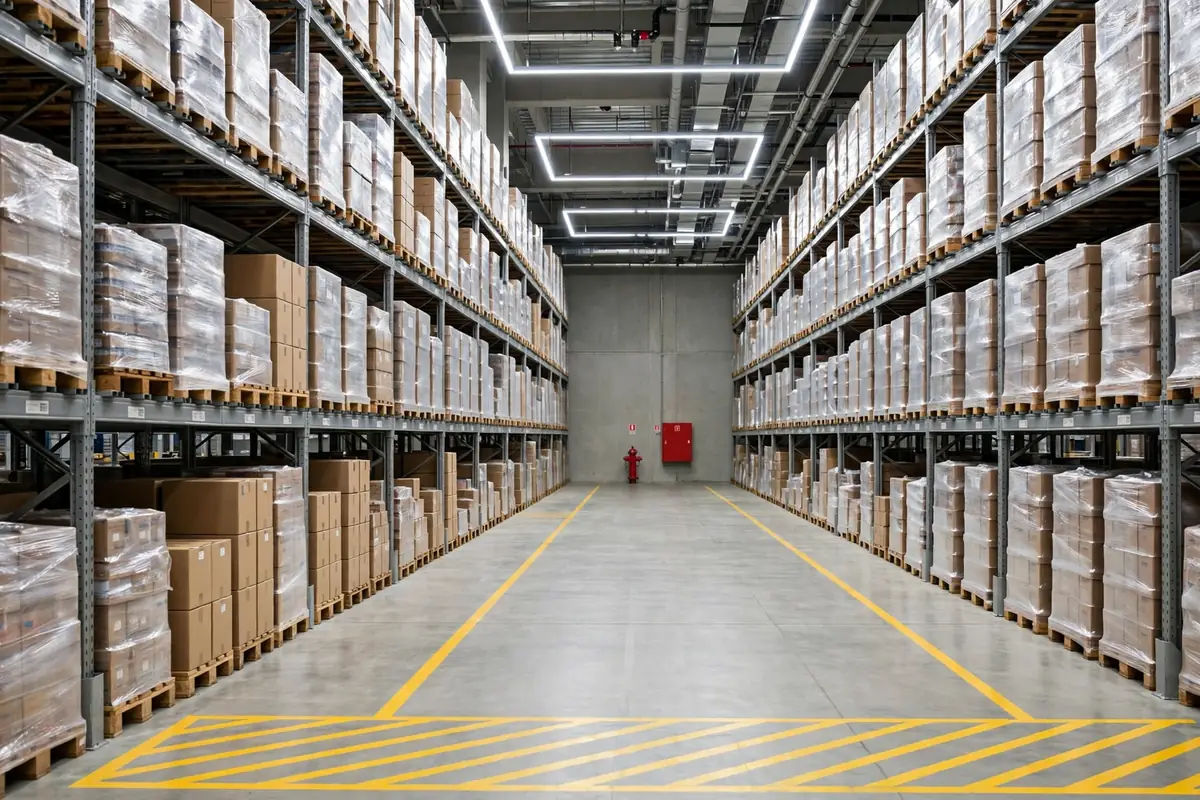
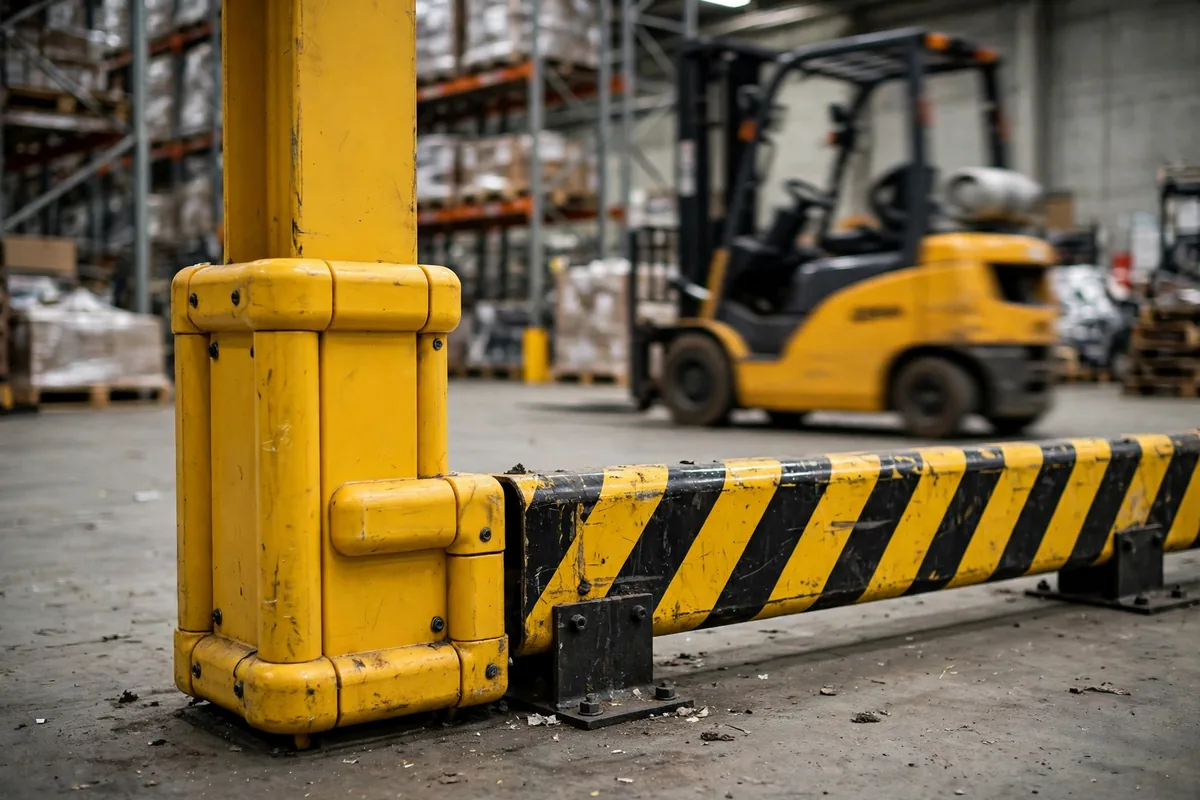
First priority: the uprights at the ends of the aisles. Forklifts turn and reverse at aisle ends, and eight times out of ten that is where the hit happens. We have six aisles, twelve end uprights, and every one of them now has a heavy-duty column protector with a guardrail around it. This was the most expensive tier and the most worth it — when an end upright goes, the whole row takes the load.
Second: the uprights along the main travel aisles. A forklift passes them hundreds of times a day. With protectors on, a light scrape damages the protector, not the upright. Swap a bent protector for a few hundred dollars; an upright cannot take that kind of abuse.
Third: guardrails at rack ends and pedestrian walkways. Plenty of people think these are decoration. I thought so too, until a packer pushing a hand cart around a rack end nearly walked into a reversing forklift. The guardrail did not stop a truck that day. It stopped a person from being hit by one. Put together, this is the whole warehouse rack safety column protector guardrail playbook for a small building: protectors take the hits, guardrails keep people and machines apart.
| Location | What to install | Rough cost | What one hit costs without it |
|---|---|---|---|
| Aisle-end uprights | Heavy-duty column protector plus guardrail | $200–$400 per spot | A full row repair, $10,000 and up |
| Main-aisle uprights | Standard column protector | A few hundred dollars each | One upright plus beam replacement |
| Pedestrian walkways | Guardrail | A few hundred dollars per section | A struck worker — no price covers that |
Those are our real costs, and prices vary by region, but the order never changes: aisle ends first, main aisles second, pedestrian protection last but never skipped.
Guardrails first: small warehouse money goes where it hurts most
Time for some anti-big-company talk. The big operators' safety manuals call for the heaviest-duty configuration across the entire warehouse, budgets starting in the tens of thousands. We cannot copy that, and we do not need to. The standard for warehouse rack safety column protector guardrail setup is not "buy the most expensive." It is "protect the most dangerous spots first."
We did it in three rounds. Round one: aisle ends only, under $3,000, plugging the worst risk first. Round two: main-aisle protectors, done before peak season. Round three: pedestrian guardrails and quarterly rack inspections — an inspection costs a few hundred dollars a visit, and I sleep better for it. Staggering the work meant cash flow never hurt, and after every round I could see the result immediately, which makes it a lot easier for the boss — me — to keep paying.
Here is a cheap trick that is not actually cheap: do not just look at the price of the protector, look at the installation. A protector that is not bolted down properly flies off on the first hit, which is money thrown away. Our first batch was installed by a cut-rate crew, the anchor bolts were not set right, and a forklift nudged one crooked with a light tap. We paid a professional crew to reinstall, spent a bit more on labor, and they have not moved since. Saving money means saving it in the right place. Installation is not the place to cut corners.
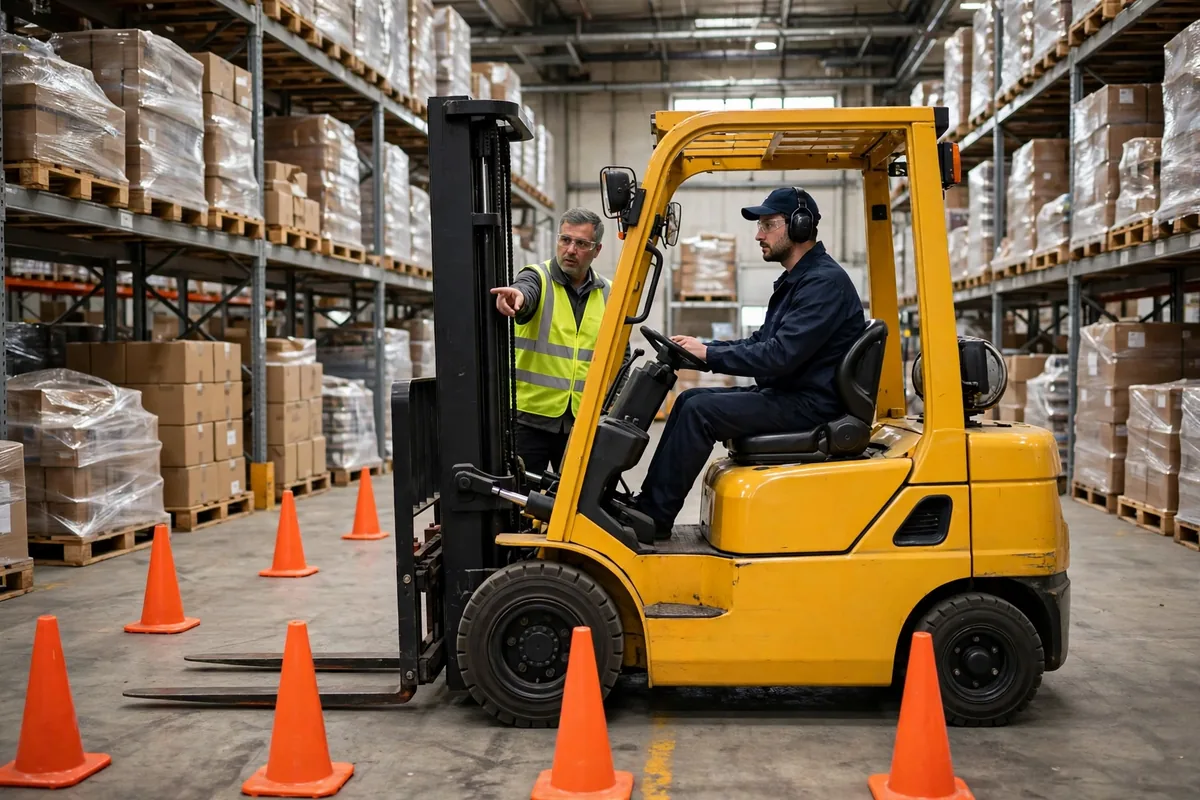
And one more habit: protectors and guardrails go on the daily walkaround checklist. Our forklift drivers do a lap every morning before start-up — a bent protector, a loose bolt, a cracked rail gets reported the same day, and anything fixable in half an hour never waits until next week. Small problems left alone are how small warehouses die. Rack safety rewards consistency and punishes delay. Pay a little now, or pay a lot later.
The warehouse next door is the cautionary tale. The owner there ran a 50,000-square-foot building with racks eight years old and not a single protector. Last peak season a forklift hit an upright, a beam came down, and two pallets of product worth $4,000 were destroyed. Worse, the customer heard about the rack incident and moved their volume elsewhere the following year. He told me later that one hit cost him enough to fit protectors across his whole warehouse three times over. Now he tells everyone: a protector is not a cost. It is an insurance premium.
On inspections, one more thing. Plenty of small-warehouse owners think a rack standing still cannot go bad. Wrong. Forklifts brush uprights every day, and steel bends a little at a time in ways your eye cannot see. We now have an inspector in every quarter with instruments to measure upright plumb, a few hundred dollars a visit. I keep the reports on file, and they even help at insurance renewal — paperwork that says your racks are checked is worth real money at the negotiating table. Rack safety is never one-and-done. Fitting the hardware is the start; checking it is what keeps it working.
One honest note on compliance: under US workplace safety rules, the employer is responsible for keeping racking and the work environment safe. Specific penalty amounts and requirements change, so check the official OSHA website for the latest — I am not going to quote numbers I cannot stand behind. Small warehouses cannot dodge this either. A big company has a legal department when something goes wrong. A small warehouse has one bad incident between it and closing down. Column protectors, guardrails, regular inspections — do not put them off. This week, go count how many your warehouse is still missing.
Small warehouses have their own way of surviving. But safety has no small-warehouse version and big-warehouse version. Every piece of it matters, and none of it can be skipped. The money we spent on protectors and guardrails buys the one thing a small operator needs most: a quiet night's sleep. Because when the phone rings at 2 a.m., you want it to be a customer, not a collapsed rack. And that is a call a small warehouse truly cannot afford.
By Xiao Ma, Small Warehouse Owner