Tuesday morning, 6:40. I had just walked through the warehouse gate when I saw a new temp climb onto a reach truck. The key was in the ignition. He probably figured that knowing how to drive a car meant knowing how to drive a forklift, and he was reaching for the switch when I called out to him. He looked confused. Honestly, I see this scene a few times every peak season. Forklift operator certification is not about a piece of paper. It is about who is allowed on the truck and who is not. Let me lay out the numbers plainly, so nobody has to run this on gut feeling.
Who Needs Forklift Operator Certification Before Driving, No Exceptions
The rule comes from the US Occupational Safety and Health Administration, standard 29 CFR 1910.178(l). It says, in plain terms, that every person who operates a powered industrial truck at work must complete training, pass an evaluation, and be certified by the employer before driving unsupervised. Note who issues the certification: the employer. OSHA itself does not issue forklift licences, and it does not approve training providers. The duty sits with the employer.
Who is covered? Everyone who drives a powered truck, with no casual-use exception. Full-time staff, yes. Temps, yes. Seasonal workers from a staffing agency, yes. A supervisor who jumps on a truck to cover a gap, yes. How often they drive does not matter; one trip still counts. A driver with ten years of forklift time at another warehouse still goes through our training and evaluation, because our rack heights, aisle widths, and truck types are different from the last place. Knowing how to drive a car is not knowing how to drive a forklift, and knowing how to drive a forklift is not knowing how to drive this forklift.
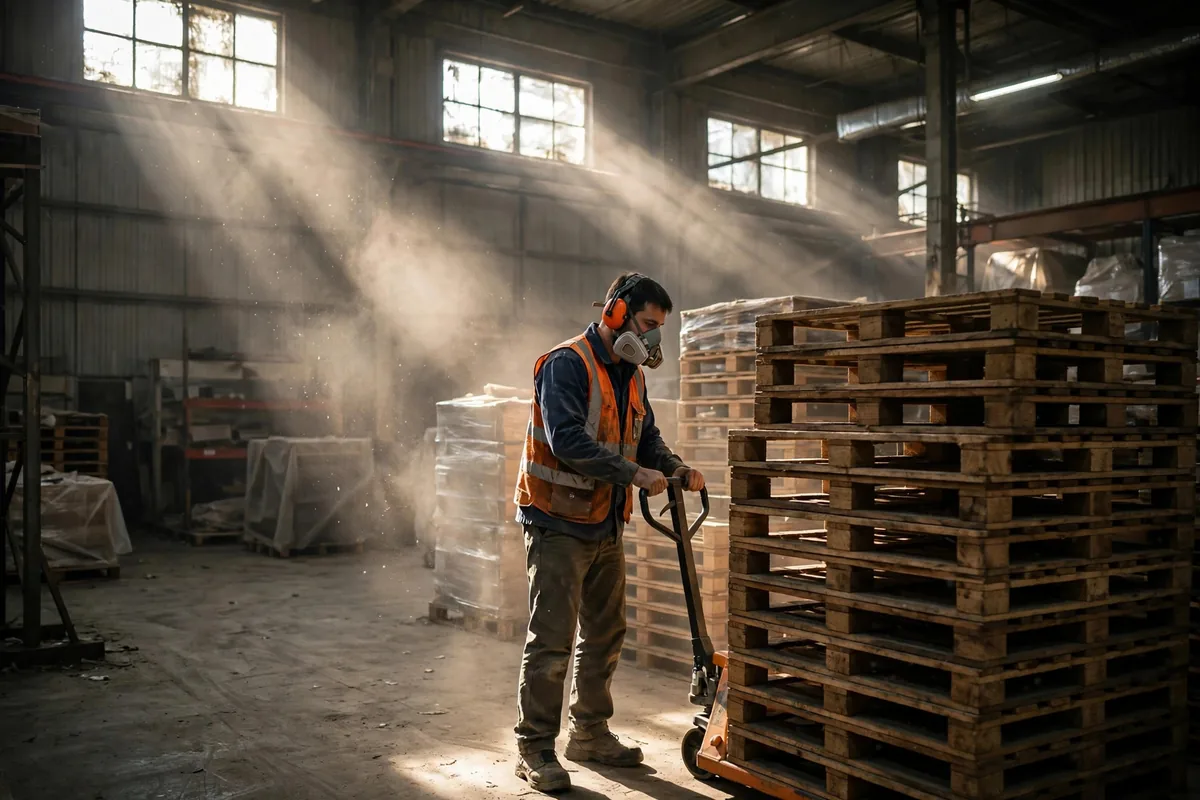
The equipment scope is wider than most people think. Sit-down counterbalance trucks, reach trucks, order pickers, stand-up riders, and rough-terrain forklifts all fall under 29 CFR 1910.178(l). A manual pallet jack is not a powered industrial truck, so it sits outside the certification rule, but that does not mean anyone can push one around carelessly. There is also a hard age line: nobody under 18 may operate a forklift in a non-agricultural workplace under federal child-labour rules. No exceptions, no workarounds.
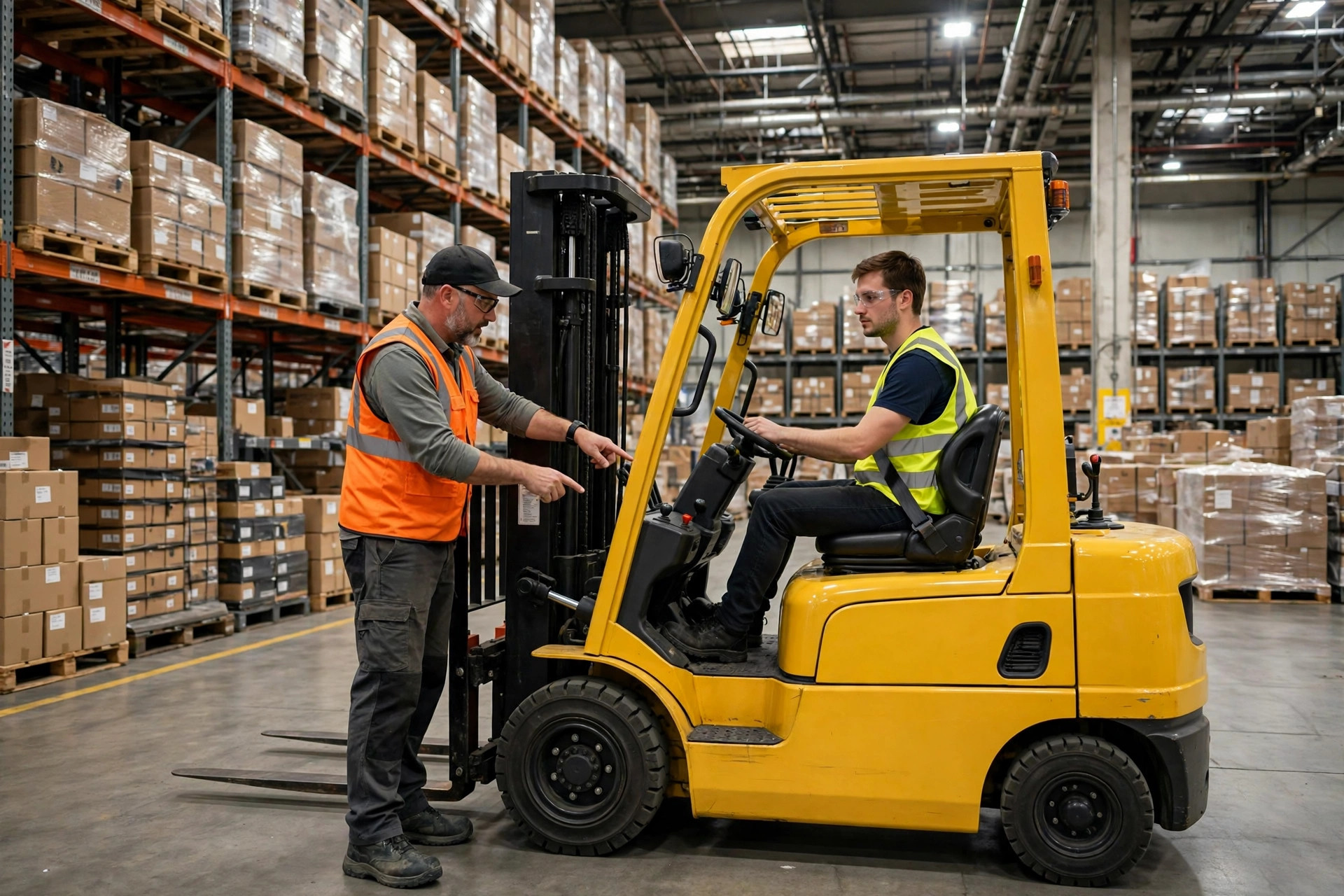
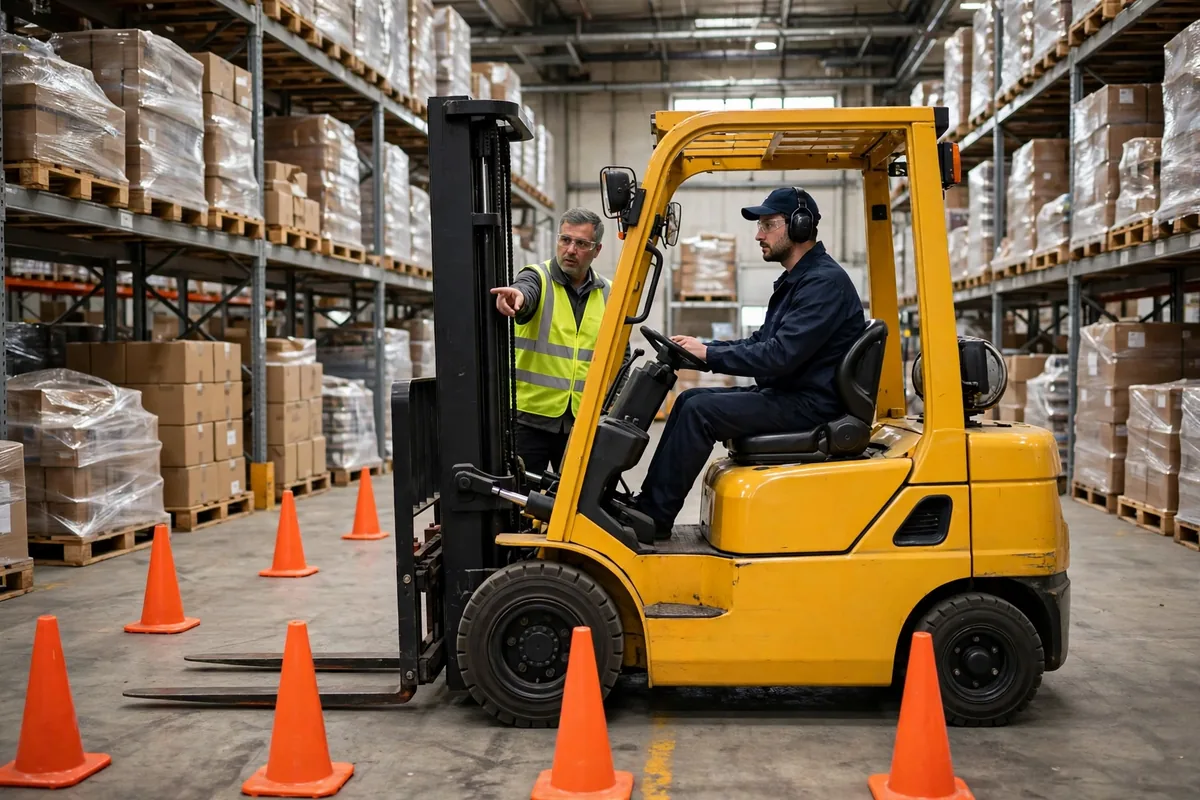
Training itself has three parts, and skipping any one of them means the operator is not compliant. First, formal instruction covering truck-related topics and workplace hazards. Second, practical training, where the trainer demonstrates and the trainee practises under supervision. Third, a workplace evaluation, where the evaluator watches the operator do the actual job on the actual equipment. A written test alone does not count. When the employer certifies an operator, the record must list four things: the operator's name, the training date, the evaluation date, and the identity of the person who performed the training or evaluation. Miss one, and an inspector has a finding.
Three Years Means an Evaluation, Not a Refresher Course
Here is the misunderstanding that costs warehouses the most money. People hear "three years" and think the certificate lasts three years and then you take another class. That is wrong. Paragraph 29 CFR 1910.178(l)(4)(iii) requires an evaluation of each operator's performance at least once every three years. The three-year number governs the evaluation, not the training course. Refresher training is a separate requirement, and it is driven by events, not by the calendar.
| Trigger event | What to do |
|---|---|
| Observed operating the truck unsafely | Retrain on the relevant topics and re-evaluate |
| Accident or near-miss | Retrain on the relevant topics and re-evaluate |
| Evaluation shows the operator is not up to standard | Retrain on the relevant topics and re-evaluate |
| Assigned to a different type of truck | Train and evaluate before driving it |
| Workplace conditions change in a way that affects safe operation | Retrain on what changed |
So one operator might be retrained twice in two years, once after a near-miss and once after switching truck types, while another goes three quiet years and only faces the scheduled evaluation. Three years is the floor, not the goal. Treating renewal as "we will deal with it when the three years are up" means every trigger in between gets missed.
Here is a hypothetical scenario that shows how it plays out. During peak season in 2025, a distribution centre in California brought in 40 temps. The shift lead was short-handed, so a few of them were put on trucks with the paperwork to follow "next week." In the second week, one temp reversed into a rack upright at the dock. Nobody was hurt, but the rack was bent out of shape. When the records were checked, that temp had no training record and no evaluation record. What the warehouse paid afterwards went far beyond the cost of a few certificates. Getting lucky on the injury does not make the compliance and insurance bills go away.
The Money: Forklift Training Is Cheap, Fines and Accidents Are Not
Let me be straight about this. Forklift training is small money in a warehouse budget. A class, a hands-on session, an evaluation, and filing the record: spread across each operator, it barely registers. What costs real money is letting an uncertified person drive. On penalties, check the current figures on OSHA's official website; they are adjusted for inflation every January. The caps in effect from 15 January 2025 were about $16,550 per serious violation, about $165,514 per wilful or repeat violation, and about $16,550 per day for failure to abate. Those numbers move, so any budget should be checked against OSHA's latest published schedule.
Take a hypothetical example to see the scale. A 30-operator fleet with 12 operators lacking valid training records, counted at one serious violation each at the cap of about $16,550, comes to 12 times 16,550, which is $198,600. That is a rough hypothetical calculation, not a quote: real penalties depend on the circumstances, the employer's good faith, and the inspector's judgement. But it shows the order of magnitude. Training and fines are not in the same league. And the accident bill is worse still: one forklift striking a person means downtime, an investigation, insurance, and compensation, each of which costs more than training ever will.
One more trap worth naming: buying a certificate online. A few dozen dollars gets you a nicely printed card with the operator's name on it. It means nothing. OSHA wants employer-run training, hands-on practice, and a workplace evaluation. A card bought online replaces none of those three. Inspectors ask for the training and evaluation records, not the card. The money spent on the card is wasted, and the compliance gap stays exactly where it was.
How We Do It in Our Warehouse Now
This is how we run it in our warehouse now, written down for anyone who wants to borrow it. New hires get safety training on day one, and forklift operators get their own session: classroom, hands-on practice, then evaluation, and the certificate only goes out when all three are done. The record is filed the same day. One missing piece, no driving. Agency workers go through the same gate: we check whatever training record they bring, then run our own workplace evaluation before they are scheduled.
Renewals run off a simple tracker. Every operator's evaluation due date is flagged 60 days ahead, and the evaluation is scheduled two weeks before it falls due. Accidents and near-misses trigger retraining the same day, no waiting, no favours. Operators in the high-risk areas, the dock, the cold store, and the high-bay aisles, get evaluated more often than the three-year floor, because one incident there costs more than anywhere else. All the records sit in one folder, so an inspector can see the lot in ten minutes.
A forklift looks slow and harmless most of the day. When something goes wrong, it goes wrong in a second. The certificate is not for the inspector. It is for the people on the truck and the people walking past it every day. Next peak season, when you are short-handed, do not let an uncertified person "just cover for two days." Those two days can take a long time to pay for.
By Chen Feng, Warehouse Operations Manager