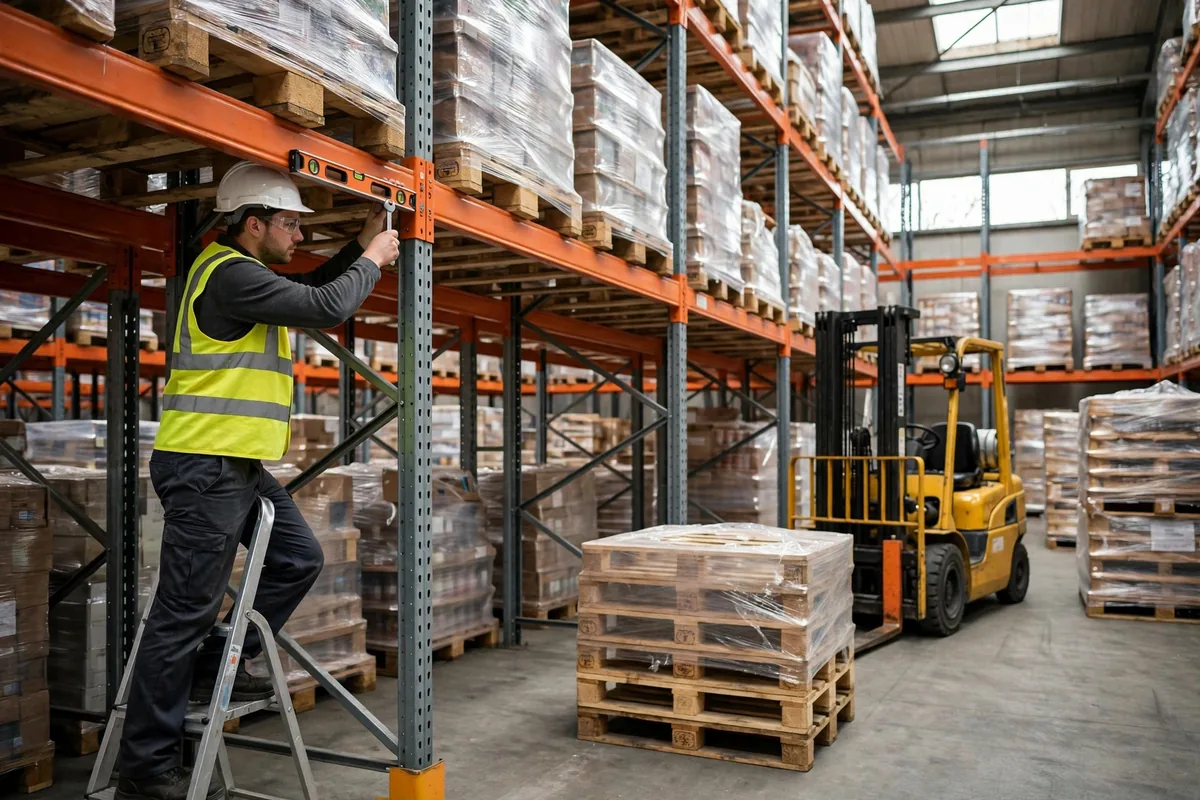
It was 6:40 on a Tuesday morning in October 2026, and I had barely walked into the warehouse when Lao Zhang from the night shift stopped me at the door with a handwritten location sheet in his hand. That was the morning rack beam height adjustment went from a someday job to a right-now job. Two trucks of peak-season stock had arrived early, the last row in Zone A had nowhere left to put a pallet, and a forklift driver had circled the aisle twice before dragging the pallet back to the dock. Lao Zhang put it plainly: we are not out of space, we are wasting space in mid-air.
My first instinct, I will be honest, was to rent overflow space. Then I ran the numbers in my head. Rent, the labor to shuttle stock back and forth, the risk of a missed shipment in peak season — none of it was cheap. Lao Zhang walked me to Zone A and pointed at a run of racking. Look at the third level, he said. Nearly half a meter of air above the pallets. And look at the fourth level, so tight the driver has to creep in with a fist of clearance. Same racks, beams in the wrong places, freight that will not fit.
Rack Beam Height Adjustment Starts With the Pallets, Not the Wrench
In our warehouse, a rack beam height adjustment never starts with a wrench. It starts with a tape measure. Lao Zhang took a new hire, Xiao Li, and the two of them spent a morning in Zone A measuring. Pallet height on its own. Total height once the cartons are stacked. The clearance a forklift needs to get its forks in and out without scraping. Pallets are not all the same height. Some cartons have lids, some do not. In one zone, the tallest and shortest loads can differ by twenty or thirty centimeters. If you move beams by the rack drawing alone, without measuring what actually sits on them, you will move them wrong.
We learned that the hard way in the fall of 2024, in Zone B. The team lead there wanted to save time, so he shifted every beam up ten centimeters by the old drawing, figuring taller levels could only hold more. Then a batch of taller pallets arrived and would not fit the top level at all, while the bottom level sat half empty. Four people on the night shift worked until one in the morning taking beams down and putting them back.
Since then we have a rule: before any beam moves, list the pallet heights expected in that zone over the next month and design around the most common ones. Not the tallest pallet you have ever seen, and not the shortest one either. The middle of the real mix is what the beams should fit.
You also have to watch the people, not just the pallets. Lao Liu, one of our forklift drivers, told me that when a level is too tight he has to look up, line up, and creep in every single time. His neck aches by the end of the day and his pace drops. When a level is too loose, the empty air above the pallet is storage density thrown away. Beam height is a measurement on paper, but in practice it is the driver's feel and the picker's rhythm. On the day we changed Zone A, we had Lao Liu test three bays first. If it worked, we kept going. If it did not, we stopped right there.
Does Storage Density Actually Go Up? Run the Math
The biggest mistake with beam moves is trusting your gut. It feels like you gained two pallets, it feels like the aisle runs smoother, and then the month-end count does not back any of it up. So before we touch a beam, we do the math on paper. The table below is our own internal trial calculation for that Zone A run. Every number came from our own measurements in our own warehouse. It applies to that run of racking and those pallets only. A different warehouse or a different pallet mix needs its own numbers.
| Layout | Pallets per bay | 12 bays hold | How it drives |
|---|---|---|---|
| Before: three equal levels | 9 | 108 | Top tight, bottom half empty |
| After: levels matched to pallet height | 11 | 132 | Top fits, bottom no longer wasted |
| After, plus a light-goods level | 12 | 144 | Light goods easy to reach, heavy goods untouched |
By our internal trial calculation, that one run gained 24 pallet positions, roughly the same as adding two extra bays, without buying a single new rack. We did not roll out the light-goods version everywhere. We tried it on two bays only, because light pallets stay stable stacked high, and heavy freight copied the same way would be asking for trouble. The honest way to say it is this: the extra positions were not free. They were height we had already paid for and were leaving empty.
There is a second bill most people forget, and that is time. Two people can rework a run of racking in half a day, while renting overflow space easily eats a week of finding a building, moving stock, and recounting. So my rule is simple: if your beams can move, move them first, and only then talk about renting space or buying racks. Before peak season in 2025 we did exactly that. The night shift reworked three runs, the day shift shipped as normal, and we never stopped for a day.
Here is the counterintuitive part, and it trips up a lot of people: lowering a level can sometimes hold more freight. Everyone assumes taller levels mean more storage. But a level left too tall holds half a meter of air that fits no second pallet and no other freight. It is a whole level of space doing nothing. Split one tall level into two shallow ones and the pallet count can go up, not down. That only holds under three conditions, though. The pallets have to be short enough, the freight light enough, and the forklift still has to reach. Heavy freight, oversized freight, and anything crush-sensitive should never follow that trick.
Do Not Walk Away After the Last Beam
The riskiest part of a beam move is not taking the beam down. It is nobody checking the work afterward. We now have a fixed routine for that, written on the whiteboard, and whoever moves the beam signs for it. Before the move, check the load rating plate on the beam and match it against the combined weight of pallet and freight. Do not guess by feel. Leave enough room for pallet height plus forklift working clearance, so the driver can slide forks in and out without craning his neck to judge the gap every time.
After the move, Lao Zhang walks every bay with Xiao Li. Are both beam connectors fully seated, or is one end high and the other low? Are the safety pins back in? Does the top pallet clear the beam above it? On the Zone A job, one connector looked seated and moved when Lao Zhang pushed it by hand. We took it down and reset it on the spot. Xiao Li asked me whether all this fuss was really necessary. I told him a beam looks solid right up until the moment it is not, and half an hour of checking is cheap insurance against that moment.
Then we watch it work for a night. During the night shift, Lao Liu drives those bays and tells me the next morning which level feels tight and which feels loose. Beam height is not a one-time job. The freight changes, the pallets change, and the beams have to follow. These days we measure pallet heights once a quarter, we always do a round of adjustments before peak season, and if anyone spots a run with silly amounts of empty air, they report it to the team lead. Once we have two runs worth doing, we fix them together.
One last reminder for anyone running a warehouse like ours. The beams look like the most boring part of the building, but moving them is real storage density, bought with half a day of labor instead of a new lease. Before you rent space or order racks, take a tape measure to the empty half-meter above your pallets. Measure first, do the math second, move the beams third, and check the work before you walk away. When the next peak-season truck shows up early, you will know whether that half day was worth it.
By Chen Feng, Warehouse Operations Manager