Let me give you the verdict first. A pick module is a multi-story steel structure inside your warehouse — flow rack on every level, conveyors running through it — that turns "people walking miles to find product" into "product flowing past stationary people." If you searched "warehouse pick module design how it works," this is the question you're really asking: how is it designed, how does it run, and what order volume makes it worth the money? Here's the part no vendor brochure will tell you: the design part is the easy part. The hard part is knowing whether your volume actually justifies one. Get that wrong and you've bought yourself a very expensive sculpture.
Don't Touch One Until Your Volume Is Ready: Two Real Lessons
I've seen too many owners fall in love with a multi-level pick module at a trade show and come home determined to build one. In 2019, a cosmetics e-commerce fulfillment operation in Ontario, California was doing 800 to 1,200 orders a day when the owner showed me a trade show photo and said he wanted exactly that. Two levels, flow rack, carton conveyor feeding pack-out — the proposal came back at over $1.7 million for steel, conveyor, and installation. I told him straight: at your volume, that module sits idle half the day. You won't save enough labor to matter, and the money is gone the day you sign. He wasn't happy with me. In 2021 he hit 3,500 orders a day, and that's when I gave the green light. The two-level module ran a little over $2 million installed, and labor savings paid it back in about 18 months — at the time, a fully-loaded picker in California cost over $30 an hour, so the math was simple.
The second story is the cautionary one. In 2022, an auto-parts 3PL in Dallas had a three-level pick module, 4,000-plus SKUs, and was still picking to paper. No pick-to-light, conveyor diverts done by manual scan. The result? Mis-ship rate stuck around 1.5%, and the conveyor jammed two or three times a day during peak — every jam stopped the whole building. They eventually added pick-to-light and an automated sorter, and the error rate dropped below 0.3%. The lesson stings: a module doesn't fix errors. It only amplifies throughput. Automate a broken process and you just make mistakes faster.
How a Pick Module Works: Steel, Flow Rack, and Conveyor
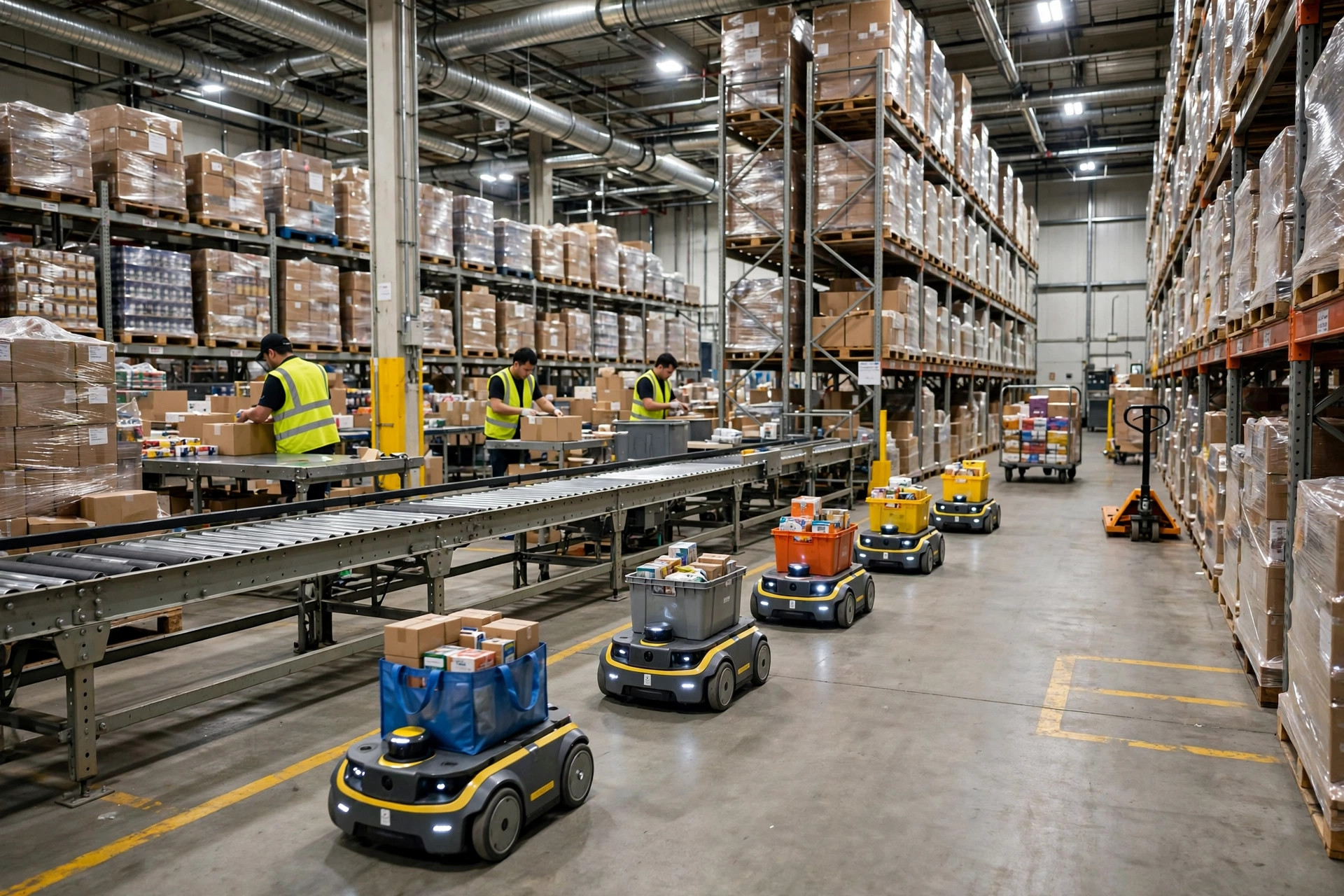
The operating logic is simpler than it looks. The "building" has two or three levels, flow rack lines both sides of the walkway on each level, and small-parcel SKUs are slotted by velocity — the faster it sells, the closer it sits to the conveyor. The conveyor is the artery: empty cartons enter at one end, pickers on each level drop items into passing cartons guided by lights or pick tickets, and cartons ride the line all the way to pack-out. Replenishment happens from the back of the flow rack, so restockers and pickers never share the same aisle.
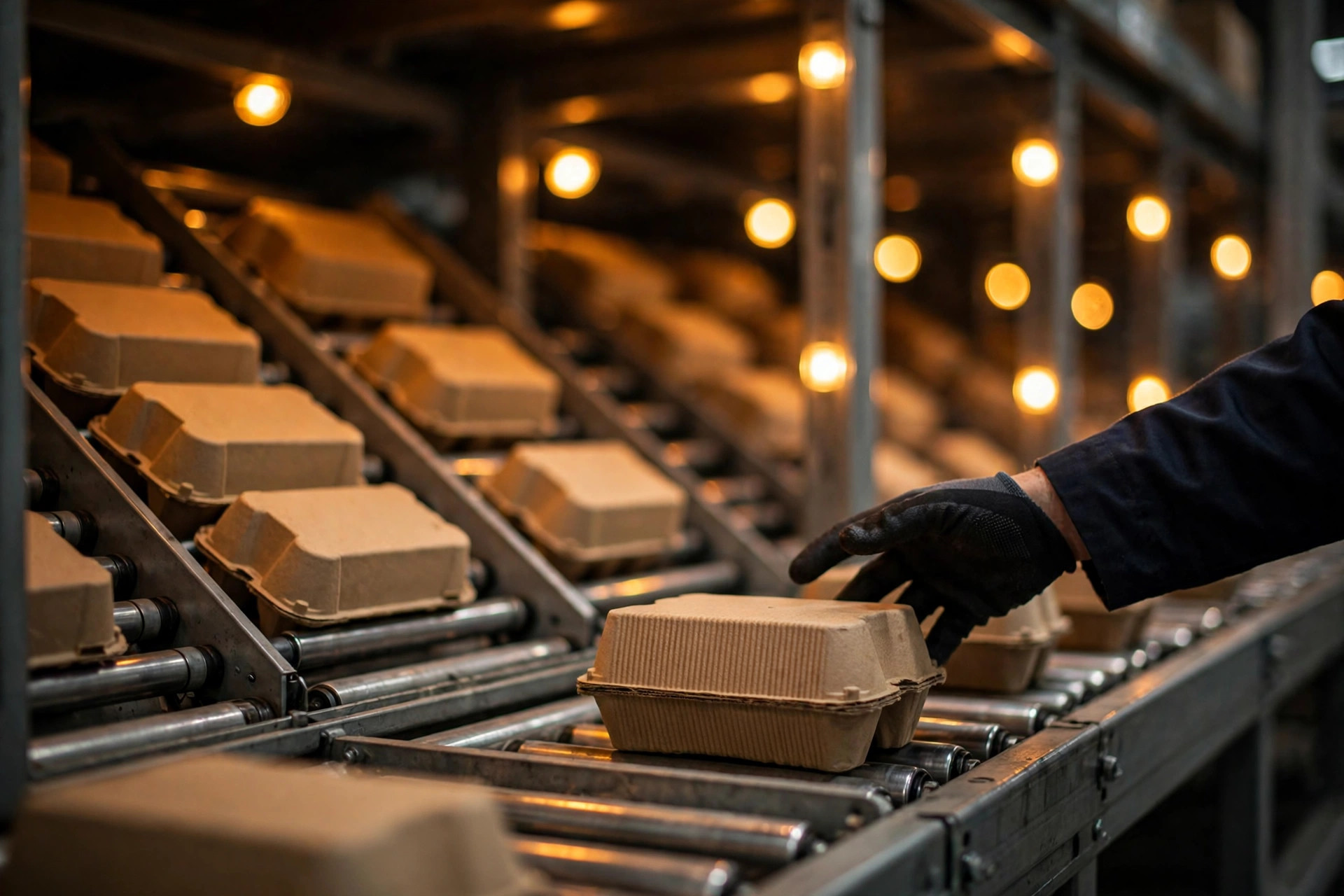
Three design decisions separate a good module from a bad one. First, deck height and pick faces: the angle of the flow rack and the number of pick positions per level directly set per-level capacity. Second, conveyor sortation capacity: manual scan divert is fine at low volume, but at real volume you need an automated sorter or the divert points become the bottleneck for the entire building. Third, replenishment flow must be physically separated from picking flow. The worst design I've seen had restock carts and pickers squeezing down the same walkway, yielding to each other at peak — slower than plain floor picking.
Two details trip up first-timers. One is carton flow versus tote flow: e-commerce small parcels can pick straight into the shipping carton, which skips a decanting step, but cartons deform and jam on conveyors; totes glide smoothly but add a pack-out step that brings the labor right back. There's no standard answer — it depends on how much of your volume is multi-line orders. The other is pick direction: paper is cheapest, pick-to-light is fastest, voice picking frees both hands for bulky items. A three-level module running on paper tickets is the Dallas auto-parts story all over again — expensive steel can't rescue an outdated direction method.
On cost structure, steel and conveyor are the big tickets, while controls and WMS integration look small but matter most — if the line control is sloppy, the rhythm of the whole building falls apart. And remember when budgeting: the number on the quote is only the starting point. Installation, commissioning, and rewriting your WMS wave strategy routinely add another 20 to 30 percent in hidden cost.
What Order Volume Justifies a Pick Module? Run This Math First
This is the most-asked question, and it's what everyone searching "warehouse pick module design how it works" actually wants answered. My rule of thumb looks at average daily orders — but never orders alone:
| Avg daily orders | Recommended approach | Why |
|---|---|---|
| Under 1,000 | Floor zone picking with carts | People are the most flexible asset; an idle module is just burning money |
| 1,000–3,000 | Single-level flow rack + short conveyor | Fix the "too much walking" problem first |
| 3,000–5,000 | Two-level pick module | Volume starts to support the steel investment |
| 5,000+ | Two-to-three-level module + automated sorter | Non-negotiable — you can't throw enough people at it |
The payback formula is straightforward: (floor pickers needed − module pickers needed) × fully-loaded hourly rate × annual hours, versus total module investment. A two-level module — steel, conveyor, installation, controls, all in — typically lands in the high six figures to low seven figures in US dollars (get a real vendor quote for your site).
My cutoff: payback under 2 years, go; over 3 years, wait — e-commerce volume changes too fast, and nobody knows what your volume looks like in three years.
A worked example: 3,000 orders a day, 8 lines per order. A solid floor picker does 60 to 80 lines an hour (typical industry range); with light-directed picking inside a module, 200-plus lines is normal. Floor picking needs roughly 40 pickers; the module needs about 15. That's 25 pickers saved — at California's fully-loaded $30-plus an hour and 2,000 hours a year, over $1.5 million a year in labor. A module investment of a little over $2 million pays back in well under two years. That's the math behind the 3,000-order threshold.
One hidden assumption in that math: your lines per order have to be dense enough. If the average order is only 1 or 2 lines, pickers spend most of their time waiting for cartons to arrive, the 200-line rate falls apart, and so does the headcount savings. So when you look at order volume, always look at lines per order alongside it — fewer lines per order means a higher volume threshold. I've seen too many people stare at the order count, miss this layer entirely, and get a payback number that's pure fiction.
The Counterintuitive Part: Volume Isn't the Real Criterion — Stability and Labor Cost Are
This is where most people get burned. First, the peak trap: never size a module for Black Friday-style peaks. Size for the peak and the module idles through the off-season, eating every dollar of savings. Design for the annual average and cover peaks with temps and overtime. Second, the flexibility cost: a module is sunk cost. If your SKU profile shifts dramatically — say, from cosmetics to appliances — half the module is scrap, while floor picking can be re-zoned over a weekend. The more stable your product mix, the more a module is worth. Third, labor cost: in expensive labor markets like California, the payback arrives early; where labor is cheap, the same volume can wait another two years.
Bluntly put: a pick module buys certainty. Certain volume, certain product mix, certain labor cost — and it's a money printer. Uncertain on any one of the three, and it's an expensive gamble.
One piece of practical advice before you commit: spend three months getting your WMS wave strategy and slotting optimization right first. Plenty of warehouses build the module and then discover the real bottleneck was bad wave releases and deep-slotted hot SKUs — fixes that cost nothing and can shave months off the payback period once the module is live. Equipment can't fix management problems. Don't get the order backwards.
So stop asking "what order volume justifies a pick module." Ask yourself this instead: would you put two years of order volume in writing? If not, don't build one.
By Lao Mi, Supply Chain Veteran (20 yrs)