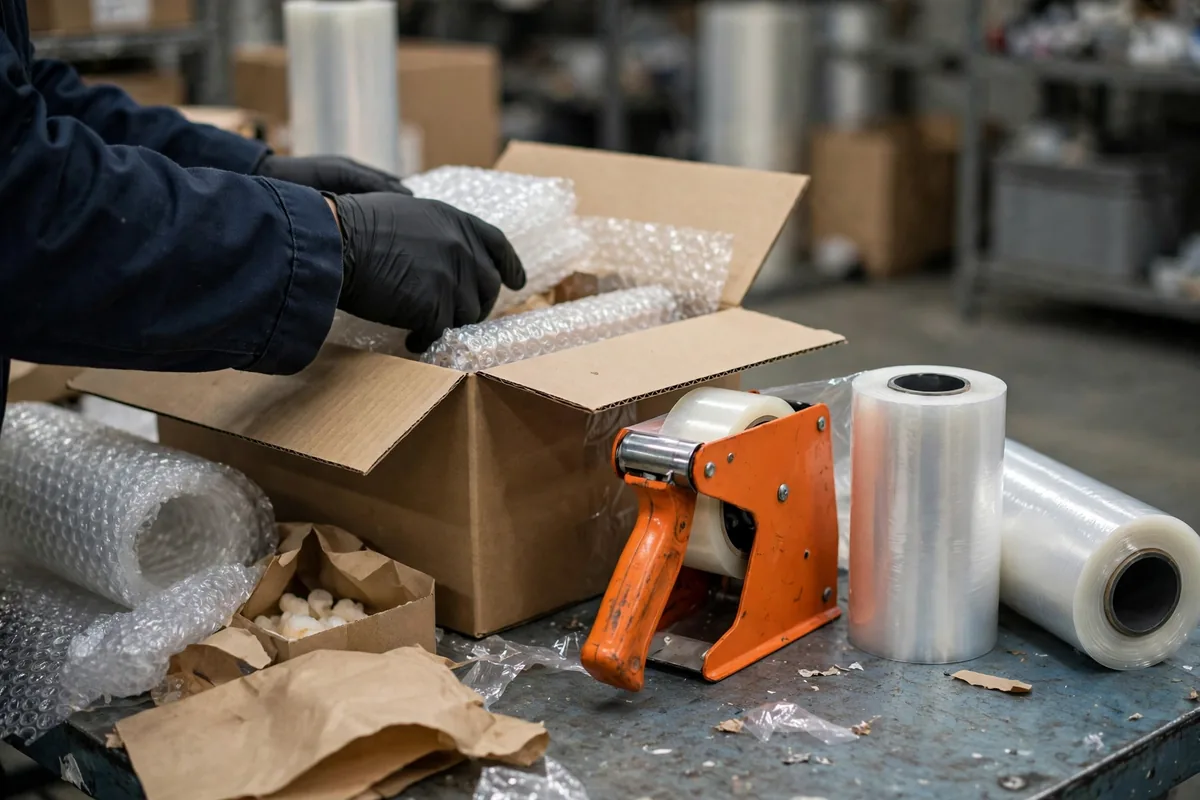
We had a client, a home-goods e-commerce seller, who shipped well over a hundred thousand orders in a peak month — and whose warehouse packing consumables were the one cost line nobody had ever itemized. At the year-end review, the owner stared at the P&L and asked me a question I still remember: "Susan, we bought the equipment, we switched systems, so why won't our cost per order come down?" I didn't answer right away. I asked him to bring me the packing station's consumables requisitions first. Three days later the numbers were on the table: tape, stretch film, cartons, and bubble wrap, four little line items, were eating enough every month to rent half another packing station. The owner blinked. "That's pocket change." I said, "Boss, that pocket change adds up to a forklift a year."
I wasn't trying to scare him. That is the nasty thing about warehouse packing consumables cost: each item is so small nobody bothers to manage it. Equipment purchases go through tenders, system rollouts get a project plan, but consumables? The warehouse supervisor files a requisition, purchasing stamps it, and a year goes by with nobody knowing where the money went. People on my side of the table know this math cold, because we live with it every day. So let me open the curtain and show you how tape and stretch film really cost you.
Warehouse packing consumables: the tape math never shows up on the quote
Tape first. With that same home-goods client, I spent a morning standing at the packing benches and noticed something odd: the tape rolls were disappearing fast, barely lasting a shift. The supervisor said tape was cheap, that purchasing had squeezed the price hard. I picked up a roll, pulled a strip, and understood in seconds. The tape was thin and weak. Sealing one carton took three passes, the seal kept lifting, and a pile of rework cartons sat in the corner waiting to be re-taped.
Here is the insider calculation your supplier will never volunteer: the real cost of tape is not the price per roll, it is how many meters you burn to seal one carton. Cheap tape costs less per roll, but each meter seals fewer cartons, you need extra passes, and you pay for the rework labor on top. A slightly pricier, thicker tape seals in one pass and the rework rate falls off a cliff. The honest formula is cost per carton equals roll price divided by cartons sealed per roll, plus the cost of rework and resealing.
I once ran a hypothetical worked example for that client: sealing a standard carton with the cheap tape took three passes, and once you added rework, the all-in cost per carton came out higher than the good tape used in a single pass. Those numbers are a hypothetical example, so check them against your own usage, but the direction is right — tape that looks cheap and costs a fortune in use is the most common illusion on the packing line.
One more detail most people miss: not all tape is the same job. There is carton-sealing tape and there is warning tape, and some warehouses use one roll for everything. Then a heavy carton gets sealed with thin tape, pops open in transit, and one customer complaint costs more than a year's tape budget. Step one of controlling packing consumables cost is matching tape to carton type and weight. One roll does not fit all.
Warehouse packing consumables: stretch film is not stronger the more you wrap
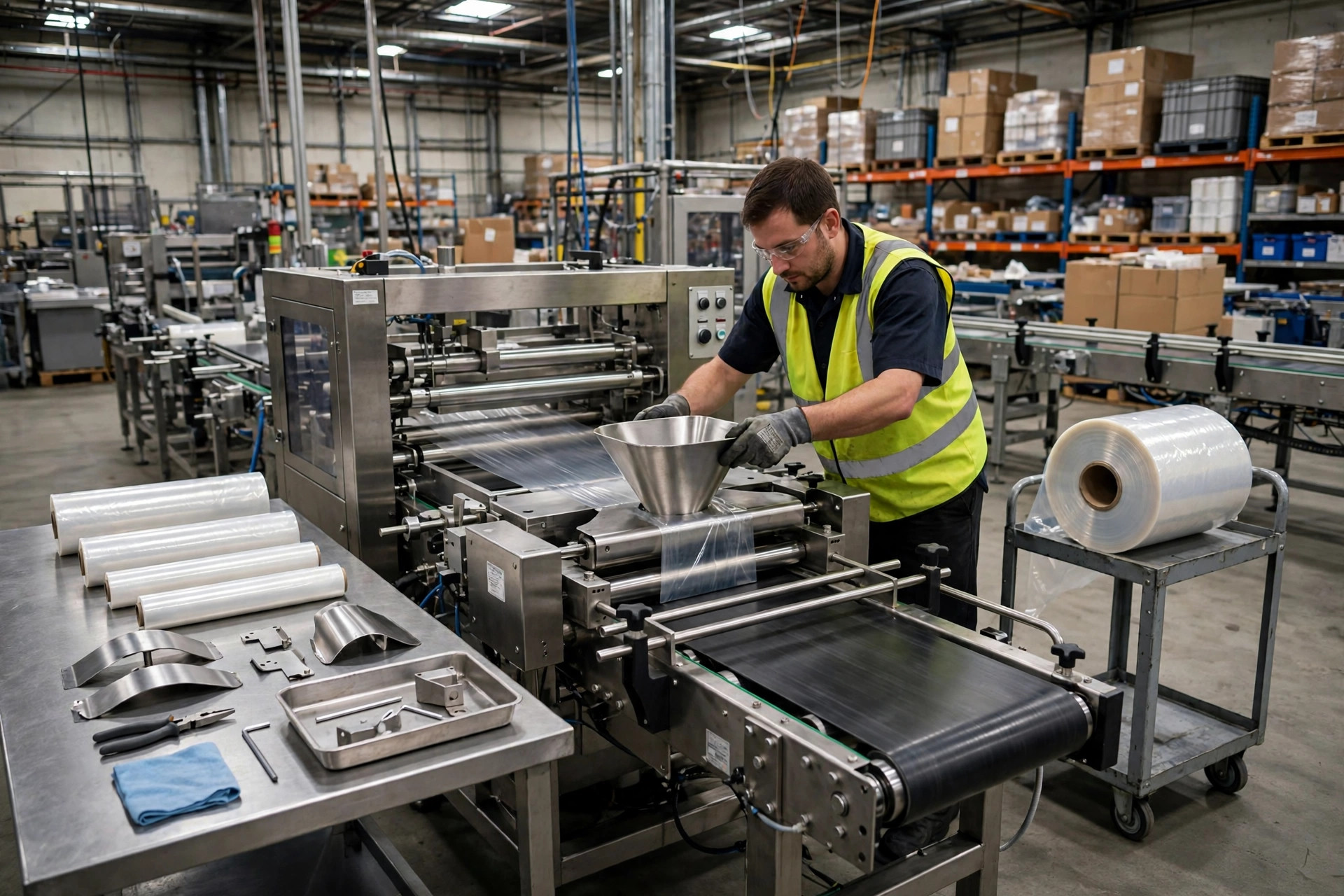
Stretch film is where I have seen the worst waste. Another client, an auto-parts distributor with heavy pallets, had packers terrified of a load collapsing on the road, so they wrapped pallet after pallet like a mummy. The monthly film requisitions were enormous. The owner assumed business was growing. In reality, film was walking out the door.
With stretch film, the number that matters is not how many revolutions you wrap. It is the pre-stretch ratio — how much the film is stretched before it goes onto the pallet. Good film on a good machine stretches a long way, so one roll covers far more pallets. Hand-wrapping, or an old machine that cannot hold its stretch ratio, puts film on the pallet unstretched, and usage roughly doubles. Same pallet, double the film, same result. That is money.
I gave the auto-parts client three moves. First, weigh it: pick a few pallets every week, weigh the film used per pallet, and track it for a month. The usage curve tells the truth immediately. Second, set a standard number of revolutions by pallet height and load weight, post it on the wrapper, and stop letting anyone add extra turns "just to be safe." Third, before switching film, do the math: a cheaper roll price means nothing if the cost per pallet is higher. Compare cost per pallet, never price per roll.
Two months later the client told me film usage per pallet had fallen by roughly a third — their own count, not my promise. The savings were modest, but it was pure margin, earned without winning a single extra order. That is how packing consumables cost works: every cent saved is a cent earned.
Three levers beat haggling over unit price
So how do you negotiate with the supplier? My experience: stop haggling over unit price alone. There are three levers in consumables negotiation, and each beats "two cents cheaper" by a mile.
The first lever is standardizing specifications. Many warehouses run a dozen carton sizes, three or four tape models, and two film widths. Purchasing volume gets spread so thin that nothing earns a good price. Cut cartons down to three or four core sizes, concentrate the volume, and the unit price comes down on its own. This is the hardest step because it touches every department's habits, but it pays the most.
The second lever is tiered pricing by volume. Bring your real usage from the past six months to the table and negotiate tiers: the more you buy, the lower the unit price — but get the measurement rules in writing. Is the tier counted monthly or quarterly, and what happens if you miss it? The trap I see most often is a client negotiating a tier on "annual volume" they will never reach, then spending the whole year one rung below the cheapest price. That negotiation was wasted.
The third lever is payment terms and service. When the unit price will not move, negotiate terms, free delivery, and damage replacement. Film that arrives damp, tape that loses its tack — if the supplier replaces it free, that saves real money over a year. Clients who only stare at unit price make my side of the table relax. Give up two cents on price, and the service you skipped would have saved far more than two cents.
Here is a consumables cost comparison table built from common situations. All figures are hypothetical examples to give you a sense of scale — use your own usage and purchase prices for real numbers:
| Consumable | Common waste | Cost per unit (hypothetical example) | Check this first |
|---|---|---|---|
| Tape | Extra passes, rework resealing | A few cents per order | Cartons sealed per roll |
| Stretch film | Low pre-stretch, extra revolutions | A few dollars per pallet | Film weight per pallet |
| Cartons | Too many sizes, oversized boxes | Tens of cents per order | Share of core sizes |
| Bubble wrap | Cut from whole rolls, over-packing | A few cents per order | Alternative void fill |
Read that table and you will spot the counterintuitive truth: the biggest cost in packing consumables is never the unit price, it is runaway usage. Cut two cents off the price while usage climbs twenty percent and you have gained nothing. Hold the price steady and control usage, and you save more than any price cut would. That is why I always say consumables negotiation is about management, not price.
One trade-off deserves an honest mention: sustainability versus cost. Compostable tape and recycled cartons do cost more per unit, but some end customers care about green packaging enough to pay for it, or at least not to complain about it. Then the pricier consumable is a moat. But if your customers only care about cheap, forcing eco packaging on them just adds cost. There is no standard answer for consumables, only what fits your customers.
Next time you negotiate a contract, ask these three questions. First, what is our consumables cost per order right now, and who owns that number? Second, what has our stretch film weight per pallet been over the last three months, and is it climbing? Third, how is the supplier's tiered pricing measured, and is damage replacement written into the contract? Ask those three, and you will understand this cost better than most of your competitors.
By Susan, 3PL Sales Director