Let me start with the bill. If you look up warehouse packaging consumables cost tape stretch film guides, most of them quote supplier prices. This one starts from our own ledger instead. Last year our warehouse shipped 380,000 orders. Tape, stretch film, labels, and bubble wrap — the small stuff — cost us just over 410,000 yuan for the year. That's under 1.1 yuan per order. Sounds like nothing, right? Except at least 60,000 of that 410,000 was wasted: tape wrapped one pass too many, film wound three turns too thick, the wrong spec on the wrong carton. It leaks out a little at a time, and at year-end it adds up to a full packer's salary.
That's how packaging consumables work. Invisible per order, shocking per year. No theory in this piece — just the bill, broken down, and the three levers that claw the money back.
Tape and Stretch Film: What a Year Actually Costs
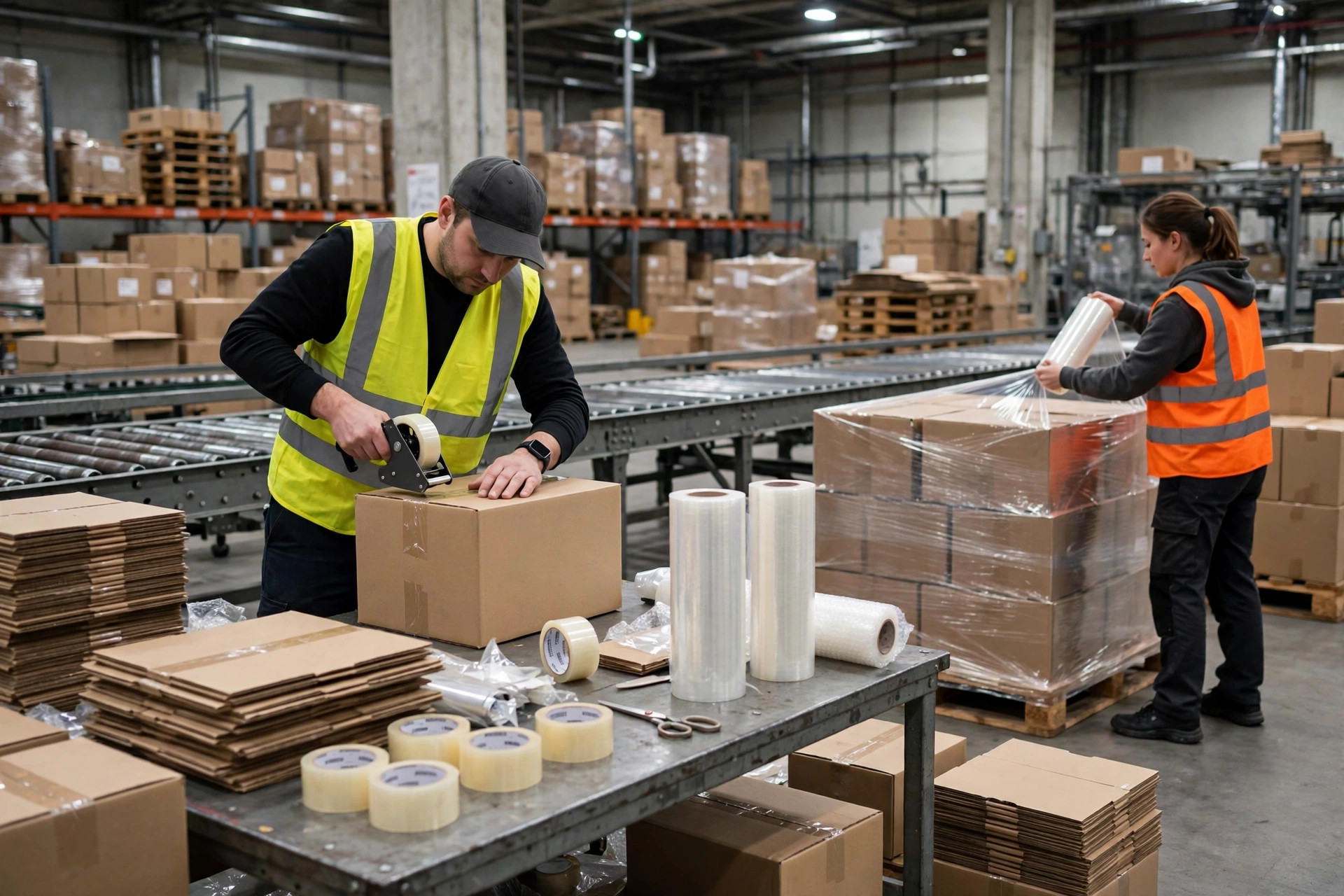
Here's our warehouse's breakdown. Tape: 92,000 yuan a year. Stretch film: 176,000. Labels: 84,000. Bubble wrap and other void fill: 59,000. Stretch film is the big one — more than 40% of the total. Why? One pallet averages 18 wraps of film. Some crews wrap 25 turns to be safe, because thicker feels sturdier. It is sturdier. It also uses 40% more film.
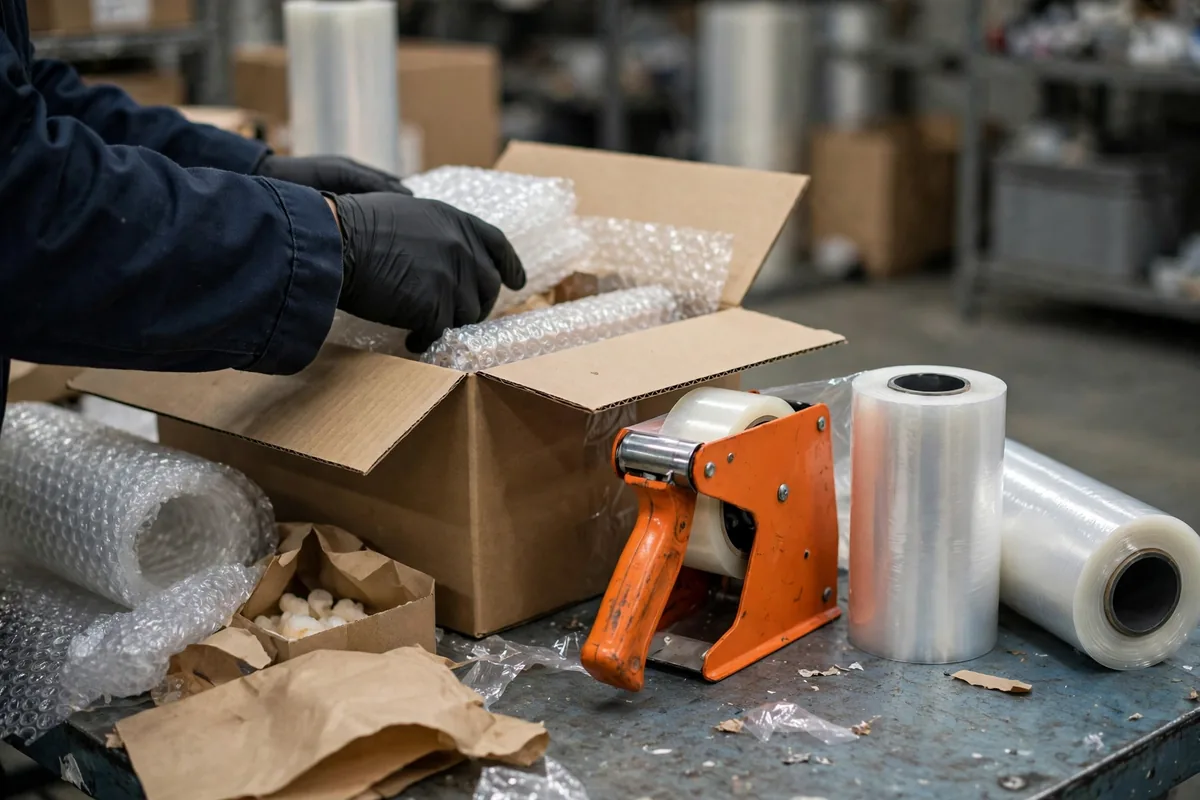
Tape wastes money in the opposite direction: the width doesn't match the carton. For a while we stocked a single 72mm tape for the whole warehouse — big cartons, small cartons, everything sealed with three strips. On a small carton, half of a 72mm strip sticks to thin air. We switched to two widths — 72mm for large cartons, 48mm for small ones — and tape usage dropped by more than 10% in the first month.
| Consumable | Annual spend | Share of total | Main waste |
|---|---|---|---|
| Stretch film | 176,000 yuan | about 43% | Too many wraps, pre-stretch underused |
| Tape | 92,000 yuan | about 22% | Wrong width for the carton, random strip counts |
| Labels | 84,000 yuan | about 20% | Misprints, reprints, crooked application |
| Bubble wrap & void fill | 59,000 yuan | about 14% | Everything padded thick, regardless of need |
The warehouse packaging consumables cost tape stretch film table above is our own measured numbers — your mix will differ, but the shape is usually the same: film and tape together run to more than 60% of consumables spend. If you want to save money, start there. Don't fight over label paper.
The Cost Formula: Unit Usage Times Volume
Consumables cost is one line of arithmetic: unit usage times volume. Volume is whatever the business gives you — you can't save your way out of it. Every lever sits in unit usage. And unit usage splits two ways: how much you use per order, and what you pay per unit. Purchase prices depend on your supplier's latest quote, so I won't quote market prices here. Usage is entirely in your own hands.
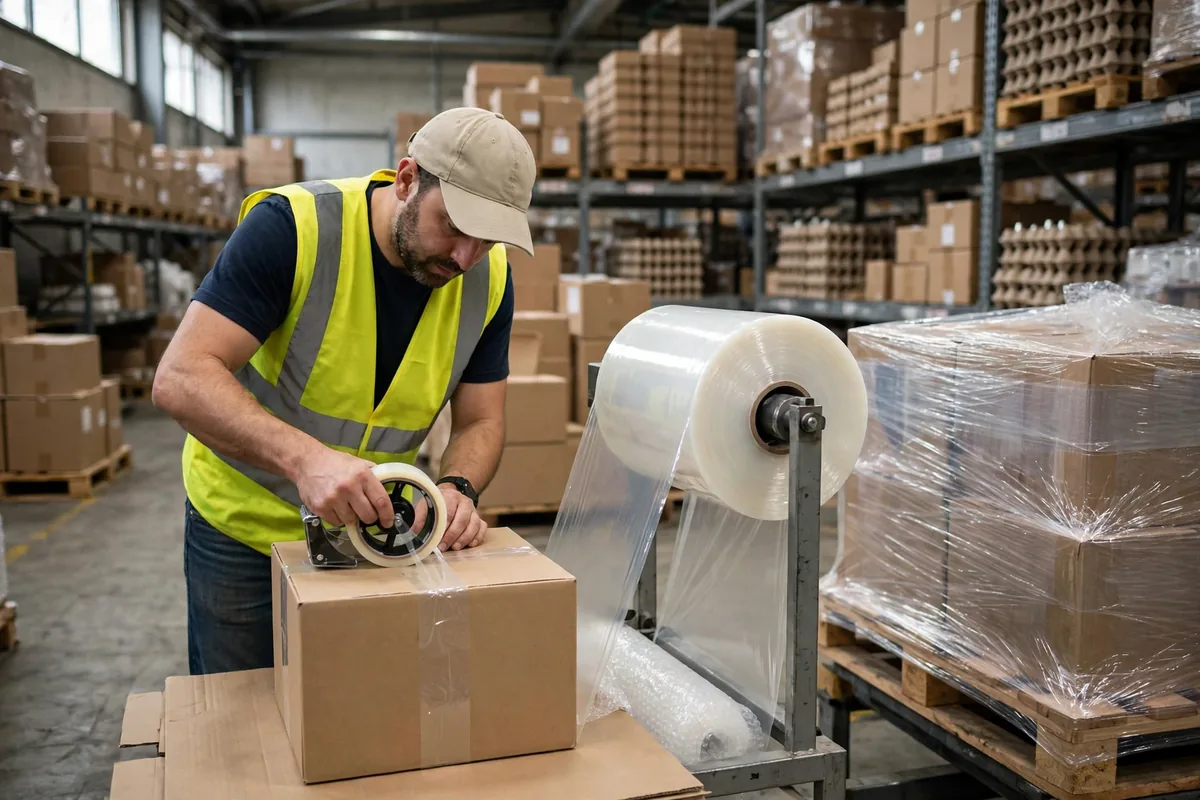
Stretch film first. Pre-stretch ratio is the whole game. Hand-wrapping barely stretches the film — under 1x — so you burn the most material. A semi-automatic wrapper stretches film to more than 2x, and the same pallet uses roughly 30% less film. In 2024 we bought two semi-automatic wrappers for under 20,000 yuan each. Monthly film usage fell from about 15,000 yuan to just over 10,000. The machines paid for themselves in seven months. I've run those numbers three times. They hold.
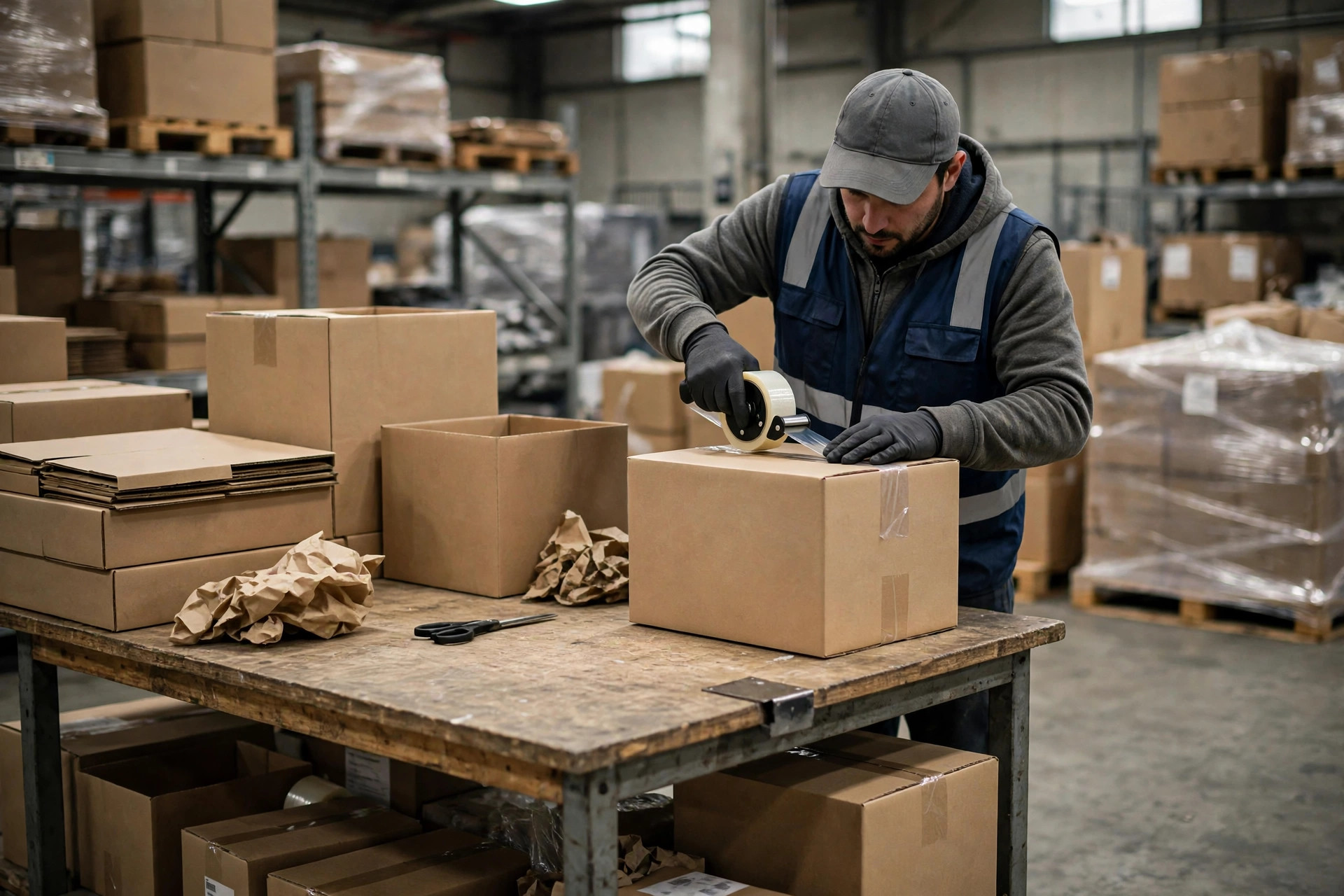
Tape next. Strip counts need a standard: two strips for small cartons, three for large, written into the work instruction and posted at the packing bench. Before the standard, it was all feel — some packers used four strips, for peace of mind. Peace of mind cost 20% more tape. Once the standard was in place, the shift lead spot-checked seal quality weekly. Damage rates didn't move. Tape usage came down and stayed down.
Label waste hides in printing. Misprints, crooked labels, printer jams — the waste sheets add up every day. We changed two small things: the shipping label template got locked down, so no shift could redesign it on the fly, and the printer rollers got cleaned every morning before start-up. Jams fell, waste sheets fell with them. Over a thousand labels a month saved. Small money — but it leaked every single day.
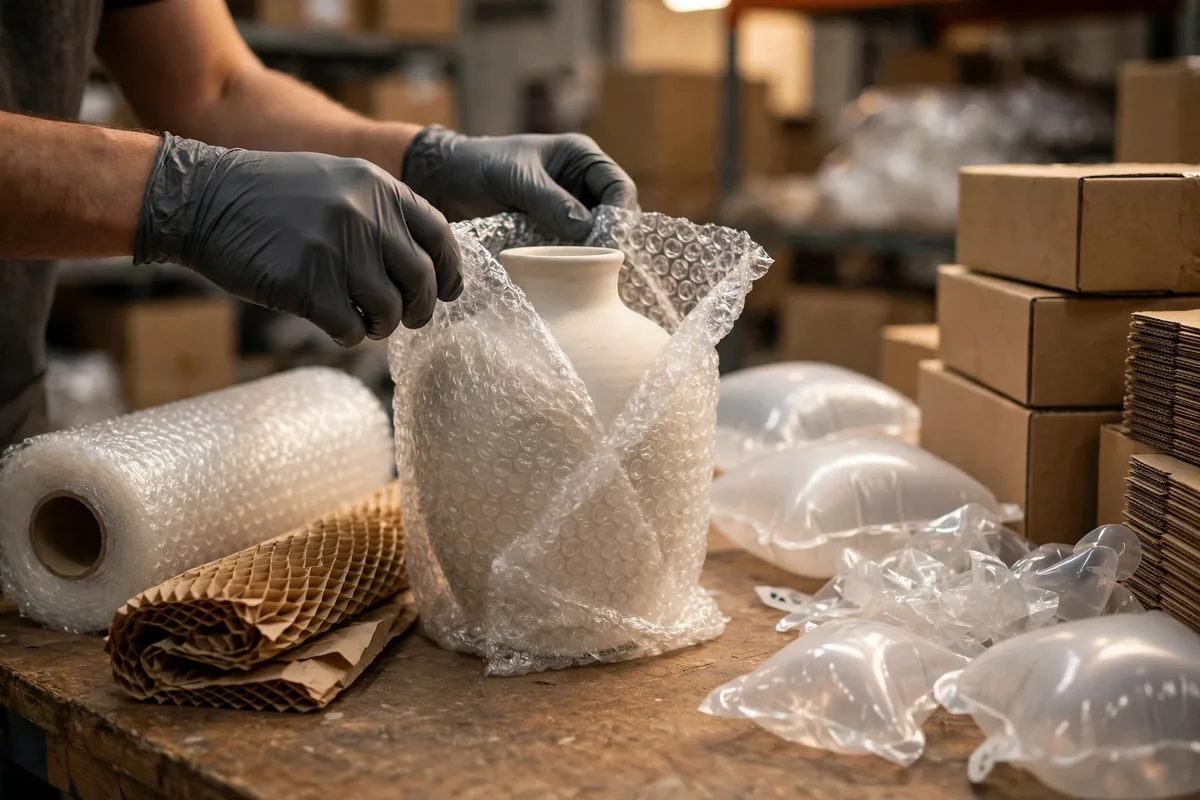
Bubble wrap is the easiest waste to overlook. Fragile goods deserve extra padding, no question. But for a while we wrapped two layers around anything a customer had marked "fragile," no matter what it was. We split products into three tiers: glass and ceramics get two layers, small appliances get one, everyday goods get corner padding only. After the change, bubble wrap usage fell 20% in a month, and damage complaints didn't rise by a single case. Protection should be enough — over-packing doesn't save money, it only buys peace of mind.
One more leak: the monthly consumables reconciliation. We match issue slips against actual usage every month. When one team's usage jumps suddenly, don't jump to conclusions — go to the floor and look. Usually it's a new hire, a new carton size, or a bad batch of film. Check the floor the moment a number moves, and within three months nearly every consumables anomaly gets traced the same day it appears.
Three Levers, All on the Floor, None in Procurement
Here's the counterintuitive part: the biggest lever on consumables cost isn't negotiating with suppliers. It's usage on the floor. Squeeze 5% off the purchase price and you've gained less than cutting three wraps of film per pallet. Plenty of warehouses chase consumables savings by pressing suppliers — press hard enough and the supplier switches to thinner film, the film snaps when pulled, the crew wraps two extra turns to compensate, and total cost goes up. Money spent for nothing.
The three levers, in order of how fast they pay off. First, set consumables quotas per shift team. Each team draws a set amount of film and tape per month, sized to its order volume, and overruns need an explanation. The quota isn't there to punish anyone — it makes waste visible. In the first month of quotas, our film usage dropped 15%. Nobody cut corners. The extra turns people used to add "just in case" simply stopped.
Second, match specs to carton sizes. Consolidate cartons to three or four sizes, and let tape width and bubble bag size follow the carton. The more carton sizes you run, the more consumable specs you juggle, and the more holes the money leaks through.
Third, let machines replace hands. Semi-automatic wrappers, automatic case sealers — judge them on total cost. The depreciation per order is a few cents; the film and tape they save per order is several times that. Don't stare at the purchase price. Look at what the machine saves you in a year.
Put the three together and our consumables cost fell from about 1.1 yuan per order to about 0.9. On 380,000 orders, that's close to 80,000 yuan a year. Not a fortune — but real profit, earned without winning one extra order or raising one price. Just by keeping usage under control on the floor.
So the conclusion is one line: consumables cost isn't a procurement problem. It's a floor management problem. The warehouse packaging consumables cost tape stretch film lesson is simple — usage, not price, is where the money goes. Tomorrow morning, stand at the packing bench for half an hour. Count how many turns of film go on one pallet, how many strips of tape seal one carton. Once you've counted, you'll know exactly where the money leaks.
By Lao Zhou, Logistics Cost Analyst