Warehouse packaging cost reduction starts with a carton, and a carton works on one principle: the box stands on its edges, not on its faces. Think of it like a tent. The poles hold the shape up. Bend a pole and the fabric does not matter, no matter how thick it is. In a corrugated box the load travels down the four edges when boxes are stacked, and the faces only close the box. So you pick a carton by its edge crush test, ECT, not by how thick the board feels. ECT is measured in pounds per linear inch. A 32 ECT board resists 32 pounds per inch of edge. The grades I keep in my head are simple: 32 ECT single-wall generally covers loads up to about 65 pounds, 44 ECT single-wall covers around 80 pounds, and 48 ECT double-wall covers around 100 pounds. Those three numbers are the dividing lines. Remember them and purchasing stops guessing. That matching of grade to load, rather than a cheaper unit price, is the core of warehouse packaging cost reduction.
Last year I walked a small-appliance warehouse where every outbound carton was 44 ECT, and the heaviest shipment was barely over 40 pounds. I asked purchasing why. The answer was fear of crushing. I asked them to run the numbers with me (hypothetical example): a 44 ECT carton costs about 20% more than a 32 ECT carton of the same size. At 800 cartons a day and 0.30 currency units extra per carton, that is 240 a day, and over 250 working days it is 60,000 a year. The damage rate on a trial run of 32 ECT cartons rose by less than two per thousand. Paying 60,000 a year to avoid two damaged parcels per thousand is a bad trade. They moved everything under 40 pounds back to 32 ECT and kept 44 ECT for the heavy freight. The saving paid for two case sealers within a year.
Warehouse Packaging Cost Reduction Starts With the Carton: Do Not Buy 44 ECT When 32 Will Do
The dividing lines sit in three places. The first is weight: under 65 pounds takes 32 ECT single-wall, around 80 pounds takes 44 ECT, and around 100 pounds or multi-layer pallet stacking takes double-wall 48 ECT. The second is stacking height. Three layers on a pallet and five layers on a pallet are not the same carton, because the bottom box carries far more edge load at five layers, so the grade goes up a step. The third is environment. Board stored in a damp warehouse or inside a sea container loses strength fast when it absorbs moisture, so stepping up a grade there is insurance, not waste.
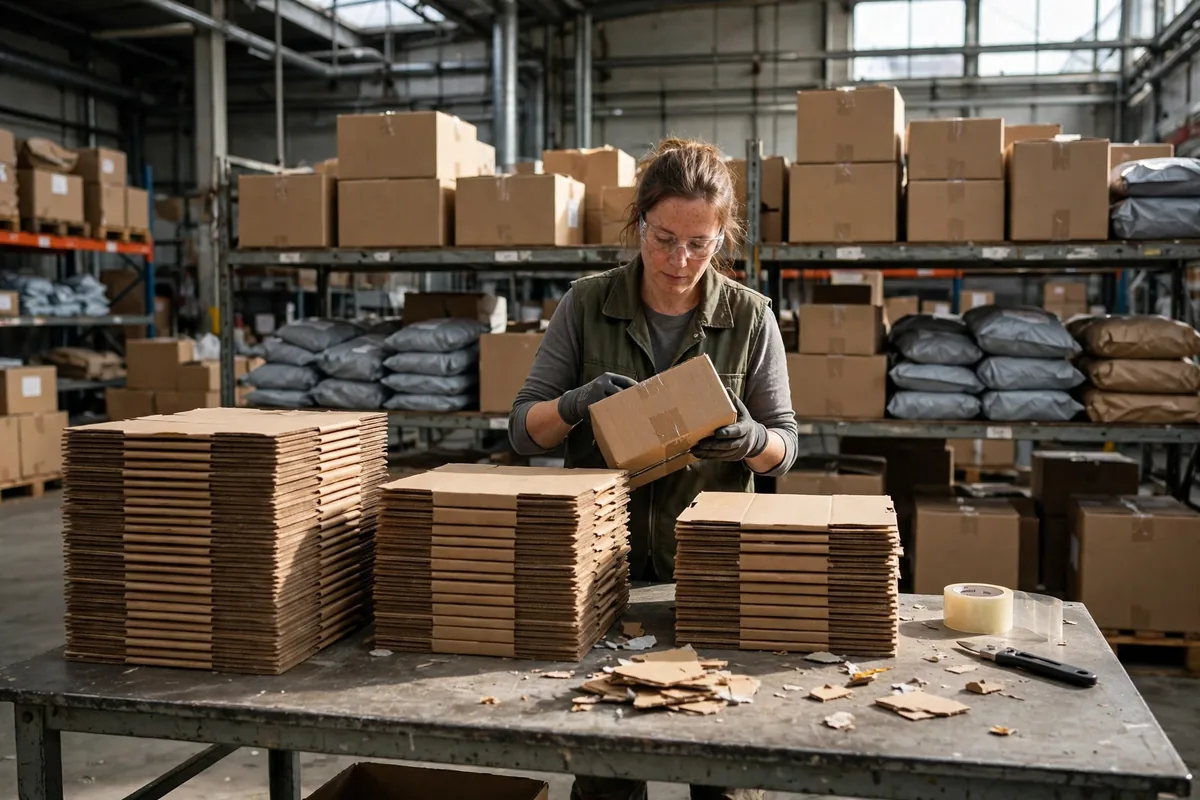
Carton size is money too. A box one size too big needs more void fill, and the carrier charges on dimensional weight as well. My method is to measure the twenty fastest-moving items first, allow 2 centimeters of clearance on each dimension, and cut carton sizes to fit. Run two extra carton sizes rather than forcing everything into one big box. Cartons store flat, so twenty sizes take less than half a pallet position of rack space, and the fill and freight saved in a month pay that back.
One more detail that gets ignored: a carton that overhangs the pallet edge loses a large share of its stacking strength. Industry guidance puts the loss at roughly a third when the corners hang past the edge (illustrative figure, direction is what matters). Line the carton corners up with the pallet corners. Do not let them poke out to save a few seconds of placement time.
Warehouse Packaging Cost Reduction Lives in the Stretch Film: 17 Microns Is Not 23 Microns
Stretch film works on an even simpler principle: the film holds the load because it is stretched and then tries to spring back, not because it is thick. Think of a rubber band. The further you stretch it, the harder it pulls back, and a thicker band is not automatically the better one. Film thickness is measured in microns. The common grades are 17, 20, and 23 microns. Light, uniform carton pallets take 17 microns. Mixed or medium loads take 20 microns as the standard grade. Heavy, sharp-edged, or irregular loads are the ones that earn 23 microns and above. The film is linear low-density polyethylene, LLDPE, and that material name is right there on the purchase order to check against.
Hand wrapping and machine wrapping are two different jobs, and the difference is pre-stretch. Hand wrapping stretches the film about 10 to 20%, limited by the operator's arms. A machine wrapper with a powered pre-stretch carriage reaches 150 to 300%, so the film is stretched before it touches the load and one meter of film does the work of two or three. That gap goes straight into the cost math (hypothetical example): a pallet hand-wrapped with about 700 grams of film can take about 150 grams on a machine at high pre-stretch. Same film price, 550 grams saved per pallet. At 100 pallets a day that is 55 kilograms a day, and over 22 working days it is about 1.2 tonnes of film a month. The wrapper itself costs money, so that part of the math is separate: how many months of film saving pay back the machine.
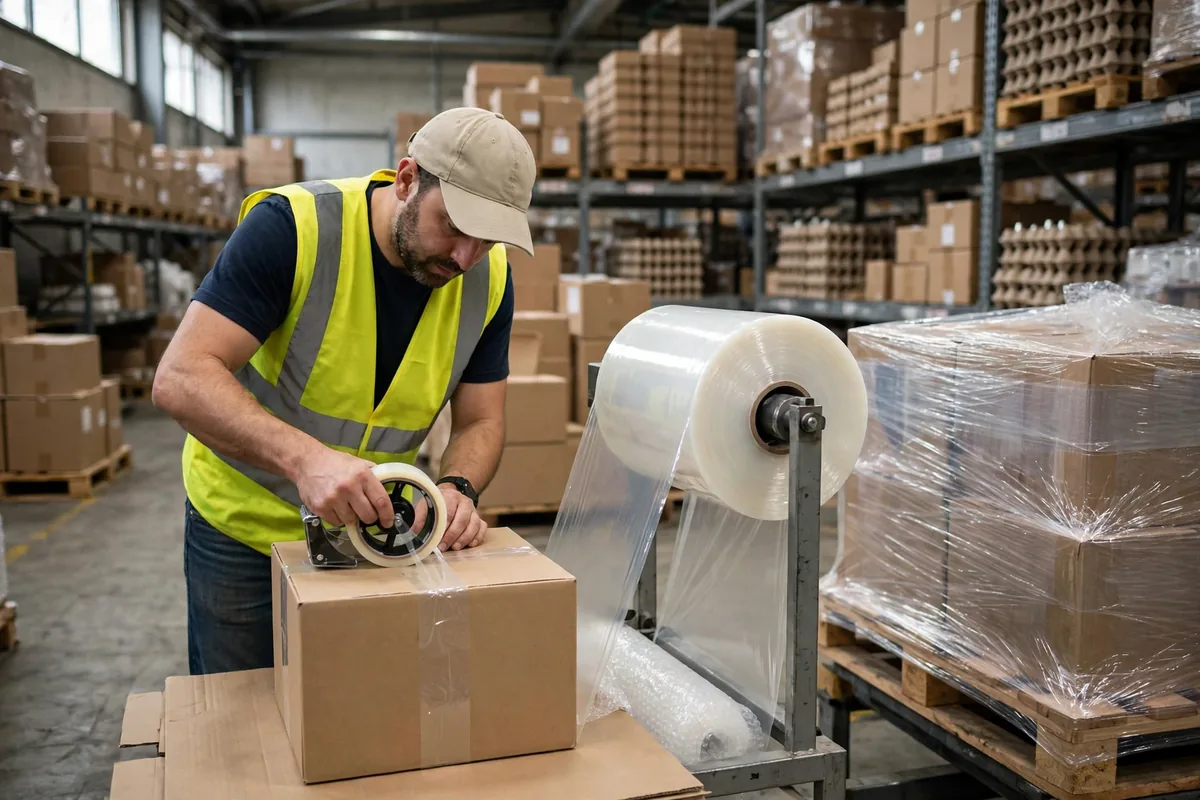
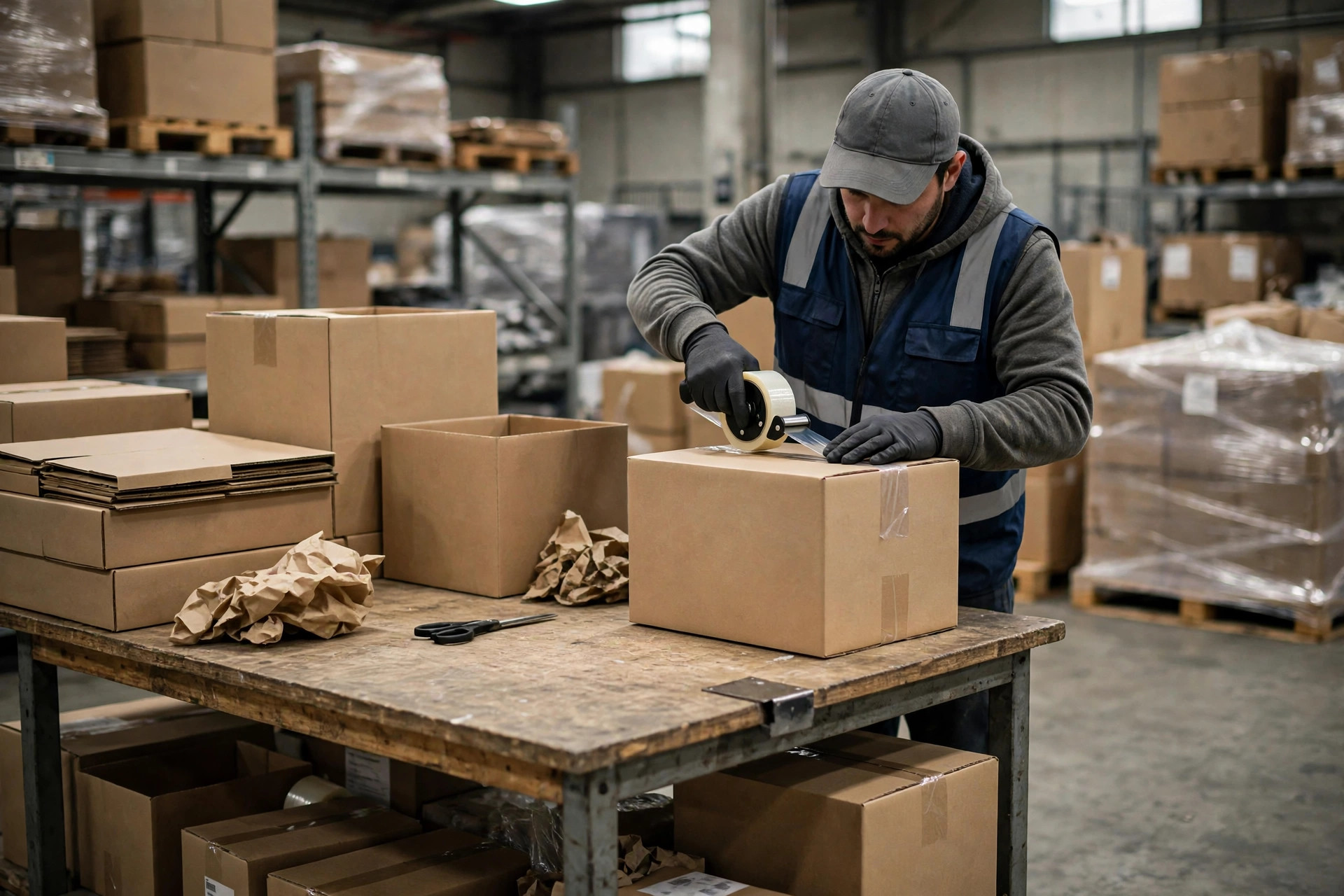
Tape deserves the same discipline. Match tape width to box weight: 48 millimeters is enough for light boxes, 72 millimeters for heavy ones. Light boxes get a single strip across the top, heavy boxes get an H-pattern seal. The H-pattern uses more tape but cuts opening damage sharply. The way to save on tape is not to buy the cheapest roll. Cheap tape with weak adhesive pops open in transit, and one rework costs ten times what the tape saved. Fix one brand and one specification, and test a new supplier first: stick it on, wait 24 hours, then peel. If it peels clean off, it fails. If it tears the board fibers with it, it passes.
The Maintenance Trap: Savings That Leak Back in Three Months
Packaging savings fail in one predictable way: the money saved leaks back within three months. I have watched four leaks. The first is specification drift. Purchasing switches supplier, the carton is still called 32 ECT, but the board weight dropped and the strength dropped with it, and the damage rate climbs slowly enough that nobody notices. The defense is to check the manufacturer's certificate stamp on the bottom flap of every batch: ECT, size limit, and gross weight limit are printed there. A stamp that does not match gets rejected.
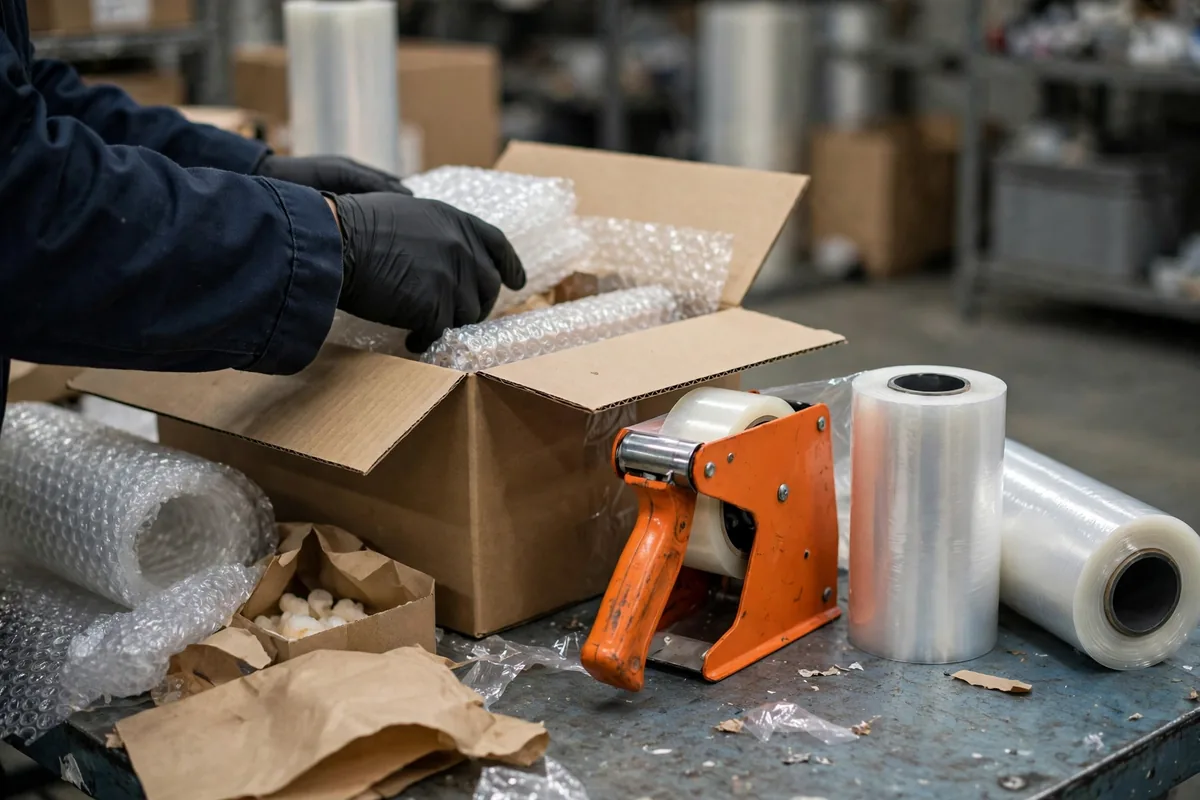
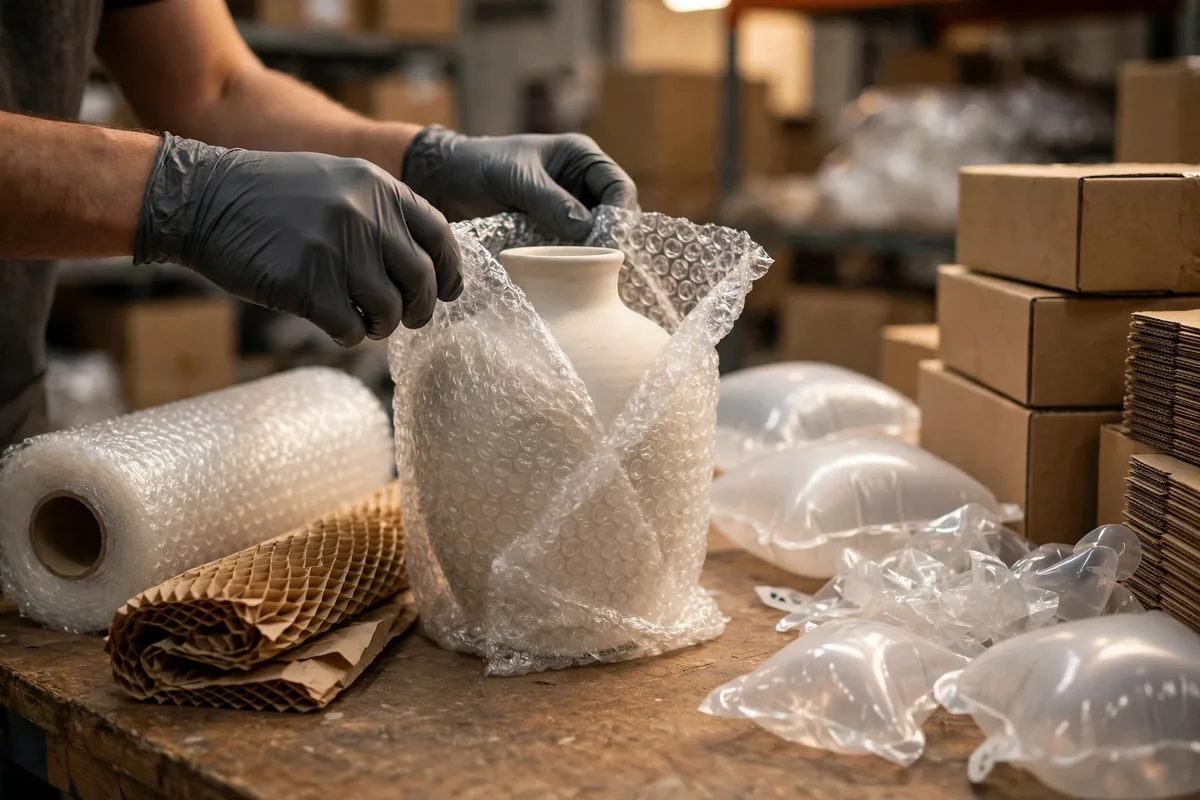
The second leak is film creep. Operators add an extra wrap or two to feel safe, and film use climbs 15% in a month with nobody watching. The defense is to weigh pallets on a sample basis and check film weight per pallet. Anything more than 10% over standard gets a question to the shift on duty. The third leak is carton size sprawl. The warehouse ends up with forty-odd carton sizes, each used rarely, each impossible to run out of, and working capital sits in cardboard. Audit sizes every quarter and cut any size untouched for three months, merging its freight into the nearest size. The fourth leak is void fill chaos: bubble wrap, paper pads, and foam peanuts all in use at once, grabbed by whichever is nearest, with costs nobody can track. Keep two fill materials only: paper pads for light freight and bubble wrap for heavy freight, and clear the rest out.
Real warehouse packaging cost reduction needs a quarterly review as well, because the product mix moves. When small light items grow as a share of orders, the usage of 32 ECT and 17-micron film has to rise with them. When heavy freight grows, stock of 44 ECT and 23-micron film has to follow. Review unit price together with cost per order and damage rate. If the unit price falls but the cost per order does not, the volume is leaking, and the leak is usually in wrap count or void fill.
So is the money well spent? Look at one number for warehouse packaging cost reduction: packaging cost per order shipped. Add cartons, tape, stretch film, and void fill for the month, divide by the number of orders shipped, and you have the cost per order. Change a specification, change the film, change the wrap count, then watch that number the following month, with the damage rate beside it. Cost per order down and damage rate flat means the saving is real. Cost per order down and damage rate up means the saving will be paid back in claims.
One thing you can do tomorrow: sort last month's cartons by ECT and count how many shipments under 65 pounds still went out in 44 ECT. That count is the first saving waiting in your warehouse.
By Da Liu, Automation Engineer