Let me open with a number, because that's how I think. An 800-order-a-day warehouse overspends $0.20 on packaging per order. At 300 working days a year: 800 × 0.20 × 300 = $48,000. That's the shape of warehouse packaging waste — and before you decide whether that money is well spent, let's take it apart piece by piece.
Everyone in warehousing touches packaging every day; almost nobody has actually costed it. In my years doing logistics cost analysis, I've seen too many operations that negotiate freight down to the penny and then bleed it all back out through cartons and stretch film. Today we're going to cost packaging all the way down.
Where Warehouse Packaging Waste Actually Hides
Three places, in order of how quietly they cost you money:
First, oversized boxes. "Better too big than too small" is the warehouse disease. In 2023, a California e-commerce warehouse shipping home goods — several hundred orders a day — packed products that fit a #2 box into #3 boxes, "so packers don't have to think." One size up means double the void fill and an extra tape pass. The fix was embarrassingly simple: measure every SKU's three dimensions, cut box types from seven to four, and tape a "which SKU goes in which box" chart to every pack station. Three months later, packaging cost per order was down roughly twenty percent.
There's a hidden illusion here too: people think "a bigger box only costs a little more." Per box, sure — a #3 isn't much pricier than a #2. But the waste compounds: a slightly pricier box, double the fill, and higher dimensional-weight freight on every parcel. Three small amounts stop being small when they stack. Box sizing has to run on SKU dimension data, never on a packer's gut feel.
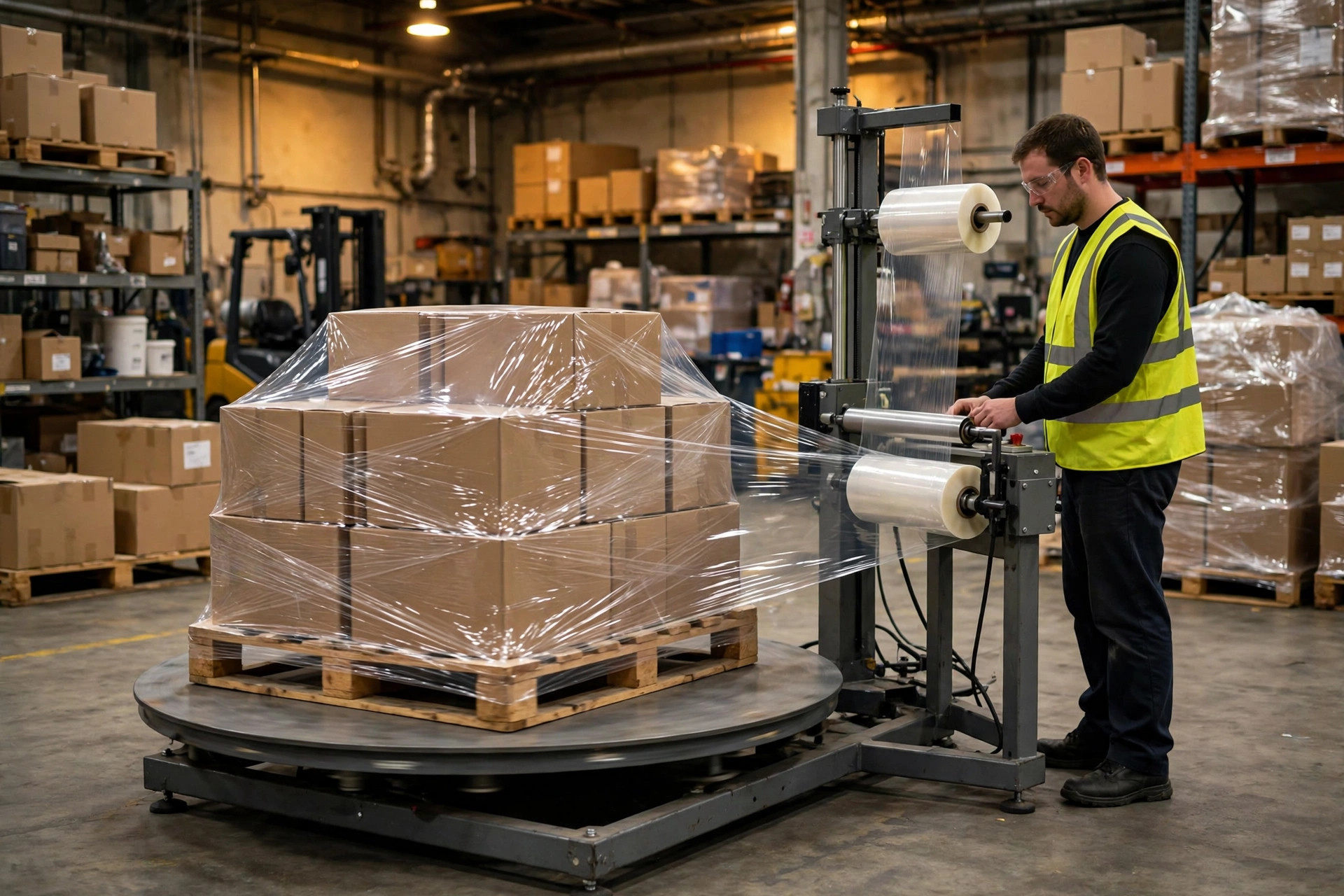
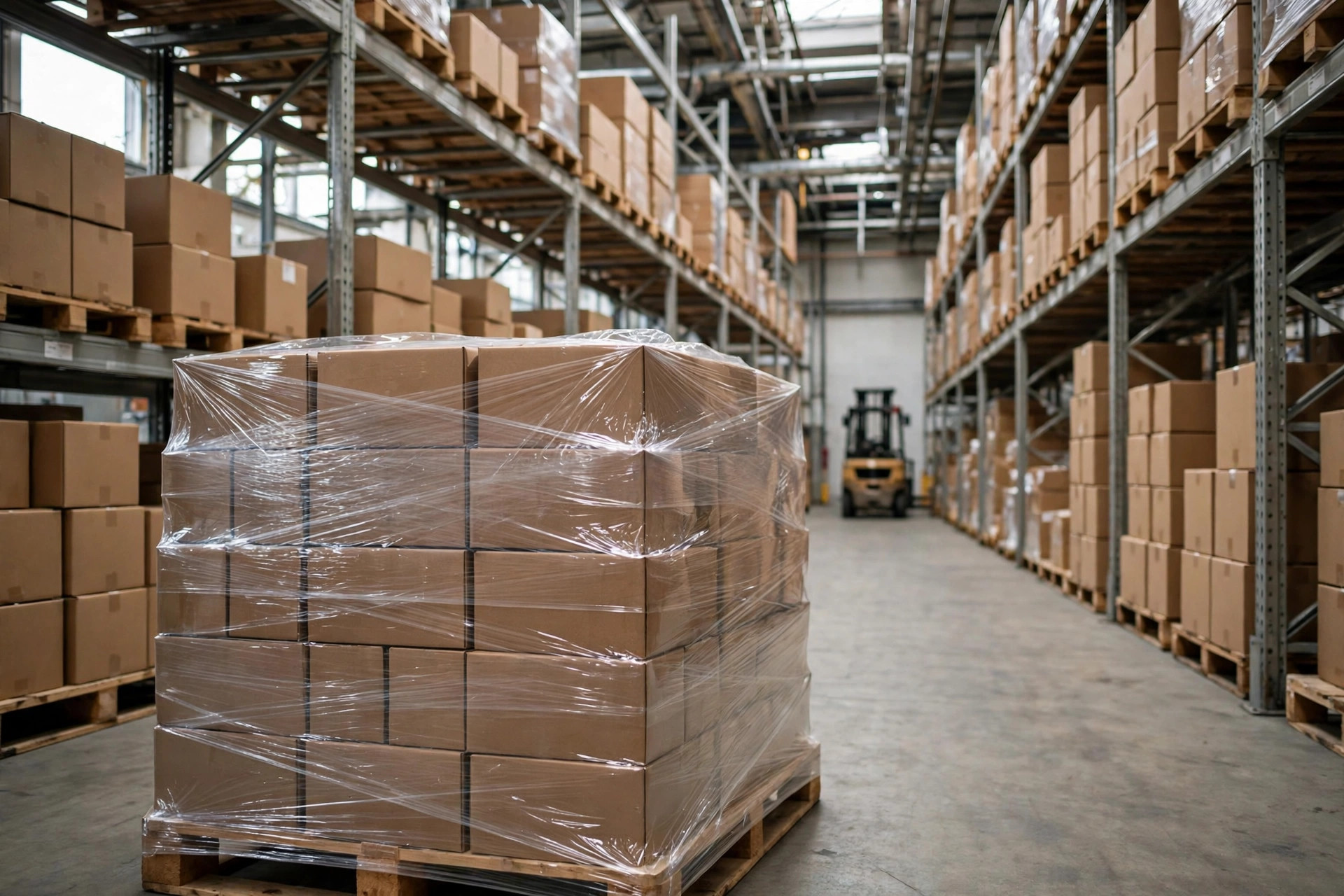
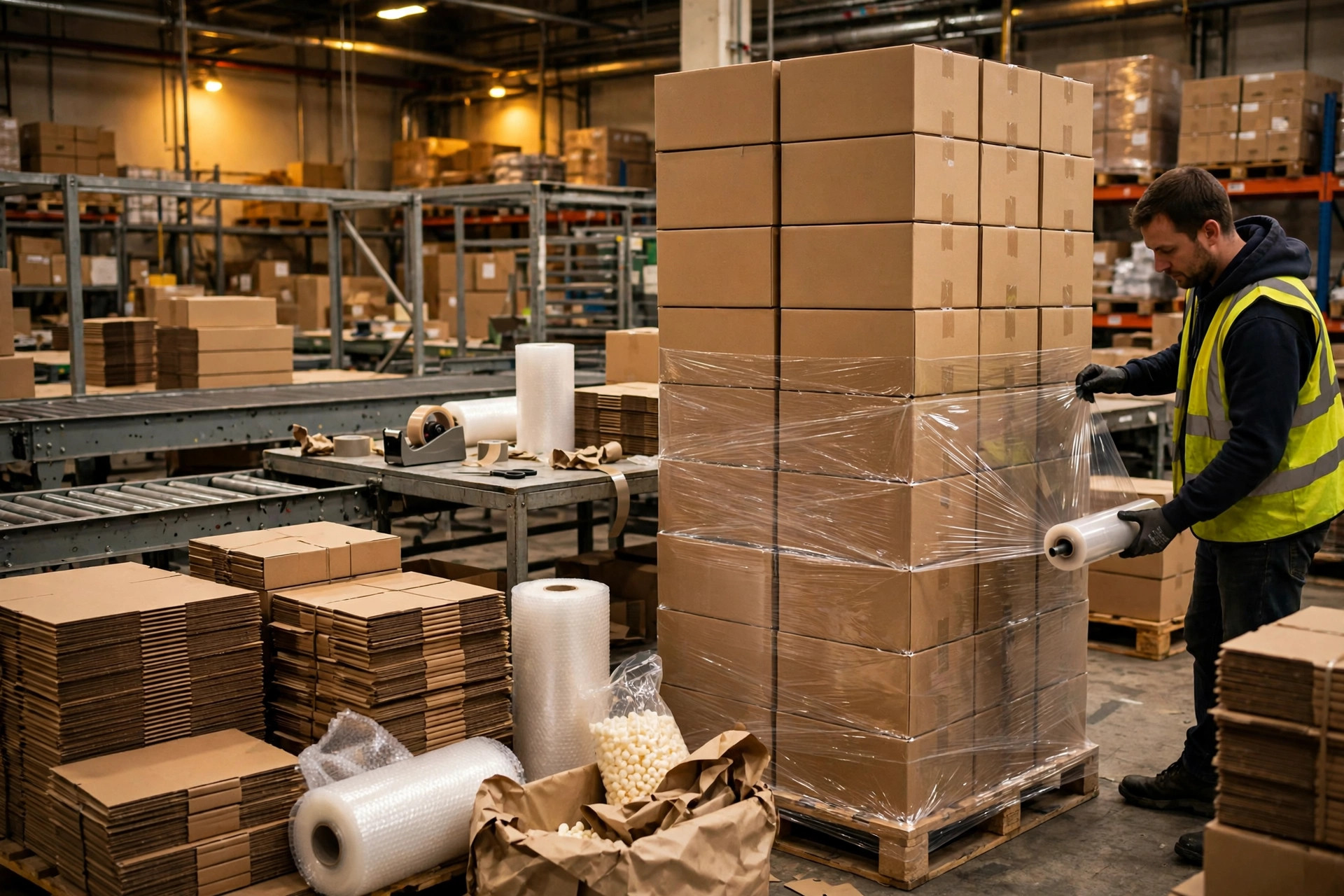
Second, stretch film. The classic hand-wrap habit is wrapping for peace of mind: 6–8 turns per pallet, plus a cross on top. A machine wrap with pre-stretch does the job in 3 turns, tighter. I've seen a warehouse cut film usage roughly in half after installing an automatic wrapper. How do you justify the machine? List your daily pallet count, film saved per pallet, labor time saved — the breakeven point speaks for itself.
Let me run a sample calculation: 40 pallets a day, 8 minutes to hand-wrap one pallet versus 2 minutes on the machine — that's 4 labor hours saved daily, 120 hours a month. Add film usage cut in half, and the payback period measures in months, not years. But flip it around: a small warehouse wrapping a dozen pallets a day has no business buying the machine. Hand-wrap with a written 3–4 turn standard, post a "wrap standard" photo in the wrap zone, and the savings are just as visible. The decision framework is one sentence: set the standard first, check your pallet volume, and only talk machines when the volume earns it.
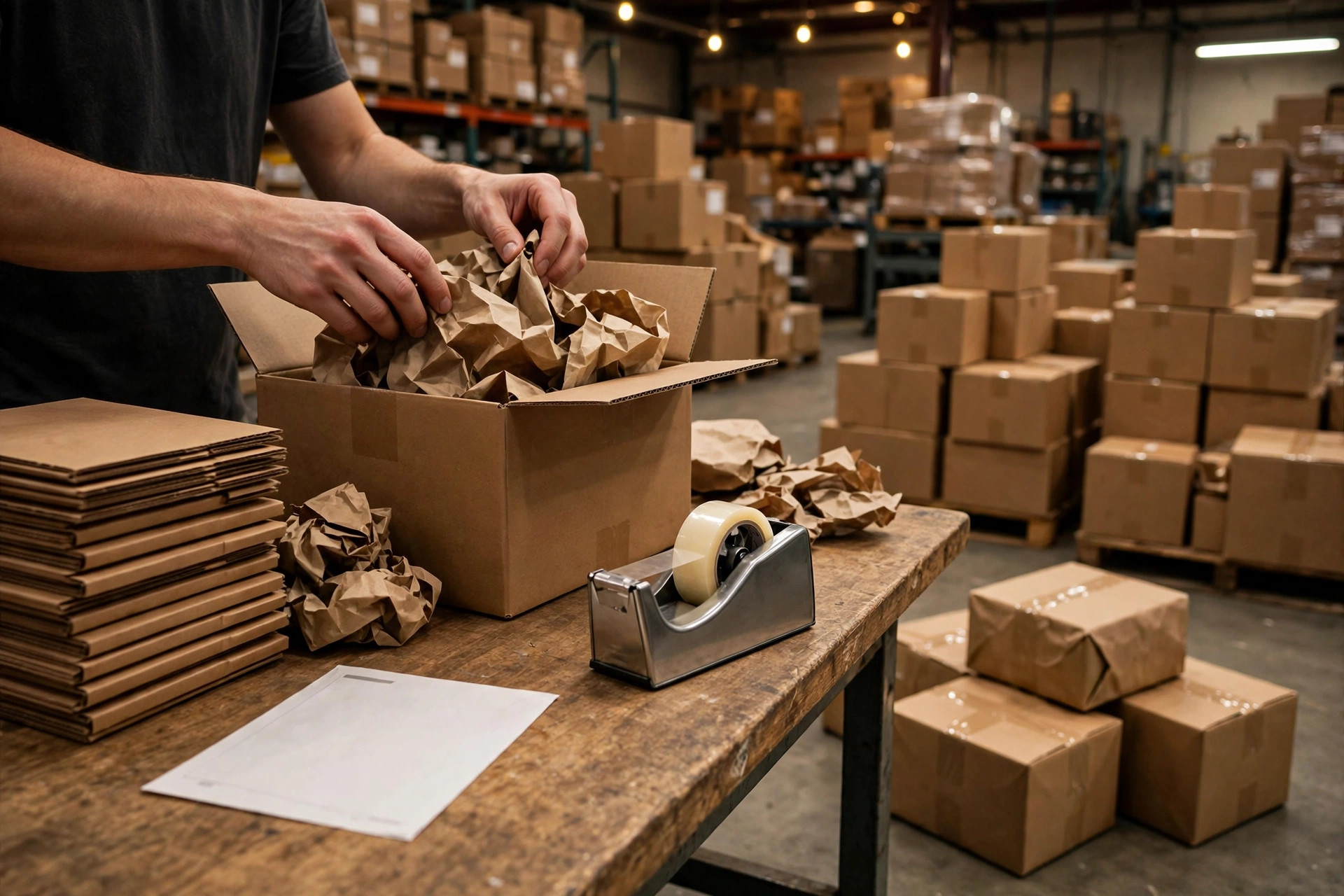
Third, void fill. Paper wadding, bubble wrap, foam peanuts — whatever's within reach. Here's the counterintuitive part: the biggest void-fill waste is never "using too much." It's "the box is wrong, so you're forced to use too much." Get the box right and the fill shrinks on its own; oversize the box and every handful of paper is insurance you're buying for thin air.
Which fill material? Don't guess. Kraft paper is cheapest but heavy and bulky — you need dedicated floor space just to store it. Bubble wrap is light and cushions well but eats storage space and crushes. Honeycomb paper is eco-friendly and recyclable, customers love it, but the unit cost runs higher. Decide on three things: does the product crush, do you have room to store the material, and do your customers care about sustainability? Fragile goods — don't skimp on bubble. Sturdy household goods — kraft is plenty. Selling into markets where buyers demand green packaging — the honeycomb premium pays for itself. There's no best void fill, only the right one.
Warehouse Packaging Waste in One Table
| Waste point | Typical reality | Where the money leaks | The lever |
|---|---|---|---|
| Box selection | Too many sizes, "bigger is safer" | Bigger-box premium + double void fill + dim-weight freight | Measure SKU dimensions, cut box types, post the chart |
| Stretch film | Hand-wrap extra turns "to be safe" | 2× film usage + labor time | Written turn standard; machine wrap only at real pallet volume |
| Void fill | Grab-and-stuff, no standard | Paying to ship air | Fix the box first, then standardize fill quantity |
Run this table as a diagnostic on your own operation: three rows, whichever one matches is where you start.
The Most Counterintuitive Line in This Whole Piece
Here it is: the warehouses that squeeze packaging hardest are usually the ones paying the most in damage claims. I've watched operations cut carton board grade again and again, shave film to the bone — and damage rates climb from 1% to 2%. What does that extra point mean? Say 800 orders a day: 8 more damaged orders daily. Assume $30 a claim in product and freight — $240 a day, $72,000 over 300 working days. The packaging savings that caused it? A fraction of that, maybe ten or twenty thousand a year. Out one door, in through a bigger one.
Real savings never come from buying the cheapest materials. They come from "right box, no wasted film, just enough fill." Packaging is a cost, but it's also insurance — squeeze too hard and you're gambling with your damage rate. That's the most hidden face of warehouse packaging waste: every penny squeezed out can come back as dollars on a claim form.
Do the Math for Your Own Warehouse
Here's my closing, and it's a calculable one: take a sheet of paper and write three numbers — your daily order volume, your packaging cost per order, your working days per year. Multiply. That's your annual packaging spend. Then pull 50 random orders, measure how much bigger the box is than the product, count the film turns on a pallet, check whether fill is grab-and-stuff — multiply the excess back out, and that's what you're wasting every year. Get the order right: box sizing first, then the wrap standard, then fill. Start with the boxes and you'll see the difference in three months. Packaging money only goes where it should once you've actually done the arithmetic — skip the math, and every cut you make might land on your own foot.
By Lao Zhou, Logistics Cost Analyst