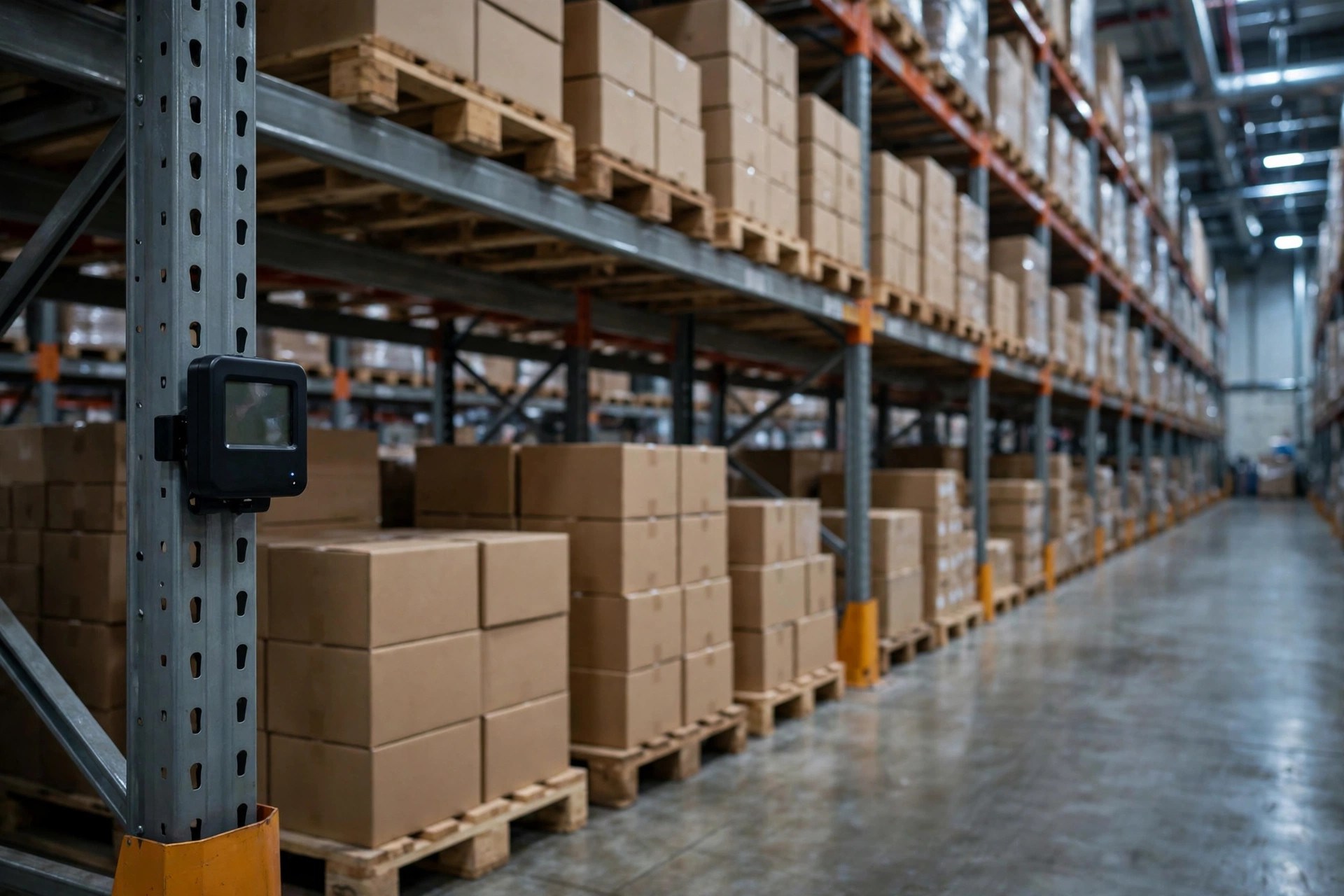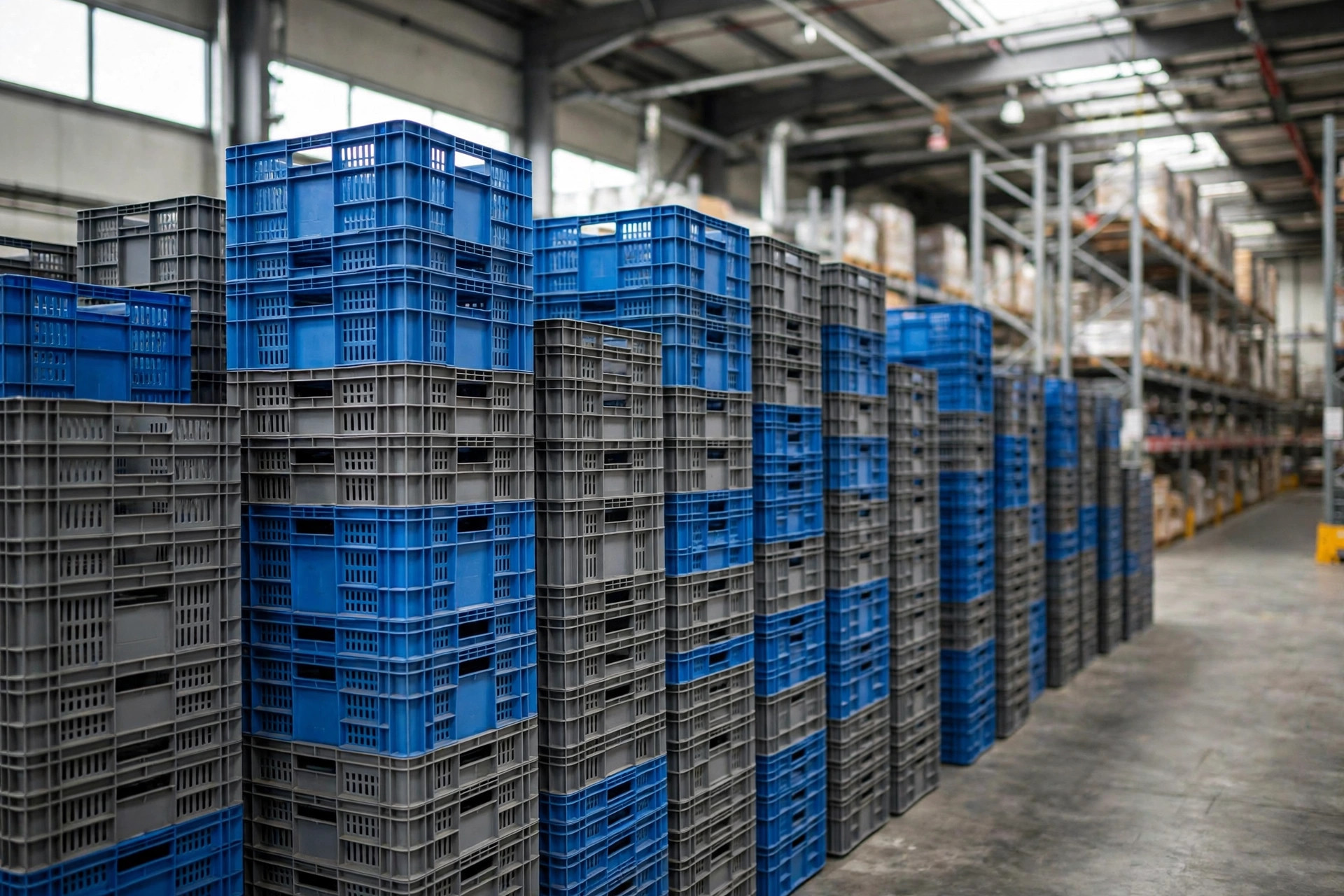
Start with the ledger, not the lecture. Ten thousand reusable totes at $20 each: a $200,000 asset pool. Apply a 15% annual loss rate — and note that this is the conservative end; ACSIS estimates that 15% to 30% of returnable packaging assets are lost, stolen, damaged, or misplaced every year — and you are replacing 1,500 totes a year at $30,000. Over three years, replacement spending alone buys the entire fleet a second time. That money is wasted, because more than half of that loss was preventable.
The headline number: how loss multiplies your cost per trip
The entire economics of reusable packaging collapses into one metric: cost per trip. Two published models show the ideal case:
| Model | Unit price | Design cycles | Cost per trip |
|---|---|---|---|
| Kiva Container analysis | $35 | 250 | $0.24 |
| BITO analysis | ~€16 | 200 | ~€0.08 |
Impressive — and both assume the tote survives to its design life. Now feed in a 15% annual loss rate. Assumptions: a $20 tote, 250 design cycles, 50 trips per year. Without loss, cost per trip is $20 ÷ 250 = $0.08. With a 15% annual probability of loss, the tote's expected lifetime cycles drop to roughly 186 (0.85 survival per year, compounded over five years), and cost per trip rises to $20 ÷ 186 ≈ $0.108.
That is 35% more expensive. A 15% loss rate inflates unit cost by 35% — memorize that ratio. Loss doesn't just nibble at the budget; it eats the entire cost advantage reusables hold over one-way cardboard. Cardboard costs $0.66 per trip (BITO figures); your tote nominally costs $0.08, an 8x advantage on paper. After loss, it's $0.108, and a big chunk of that advantage is gone. Push the loss rate toward 25% and the math gets ugly fast.
A real case: 8 million trays, over $5 million lost in a year
ACSIS documents a global bakery running roughly 8 million trays across 11,000 distribution routes. Each tray costs about $7. Annual losses — trays lost, damaged, or misplaced — exceed $5 million, roughly 9% of the fleet.
Three things matter here. First, these are trays, not totes, but the loss mechanics are identical: the asset leaves your sight and nobody owns it. Second, 9% is actually well managed — it sits below the 15%–30% industry range ACSIS cites, which means this company spent serious effort to get there. Third, the $5 million covers replacement only. It excludes the labor spent hunting for trays, the line stoppages when trays run short, and the chargeback disputes with downstream partners. Add the full cost stack and the number climbs.
So stop asking "what's a normal tote loss rate for our warehouse." Normal is not a feeling. It's two numbers: where your annual loss rate sits inside that 15%–30% band, and how much it inflates your cost per trip.
The full cost stack: replacement is only the visible part
Most warehouses count only replacement purchases. That understates the bill. The complete structure has five layers:
| Cost layer | What it is | How to quantify it |
|---|---|---|
| Replacement | Buy one for every one lost | Annual lost units × unit price — the obvious one |
| Search labor | Cycle counts, digging through the warehouse, asking "where did the totes go" | Track actual hours; varies too much by site to generalize |
| Stockouts | Picking and shipping wait for totes | You know what an hour of downtime costs better than I do |
| Cardboard substitution | Buying one-way boxes to cover tote shortages | $0.66/trip vs. $0.08/trip — an 8x penalty |
| Dispute overhead | Arguing with customers and carriers over who lost what | Legal and customer-service hours — invisible but real |
The fourth layer is the most underestimated. When totes run short, the floor quietly buys cardboard to keep lines moving. That spend hits the consumables budget, never the "tote loss" line, so management never sees the connection on any report. I've seen a warehouse spending $30,000 a year on replacement totes while quietly spending $50,000 on substitute cardboard. Consolidate the ledgers before you decide anything.
The counterintuitive part: why zero reusable tote loss loses money
Here is the uncomfortable conclusion: the optimal loss rate is not zero.
Loss prevention costs money. Cutting loss from 15% to 5% saves 1,000 totes a year — $20,000 in replacement. But if you tag all 10,000 totes with a $5-per-tote tracking solution, that's $50,000 upfront before systems and maintenance. Negative return. The ceiling for prevention spending equals the loss it eliminates:
Annual prevention budget cap = annual lost units × unit price × expected loss-rate reduction
Spend above that and you're paying $2 to save $1. The right sequence: deploy the free and cheap measures first (fixed locations, scan-at-handoff, an asset register) and drive loss from 15% toward 8%; reserve the expensive tools (full-fleet RFID, vision cycle counts) for the residual loss the cheap measures can't touch. Below about 5%, each additional point of reduction costs exponentially more — that's a tax on perfectionism, not an investment in profit.
One regulatory variable for Europe-facing operations: the EU Packaging and Packaging Waste Regulation (EU) 2025/40 sets a 40% reusable-packaging target for specified transport packaging from 2030. If you ship into Europe, this ledger is going on the table sooner or later — better to do the math now.
Four levers to reduce reusable tote loss, cheapest first
Lever 1: Fix misplacement — free. Most "lost" totes aren't stolen; they're in the wrong place and nobody can find them. Empty totes with no fixed return route, mixed sizes in one stack, a returns area nobody clears for three months — squeeze out this phantom loss first. Assign a fixed zone per tote size, draw the empty-return route, clear the returns area weekly. Zero spend. Only after this do you know your true loss rate.
Lever 2: Give every tote an identity. Without an asset register, every loss figure is a guess and replacement is a bottomless pit. Tag each tote with a barcode — RFID at scale if the volume justifies it; get current supplier quotes for tags and readers rather than trusting a sales pitch — record it on receipt, and count by unit, not by stack. The first full count after building the register usually "finds" a batch of totes. They were there all along; nobody knew.
Lever 3: Scan at every handoff, own every node. Totes disappear at the moment they leave your sight: handed to a carrier, delivered to a customer site. Scan at outbound, at handoff, and at return; flag quantity mismatches on the spot. A scan costs next to nothing; a lost tote costs $20. Where nobody owns the tote, it's a tragedy of the commons.
Lever 4: Close the loop contractually. Write recovery terms into customer and carrier contracts: loss compensation rates, return deadlines, periodic reconciliation. Without contractual teeth, the other side's rational choice is to treat your totes as free disposable packaging — their cost optimum is your loss rate. This is a management action, not a purchase, but someone has to negotiate it and enforce it.
Don't reorder the sequence: plug the process holes first, then talk technology; control your own floor before policing the outside.
The computable conclusion
Memorize this formula:
Your annual wasted spend on tote loss = annual replacement units × unit price + cardboard substitution cost during shortages + search-labor cost
Any prevention spending below that number pays for itself. Pull last year's cycle-count data, fill in the three figures, set the ceiling, then price the four levers against it one by one — the order you deploy them can double or halve the ROI. A prevention program launched without this math is the same as blindly buying replacements: both are spending money on a feeling.
By Lao Zhou, Logistics Cost Analyst