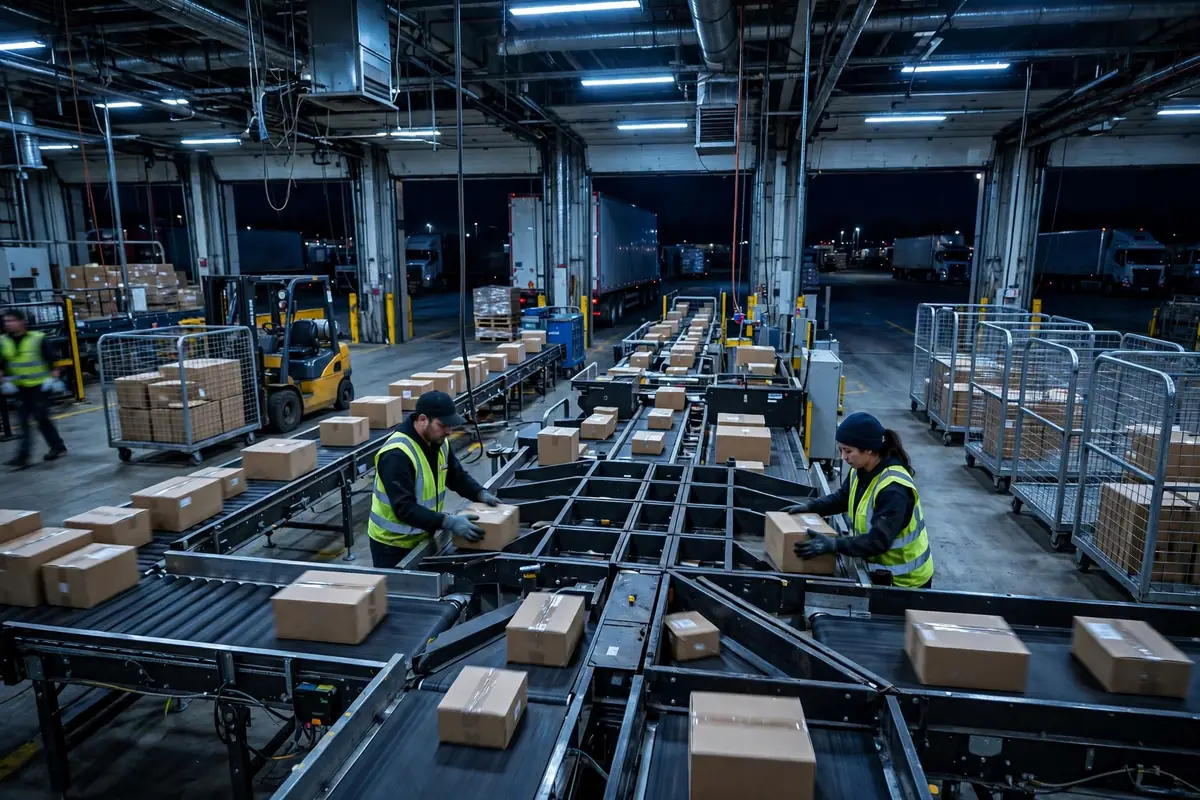
Let me start with the verdict: a parcel sortation hub at night is won by rhythm, not headcount. Inbound, sort, and dispatch are three gears that have to mesh. If one of them slips by half an hour, the whole night's math falls apart. I've seen too many hubs that look orderly in daylight and turn into chaos after dark — and the problem is never the equipment. It's that nobody treats the night as a budget of minutes.
To put it bluntly, a night shift is a timed exam. When the linehaul trucks arrive, when the sorter starts, when the last departure leaves — those three times are nailed to the wall, and nobody gets to move them. What you can move is everything in between: where people stand, where freight flows, and which step catches the problem parcels.
Where the Night Shift Clock in a Parcel Sortation Hub Comes From
The rhythm isn't shouted into existence. It is worked backward from the cutoff. The last departure leaves at 4 a.m., loading takes 40 minutes, so sorting has to finish by 3:20 at the latest. Sorting finishing at 3:20 means the sorter has to start at a certain time, and the sorter starting means inbound unloading has to finish before that. Work it all the way back and you know exactly when the night shift has to start and how much volume goes in each wave.
I've seen too many hubs pack their wave plan full, looking busy and efficient, when really they're betting no inbound truck will be late. On the night of November 12, 2024, a hub in East China was running at its Singles' Day peak, planning to handle 380,000 parcels in one night. The first two linehaul trucks were 40 minutes late because the highway was closed. The night supervisor decided everyone would wait — hold the sorter until the trucks arrived. When the sorter finally started, it ran at full load, there was nowhere to put the exception parcels, and the 2:30 a.m. wave slid to 3:40. The last departure left, and more than 6,000 parcels were left waiting for a morning relief truck. That night's relief truck, the customer complaints, and the next day's delivery delays cost far more than 40 minutes of waiting ever would.
This one cuts both ways. Waiting has its logic: if the freight isn't there, starting the sorter means people standing by a belt with nothing to sort, and labor burns just the same. Not waiting has its logic too: every minute the sorter starts late is a minute less for loading the last departure. My rule is a line in the sand: if inbound is less than 15 minutes late, wait and start on plan. Fifteen to 30 minutes late, cut one wave — split the biggest wave in two and sort what has arrived. More than 30 minutes late, don't wait at all: start the sorter on arrived freight and run the late freight through a small side sorter to catch the next departure. With the line drawn, the night supervisor doesn't have to make it up on the spot.
Shift handover is another gap that gets missed. Before the day shift clocks out, the night supervisor needs three things on paper: how much freight was left behind, which dock doors still have cages to clear, and which equipment reported a fault. Without that, the night shift spends its first half hour hunting for freight around the building, and the rhythm is broken from the start. I insist handover happens face to face, standing up, 15 minutes — a group-chat message saying "it's all yours now" is not a handover. In the summer of 2025 I watched a hub where the day shift left more than 2,000 parcels unsorted and never told the night shift. The night crew planned its waves, then found the freight sitting in a corner halfway through, and the whole wave plan went out the window.
The Truck Is 30 Minutes Late. Now What?
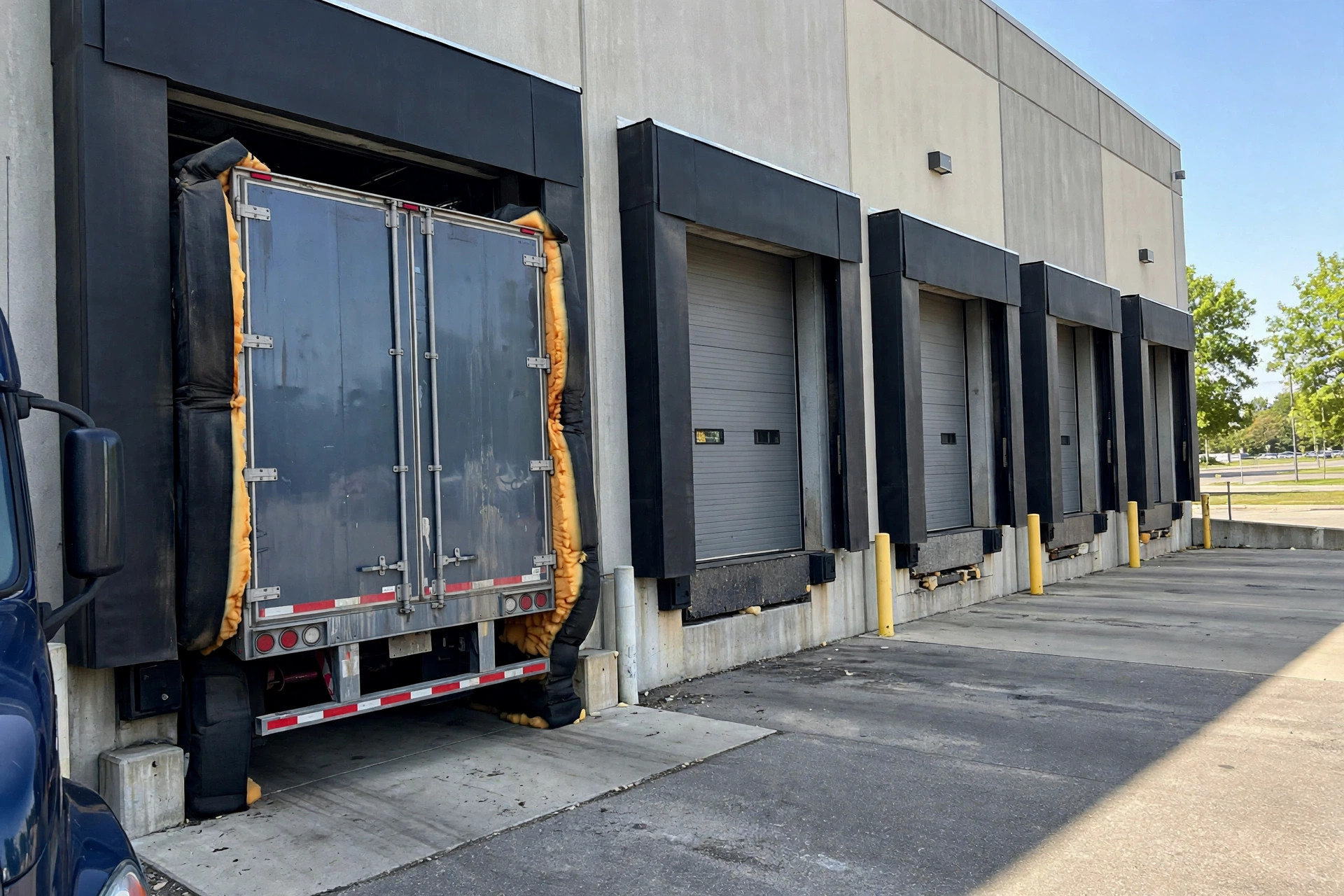
Inbound is the first gate of the night shift, and the most underestimated one. Unloading looks simple, but three numbers decide whether you have any time left later: unloading speed, dock doors, and forklifts and cages. In March 2026 I visited a hub in North China: six trucks inbound in one night, only four dock doors, and nearly an hour lost just queueing to unload. The supervisor told me the equipment was fine. I asked why there were only four doors, and he said four was enough in the daytime. Enough in the daytime, not enough at night — that is the classic mistake of planning a night shift on daytime numbers.
My fix is to schedule inbound in waves too: before the trucks arrive, sequence the doors by arrival order, biggest loads first; stage the cages beside the dock doors in advance, instead of hunting for them after the truck is already there; and do a first-pass sort while unloading — oversized, odd-shaped, and damaged parcels get diverted right away instead of going into the sorter and coming back out. Ten extra minutes of first-pass sorting saves twenty on the sorter.
Here's the counterintuitive part: the most expensive thing at night isn't electricity, it's waiting. A sorter standing idle for an hour is labor sitting on the clock. A linehaul truck waiting at a dock door is the driver's time, fuel, and the next leg's connection all burning. What you save on power is nothing next to what waiting costs. So the first rule of night-shift rostering is that neither people nor trucks should wait.
The Last Gate Before Dispatch at a Parcel Sortation Hub
Dispatch is the end of the night, and the easiest place for things to go wrong. Loading looks like manual labor, but it's really one question: load factor or on-time departure — you can only guarantee one. Load it full and the truck leaves late; leave on time and the truck leaves part-empty. Plenty of hubs reach 3 a.m. and start agonizing, and the usual result is losing both: the truck leaves at 90 percent full and twenty minutes late.
My call is blunt: the last departure protects the clock, not the load factor. The logic is simple — a late truck misses the next hop, and the whole truckload's service promise is destroyed. One load short by ten percent can be made up on the next truck, and the damage is limited. That rule belongs in the night-shift manual, not in the loading lead's head at 3 a.m.
Exception handling is the last gate before dispatch, and the one I most insist on staffing separately. Parcels with unreadable addresses, torn labels, or excess weight can't be sorted by the machine — and if they slip onto a truck, they come back as returns and complaints. At that North China hub, the night shift staffed a three-person exception post that caught more than 400 problem parcels in one night. After review, more than 300 were re-addressed and shipped the same night, and fewer than 100 waited until morning. Three people bought an entire truckload's worth of on-time delivery. That math works. Review has its own rule too: re-address what can be re-addressed on the spot, and for the rest, photograph it, log it, and hand it to customer service first thing in the morning. Don't let a problem parcel spend the night in the hub — by morning, the customer's phone call has already arrived.
Here's a comparison I worked out for fellow operators — a hypothetical example of one night at 300,000 parcels, with the last departure at 4 a.m.:
| Cutoff strategy | Cutoff time (assumed) | Same-night dispatch rate (assumed) | Next-day relief cost (assumed) |
|---|---|---|---|
| Early cutoff, protect the clock | 2:30 a.m. | About 92% | Low |
| Late cutoff, ship as much as possible | 3:30 a.m. | About 97% | High — last departure often leaves late |
| Split cutoff, large and small apart | Large 2:30 a.m., small 3:15 a.m. | About 96% | Medium |
The third option looks the most complicated, but it fits high-volume hubs best: large parcels load slowly, so cut them first; small parcels move fast, so cut them later. A cutoff time isn't set by gut feel — it's calculated from the shape of your freight. If your hub runs heavy on large parcels, the answer is different, and the strategy should be different too.
Running a night shift comes down to three things: inbound without queues, sorting without gaps, and dispatch without dithering. Work out the rhythm, write it down, stick it on the wall, and let every shift run by it.
So — who actually sets the rhythm on your night shift?
By Lao Mi, Supply Chain Veteran (20 yrs)