Think of a damaged carton the way you would think of a headache: treating the head is the obvious move, and it is usually the wrong one. I have watched a home-goods warehouse chase a rising carton box damage rate for three months, buying thicker and more expensive cartons through two rounds of supplier changes, while the damage rate did not move at all. The fault turned out to be the case taper: the tape tension was set so tight that every seal put a crease into the top flaps. The carton looked fine leaving the warehouse and split open in the customer's hands.
Before anything else, define the number. My working definition of the damage rate is simple: damaged cartons reported by customers — through complaints, returns, or claims — divided by total cartons shipped in the same period. Counting only the damage you can see inside the warehouse is self-deception. The damage that matters is the damage in the customer's hands.
Check the Taper Before You Blame the Box
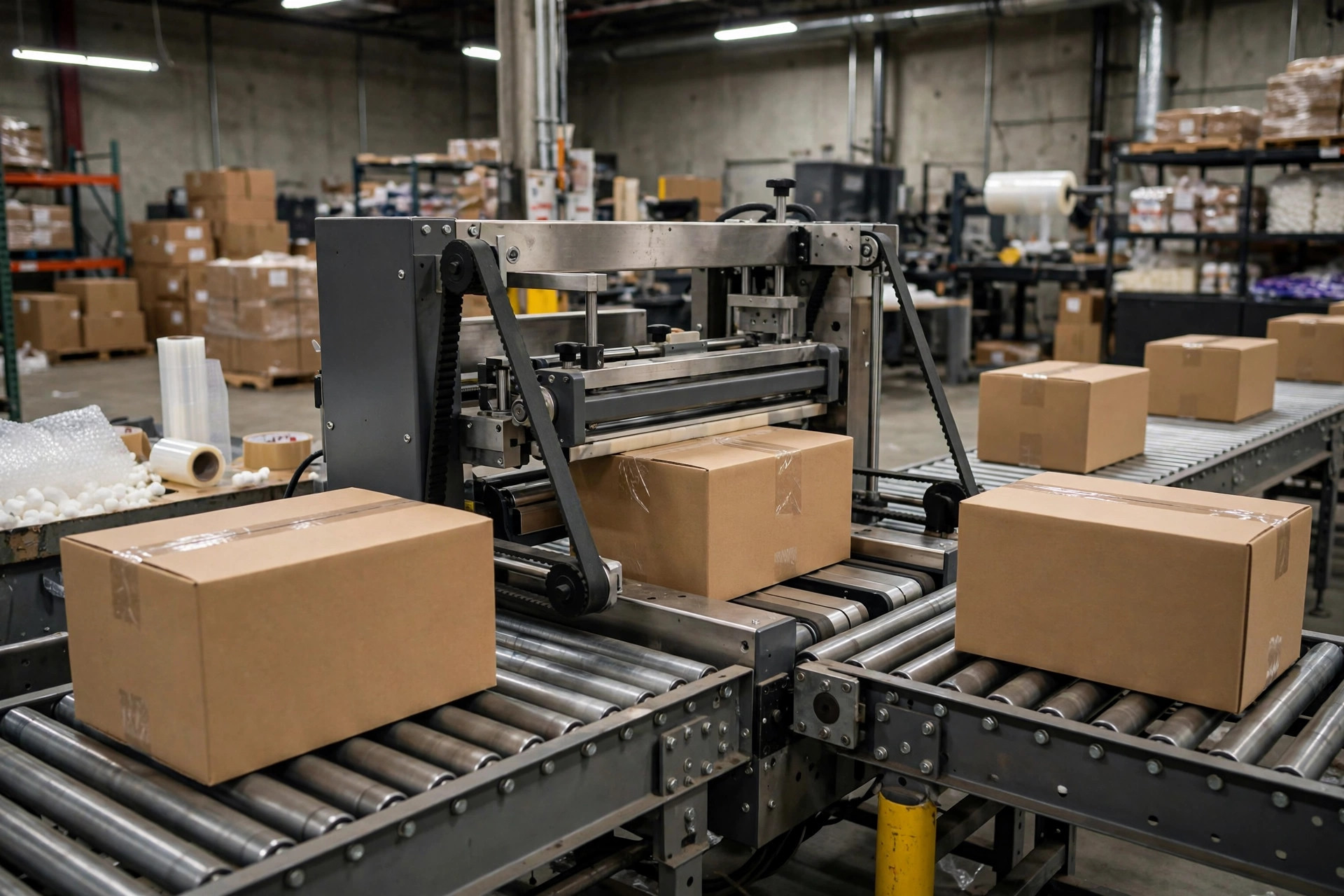
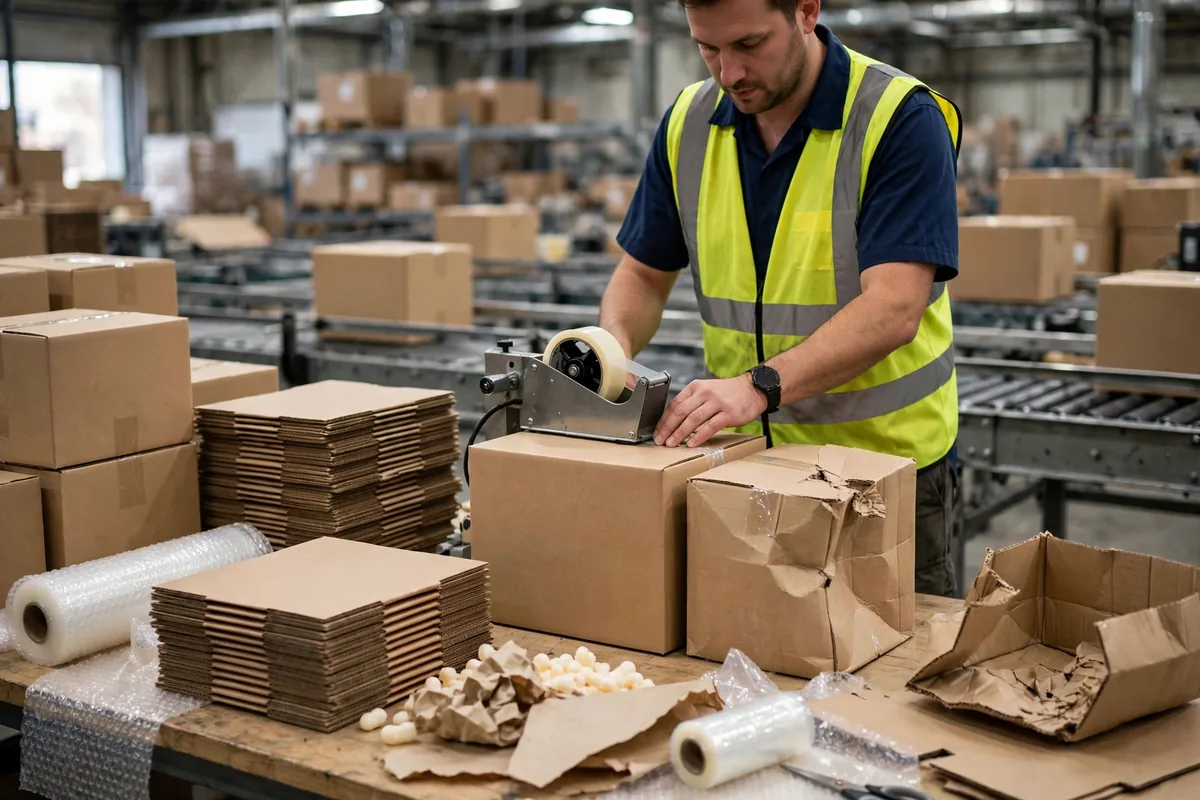
Last summer a small-appliance warehouse came to me with a carton damage rate above 2%. Their first instinct was that the cartons were no good. They changed suppliers, they raised the board grade, they spent the money — and the rate stayed put. I spent half a day on the floor. The top tape on the taper was strung as tight as a guitar string, and the sealing pressure was cranked to maximum. Tape tension that high creases the flaps the moment the box is sealed. Sealing pressure that high crushes a layer of flute. The carton leaves the line already injured, and a few bumps in transit finish the job.
It is like over-inflating a bicycle tire and then blaming the tire when it blows. Three settings on a taper cause most of the trouble: tape tension, sealing pressure, and the cutting blade. A dull blade leaves a ragged tape edge that never sticks properly, so the seal pops open halfway to the customer. Tension too tight and the board gets creased. Pressure too high and the flute gets crushed. Adjusting all three costs nothing — a few turns of a knob — but someone has to think of checking the taper first instead of ordering better cartons.
There is one more usual suspect that gets ignored: moisture. A carton that has absorbed damp loses crush strength fast. The rainy season, or cartons stacked against an outside wall, are the classic cases. The same batch of cartons performs fine in dry storage and falls apart in a damp month. No grade of board fixes a humidity problem — fix the storage conditions first.
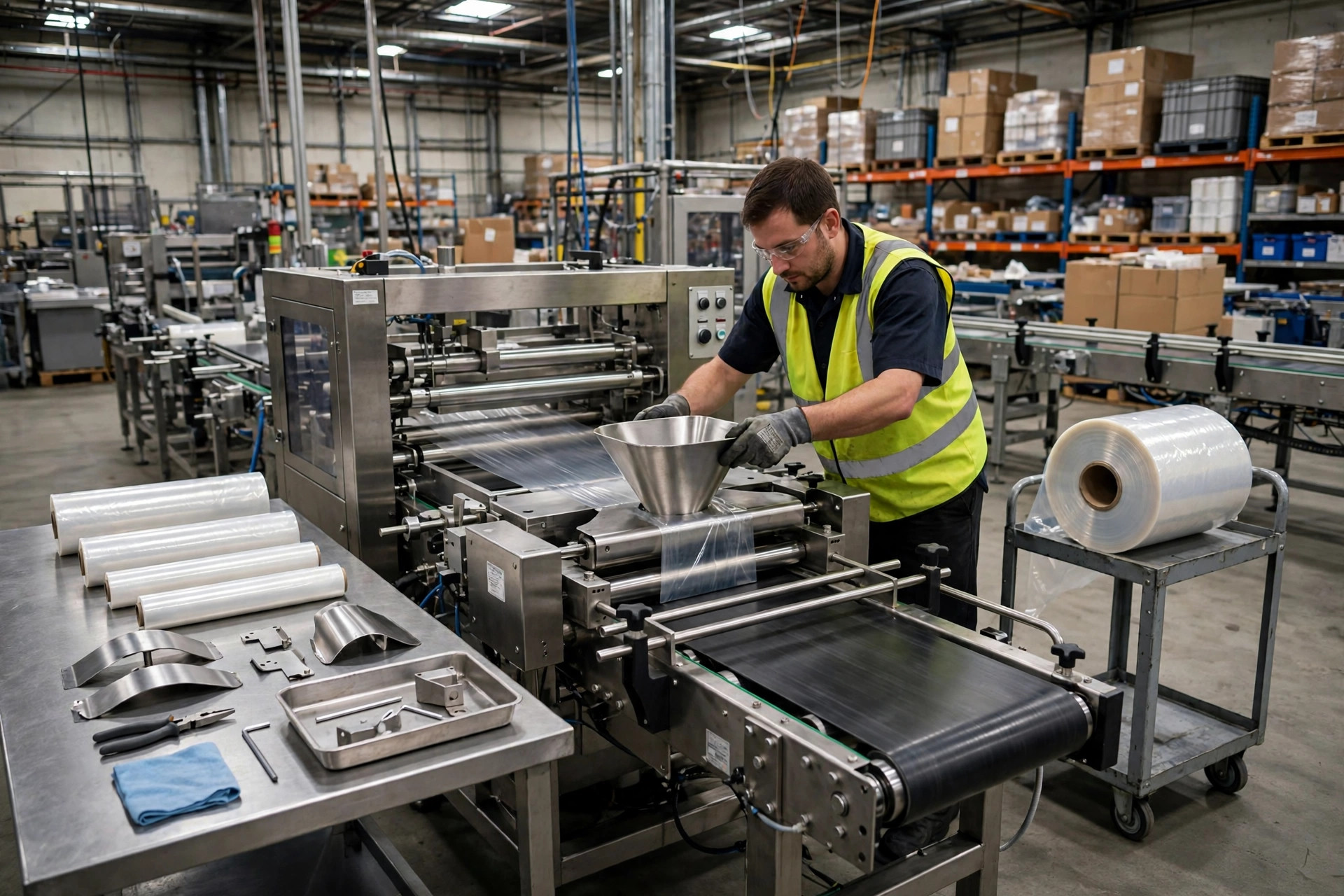
The taper has its maintenance traps too, and it is like a car that never gets serviced: sooner or later it leaves you stranded. A dull blade is the most common one — a ragged tape edge never sticks properly. Tape and pressure rollers build up adhesive, start slipping, and the tension drifts with them. My practice is to put all three on a weekly check: blade judged by whether the cut edge is clean, rollers by whether adhesive has built up, pressure wheels by whether they turn freely. How often to change a blade has no universal answer — it depends on how many cartons you seal a day. As an illustrative guide, a line sealing 2,000 cartons a day commonly gets two or three months from a blade. Judge by your own cut quality, and do not wait until the edges start fraying.
Three Inspection Stages for the Carton Box Damage Rate
A high damage rate is not a verdict, it is a starting point. Use three-stage inspection to pin the fault to a specific step. Run it for a week and the suspect usually confesses on its own.
| Inspection point | How to sample | What a failure means |
|---|---|---|
| Incoming cartons | 20 empty cartons per delivery, stack-press and squeeze the corners | Soft board or crushed flute here means the carton itself, or damp storage |
| After taping | 5 cartons per hour off the taper, check flaps, tape, and flute | Creased flaps or crushed flute here means the taper settings |
| Before loading | 10 cartons before the truck leaves, simulate handling bumps | Clean at the first two stages but failing here means handling |
The point of the stages is isolation. Incoming stock fine but damage after taping means the taper. Fine after taping but damaged before loading means handling. And handling is the hardest stage to manage: tossing, stacking too high, cartons overhanging the pallet edge — all classic causes. Tossing only gets admitted when the camera caught it. Without footage it is always "a carton quality problem," which is why inspection records matter. Numbers leave less room for argument.
One more case. A baby-products warehouse had damage concentrated on one long, narrow carton. Incoming inspection was clean, post-taping was clean, and pre-loading inspection kept finding the same corner split. The cause was pallet stacking: the long cartons were laid flat, so the bottom layer carried uneven load and the corners gave way first. They switched to standing the cartons upright with a divider sheet between layers, and the damage rate dropped by more than half within a week. Same carton, same taper — only the stacking changed.
So when is changing the carton actually the right move? The dividing line is the product, not the box. Light, small goods and household items are fine in single-wall board — upgrading to double-wall is money spent for nothing. Heavy goods and hardware with sharp edges will beat single-wall to pieces, and whatever you save on cartons comes straight back as damage claims. And damp is damp: cartons stored against a wall or on a floor that sweats will fail whatever flute you buy, so move the storage spot first. My rule is to locate the fault with the three-stage inspection, talk about changing cartons only when the carton itself owns the blame, and price it before you switch — the extra cost per carton times monthly volume, weighed against the monthly claims it would save. If the saving wins, switch. If it does not, do not.
The Carton Box Damage Rate: Is the Fix Worth It?
Price one damaged carton honestly. Take an illustrative example: a $45 parcel that arrives damaged. The refund or replacement, repack labor, return freight, and customer service time add up to easily more than $12. Ship 30,000 orders a month at a 1% damage rate and that is 300 cartons — $3,600 a month in losses. The price difference between carton grades is only a small part of that bill. The big money is claims and repacking.
That is why "check the taper before you change the carton" is not a slogan, it is arithmetic: a better carton is a recurring cost increase, while adjusting a taper is a one-time action. No grade of board saves a misadjusted taper, and no taper saves a carton that gets thrown.
So here is the test. Run the three-stage inspection for a week, find which stage owns the damage, and fix the cheapest thing in that stage first. Run it for two weeks and watch the number. If the damage rate falls, you found the right place. If it does not move, move to the next stage. The carton box damage rate in warehouse packing is worth fixing only by one measure: whether the fix costs less per month than the claims and repacking it saves. Less, and it was worth it. More, and you try another direction.
By Da Liu, Automation Engineer