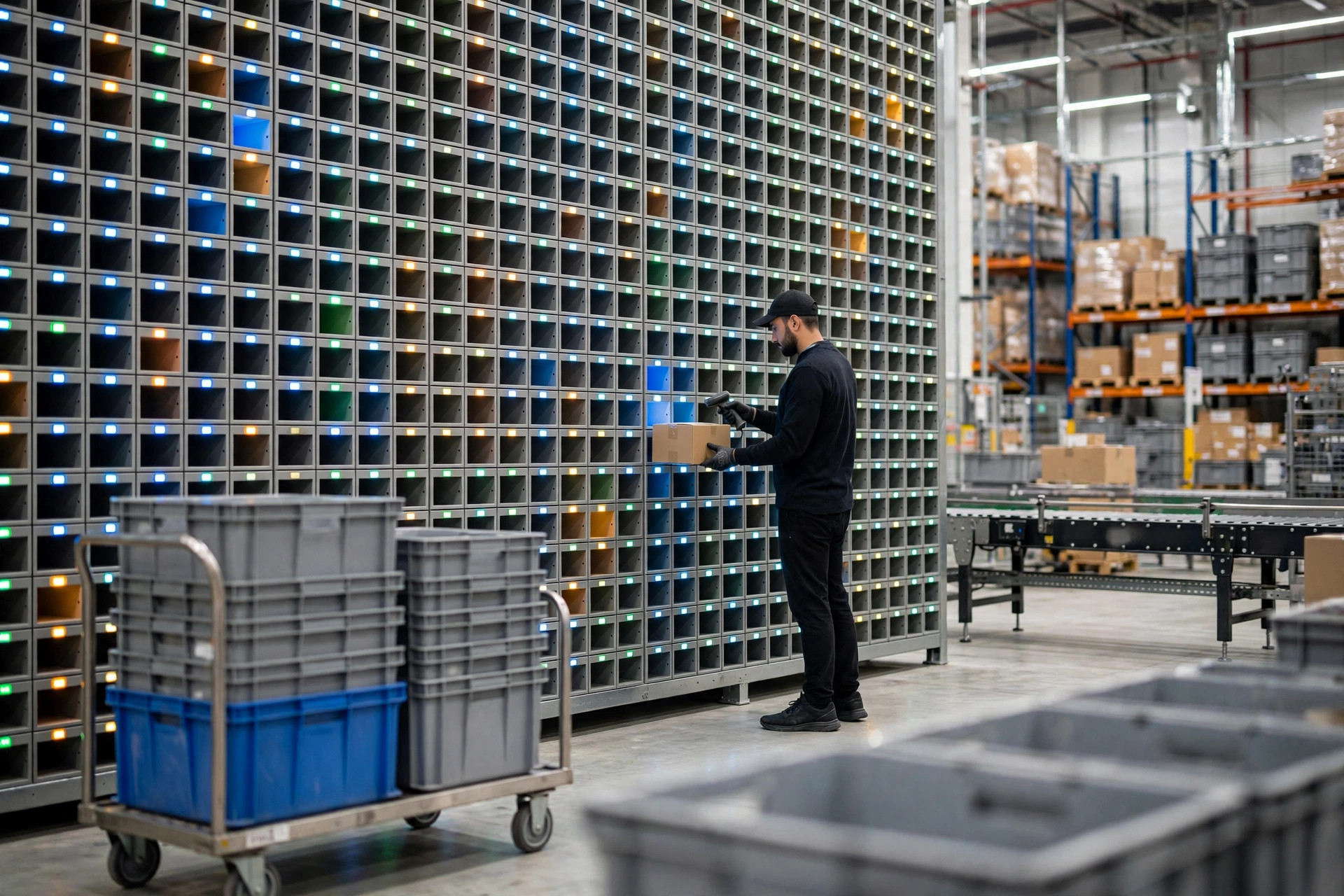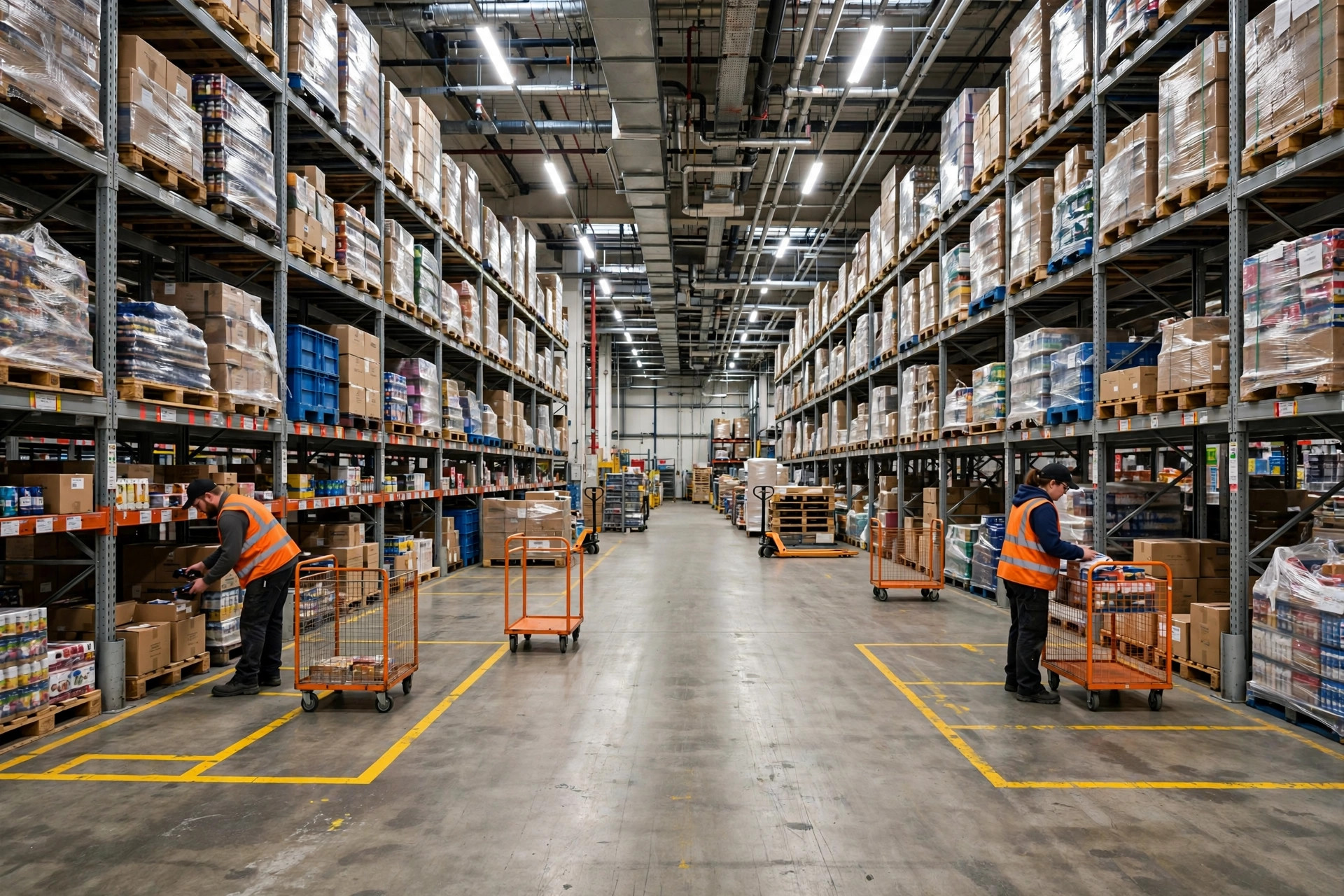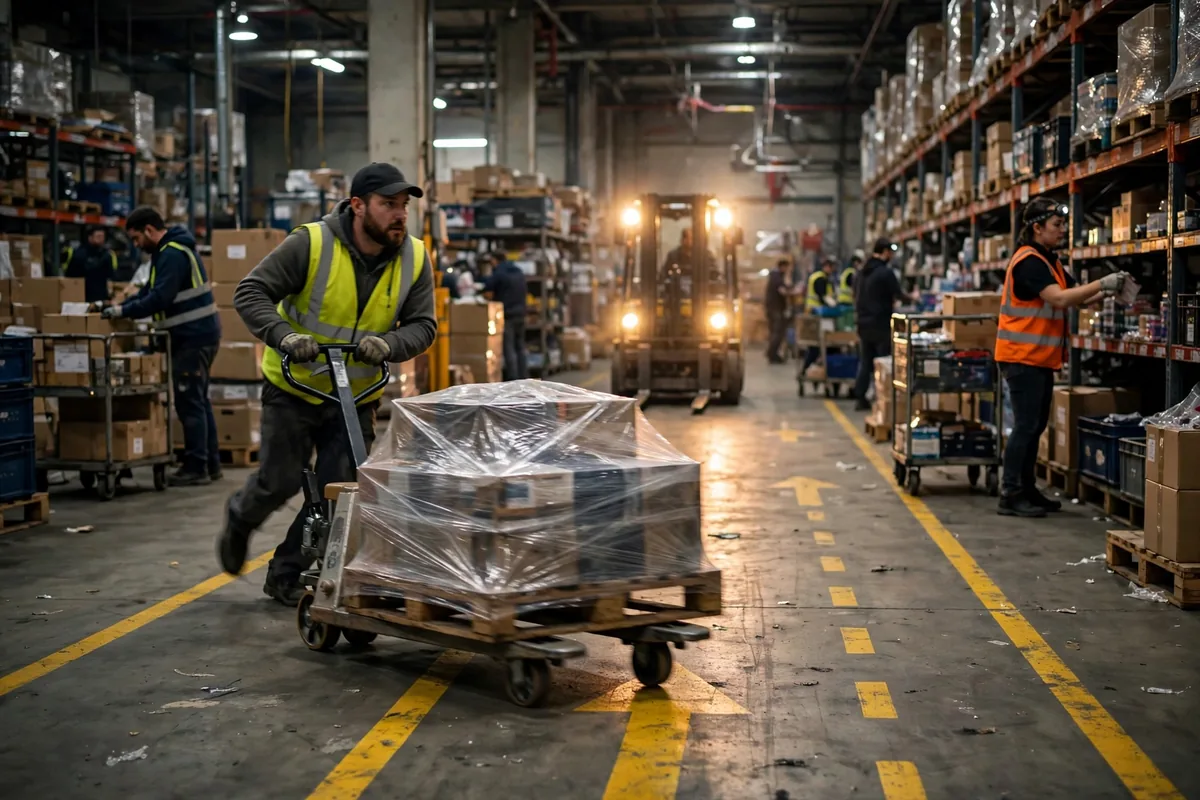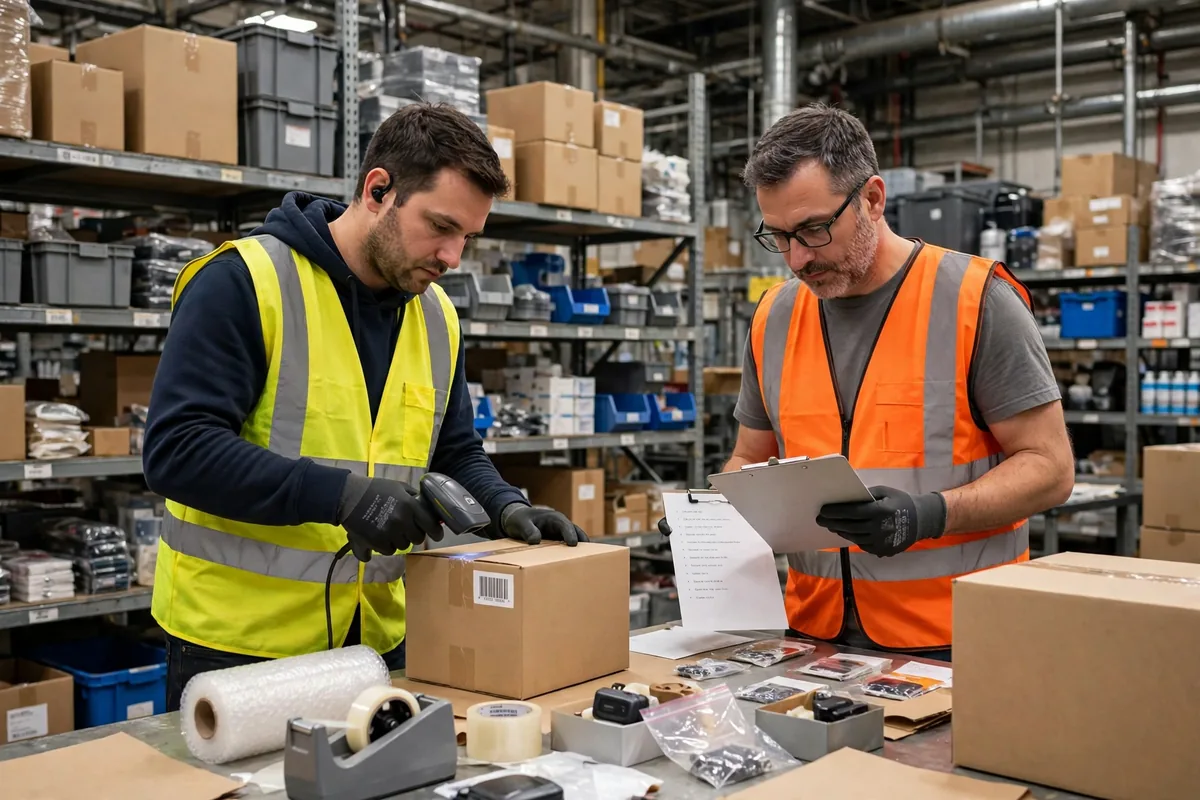
Last fall I walked into a home-goods warehouse where six pickers were working the same wave, and it was pure chaos: two of them met head-on in aisle three, stepped aside for each other, and each grabbed a line off the other's order. The manager told me it was not a staffing problem. Nobody had drawn clear territories for multi-picker zone picking.
The principle behind multi-picker zone picking is dead simple. Think of it as drawing a box on the floor for each picker, where one location belongs to exactly one person at any given moment. It is like a parking space: two cars cannot use it at once, and two hands reaching for the same bin will produce more errors than speed.
Multi-Picker Zone Picking Rule One: One Location, One Picker at a Time
Before you draw anything, settle this rule: you divide by where the order's locations actually fall, not by splitting floor area evenly among headcount. Plot the wave's locations first, see which aisles they land in, then cut those aisles into segments with one picker per segment. The payoff is immediate. A picker stops asking himself whether someone already grabbed an item. He only owns his segment, and everything outside it is someone else's problem.
I once saw a warehouse divide by shelf level instead, one person on upper levels and another on lower levels in the same aisle. They crossed paths all day, and when a short pick showed up in review, it took hours to trace: the lower-level picker had helpfully grabbed an upper-level item, and the system credited it to the wrong person. Dividing by level looks fair. In practice it leaves the collision door wide open inside the aisle.
How to Cut Multi-Picker Zones: Segment by Aisle, Give Crossings to One Person
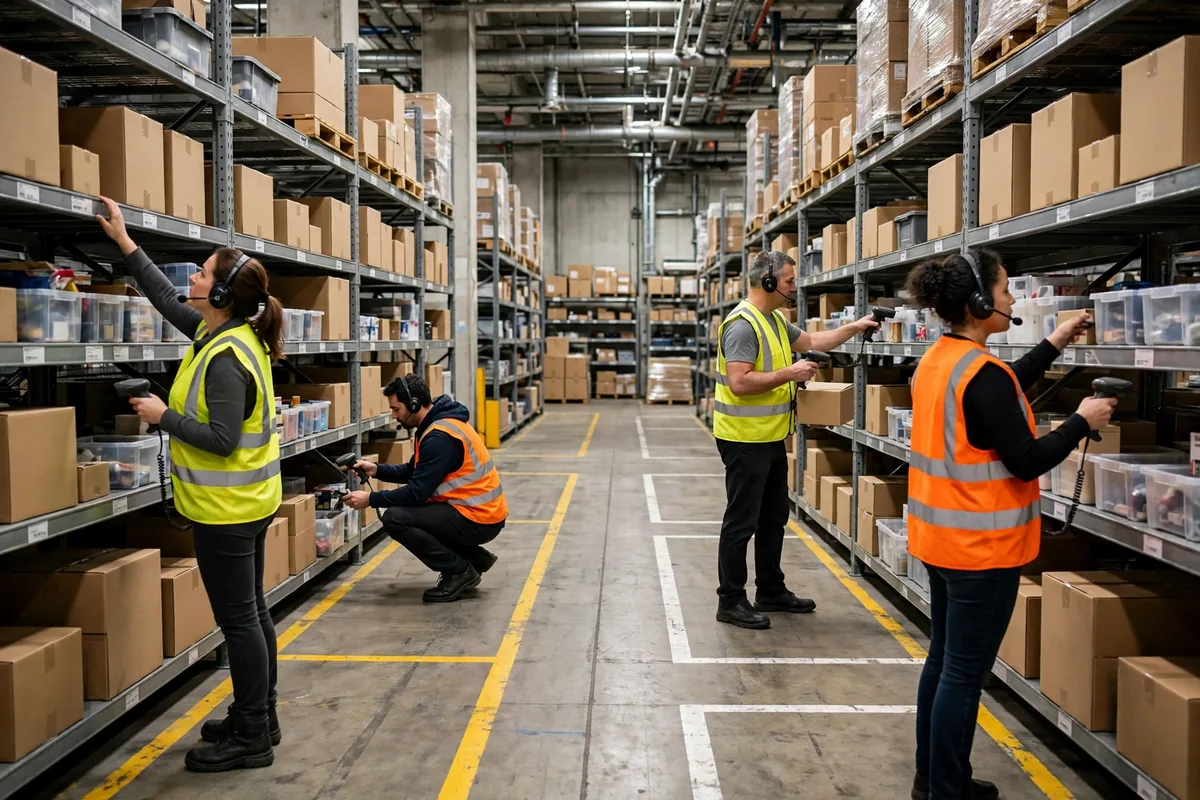
My usual method has three steps. First, mark every location in the wave on a map and spot the hot aisles versus the ones with only a stray item or two. Second, cut hot aisles into segments, one picker each, leaving one buffer location between adjacent segments so two pickers' boundaries never touch. Third, assign shared spots, aisle crossings and end-cap racks, to a single picker, and let everyone else walk around, even if it adds a few extra meters.
A household-goods warehouse I worked with ran waves of forty-plus locations across four aisles in peak season. Four pickers, one aisle each, sounded perfectly reasonable, except the end-cap racks were shared and all four pickers went for them. We assigned each end-cap to its nearest picker and routed everyone else around. Within a week, collision rechecks fell from more than a dozen a day to two or three.
Think of it like cutting a cake. The cut has to be clean. If two people share the corner slice, they will argue about it. The buffer location is the little gap you leave on purpose. It looks wasteful, but it saves recheck and rework time.
Do not skip the measurement week either. For seven days after zoning starts, count three numbers every evening: collision rechecks, empty trips, and average extra walking distance per trip. Write them on a sheet and pin it to the wall. I have seen a warehouse with a beautiful zone map whose recheck count refused to drop, and the cause turned out to be a missing buffer location at one boundary. One buffer location added, and the numbers fell the following week. The map is static. The data tells you whether it works.
The Selection Line: Manual Zones for Small Waves, System Dispatch for Big Ones
Know when manual zoning is enough and when you need system dispatch. A warehouse with modest volume, concentrated locations, and fewer than ten waves a day can do fine with the shift lead spending ten minutes each morning drawing zones on a map and pinning it to the wall. Buying system dispatch at that stage is a fake need: the lead still ends up redrawing zones by hand every day because the order mix keeps changing.
Flip the picture, dozens of waves a day across a dozen aisles, and manual zoning cannot keep up. There the value of system dispatch is not the word automatic. It is real-time load balancing: when one picker is nearly done, the system hands them the tail of the neighboring segment instead of leaving one person idle and another rushed. The dividing line is one number: if manual zoning takes the lead more than half an hour, system dispatch pays. If not, do not spend the money.
One more fake need to call out: vendors selling dynamic heat-map zoning. It sounds advanced, but a small warehouse's order swings are too noisy for a heat map to mean anything. Hot today, cold tomorrow, and the map is stale the moment it prints. Get static zones running smoothly first, then talk about dynamic.
The Maintenance Trap: A Stale Zone Map Ruins Multi-Picker Zone Picking
The biggest trap is not in drawing zones but in maintaining them. Locations get shuffled, bestsellers move aisles, seasonal goods come and go. If the zone map still shows last month's layout, it is a misleading document. The worst case I saw: a bestseller moved from aisle five to aisle two, the map never changed, and two pickers collided in aisle two every day while everyone blamed the new hire for being slow.
So make it a rule. Every Monday morning, the shift lead spends ten minutes verifying the zone map, and any major location change updates the map the same day. Print the new map and post it at the aisle entrance, and tear the old one down on the spot. When two maps coexist, people always follow the old one.
Seasonal goods will wreck a zone map faster than anything else. When summer fans give way to winter heaters, the hot aisles move, and a balanced map turns lopsided overnight: one picker drowns in bestsellers while another walks an empty aisle. During the two changeover weeks, the shift lead should spend five minutes each morning checking that day's order spread and shift a segment temporarily if the hotspot has clearly moved. A temporary adjustment is not a failure. Clinging to a stale map is.
And do not drop the recheck step early. Once zones run smoothly, people want to relax rechecks, but that is exactly backwards. Keep full rechecks for at least two weeks after zoning starts, and only loosen up once collision rates have fallen for two straight weeks. Zoning answers who picks it. Rechecking answers whether they picked it right. One cannot replace the other.
In the end, whether the money was worth it comes down to one number: how many recheck exceptions per wave you had before zoning versus after. If that number does not drop, the prettiest map in the world is worthless.
By Da Liu, Automation Engineer