Let me start with the bill, because the warehouse picking error verification stage question is, at its core, a bill. Last year our warehouse shipped 20,000 orders a month at 98 percent picking accuracy. That means 2 percent of orders went out wrong, 400 orders a month. Handling one wrong order, return shipping, reshipping, customer service, and restocking, averaged 120 yuan (illustrative figure). That is 48,000 yuan a month, 576,000 a year. That money went to nobody. It went straight into the water.
Picking is the most expensive activity in a warehouse, commonly cited at around 55 percent of warehouse operating costs. On accuracy, typical operations run at 97 to 99 percent, good ones reach 99.5 percent, and world-class scan-verified operations reach 99.9 percent. The gap between 98 and 99.5 percent sounds like 1.5 points. On 20,000 orders it is the difference between 400 wrong orders and 100, a gap of 36,000 yuan a month. Where you place the verification stage decides where that money goes.
Picking error verification: the later you catch the mistake, the bigger the bill
In June 2025, I reviewed costs at a third-party warehouse in Foshan, Guangdong, handling home goods. Their pickers worked with no verification at all, packers relied on feel, and only 5 percent of orders were spot-checked before shipping. That month they shipped 18,000 orders and received 312 customer complaints. Return handling averaged 150 yuan per order (illustrative figure), burning 47,000 yuan on that line alone. Worse, handling a return is expensive by nature: a widely cited study notes that processing a return can cost up to ten times the cost of shipping the product out. The freight gets paid twice, the goods may arrive damaged, and some of it can never be sold again.
In September of the same year, a cosmetics warehouse went to the other extreme: triple checks on every order, scanning at picking, packing, and dispatch. Accuracy was beautiful, 99.8 percent. But verification labor cost an extra 23,000 yuan a month, about 1.8 yuan per order (illustrative figure), while the errors they caught numbered only 90 a month. The money spent catching mistakes exceeded the losses those mistakes would have caused. That is the easiest trap in verification: spending more on prevention than the error itself costs.
The logic is simple. A mistake caught at the shelf costs a few seconds to swap the item. Caught at the packing bench, it costs a few minutes to reopen and repack. Caught after dispatch, it costs freight, returns, and customer service. Caught by the customer, it costs all of that plus the customer's trust. The real question in verification is not how many times you check. It is where the check is cheapest.
Four picking error verification stages, one table
Verification breaks into four stages by position, and their cost and catch rate are nothing alike. The table below uses our warehouse's own structure; catch rates and costs are illustrative figures, but the method transfers directly:
| Stage | Position | Cost per check | What it catches | Cost of a miss |
|---|---|---|---|---|
| Stage 1 | Scan while picking | About 0.2 yuan | Wrong item, wrong quantity | Almost zero, swapped on the spot |
| Stage 2 | Weigh check before packing | About 0.5 yuan | Wrong quantity, missing item | Reopen and repack, a few minutes |
| Stage 3 | Spot check before dispatch | About 0.8 yuan | Only what the sample covers | Already sealed, half an hour of rework |
| Stage 4 | After customer receipt | 0 yuan | Nothing | Return and reship, the largest loss |
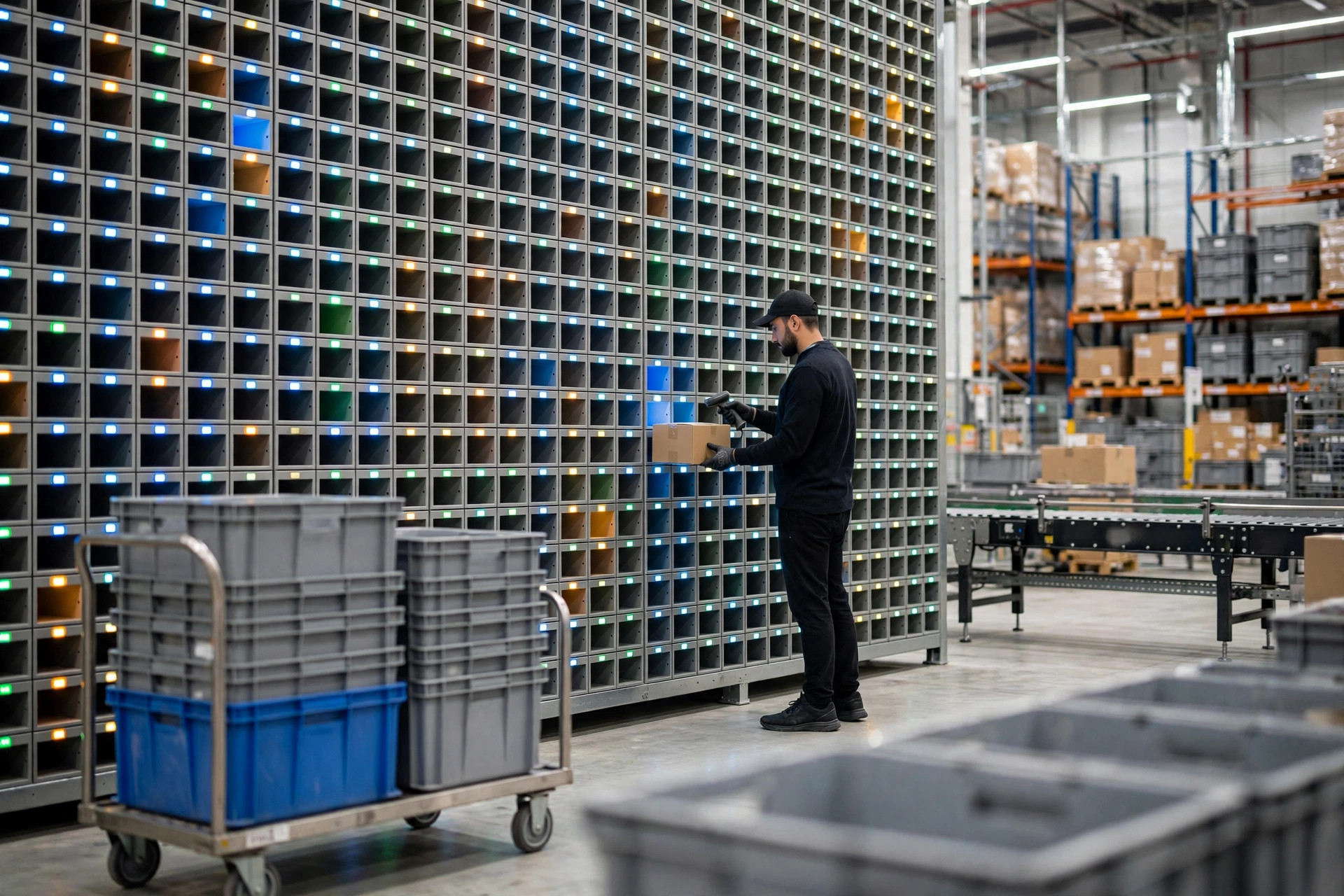
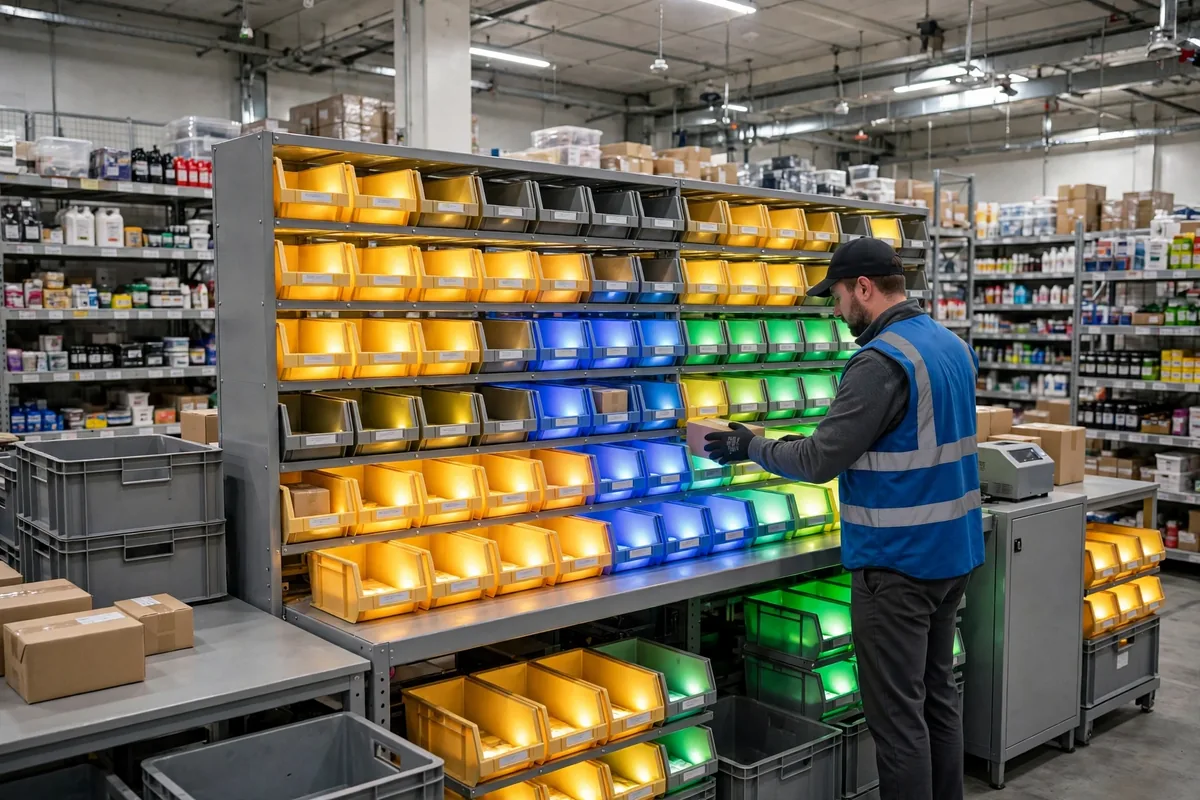
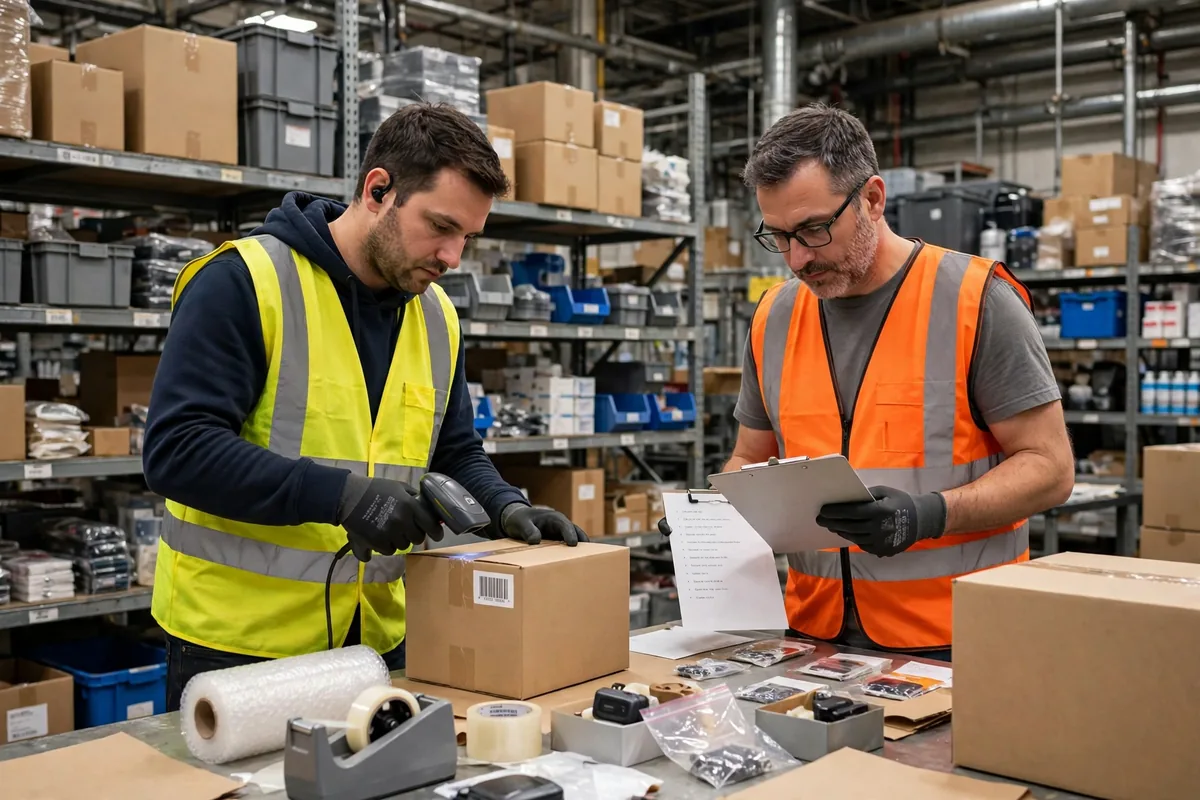
Stage 1 is the cheapest and the most effective. The picker scans each item, the system compares it instantly, and a wrong pick triggers an alarm right there. Swapping the item takes seconds. The cost is mainly the scanning time, about 0.2 yuan per order. Yet many warehouses skip this stage because they think scanning slows picking down, and then they pay far more to clean up the errors later.
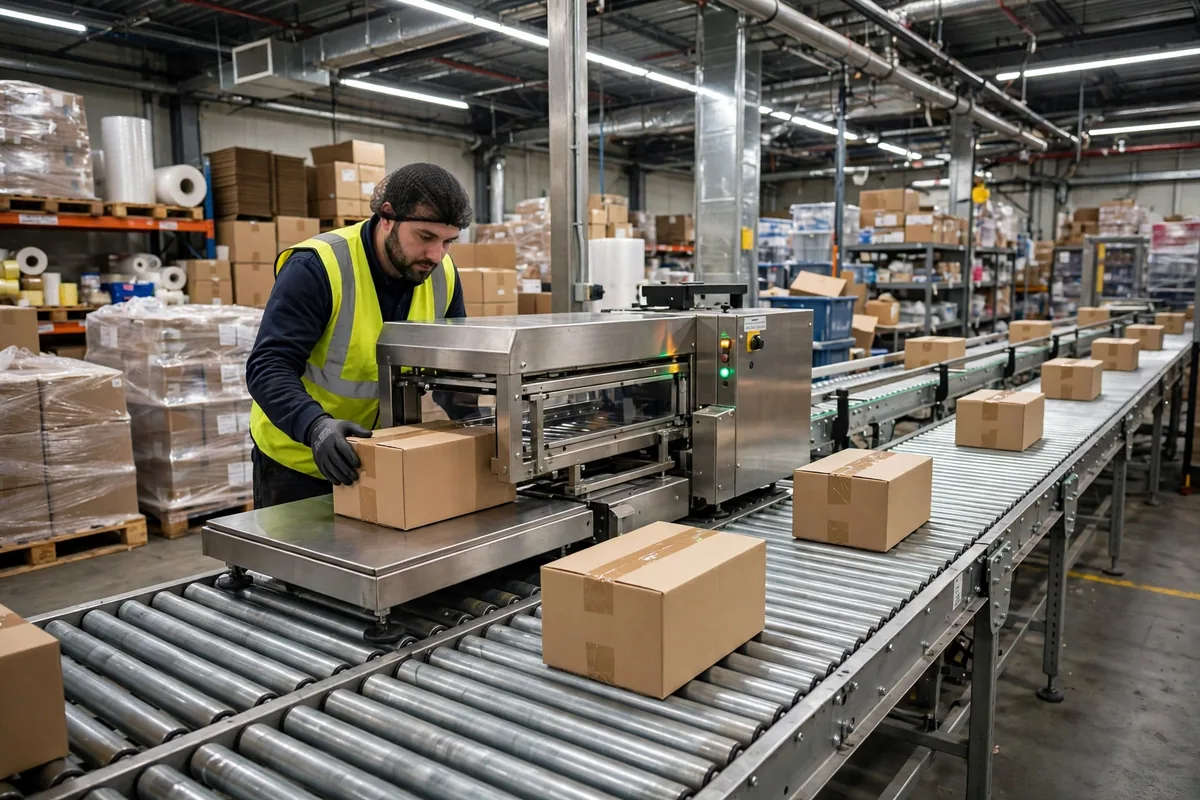
Stage 2 is the value-for-money supplement. Weigh the carton before packing, compare it against the standard weight in the system, and flag anything outside tolerance. It catches wrong quantities and missing items without adding headcount, as long as the scale is connected to the system. It suits warehouses with many product types and light items. In our warehouse, this stage cut missing-item errors from more than 60 a month to under 10.
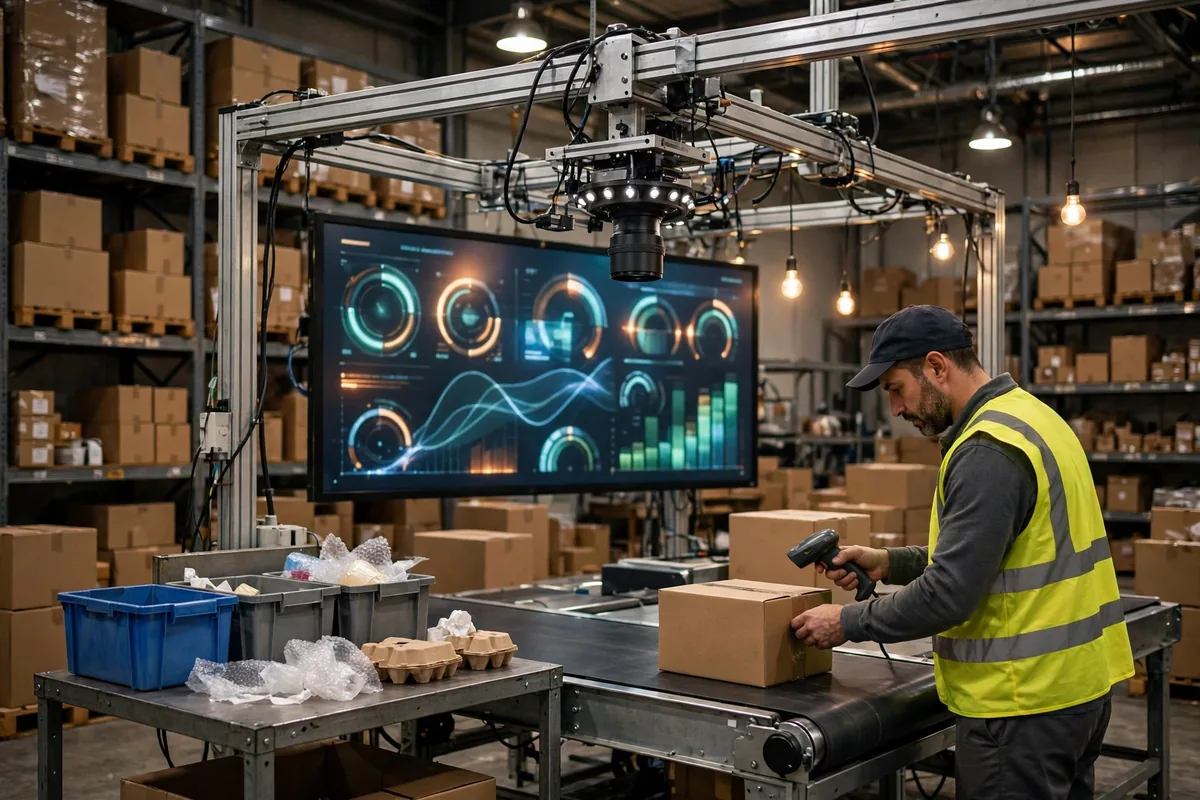
Stage 3, the pre-dispatch spot check, is what most people call the last line of defense. In practice it is the weakest stage. A 5 percent sample means 95 percent of orders are never checked, and when the sample does catch an error, the carton is already sealed and half an hour of rework follows. The real value of spot checks is not catching errors but spotting systemic problems: one location producing errors three days in a row, or one new hire's mistakes clustering on one product type. Those signals are worth far more than one or two caught orders.
The conclusion: start with Stage 1, then talk about the rest
Here is the counterintuitive judgment, and the answer to the warehouse picking error verification stage question: more verification is not better verification. A warehouse with triple checks reached only 0.3 percentage points higher accuracy than a warehouse with single scan verification at picking (illustrative figure), at three times the cost. The extra two lines of defense caught very few additional errors. Most of the time they were re-confirming items that were already right. The marginal return on verification falls fast. Stage 1 catches more than 80 percent of errors, Stage 2 catches another 10 percent, and beyond Stage 3 you are mostly paying for peace of mind.
Here is a conclusion you can apply directly to your own warehouse picking error verification stage setup. Warehouses shipping under 10,000 orders a month: install Stage 1 picking scans and nothing else, run it for a month, and if accuracy reaches 99.5 percent, that is enough. Warehouses shipping over 10,000 orders a month: combine Stage 1 with Stage 2 weight checks. Use Stage 3 spot checks only to watch for systemic problems, keep the sample at or under 5 percent, and when you see a repeated anomaly, stop the line and check the location instead of raising the sample rate. The test is arithmetic: verification cost per order multiplied by monthly orders must stay below the monthly losses the errors would have caused. If that holds, the check pays for itself. If not, a stricter check only loses more money.
One formula to take home: multiply last month's wrong orders by the average cost of handling one, then divide by monthly orders. That number is the ceiling of what you can afford to spend on verification per order. Spend more than that, and the stricter you check, the more you lose. Verification is a cost problem, not an attitude problem.
By Lao Zhou, Logistics Cost Analyst