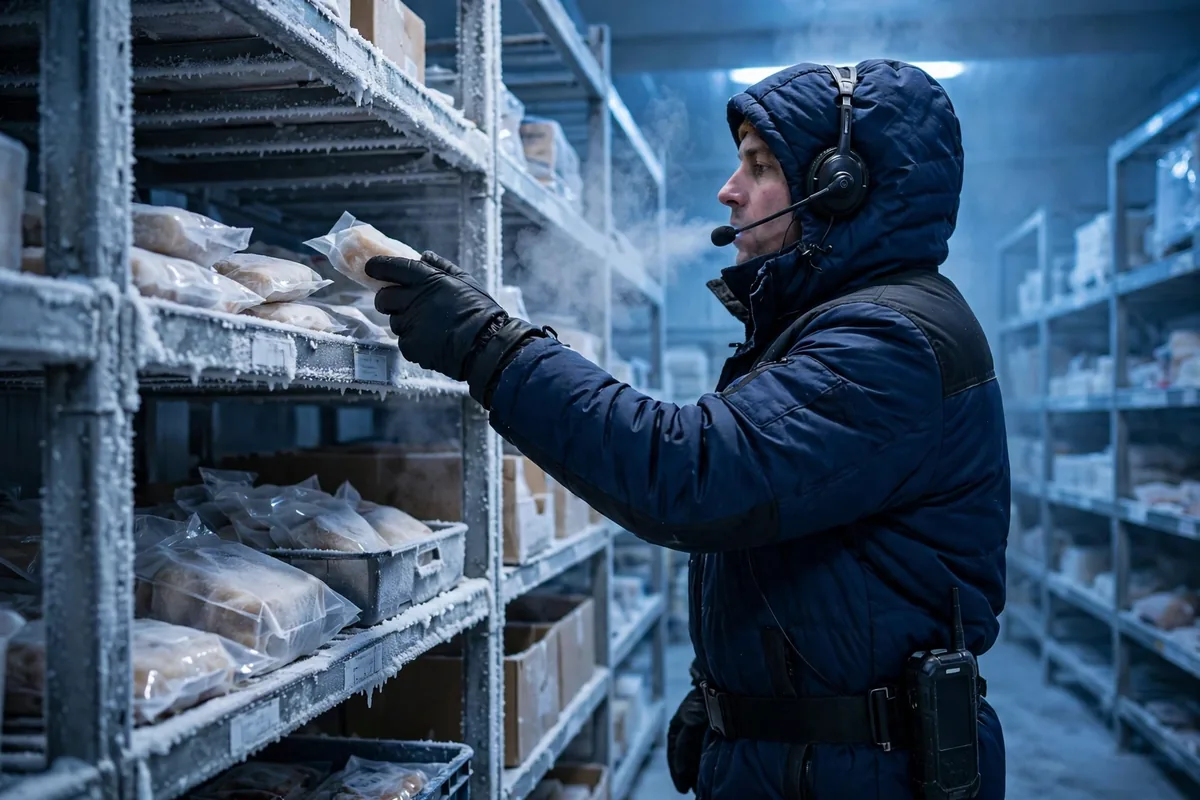
Here's my short answer: voice picking in cold storage with gloves works — and in a freezer at minus 20-something, it works better than scanning or pick-to-light. But only if you solve the headset, the microphone, and the battery first. Get those three wrong, and you've bought yourself an expensive paperweight.
Let me say this plainly, because this one cuts both ways. On the human side, the case for voice is obvious. A picker in a freezer wears thick gloves. A scanner's trigger is hard to press, a paper list is hard to hold, and your eyes need to be on the product, not on a screen. Voice frees both hands and both eyes — you listen, you walk, you speak a number, done. In theory, it was made for cold storage. On the equipment side, though, cold, frost, and moisture are three things that humble electronics fast. I've seen too many projects that demoed beautifully and went silent the first morning in a real freezer.
The Morning at Minus 25 When the System Went Deaf
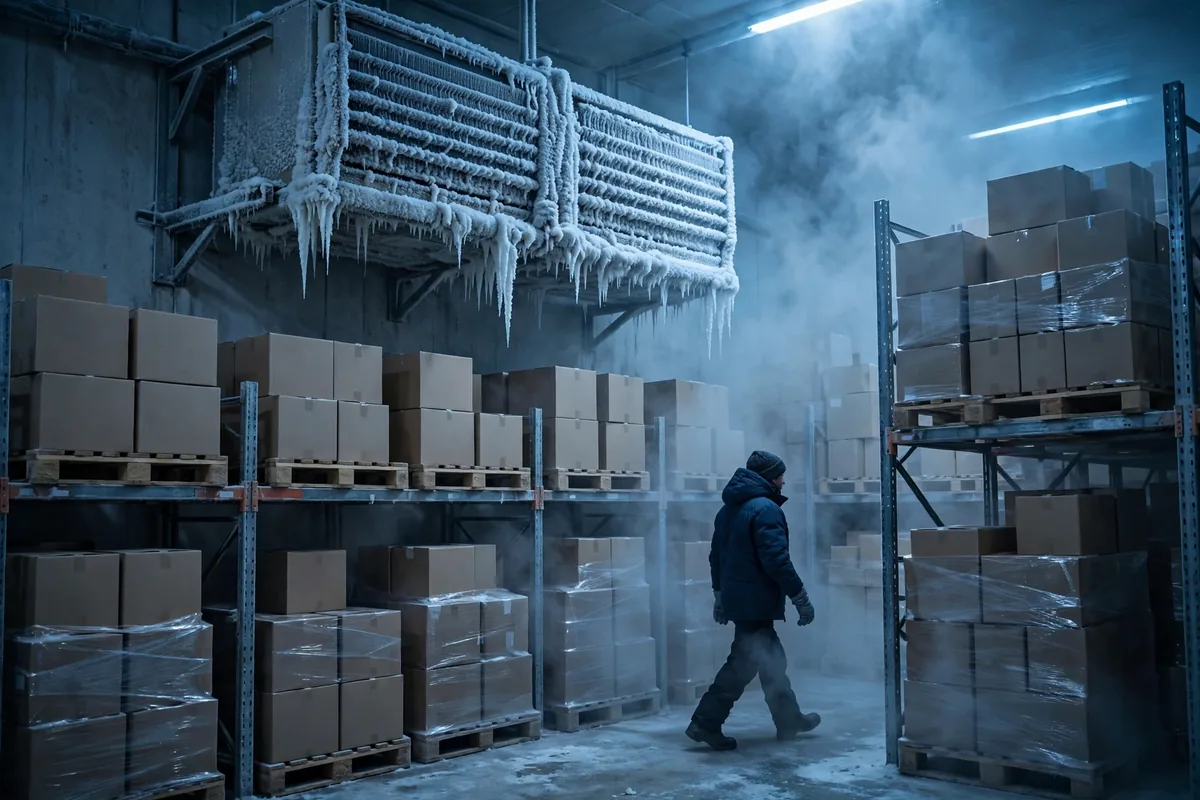
One winter morning in 2019, I was visiting a cold-chain 3PL in Minnesota. It was minus 25 degrees in the freezer. The pickers wore heavy insulated jackets and double gloves, with voice-picking headsets on. Half an hour into the shift, the problems started. Pickers spoke quantities into the microphone and the system kept missing them — no response, or the wrong number. "Fourteen" came back as "forty." "Six" came back as "nine." One wrong digit, and the whole order had to be reworked.
That morning I stood at the freezer door watching a picker take off a glove, wipe the microphone, and put the glove back on — over and over. Taking the glove off is exactly the problem voice picking is supposed to solve. Bare fingers go stiff in a few minutes at minus 25, so productivity didn't go up; the frostbite risk did. The project lead told me later that three months after go-live, pickers were still quietly using paper lists, because "paper never mishears a number."
I've seen the same failure twice more since, and the cause was the same every time: the equipment was chosen for a room-temperature warehouse. Not the headset, not the microphone, not the battery — nothing was spec'd for freezer conditions. Voice picking itself wasn't the problem. The problem was a selection process that didn't take the cold seriously.
Three Places Voice Picking in Cold Storage Fails
First, the microphone. An ordinary mic has two weak points in a freezer: frost and moisture. Warm breath from the picker hits a cold microphone, condenses, then freezes into a thin layer of frost, and the sound arrives muffled. The fix sounds simple: use a cold-rated microphone with a windscreen and moisture-resistant design, and keep a fixed distance from the mouth — don't let it touch the lips, because that's where moisture is worst. And here's a low-tech trick that works: keep two microphones per shift and rotate them. One works in the freezer, the other dries out in a room-temperature area. Frost problems drop by more than half.
Second, the headset and the cable. In the cold, headset cables stiffen and get brittle — bend them a few times and they crack. An over-ear headset over a thick winter hat won't stay put either; the picker bends down and it slides off. My advice: look at bone-conduction or in-ear headsets first, with cold-rated cabling. Wireless is an option, but wireless batteries drain fast in the cold, so you have to plan the runtime honestly.
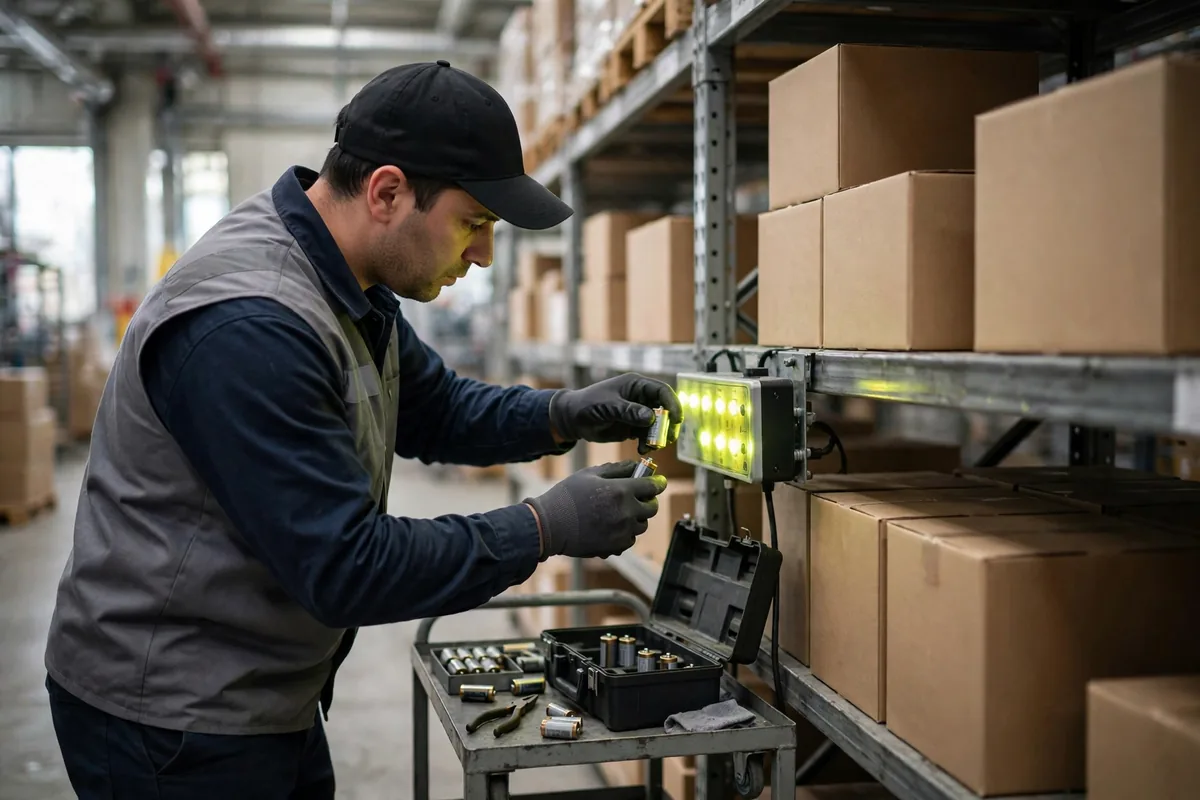
Third, the battery and the terminal. Lithium batteries lose significant capacity below minus 20 degrees. That's not a brand problem, it's electrochemistry. A terminal kept in an inside jacket pocket, warmed by body heat, lasts noticeably longer than one hanging on a belt outside. Plan battery swaps into the shift schedule. Don't wait until a device dies in the middle of an aisle to think about it.
Voice Picking in Cold Storage vs. Scanning vs. Pick-to-Light: How to Choose
There's no universal winner here. Each method fits a different warehouse.
| Method | Strengths in the cold | Weaknesses in the cold | Best for |
|---|---|---|---|
| Voice picking | No glove removal, hands free, eyes on product | Mic frosts over, cold drains batteries, needs pronunciation training | Freezers with many order lines and scattered SKUs |
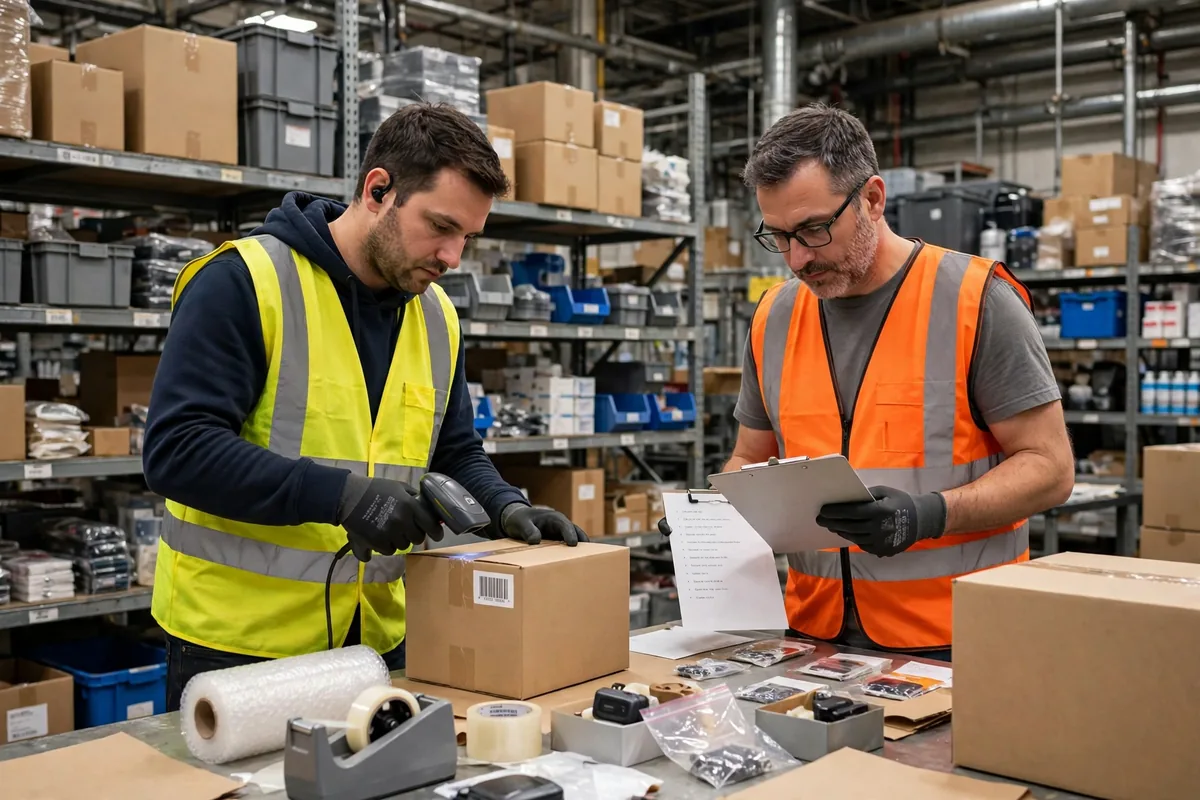
| Barcode scanning | High accuracy, cheap devices, everyone knows how | Gloves make triggers hard to press, screens respond slowly in the cold, frost fogs the scan window | Simple orders, few SKUs, tight budgets |
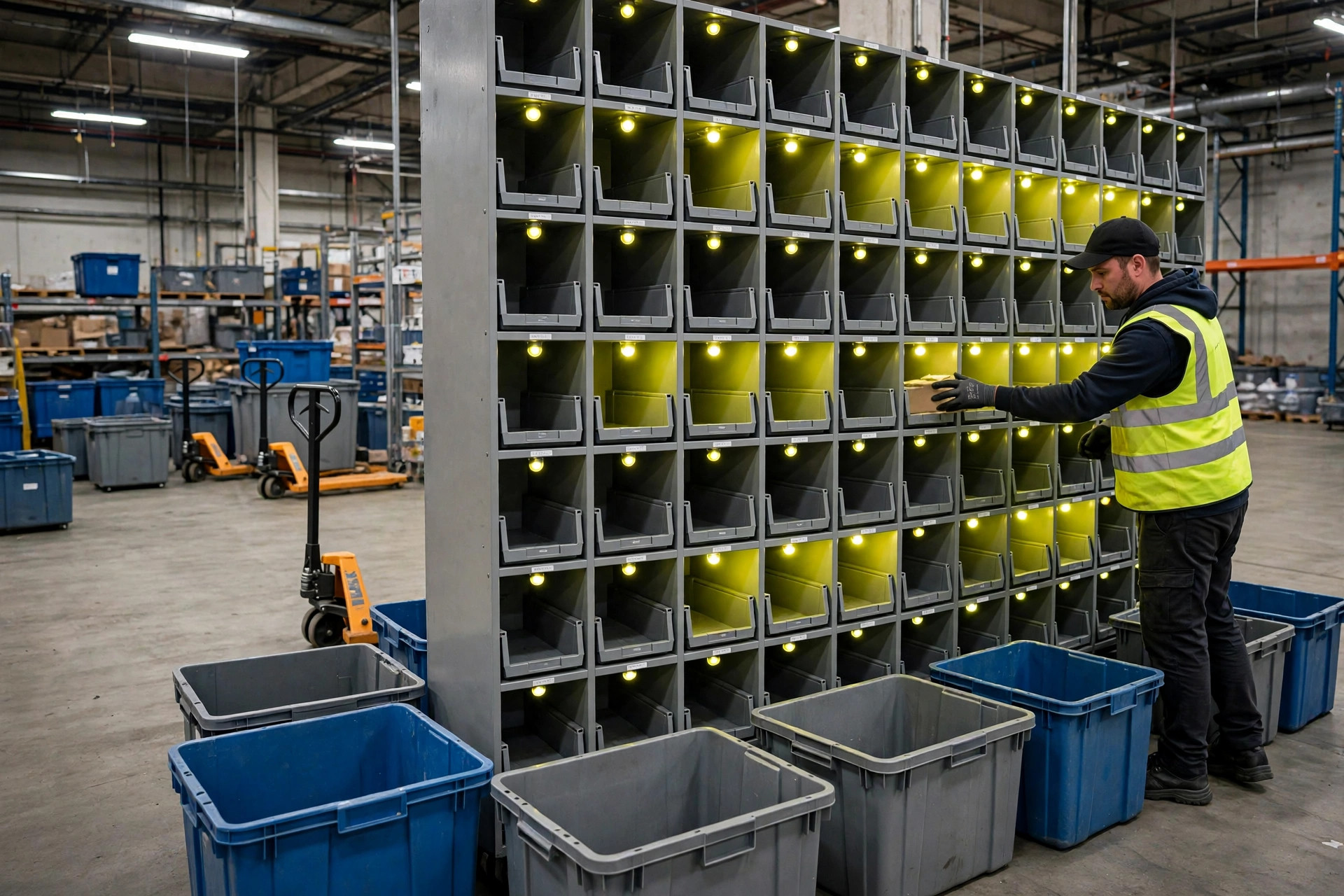
| Pick-to-light | Very fast, almost no training | Lights fail more in cold, humid air; retrofit cost is high | High-frequency small items with fixed slots in a chiller |
My judgment: if your pickers run hundreds of order lines a day in a freezer, voice picking in cold storage with gloves pays for itself — the minutes saved not removing gloves, not pulling out a device, not looking at a screen add up fast. But if your orders are simple and your SKU count is in the dozens, scanning is enough, and the training and maintenance overhead of voice becomes a burden. Pick-to-light fits a chiller with fixed slots that rarely change. If your SKUs turn over often, skip it — the cost of moving lights will eat you alive.
And here's the trade-off most people forget to price: the real cost of voice picking isn't the hardware. It's the training and the first two weeks of ramp-up. Pickers have to learn to speak quantities in a standard way, and the system has to learn each person's accent and pace. Efficiency dips for two weeks. Get through that and it works. Don't get through it, and the equipment becomes a shelf ornament. So before you buy, ask yourself: do you have two weeks of patience, and someone watching the ramp-up data? If not, don't buy yet.
Four Things to Do Before You Go Live
First, test for real — don't trust the demo. Run real orders, real pickers, real temperatures for two weeks, and put three numbers on the table before you decide: recognition rate, mis-pick rate, and time per order. A demo room is always warmer, quieter, and cleaner than your freezer.
Second, spec the microphone, headset, and terminal for freezer conditions, line by line, in the purchase order. Don't let the vendor ship room-temperature standard kit. Check each item at acceptance. Miss one, and it will find you later.
Third, keep a fallback. When voice goes live, don't pull the scanners on day one, and don't stop the paper lists. Run both tracks for a month, and only retire the old way when the data is stable. I've seen too many big-bang cutovers fail.
Fourth, do the full math. Hardware, software, training, spare batteries, microphone consumables, and the efficiency dip during ramp-up — all of it — weighed against the labor saved and the mis-picks avoided. And be honest about which numbers are vendor claims and which are your own measurements. Don't put a supplier's brochure numbers into your business case.
So, does voice picking in cold storage with gloves really work? My answer: yes — but only for the people who did the selection and the testing properly. Equipment doesn't adapt to conditions. Conditions don't negotiate. You do the work, or the cold does it for you. What do you think?
By Lao Mi, Supply Chain Veteran (20 yrs)