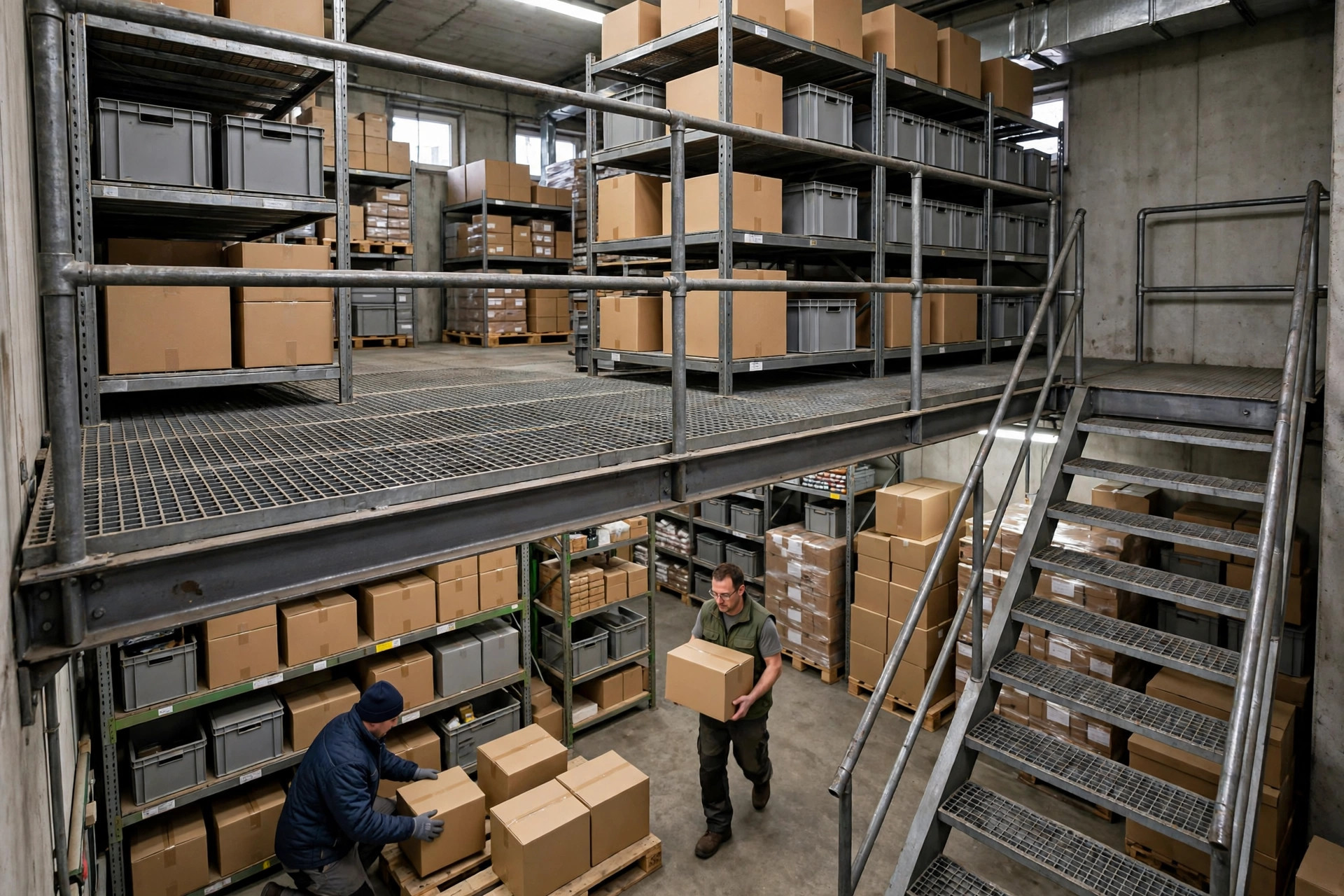
Last fall, eyeing a mezzanine for my 3,000-square-meter warehouse, I stood under more than seven meters of empty headroom and did the math every small warehouse owner does at some point: add a level, and do I basically get half a warehouse for free? The landlord said it was fine. The racking salesperson said installation would take a week. The quote did not look scary. I almost signed. Then a friend who works in steel structures came by, asked me three questions, and I put the pen down. This is those three questions, turned into three bills: load, fire safety, and forklifts.
Here is my conclusion up front. A warehouse mezzanine is not a bad idea. But it is never just "buying a rack." If any of these three bills is left unsettled, what you pay later can cost several times more than the mezzanine itself. And we small warehouses cannot afford to burn money like that.
The load bill: can your floor actually carry your mezzanine?
My friend's first question was simple: what load was this floor designed for? I said I had no idea — when I leased the place, the landlord just said "you can store goods here." He laughed and said that means nothing. Old industrial floors, columns, and foundations each have their own limits. The weight of the mezzanine plus the weight of the goods ends up on a handful of columns and on the slab. A strong rack on a weak floor is still a problem.
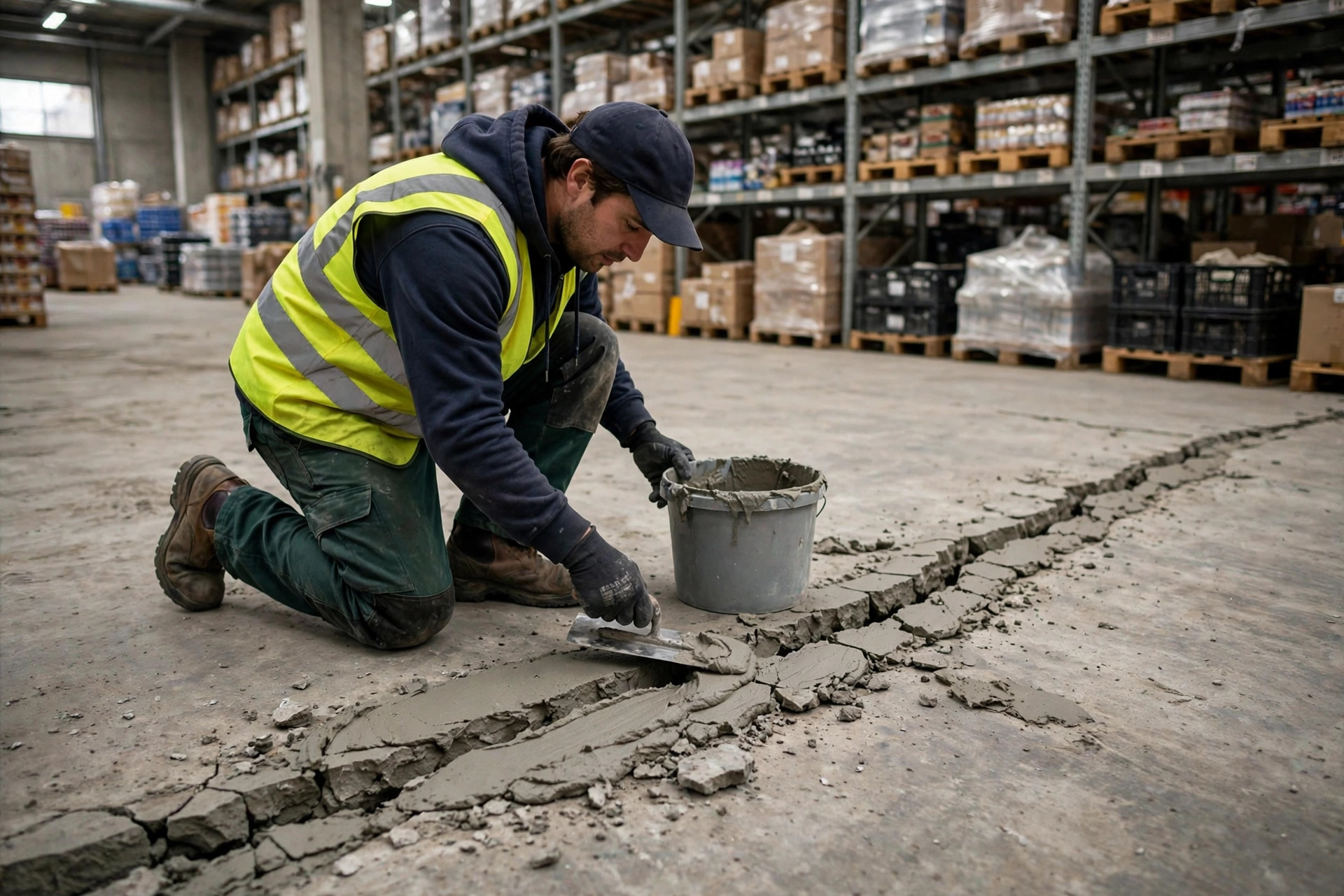
A warehouse next door to us learned this the expensive way. In early 2024, that small auto-parts warehouse added a mezzanine without a structural review, chasing the cheapest quote. They put full pallets of brake discs on the ground floor and stacked cartons on the mezzanine. Within a couple of months, fine cracks appeared in the floor. The landlord brought in an inspector, who found localized overloading. The warehouse had to clear everything off the mezzanine, pay for reinforcement, and cover repair costs. They basically paid for the mezzanine twice.
Our approach is unglamorous, but it works. First, get the original structural documents from the landlord. If you cannot get them, pay a third party for a review yourself, and do not trust a salesperson who says "our rack can handle it." Second, work backwards: decide what will sit on the mezzanine and how heavy it is, then calculate the load per square meter, instead of installing the rack first and piling goods on it later. Light, bulky goods go up; heavy goods stay on the ground. That sounds like common sense, but enforcing it removes most of the trouble. Third, leave headroom in your numbers. Peak season always tempts people to squeeze one more layer on top, so do not calculate right up to the limit.
Here is the counterintuitive part: the rent you save with a mezzanine does not always cover the cost of review and reinforcement. If your rent is already low, or you only have a year or two left on the lease, run the full numbers before you commit. Can you take the mezzanine with you when you move? Will the next landlord even want it? Those are money questions too.
The fire bill: if your mezzanine fails inspection, it is useless
Once the load question was settled, I thought I was ready to sign. Then came the second question: have you cleared this with fire safety? I honestly thought adding a rack did not involve the fire department. It does. A mezzanine changes escape routes, sprinkler coverage, and smoke detector placement, and the inspection standard changes with it.
What we learned from a consultation was very practical. A mezzanine turns one open space into two levels. How do people get down from the upper level? Where does smoke go in a fire? Can sprinklers actually reach the goods stored under the mezzanine deck? None of that is solved by "just add a fire extinguisher." Requirements also vary by location, so check with your local fire authority and the latest official rules rather than copying a checklist you found online. And some goods simply do not belong on a mezzanine: large volumes of flammable packaging, products that need special storage conditions, or anything that turns a small fire into a big one.
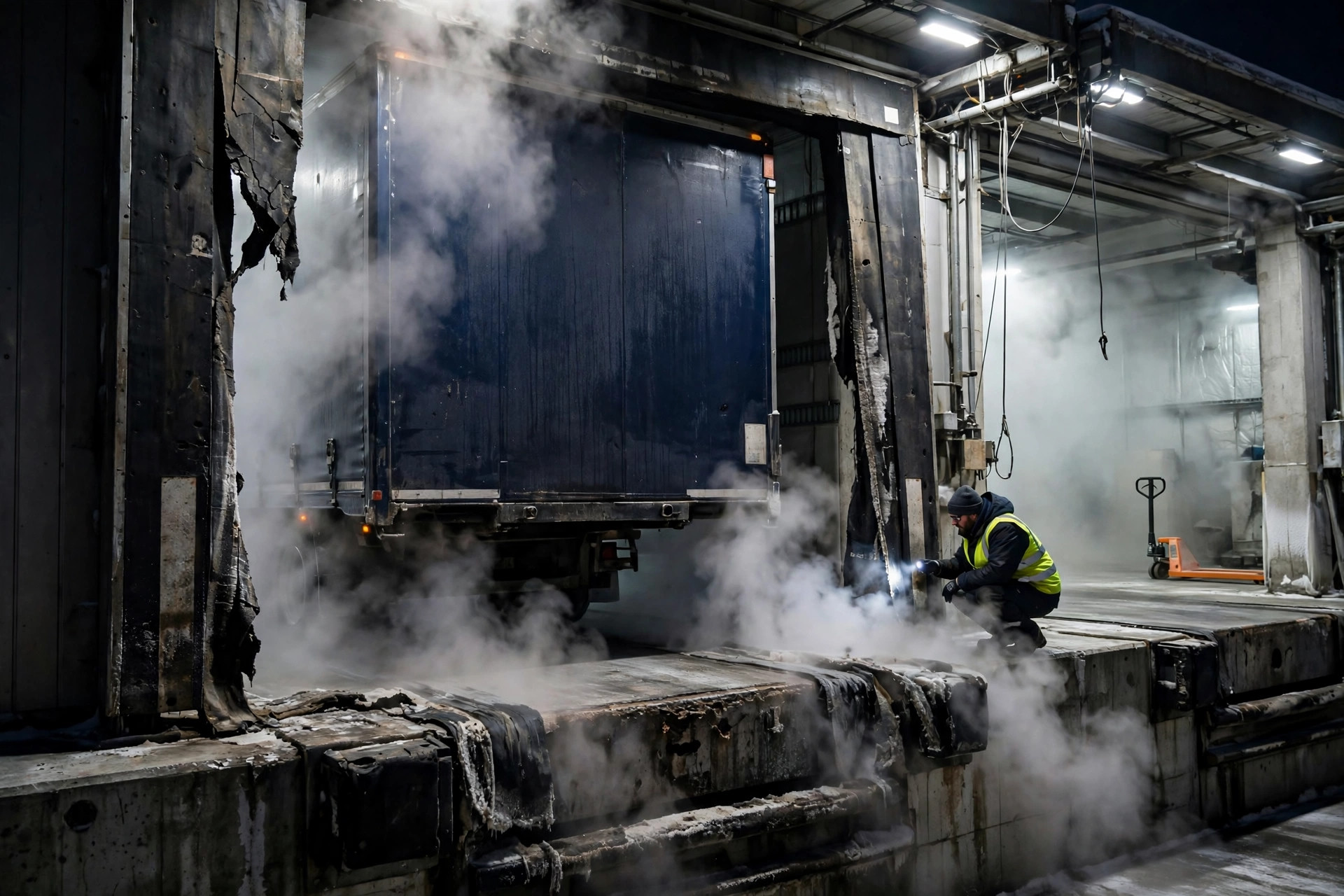
I know a small daily-goods warehouse owner who stacked cartons and plastic packaging on his mezzanine in 2023. A fire inspection ordered changes, and the mezzanine sat idle for more than a month. During peak season, all the goods were squeezed back onto the ground floor, and picking slowed badly. He told me later that if he had known the cost of those required changes, he would have planned the mezzanine from day one for light finished goods only, never for packaging.
Our low-cost fix was to set hard rules: the mezzanine holds only fast-turning light goods, packaging and flammable materials stay on the ground floor where sprinklers reach directly, stairways are never blocked or locked, and we walk the escape route ourselves before every annual inspection. It is not fancy, but inspectors do not make us panic. The trade-off is clear: the extra space is the benefit, and compliance cost plus shutdown risk is the price. If you leave the price out of the calculation, the benefit is fake.
The forklift bill: if your forklift cannot reach the mezzanine, it is decoration
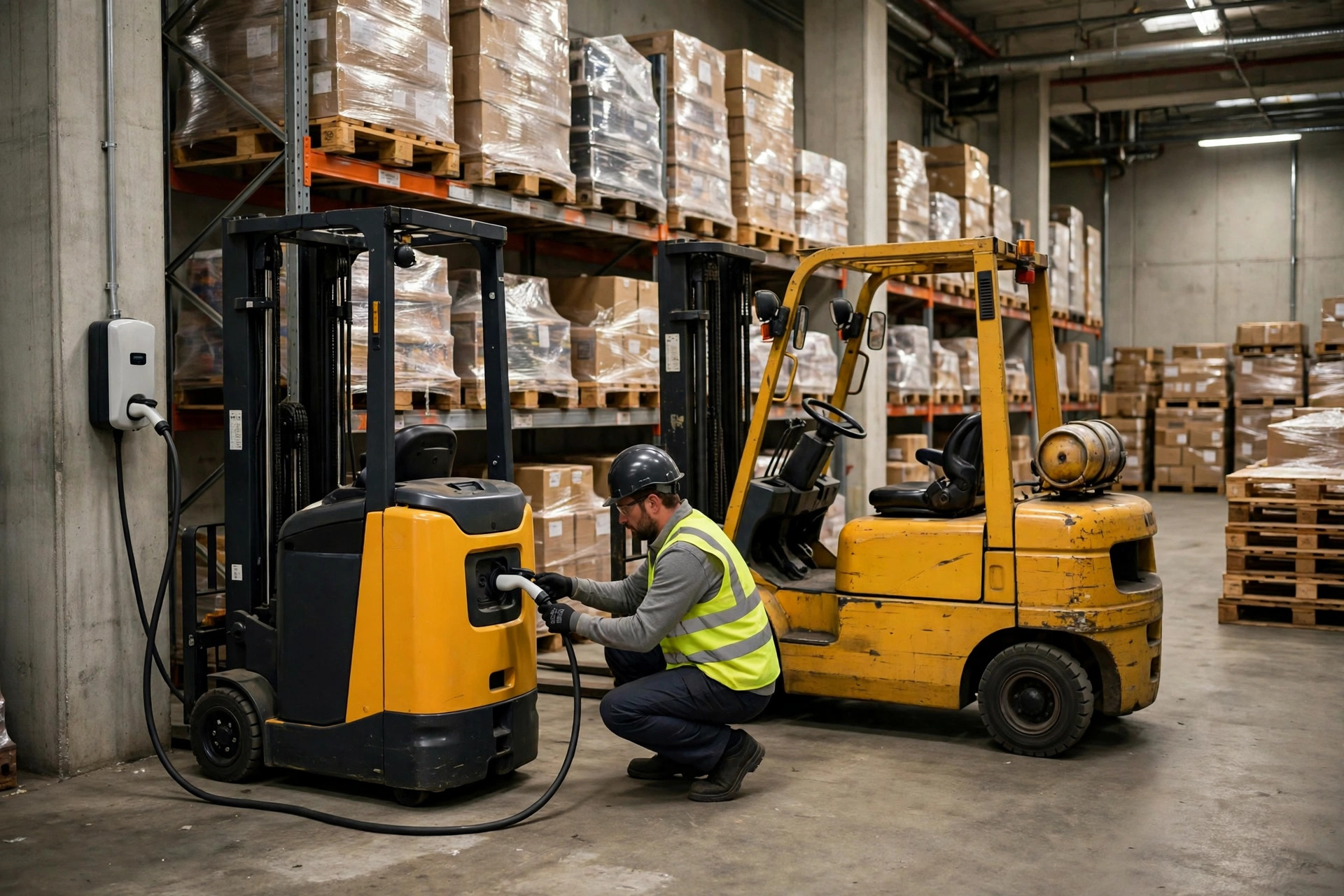
The third question hurt the most: can your forklift even reach up there? Our old forklift could just about serve the high racks on the ground floor. Add a mezzanine, and the whole replenishment route falls apart. Goods on the mezzanine would have to be carried up by hand, one carton at a time, up the stairs. Picking one order took more than twice as long. We would have gained space and lost speed — a losing deal no matter how you slice it.
The big-company solution — mezzanine plus lift plus conveyor — is not something a small warehouse like ours can afford. So we designed the process backwards instead. The mezzanine is not our main storage. It is a slow-moving light-goods zone and a seasonal overflow zone. Fast-moving goods never go up there. Replenishment happens in one morning batch when the floor is quiet, enough for the whole day, instead of little trips all day long. Mezzanine picks run as their own wave, not mixed in with ground-floor orders competing for the same people.
How did it work out? Honestly, in the first year our mezzanine utilization was only around sixty percent, which looked wasteful on paper. But on total cost, we came out ahead: no lift to buy, no extra headcount, and no peak-season chaos from a forced shutdown. Looking back, that was the right trade. For a small warehouse, it is better to run a mezzanine a bit underused than to fill it up and wreck your workflow. Utilization alone will mislead you; you have to read it together with pick time and labor cost.
So here is my advice to other small warehouse owners, all paid for with my own mistakes. First, before you sign anything, pay for a structural review and a fire-safety consultation. Do not skip those fees — skipping them can cost you ten times more later. Second, put only light, slow, predictable goods on the mezzanine. Keep heavy goods and bestsellers on the ground. Third, pilot it for a month on half the mezzanine area, get the workflow smooth, and only then expand. Do not cover the whole floor on day one.
Small warehouses have their own way of surviving. A mezzanine is standard equipment for a big company, but for us it is an investment that needs careful math. Settle the load bill, the fire bill, and the forklift bill first, and the extra space is real. Skip them, and you have just bought yourself an expensive headache.
By Xiao Ma, Small Warehouse Owner