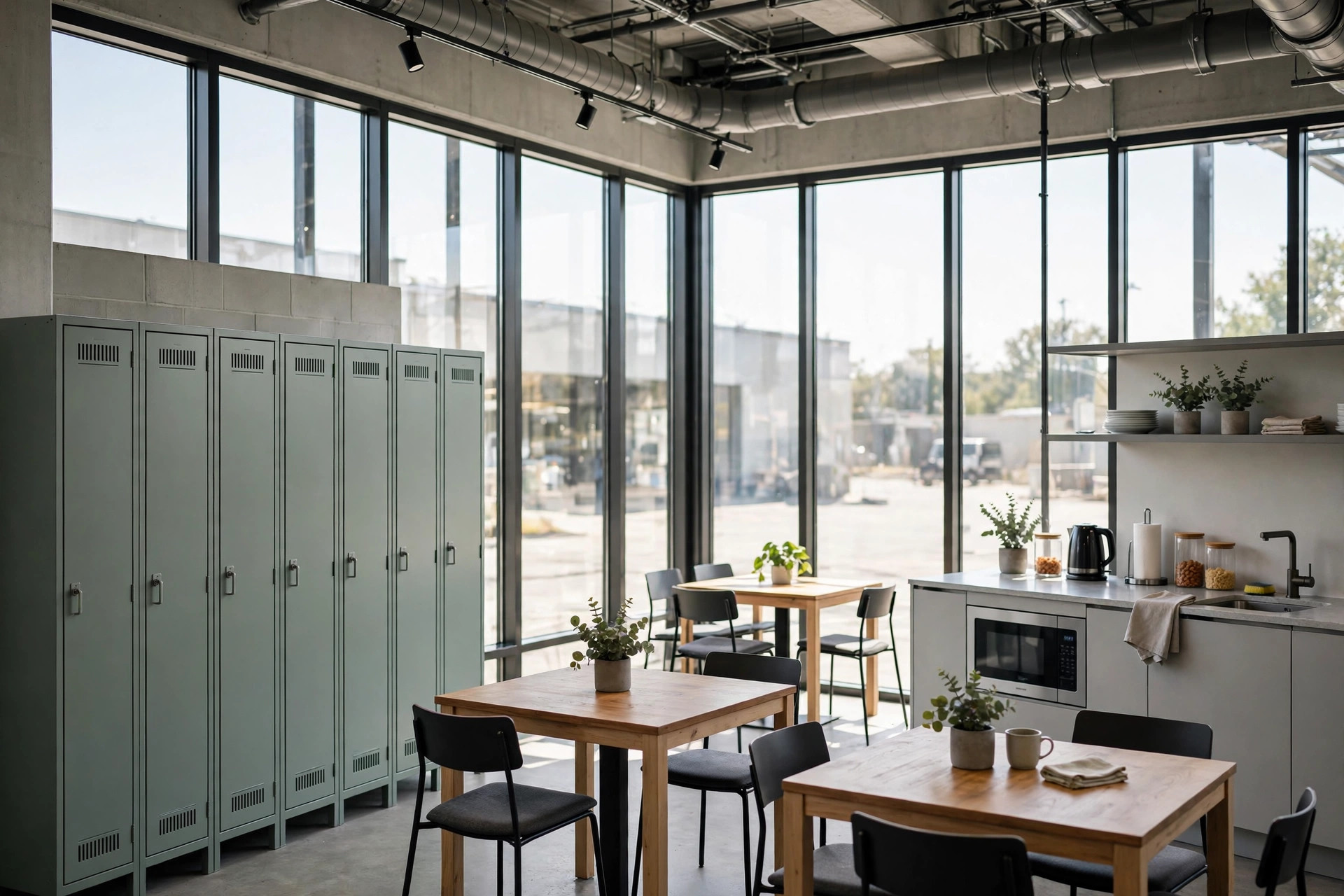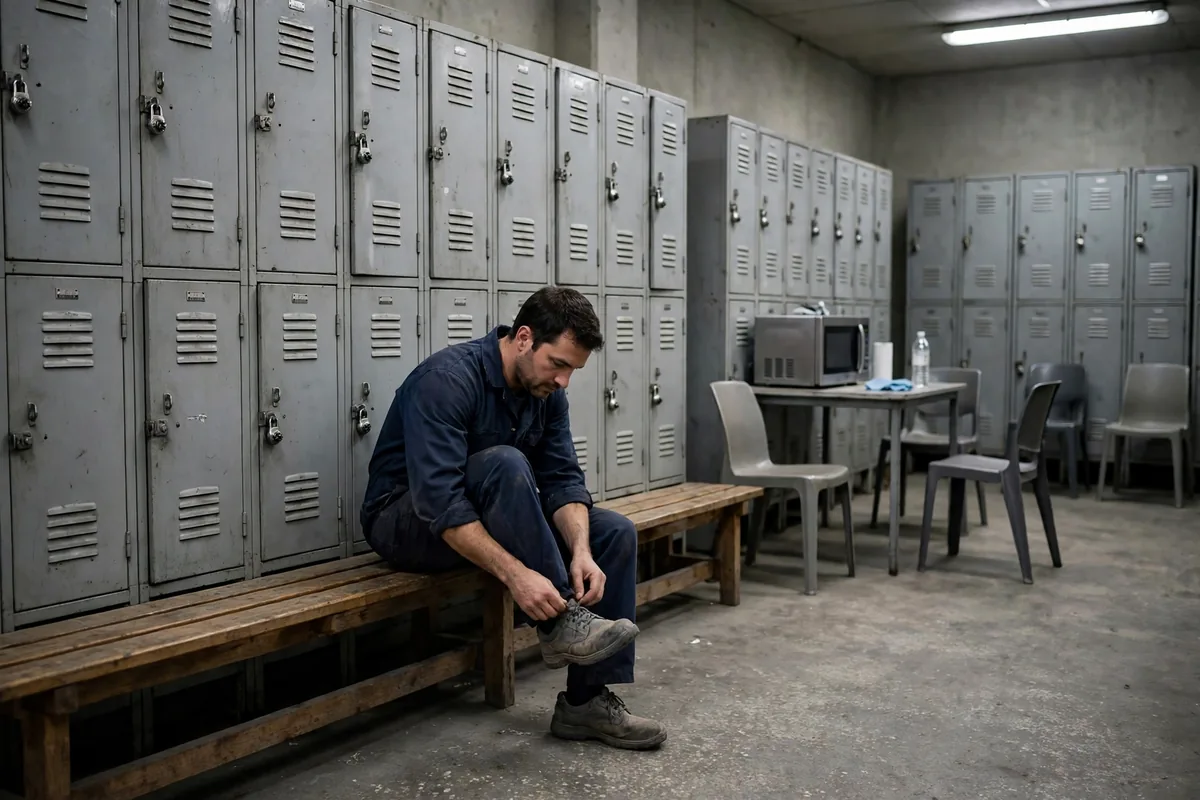
Warehouse locker room layout is why Marcus was eating noodles on the steps at 2:40 in the morning.
It was halfway through the night shift, peak season. I ran into Marcus in the hallway outside the break room. The break room lights were on, but the chairs were hard plastic, the microwave had been broken for two weeks, and last shift's lunch boxes still sat on the table. He looked at me and said, "Boss, it's not that I'm soft. There's nowhere in this building to sit down and eat a hot meal. I'm done after this month." I didn't sleep well that night. Warehouse locker room layout used to feel like a facilities side project to me. Then people started walking out through that door one by one, and I understood: those two rooms are about compliance, and they are about people.
Warehouse Locker Room Layout Starts With Hygiene Compliance
Let me be straight with you. A lot of warehouses treat the locker room as a row of metal cabinets and a mirror. Good enough to change clothes. That thinking is dangerous.
OSHA's sanitation standard, 29 CFR 1910.141, sets clear requirements for locker rooms, restrooms, drinking water, and eating areas. Where workers are exposed to harmful substances or dust, or where the job requires protective clothing, a locker room is required, not optional. I won't recite the regulation here. Check the current text on OSHA's website. What I will tell you is the mess we walked into.
In the winter of 2024, I covered two weeks of nights at a 3PL warehouse outside Atlanta that handled auto parts. Heavy dust, greasy work clothes, and a locker room tucked at the far end of the building. The vent faced a wall. Fewer than half the lockers had working locks. The shower taps ran hot and cold backwards. The women's side was worse: one stall, and the lock on the door was broken. One of the women went straight to the safety officer and said it plainly: under those conditions, she could not do her job with dignity.
Here is how it ended. The safety officer issued a correction order. The warehouse shut down two nights of night shifts for the fix. Every locker got a new lock, the shower plumbing was redone, and the vent was moved to an outside wall. The repair bill was not the painful part. Two nights of lost work were, and a month of hiring after that. Replacing the people who left cost far more than fixing the lockers.
Here is what we do now, every single week. We think of the locker room in two zones: dirty and clean. Work clothes covered in dust and grease never share a cabinet with street clothes. There is a real partition between the changing area and the showers, not a curtain. Ventilation and odor control get checked daily, not when someone complains. Cleaning is on the shift schedule, with a name, a time, and a signature on a sheet posted by the locker room door. Compliance is invisible on a normal day, and on inspection day every piece of paper matters.
If you want the nuts and bolts of how the rooms are zoned and how traffic flows between them, I wrote that up separately. Take a look at how we lay out locker rooms and break rooms. That piece covers flow and zoning, this one covers compliance and people. Read them together and you get the full picture.
One thing a lot of managers miss: drinking water and the eating area. OSHA covers those too. The eating area cannot be mixed in with the work floor, and food cannot sit where dust settles. Our break room and the warehouse floor are separated by a door, and on that door there is a sign that says, in plain language: come in to eat, freight stays out. Crude, but it works.
Keeping the Night Shift Comes Down to the Break Room
Day-shift workers go home for dinner. Night-shift workers don't. The thing they look forward to most is thirty minutes in the middle of the night to sit down, eat something hot, and close their eyes. The break room is their home for the night. What that home looks like decides whether they come back next month.
Marcus left anyway. Before he went, he told me something I still remember: "Boss, I don't mind hard work. What I mind is three in the morning with no hot food and nowhere to sit." He went to a warehouse down the road for about the same pay, because their break room had a working microwave, a fridge, and a couple of benches you could stretch out on. Brothers, listen to that. That is the reality.
After he left, we changed a few small things. First, a broken microwave or fridge gets fixed the same day, or replaced the same day. No waiting until next week. Second, we put two old couches in the break room, retired from the office, cleaned up, perfectly fine to sit on. Third, the night-shift lead walks through the break room before every shift: is there water, are there paper towels, is the floor clean? Those three things cost almost nothing each month, and night-shift turnover dropped in a way you could see with your own eyes.
Here is the counterintuitive part: keeping night-shift workers is not mostly about pay. Pay helps, but the warehouse down the road can match your pay tomorrow. A clean, warm break room where a person can sit down and eat a real meal takes real effort to copy. Money can buy anything your competitor can buy too. An atmosphere takes time to copy, and that slowness is your advantage.
When a veteran shows a new hire around, I tell them to start with the locker room and the break room, then the work floor. The new hire usually says the same thing: "This place is pretty clean." And I tell them: "A clean building means the boss treats you like a person. Treat it like your own home." That line is not mine. It came from a guy who has worked here for eight years. The new hires he trains stay longer than the ones he doesn't.
Running the Numbers on Warehouse Locker Room Layout
Most people start the math with the renovation bill. That is backwards. The math on a locker room and a break room starts with people, and only then with money.
The table below is an illustrative example built on our warehouse's situation. The figures are assumptions, not numbers from any regulation, just a framework for doing the math:
| Approach | Investment (illustrative example) | What you get | What to fear |
|---|---|---|---|
| Compliance minimum only | Enough lockers, working ventilation, daily cleaning | You pass inspection, no fines | People keep leaving, hiring costs never stop |
| Decent | Minimum plus locking lockers, steady hot water, microwave and fridge in the break room | Night crew eats hot food, complaints drop by half | One slack month of maintenance and you are back to square one |
| Built to keep people | Decent plus benches to stretch out on, hot water on nights, cleaning written into the shift roster | Veterans train new hires, night shifts stay staffed | It takes real management attention up front |
Let me be honest: the most expensive row in that table is not "built to keep people." It is "compliance minimum only." It looks cheap, but the hiring, training, and ramp-up costs are all below the waterline. A new hire takes about two weeks of training before they can work alone. During those two weeks a veteran splits attention, productivity drops, and mis-picks go up. Add it all together and it costs more than a few couches.
Here is what is fixed in our warehouse now, for any fellow manager reading this. One locker per person, key in their own hands, returned on the last day. Showers checked weekly for water temperature and drains. Break room cleaning written into the night-shift roster, owned by whoever is on duty. A broken microwave or fridge fixed the same day. The shift lead walks the break room before every shift. None of this is hard. Doing it every day is the hard part.
One last reminder for anyone running a warehouse: next night shift, go change in your own locker room, and sit down and eat a meal in your own break room. Does the locker open? Is the water hot? Does the chair hurt your back? Try it once yourself and you will know everything. Don't wait until someone quits to fix a microwave that has been broken for two weeks.
By Chen Feng, Warehouse Operations Manager