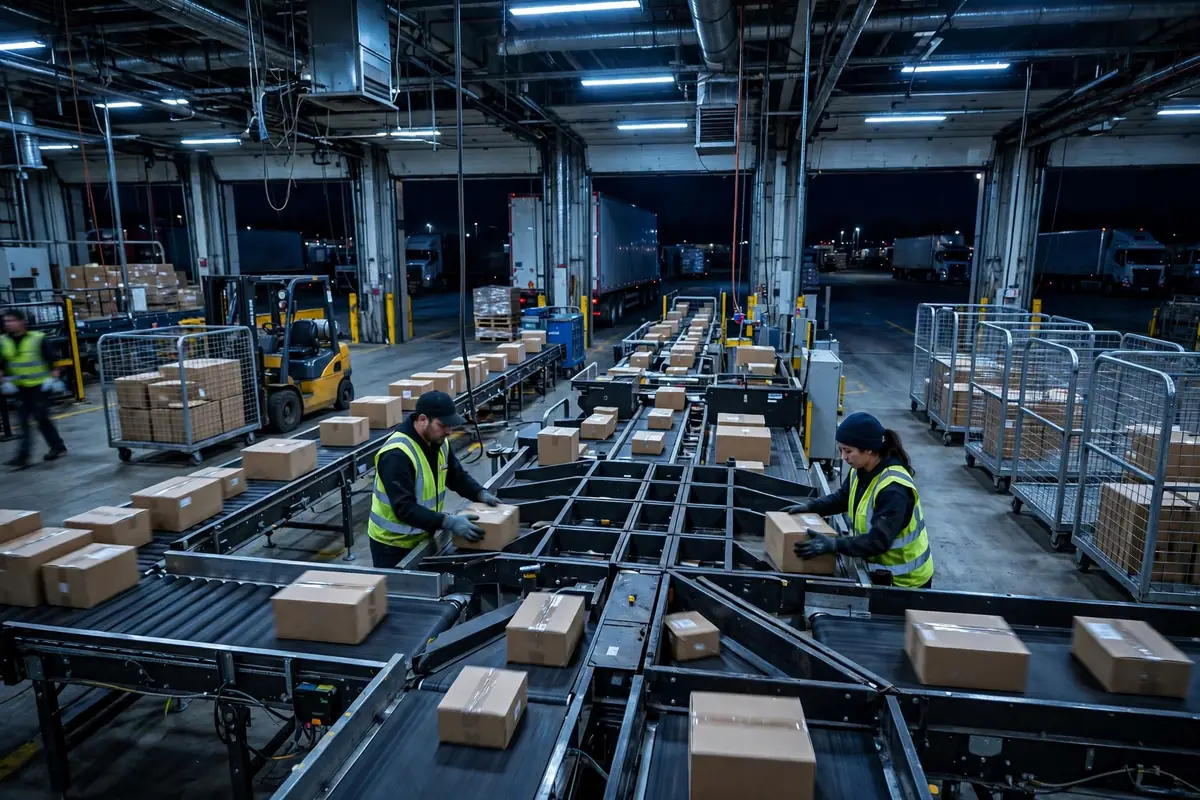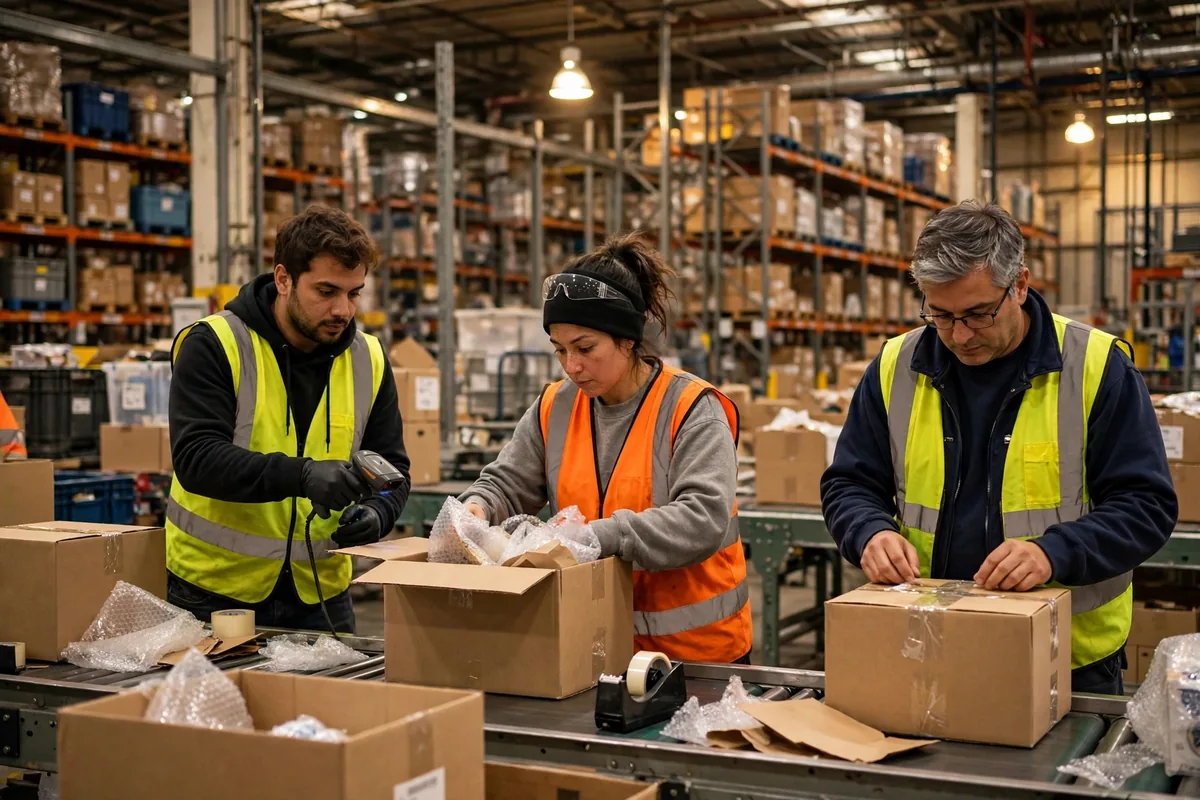
11:40 at night. Old Zhang, our night-shift lead, pushes the last pallet into staging, pulls off his gloves, and scribbles in the book. Our warehouse shift handover log checklist that night was three words long: nothing unusual tonight.
7:00 in the morning I walk in. Two orders are sitting half-finished at the dock. The forklift battery is at one bar. And a damage note is lying in the picking area with nobody's name on it. Zhang is home asleep. I call him. He says, oh, I thought the morning shift knew about those two orders.
Honestly? Half the arguments in a warehouse are not about work not done. They are about words not handed over. That is exactly what a proper handover is supposed to fix — if you build it right.
This is how our warehouse does it now. Every rule below was bought with a real headache first.
What Actually Gets Handed Over: Four Things, No Exceptions
A handover is not a peace report. "All normal" is the most dangerous sentence in shift work. It sounds reassuring and tells the next crew absolutely nothing.
Our handover only counts when four things are covered.
First, unfinished tasks. Not just order numbers — where each order stopped and why. Short stock, out of packing material, or waiting on a customer confirmation are completely different problems. Picked but not packed, packed but not weighed, weighed but not yet handed to the carrier: each state means a different priority for the crew coming in. Write the step, not just the number.
Second, exception orders. Damaged, short, wrong-item, bad-address — list them separately, every time. Exceptions do the most damage when they flow along hidden inside normal work. They reach the customer as a complaint or reach stocktaking as a mystery loss. Whoever finds an exception owns putting it on the record that same shift, even if it is not resolved yet: what it is, where the goods are, and do not ship it by mistake.
Third, equipment status. Forklift charge, which printers and scales actually work, broken scanners, and how much stretch film and how many cartons are left. The night shift notices the forklift feels wrong and says nothing. Peak morning starts, the truck dies, and the whole warehouse waits. One sentence at handover saves half a day of downtime.
Fourth, dock occupancy and pending dispatch. Which doors are blocked with freight, which batches wait for which trucks, and roughly when drivers arrive. Without it the morning crew plans blind and drivers cannot find their freight. Half the driver arguments I have had were exactly this — and they were our fault.
Illustrative scenario (hypothetical example): A mid-sized warehouse runs two shifts, two handovers a day. Each handover drops one key detail, and the incoming crew burns 20 extra minutes confirming, calling, and hunting for goods. Over 26 working days that is 52 handovers and roughly 17 hours re-confirming what should have been written down — before counting mis-shipments and driver waiting time. Sloppy handover is never free; you just pay in a currency you do not track.
Warehouse Shift Handover Log Checklist: Paper or System?
Fellow managers ask me this constantly. My answer: stop picking teams. It depends on your stage.
For a small warehouse just moving from one shift to two, a paper book works fine — sometimes better. It is fast, needs no login, and forces two people to go through it face to face. Keep the book at a fixed handover point; pages do not get torn out.
But paper has three ceilings. History is painful to search — try finding what last Tuesday's night shift wrote. Handwriting and private shorthand die when staff change. And when something goes wrong, memory becomes evidence, which means an argument.
Once shifts and volume grow, go to a system. Not because it looks advanced, but because it is searchable, traceable, and it can nag: unfinished tasks travel with the task list, exceptions carry a status, and the incoming lead gets them in the face at login. No pretending not to have seen them.
Here is the counterintuitive part: installing a system can make handover worse before it makes it better. In our first week on the system, quality dropped. Everyone assumed the system had it covered, so nobody talked face to face any more — and the system entries were sloppy too. Both channels failed at once. What saved us was a simple rule: system entry plus a three-minute face-to-face check. Neither one alone counts. Handover is a transfer of responsibility, and responsibility needs a human nod, not just a database row.
| Comparison | Paper log | System handover |
|---|---|---|
| Getting started | Near zero, pick up a pen | Training, accounts, permissions |
| History search | Slow, flip pages, easy to lose | Search by order or date in seconds |
| Accountability | Handwriting, still arguable | Time, account, status all logged |
| Exception alerts | Relies on next crew reading | Pop-ups and open to-dos |
| Best fit | Small site, early two-shift stage | Multi-shift, multi-site, peak volume |
Neither choice is shameful. What is shameful is choosing one and not enforcing it. A paper book written like a code puzzle and system entries filled in like homework are both worse than useless.
The Night–Morning Gap: "I Thought They Knew" Is the Most Expensive Sentence
The real enemy of two-shift work is not tiredness. It is the gap.
Night crews feel their job ends when freight is staged before dawn. Morning crews assume the night shift already handled every exception. Both sides assume the other side knows. So the exception sits in the middle ground for a full day and nobody touches it.
We fight the gap with two habits.
One: no exception floats without an owner. At handover, every exception lands on a named person on the next shift, confirmed face to face. Confirmation does not mean signing a box. The receiver has to say back where the order is stuck and what happens next. If they cannot say it back, the handover did not happen. Do it again.
Two: a five-minute stand-up before the morning shift starts, right at the handover point, going through last night's log. No long meeting, no speeches. Three topics only: unfinished, exceptions, equipment problems. After three months of this, our morning hunting-for-goods calls dropped off a cliff.
Illustrative scenario (hypothetical example): A night worker finds a pallet with a crushed outer carton, takes a photo, and moves it to the exception area — but only mentions it verbally to the lead and never writes it in the log. In the morning, customer service checks system stock and promises a replacement shipment. The warehouse goes to pick it and finds the quantity on that pallet does not match. Half a day disappears, the order runs late, and customer service and the warehouse blame each other. Nobody was lazy in that story. The failure was one spoken sentence — and spoken words go home when the shift goes home.
So we have a rough house rule now: if it is not in the log, it was not handed over. Sounds harsh. Works beautifully.
Warehouse Shift Handover Log Checklist Template You Can Copy
Here is the checklist our warehouse settled on. Copy it, trim it to your site, but do not cut the core four.
Every-shift handover list:
- Unfinished tasks: order number, current step, reason it is stuck, suggested priority.
- Exceptions: order number, exception type, goods location, named next owner.
- Equipment: forklift charge and available units, printer/scale/scanner faults, consumable low-stock warnings.
- Dock and dispatch: occupied door numbers, pending batches, expected truck arrival times.
- Safety and floor: exception area cleared or clearly marked, aisles open, doors, lights, and water checked.
- Sign-off: outgoing and incoming leads both sign — after the incoming lead repeats back the key exceptions.
Three writing rules come with it. Write real numbers and real locations, never empty words like "normal" or "nothing unusual." Every exception needs a location; no location means it was not written. And if finishing the log takes five extra minutes, stay the five minutes. Never hand the next shift a puzzle to pay for your early exit.
A closing word to fellow managers: the handover log looks like the smallest thing in your warehouse on a quiet day. On the day something goes wrong, it is your only witness. Do not wait until you are shouting across a table to wish you had written that one extra line.
By Chen Feng, Warehouse Operations Manager