Warehouse golden zone picking ergonomics: the answer is waist height
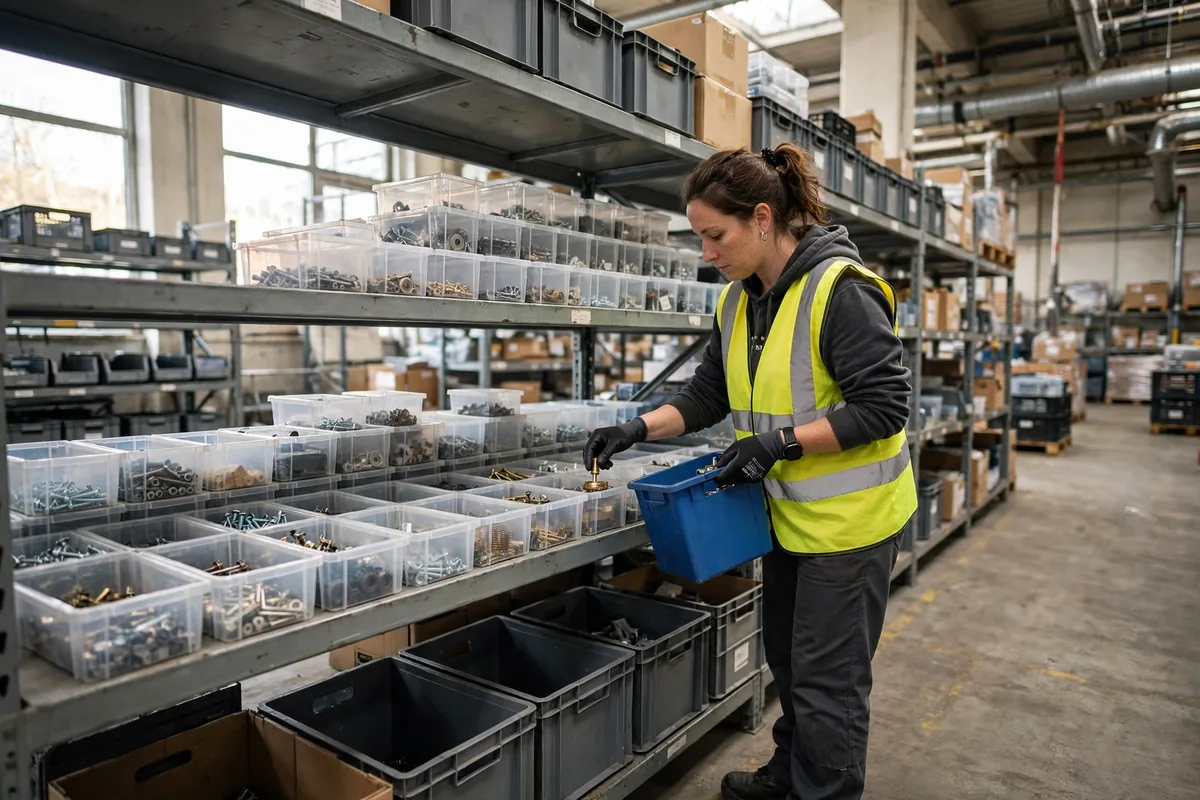
Here is the answer before anything else: a pick slot is worth what its height is worth. The band roughly 75 to 120 centimeters off the floor is the heart of warehouse golden zone picking ergonomics. Stock sitting there can be reached by a picker standing upright, no bending, no stretching on tiptoe, eyes on the label at the same moment the hand takes the item. Fast movers belong in that band. Slow movers go to the high shelves and the floor level. That decision is settled. What remains is execution: what moves, how much of it, and in what order. I have worked on more than 30 WMS go-lives, and the picking productivity math keeps landing on this height. Companies change racking, systems, and processes, and still pay for bad slotting every day while fast movers sit outside waist height.
Why waist height picks fastest
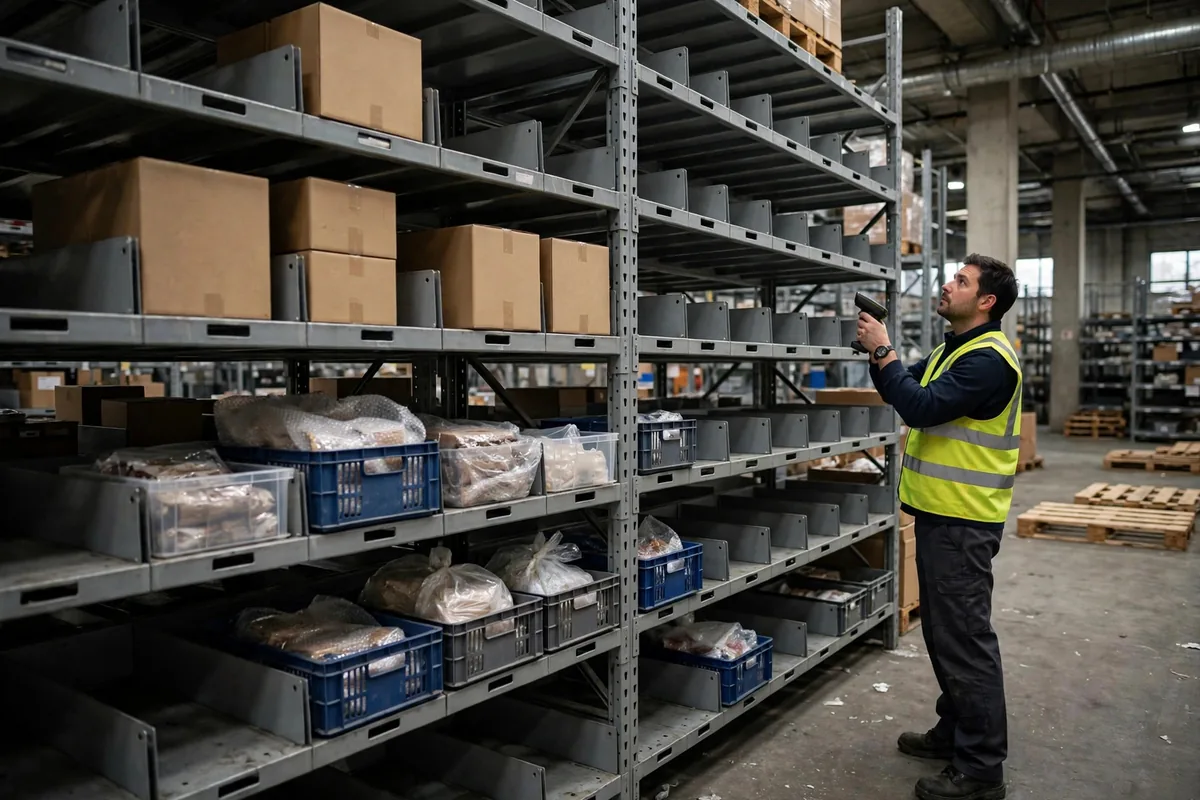
The reason is physical, not managerial. The human body works cheapest at waist height. Stock below knee level forces a bend or a squat on every pick. Stock above head height forces a stretch, a reach, and a look upward to find the item. Bending and reaching do more than cost seconds: they split attention, and split attention produces wrong picks. Good warehouse golden zone picking ergonomics removes both movements, so the hand, the eyes, and the product sit on one line, and picking and checking happen in the same motion. NIOSH sets its recommended lifting limit at 51 pounds, or 23 kilograms, under ideal conditions. That number is a ceiling, not a daily target. Daily picking should feel light and smooth, never a strain, because once weight pushes toward the limit, speed and confidence fall together. OSHA 1910.176 requires aisles and work areas to be kept clear, and that rule matters here too: a perfect waist-height slot is worthless if the aisle in front of it is blocked by staging cartons.
Checking benefits from the same height. At waist height, a picker matches label and quantity in one glance with the item already in hand, and the pack bench sees fewer wrong picks coming back. At the wrong height, the picker holds the product in one hand and the list in the other, and the checking motion itself gets distorted. If the error rate needs to come down, look at whether the product sits where a hand reaches naturally before tightening the checking procedure.
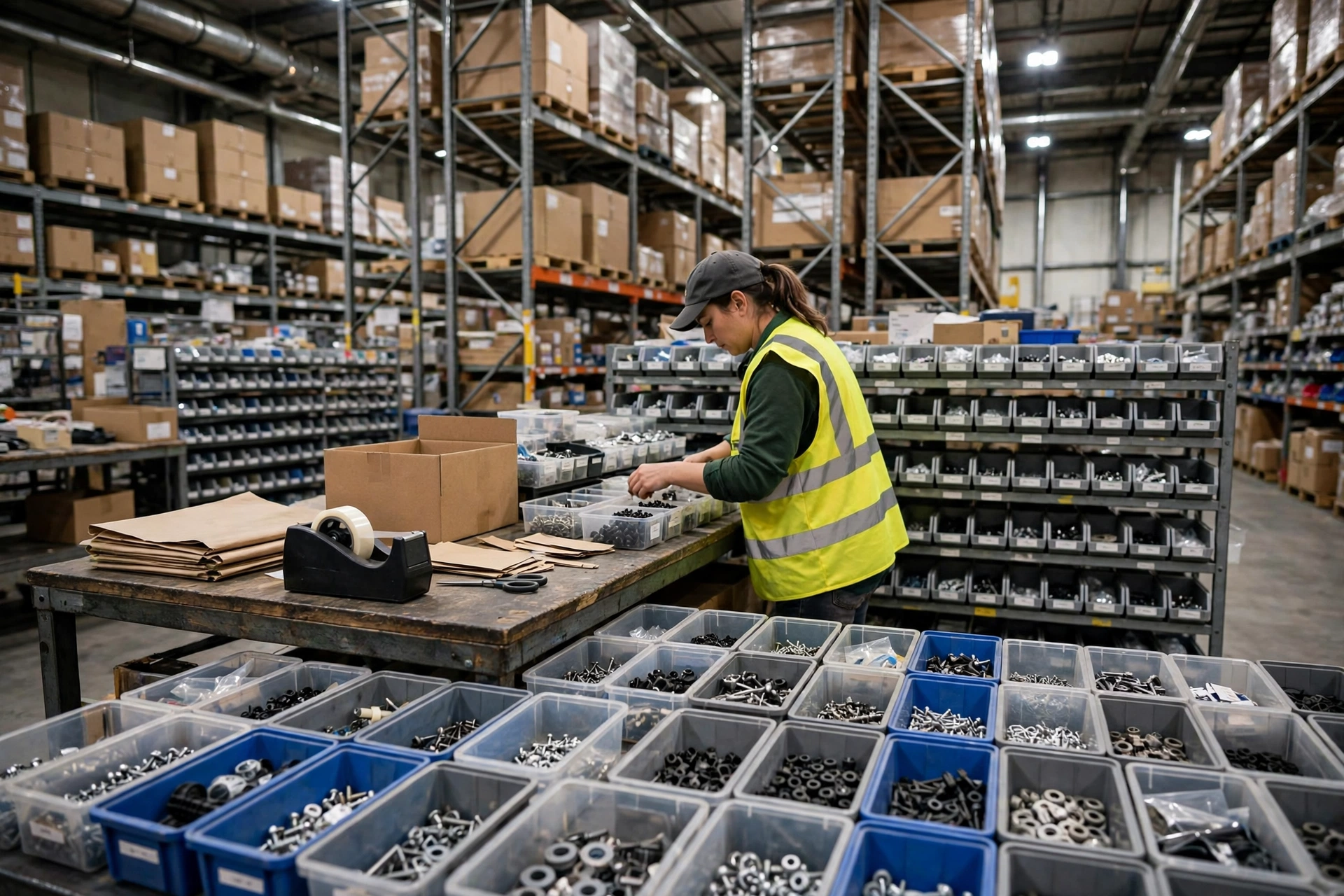
Illustrative scenario: in November 2024, an e-commerce warehouse in eastern China shipping around 8,000 orders a day kept its fast movers scattered across four shelf levels. The project team shadowed three shifts and watched pickers bend more times than anyone could count. Tired backs slowed the pace, a slow pace invited rushing, and rushing produced wrong picks. The problem was not headcount and not the system: the fast movers were living on the wrong floors. Once the top 20 percent of SKUs by movement were concentrated at waist height, the same crew handled the same workload with visibly fewer bends, and wrong picks sent back from checking fell as well. The numbers here are illustrative; the direction is certain: get the height right and errors drop.
Putting warehouse golden zone picking ergonomics to work in five steps
Step 1, pull movement data. Export the last 90 days of outbound order lines from the WMS, total them by SKU, and rank every SKU by its share of total lines. Use 90 days, not a full year, because a full year mixes seasonal spikes with discontinued lines. Clean the data first: remove lines from returned orders shipped twice, test orders, and cycle-count adjustments. New products with no 90-day history get a temporary slot based on a similar established product, then move once four weeks of real data exist. Never park a new product in a random empty slot just because it has no history yet.
Step 2, split ABC. Class A covers the SKUs that add up to the first 80 percent of lines, Class B the next 15 percent, Class C the final 5 percent. Class A is usually only 20 to 30 percent of SKUs yet carries 80 percent of picking, and that group lives in the golden zone. Class B goes on the two levels directly above and below waist height, Class C to the top level and the floor level. Re-run this split every quarter, because movement changes: last summer's bestseller can be this year's slow mover.
Step 3, measure the racking. Take a tape measure to every level and mark where 75 to 120 centimeters falls on each bay. Do not estimate, because floor-level heights can differ between bays in the same row. Draw a height map of the pick area and pin it on the site office wall, showing three things only: which levels are the golden zone, which Class A SKUs live on each level, and which levels are empty and waiting for moves.
Step 4, move the stock. Work in Class A rank order, highest movement first, closest to the main aisle first. Change the system location the same day a SKU moves, because a move without a system update is no move at all. Schedule moves between waves, never during the peak shipping window, since moving stock at peak is a reliable way to manufacture wrong picks.
Step 5, verify for a week. Compare three things before and after: time to complete the average order lines, wrong picks returned from checking, and picker feedback on bending. Judge one week, not one day, because a single day is skewed by promotions and stockouts. If the result disappoints, check three suspects in order: the ABC split was wrong, the golden-zone levels were measured wrong, or the system locations were never updated on moving day.
The table below is an illustrative example. Its numbers are invented scenario values, included only to show how the calculation works, and they describe no real warehouse:
| Measure | Before the move | After moving to waist height |
|---|---|---|
| Bends per order, average | 14 | 5 |
| Reaches on tiptoe per order, average | 6 | 1 |
| Wrong picks returned per 100 orders | 3 | 1 |
| Picker fatigue at end of shift, self-reported | Very tired | Noticeably easier |
The point of the table is that bending is a cost problem, not a fitness problem. Every bend costs time, drains energy, and adds one more chance to pick the wrong item. What warehouse golden zone picking ergonomics saves is not a few minutes: it is thousands of bends repeated across every order of the day. The counterintuitive judgment is this: many warehouses reach for more staff, more overtime, or a faster system first, when the cheapest speed gain is moving stock to the right height. Extra staff does not fix bending, and a new system does not fix reaching. Only slotting fixes either one.
Three ways the golden zone goes wrong
The first failure is slotting by size instead of by movement. I have seen this mistake three times: a project team puts large items on the floor level and small items at waist height because the drawing looks tidy, and then pickers bend all day for a small slow mover while stretching for a large fast mover. Size decides load-bearing, not picking priority. Movement is the only standard for ranking slots. Size only decides who sits left and who sits right on the same level.
The second failure is a golden zone full of slow movers. It happens when re-slotting is done once and never repeated: a bestseller gets discontinued and its slot still occupies waist height, while the new bestseller waits on the top level. The fix belongs in the operating rhythm. Re-run ABC every quarter, and every re-run must produce a location-change order that someone signs. Skipping that small action quietly turns the golden zone into a display shelf for slow stock.
The third failure is remembering slotting on go-live night. The go-live night checklist should carry one line: Class A locations in the golden zone verified, system and physical stock in agreement. Too many projects schedule slotting for after go-live, start the system first, and promise to move stock later. The first week after go-live then becomes the worst week for wrong picks. The order is backwards: slotting is a go-live condition, not a post-go-live improvement. On the day the system switches over, pickers look for stock in the new locations, and the stock has to be there already.
This work has no technical mystery to it. It has discipline. Pull the movement data, split ABC, measure the heights, move the stock, verify for a week, re-run every quarter. Every action can be scheduled before the end of today. If one cannot be scheduled, the problem is not time: nobody wrote it down as a task. By Lin Xiao, WMS Implementation Consultant