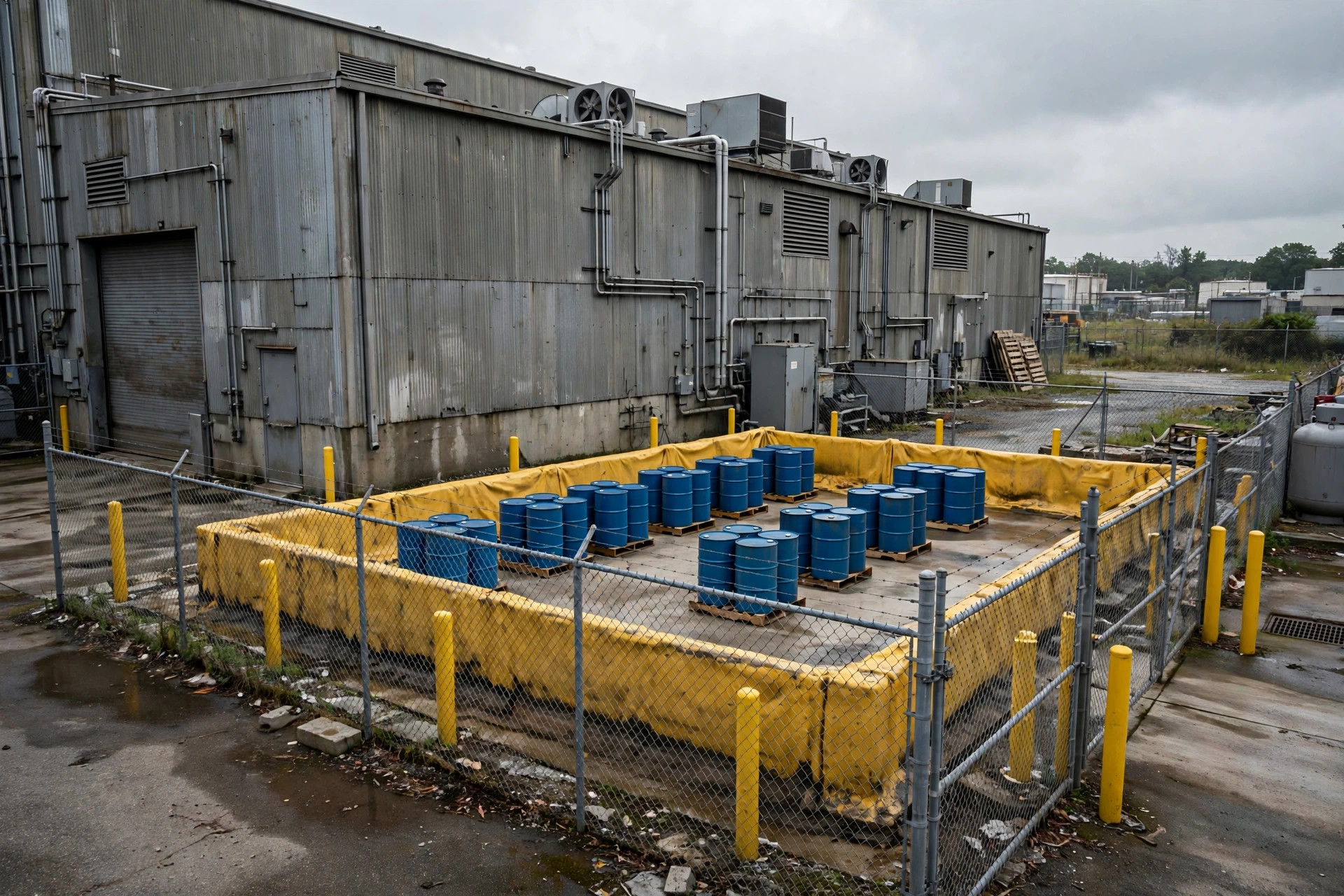
We had a client, a small-appliance importer, who stored with us in the Inland Empire for almost two years. One night in August 2023, aging wiring in the adjacent bay sparked a fire. It took crews three hours to put it out. His inventory, worth roughly $600,000, sat right next door. Between fire, smoke, and water damage, nearly 40% of it was a total loss.
Three days after the fire, the owner's call came in, his voice hoarse: "Susan, that's $600,000 of my goods. How much are you going to pay?" I pulled up the contract. The liability limit clause was right there in black and white: capped per pallet, $5,000 per pallet maximum, on twenty-eight pallets. Maximum payout: $140,000. Ten seconds of silence, then he exploded: "I pay you over two hundred grand a year, and you pay me $140,000?!"
That question needed to be asked the day we signed the contract, not the day after the fire.
Your Warehouse Is Not Your Insurance Company: How Liability Limits Actually Work
Most shippers walk in with a natural assumption: my goods are in your warehouse, so if they're lost, burned, or flooded, you pay me full value. Reasonable? Sure. Legally true? Not close.
In the United States, a warehouseman's liability framework comes mainly from Article 7 of the Uniform Commercial Code (UCC), as adopted by the states — the key provision being Section 7-204. In plain English, it says three things:
First, a warehouse is only liable for losses caused by its failure to exercise reasonable care — the care a reasonably careful person would exercise in similar circumstances. Neglected wiring starting a fire counts; an unpreventable disaster next door doesn't.
Second, damages can be capped by contract. UCC 7-204 expressly allows a term in the warehouse receipt or storage agreement limiting the warehouse's liability. The warehouse gets to say, in writing: "I pay up to this much, and not a dollar more." That's the warehouse's shield — and the contract page most shippers never read.
Third, there's one hard boundary: the cap doesn't apply to conversion — when the warehouse itself misappropriates the goods. If employees steal inventory or the warehouse sells it off, the liability limit won't save anyone. That's the law's last line of defense for the shipper.
And here's one most shippers don't know: the bailor (that's you) has the right — in a record, at signing or within a reasonable time after receiving the warehouse receipt — to request increased liability limits on part or all of the goods. The catch: the warehouse can charge higher rates. In all my years in sales, I can count on one hand the shippers who've actually exercised it.
The Second Trap: Your Claim Expired Before You Filed It
Let me tell you another story. In 2024, an auto-parts client in Houston found 13 pallets missing during a cycle count — close to $100,000 in goods. The warehouse admitted an internal mis-shipment and agreed to pay per the contract's liability limit.
The claim eventually died on a deadline. Legal pulled out the contract: written notice of loss within 60 days of discovery, and any lawsuit or arbitration within 9 months — or the claim is deemed waived. The client had dragged things out for nearly four months before the lawyer's letter went out.
How did it end? The client's owner flew to Houston, took our regional VP to dinner, and the warehouse made a small "customer relationship" payment that wasn't close to a rounding error. That was an expensive dinner.
So remember: sitting next to every liability limit clause is its twin — the claims-filing deadline. Many warehouse contracts require written notice within a set number of days and a hard deadline for filing suit, with late claims treated as abandoned. The exact numbers live in your contract. My advice: the day you sign, write those two numbers into your company's SOP. Don't go hunting for them after goods go missing.
Three Ways to Cap Liability: Run the Math Yourself
On a 3PL rate sheet, liability limits almost always come in one of three flavors. Let me run the numbers on a hypothetical shipment so you can see the mechanics: $300,000 in goods, 20,000 pounds, 20 pallets.
| Basis | Typical wording | Cap on this shipment | The catch |
|---|---|---|---|
| Per pound | $X per pound | At $2/lb → $40,000 | Brutal for high-value, lightweight goods (electronics, small appliances): $300,000 of goods, $40,000 of coverage |
| Per pallet / per unit | $X per pallet | At $5,000/pallet → $100,000 | Low pallet utilization quietly shrinks your cap; odd-shaped freight is harder to pin down |
| Declared value | A percentage of declared value | Declared $300,000 → $300,000 | Looks the fairest — but declare low to save on storage fees and you'll cry when goods are lost; declare high and the warehouse charges a valuation premium |
See the pattern? A liability limit is never just a number — it's a function of your goods' value density. High-value, lightweight goods (electronics, cosmetics) suffer under per-pound caps; heavy, cheap goods may actually prefer per-pallet pricing.
Many shippers negotiate hard to push the cap number up and walk away feeling victorious. But every warehouse operator knows — raise the limit one notch, and the storage rate plus the insurance surcharge go up with it. That "higher limit" you won? You're paying for it. Sophisticated shippers don't ask "how high is the cap." They ask "what's the basis of calculation."
The Insurance Split: The Warehouse's Policy Has Nothing to Do With Your Goods
This is the insider truth I most want to share. Many shippers assume a big warehouse carries massive insurance, so if something happens, the insurer pays. Wrong. The warehouse carries warehouseman's legal liability insurance — it covers the warehouse's risk of owing money for its own negligence, and the coverage tracks the contract's liability limit. Your goods' actual value is not on the warehouse's policy.
Whose policy is your goods' value on? Yours. The shipper's own stock/inventory insurance or cargo policy. That's the iron rule of this business: whoever owns the goods insures the goods.
The split, side by side:
- Warehouse liability insurance: bought by the warehouse, covers the warehouse's fault-based liability, coverage amount = the contract's liability cap. When something goes wrong, the contract cap is where the conversation starts.
- Shipper's inventory insurance: bought by you, covers your goods' actual value — fire, theft, flood. Premiums follow the value you declare.
The worst case I ever saw: a New Jersey shipper in 2022 lost over $400,000 of goods to warehouse flooding. The per-pound contract cap paid out barely $60,000. His own inventory policy? He'd declared only half the value to save on premiums. $400,000 of goods, less than $200,000 recovered. The premium savings wouldn't cover a rounding error.
Three Questions to Ask Before You Sign
After this many years in sales, I can tell you: the liability limit clause is the one clause warehouses least want you to read — and the one shippers most need to. Next time you negotiate, don't just grind down the storage rate. Ask these three questions:
Question one: "What is the basis of the liability limit — per pound, per pallet, or declared value?" Get it in writing, run your own numbers, and see what percentage of your goods' value the cap actually covers. If a basis covers less than half your inventory value, walk away from that basis.
Question two: "What are the claim notice and filing deadlines, and which section are they in?" Make them point to the exact clause. Write the numbers down and build them into your claims SOP. Don't discover them after goods go missing.
Question three: "If I want a higher liability limit, what does it cost and how do I request it?" That's your statutory right under UCC 7-204. Get the pricing in writing. For high-value SKUs or peak-season inventory, buy the increase — it costs far less than a lawsuit after the fact.
One honest closing thought: liability caps aren't warehouse greed — they're the pricing logic of the industry. Storage is billed by the square foot or the pallet; a warehouse charging you $200,000 a year can't underwrite $600,000 of inventory risk on that math. What the warehouse side can do is put the rules on the table. What the shipper side must do is read them before signing — and insure to full value.
Contract drafting and negotiation vary by state, so have an attorney review anything you're unsure about, and follow counsel's advice and current regulations. But the direction never changes: whoever holds the goods writes the risk into the contract; whatever the goods are worth, that's what the insurance should cover.
By Susan, 3PL Sales Director