Warehouse led lighting retrofit payback is a calculation most people get backwards. They start with the price of one fixture, jump straight to "how many years until it pays for itself," and skip the two numbers that actually decide the answer: how much electricity the old lights really eat, and who guarantees the new ones are not burning bright in an empty aisle at 2 a.m. This is like swapping in a fuel-efficient engine and then leaving the car idling all day. The physics of the light is simple. The traps are all in how you count.
Let me start with one warehouse I walked through last year. It was an auto parts operation with an 11-meter ceiling and 180 old metal halide high bays. The aisles were lit around the clock, even though the night shift only worked two aisles at a time. The owner complained about the power bill, and before talking fixtures I asked him to do two things: pull a week of meter readings and count how many hours each zone was actually lit. Lighting turned out to be the biggest single chunk of the bill, and nearly a third of those lit hours were empty aisles burning for nobody. That is the classic mistake: signing a retrofit contract before you have a baseline.
Warehouse LED Lighting Retrofit Payback Starts with the Physics
An LED saves energy for two hard reasons, not because "advanced" is a magic word. First, efficacy: it delivers the same illuminance at far fewer watts. Second, it can be controlled. Metal halide lamps hate being switched on and off, so they stay on. LEDs do not care, which is what makes sensors and zoning worth doing at all. You can think of the old lamp as a tap that only knows fully open or fully shut, and the new one as a sensor tap that knows when to stop. The saving comes from both the tap itself and the fact that it stops.
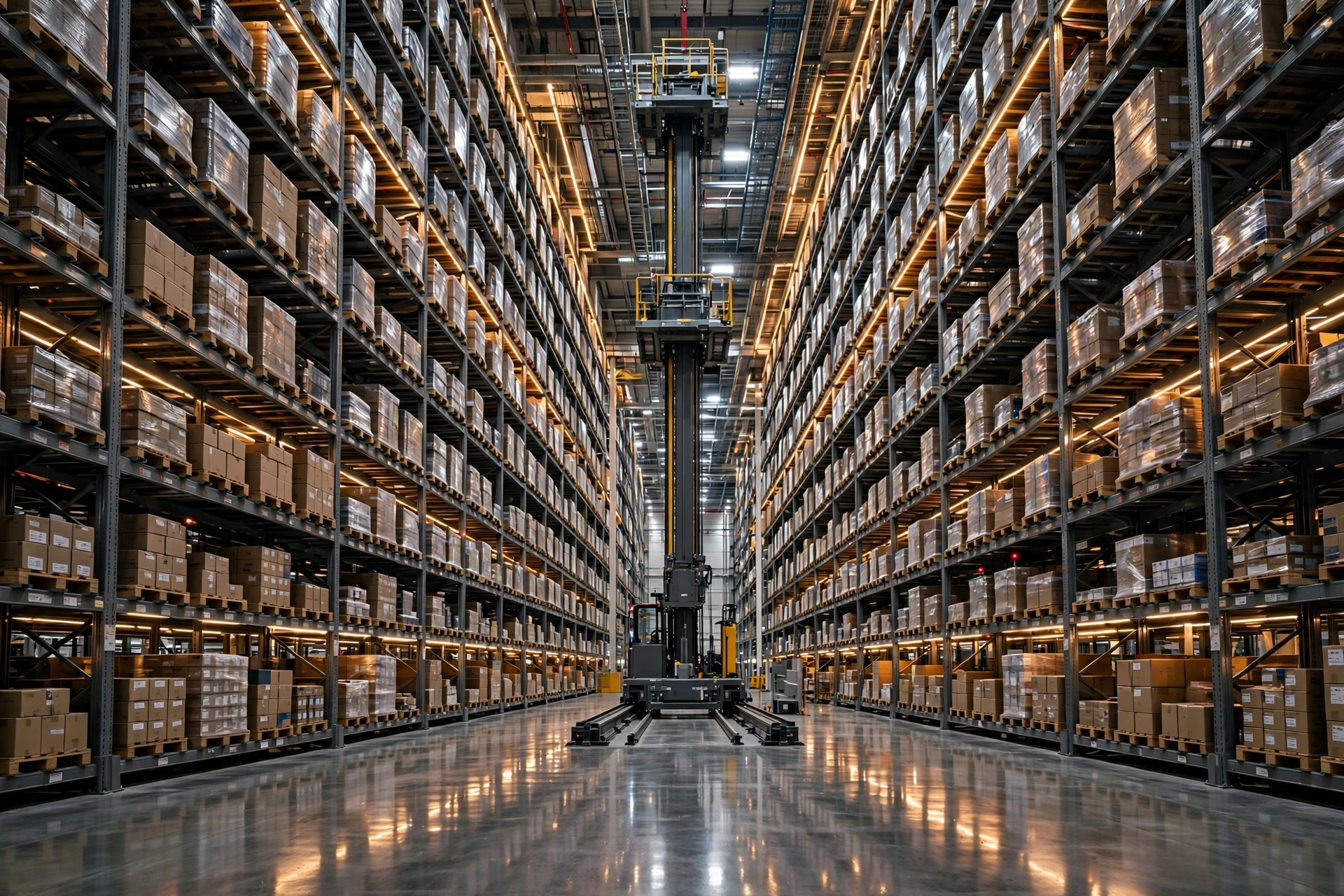
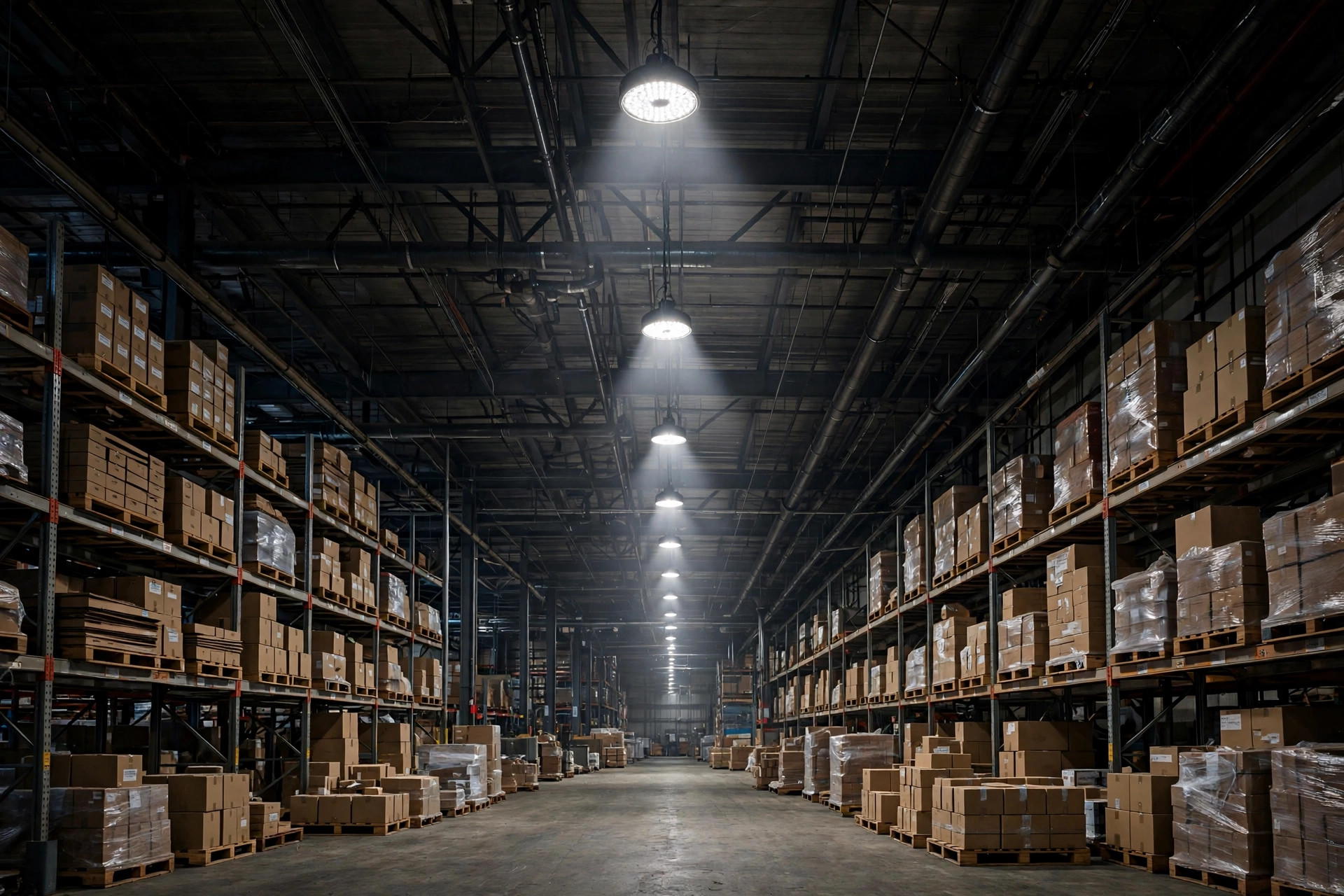
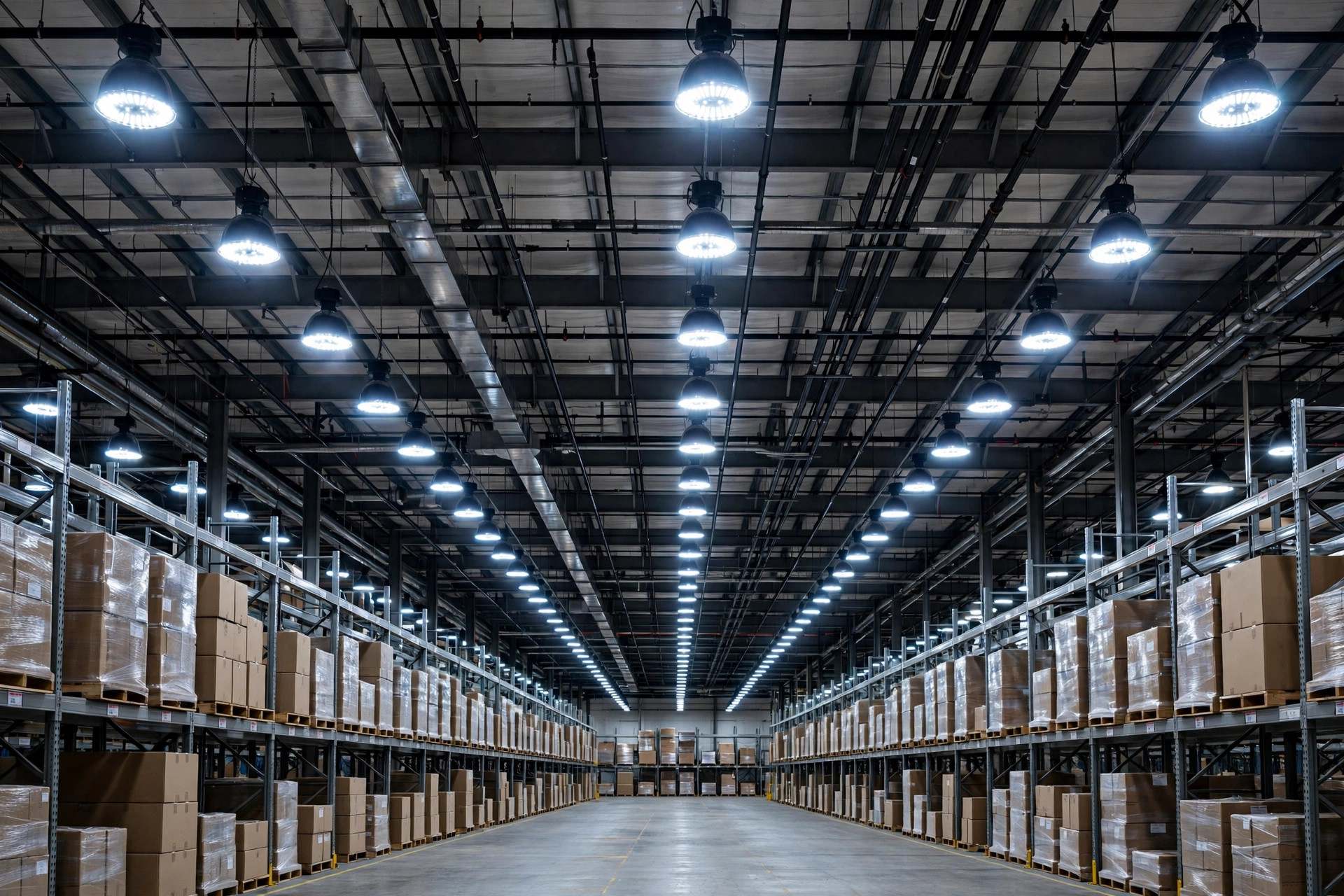
There is a selection boundary here, and it matters more than the brand. Above about 8 meters in open high-bay areas, UFO-style high bays make sense because one fixture covers a wide patch. In long, narrow rack aisles, linear high bays laid along the aisle put the light where people walk instead of dumping half of it on top of the racking. Then there is color temperature, the number everyone forgets. Around 4000K, a neutral white, lets pickers read labels without strain. Push everything to a harsh 6000K cool white and the floor looks brighter while glare makes labels harder to read. For a picking zone, the pass mark is not maximum brightness. It is enough light, evenly spread, without glare.
Where Warehouse LED Lighting Retrofit Payback Splits: Fixtures Versus Controls
Here is where I get blunt: many quotes bundle fixtures and controls into one price and one payback figure, so you cannot see where the money went. Split the math into two ledgers. Ledger one is the fixture swap: old watts minus new watts, times annual lit hours, equals kilowatt-hours saved. Ledger two is controls: sensors, zoning, and dimming save the hours when the light should never have been on, and that saving has nothing to do with the price of the lamp.
Splitting the ledgers also exposes pseudo-demand. If your warehouse runs three shifts around the clock and the aisles are never empty, sensors will save you very little, so do not pay extra for a fancy smart lighting platform; just swap the fixtures and zone them properly. If, on the other hand, your night shift works only part of the building and daylight comes through high windows during the day, sensors and dimming are the bigger prize and the fixture price difference is the smaller number. The tell-tale symptom of a bad quote is a controls package that costs more than the lights while the salesperson keeps talking about lamp life. Those are two different ledgers.
Here is the worked example from one warehouse. Every figure is an example calculation, not a promised return, and rebate rules should be checked against the latest official policy:
| Item | Example figure |
|---|---|
| Old: 180 fixtures × 400 W, 4,800 lit hours a year | About 346,000 kWh a year |
| New: 180 fixtures × 150 W, same lit hours | About 130,000 kWh a year |
| Annual electricity saved (at the example tariff) | About 194,000 currency units a year |
| Fixtures plus installation | About 324,000 currency units |
| Simple payback without any rebate | About 1.7 years |
| Payback if the example rebate lands | About 1.4 years |
The formula is the whole story: payback equals net investment divided by annual saving, and both numbers must come from your own building. Somebody else's payback period is irrelevant to you. If sensors cut additional empty hours, payback gets shorter, but I suggest deciding on the conservative figure without controls and treating the controls saving as a bonus, not the baseline.
Rebates Are Real Money, but Do Not Book Them on Day One
Rebates are real, but they have an annoying habit: the timing is uncertain and the rules can change. Some pay per fixture, some pay per unit of energy saved, and some require the application before the work starts. Get the order wrong and you get nothing. My rule is simple: decide on the payback without the rebate. If the rebate lands, payback shortens and that is a pleasant surprise. If you signed the contract counting on the rebate first and it arrives six months late, your cash flow plan is already broken. Before work starts, pin down three things: which body runs the scheme, the application window and deadline, and what proof of installation you must keep. Keep that proof on the day, because a photo taken months later convinces nobody.
The second warehouse story is about maintenance, and it is the one people forget to price. A consumer goods warehouse bought cheap drivers to save on fixtures. The LEDs themselves were fine, but a batch of drivers failed early. Replacing one fixture at height meant scaffolding and shutting half an aisle, and the labor cost more than the fixture. That is the maintenance trap: the cost of a high-bay lamp is not its rated life, it is what one trip up to the ceiling costs you. When you choose a fixture, do not just compare efficacy and unit price. Ask how long the driver warranty runs, whether the driver can be replaced on its own, and whether the supplier can support high-level replacement work.
The Maintenance Bill That Belongs in the Payback
Three maintenance failures show up again and again. First, blocked sensors: a sensor mounted at an aisle entrance loses half its range when racking is raised or moved, the light stops following the worker, and the zone ends up switched back to always-on. The controls money is wasted. Second, mixed batches: fixtures bought in separate batches at different color temperatures leave one aisle half yellow and half white, and picker complaints arrive faster than the power bill. Third, incompatible dimming protocols: lamps from one supplier, controllers from another, and a platform from a third, all speaking different protocols, so dimming degrades to on-or-off and the smart system becomes an expensive switch.
So do not accept the job on "the lights turn on." Walk every aisle at night and check that sensors follow your footsteps. Measure illuminance at floor level and at height, not just at the brightest spot in the middle. Keep spare drivers and fixtures on hand, a small proportion of the total is enough. And record every fixture's position, model, and installation date, so the next failure does not require a climb just to read a label.
Here is the counterintuitive judgment to finish on: in most warehouse lighting retrofits, the biggest saving does not come from the lamp itself. It comes from the habit of turning lights off when nobody is there. In other words, you are not just buying brighter light, you are buying light that knows when to go home. So is the money worth it? Look at one number: your own building's simple payback without any rebate. Under two years, it is worth a serious conversation. Over three years, go back and recheck your lit hours and zoning plan before you sign anything.
By Da Liu, Automation Engineer