Let me put the conclusion first: in the Bogota Colombia warehouse market logistics, rent is the least useful number on the page. The real cost hides in altitude, gradient, and the time it takes to get into the city. Put bluntly, whatever you save on rent, you will usually pay back twice over in hill climbs, traffic, and damaged goods.
There are two sides to this. On one side, the spreadsheet: space outside the city looks cheap, floor area is generous, and negotiations often throw in a few months rent-free. On the other side, the daily reality: trucks climb in from the edge of a high plateau, rain makes the roads slick for months, and one morning bottleneck can eat half a delivery window. I have seen too many operators pick a building from a rent table and discover, three months after moving in, that their real cost center was never the warehouse. It was the road.
A few years ago I worked with a consumer-goods distributor serving Bogota and several satellite towns. They took a large, cheap building south of the city because the rent came in well below comparable space on the west corridor. The first two weeks felt like a win: racking went up, the team was staffed, and everyone liked the size of the place. The trouble started in week three. Trucks left at 6:30 in the morning and ground up a long, steep approach into the city, and in the rainy season trip times swung wildly day to day. On the worst day, one truck had still not reached its first customer by noon. Customers did not complain about price. They complained that they could not plan their own receiving labor, because nobody could say when the goods would arrive. Three months later the distributor gave up the cheap space for a smaller building on the west corridor, closer to the main highway. Rent went up, complaints fell by more than half, and drivers fit in an extra run each day. That lesson stuck with me: what you buy with a location is certainty about time, not cheap square meters.
The Bogota Colombia Warehouse Market: Pick a Direction Before You Look at Rent
Broadly, warehouse space here fans out in three directions. The west corridor, around Funza and Mosquera, sits near the airport and the highway to the western provinces, which suits national distribution and air-freight connections. The northern corridor, toward Tocancipa, serves the wealthier northern neighborhoods, which suits higher-ticket categories. The southern corridor, toward Soacha, sits close to the densely populated south, which suits high-frequency delivery of everyday goods. None is objectively best. The only question is whether it fits the shape of your orders.
| Corridor | Best for | Relative rent | The price you really pay |
|---|---|---|---|
| West (Funza, Mosquera) | National distribution, air-freight links, orders spread across the country | Relatively higher | Peak-hour congestion on the way in, but several route options |
| North (Tocancipa direction) | Northern customers, higher-value categories | Mid-range | Long hauls when serving orders in the south |
| South (Soacha direction) | Dense southern-city delivery, fast-moving consumer goods | Relatively lower | Hill climbs and congestion eat delivery time; reliability is hardest to guarantee |
| Edge-of-city small site | Same-day replenishment, forward stock | Relatively highest | Small footprint, no room to expand; a transfer point, not a stock-holding site |
The rent levels in that table are relative comparisons only. For current figures, check current local market reports, and never negotiate a new lease off an old report. I have seen too many people read the Bogota Colombia warehouse market backwards: they pick the cheapest row first, then try to bend their business around it. The right order runs the other way. Map where your orders actually go, find which corridor gets the most orders delivered inside the promised window, and only then talk rent. What you save at the negotiating table will never cover the delivery promises you lose every day.
Hill-Climb Delivery: Trucks, Timing, and Breakage Pull Three Ways
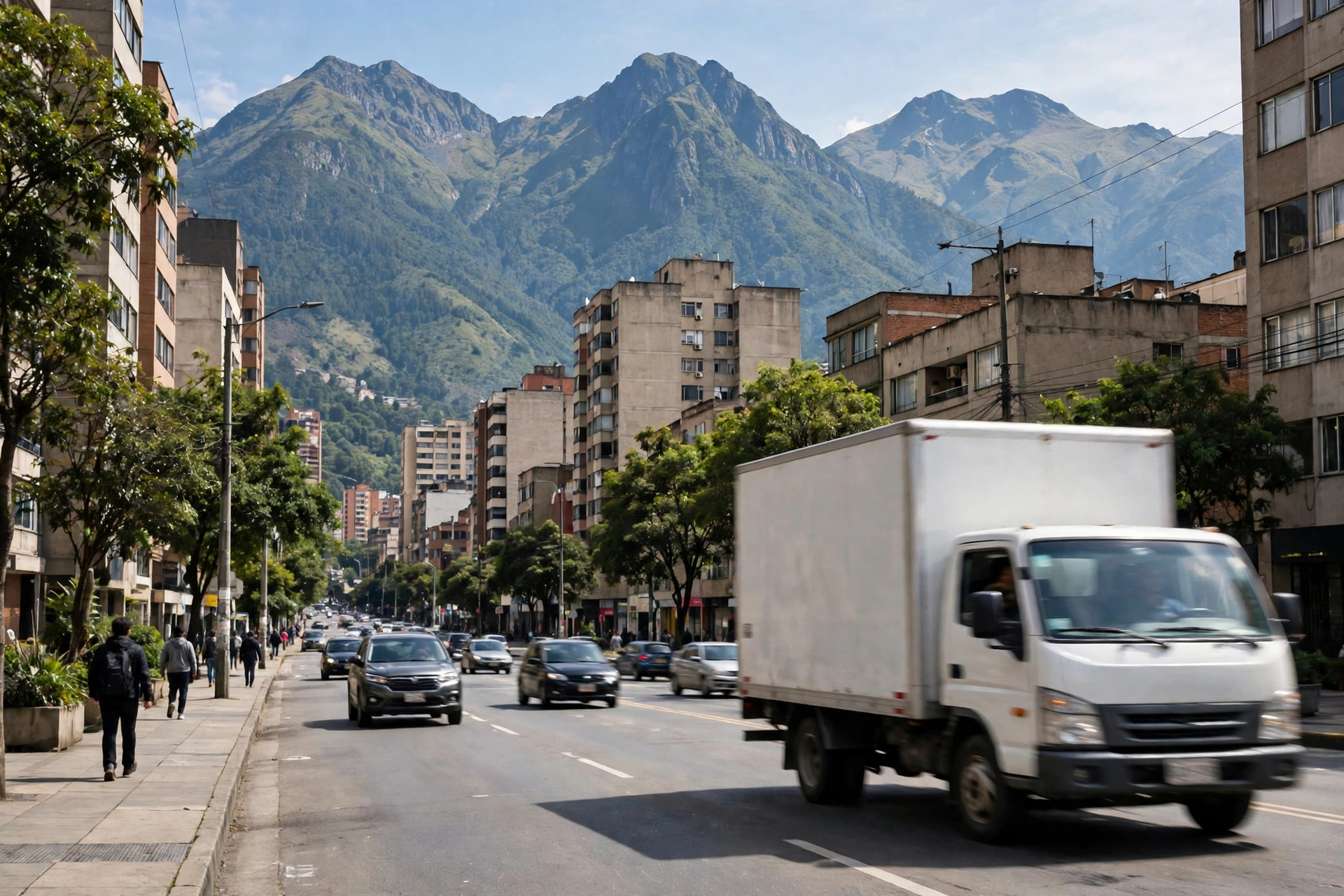
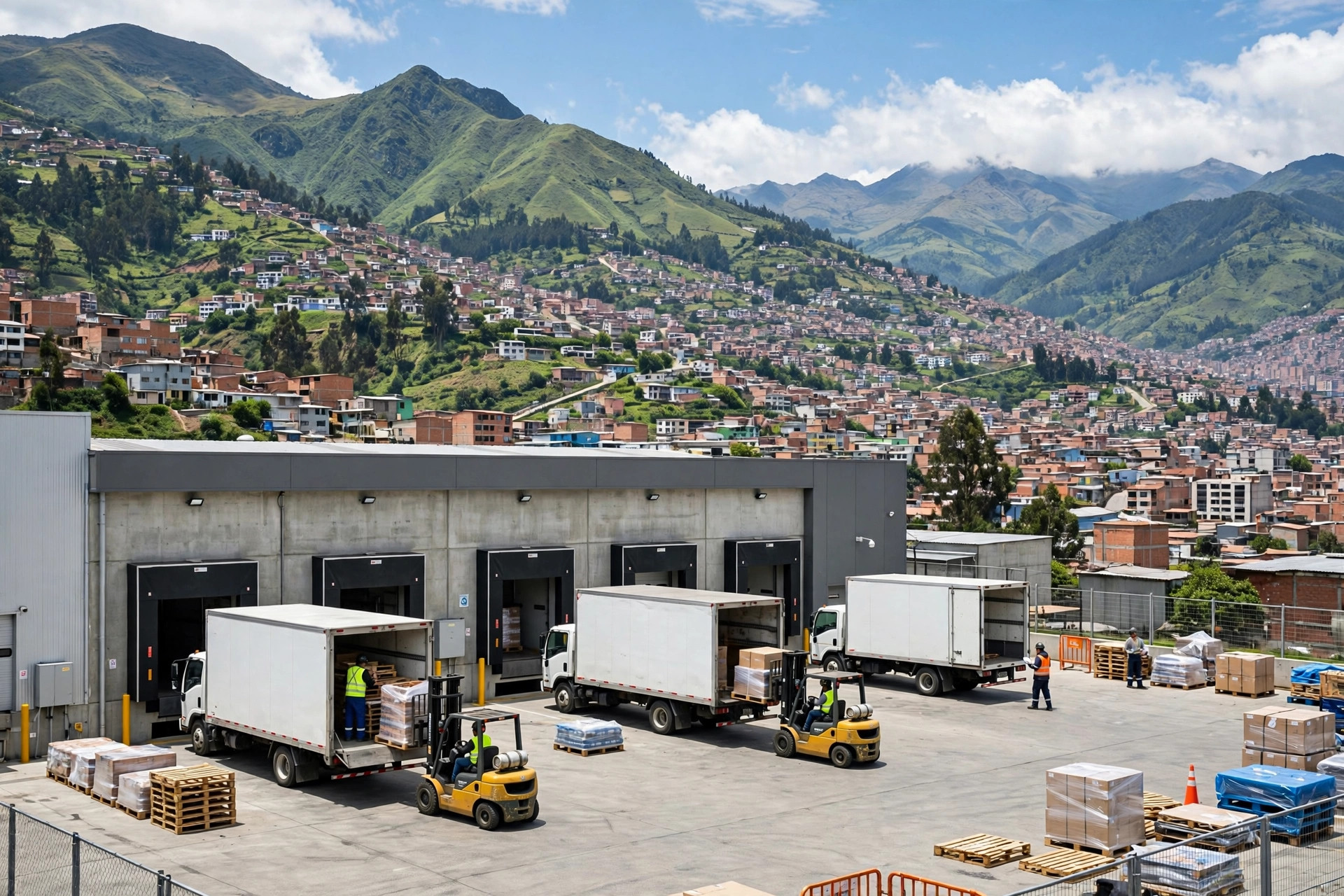
Bogota sits around 2,600 meters above sea level. That is not a travel fact. It is a daily operating cost. Loaded trucks burn more fuel on climbs and wear brakes faster, drivers tire sooner, and fragile loads suffer: light goods shake apart, liquids slosh, glass breaks, and wet-season roads push damage rates higher still. A route a big truck could finish in one trip on flat ground may need two smaller trips here, or a departure a day earlier. If you do not price that in, the margin on your quotation is fiction.
I still remember one rainy Tuesday morning. A truck carrying roughly four hundred cases of beverages left an out-of-town warehouse bound for about a dozen convenience stores in the north of the city, a run that should have finished by early afternoon. Halfway there, standing water on a slope brought the queue to a crawl for nearly two hours, and by the third stop the driver was three hours behind schedule. Three stores refused that day's delivery outright, because their afternoon staffing had already been assigned elsewhere. Only about sixty percent of the load went out that day; the rest came back for re-routing the next morning. The customer later changed the model: big trucks now run only to a transfer point at the edge of the city, and smaller vehicles handle the last leg inside town. It added one handling step, and it cost money. But on-time performance recovered, and refusals nearly disappeared. Look at it from both sides: the extra handling is a cost, and reliability is revenue.
So price a full order, not just the rent. Write it on a whiteboard: cost per order equals rent share, plus climb-driven fuel and vehicle wear, plus losses from missed windows and refused deliveries, plus breakage and redelivery. If any one of those four numbers is a guess, the whole site decision rests on air. Use your own fleet's history for wear and breakage, not a supplier's glossy figures, and count refused deliveries at their real cost.
Bogota Colombia Warehouse Market Site Selection: My Shortlist
When it comes down to practice, I hand clients five checks. Plot three months of real order addresses on a heat map, and put the warehouse near the densest orders, not near the landlord's office. Ride the full route with a truck at morning and evening peaks; a straight line on a map tells you nothing. Measure delivery times in both seasons, and treat the rainy-season numbers as your real promise baseline. Find out the vehicle restrictions and daytime rules for large trucks on each road before you sign, because some routes simply do not allow big trucks during the day. And keep an exit in the lease: clear terms for early termination and expansion, because a warehouse that locks you in becomes a liability.
One more piece of advice about how to enter: do not sign a big, long lease on your first move into Bogota. Start with a transfer-scale site that covers three to six months, run real orders through it, and let the data on timing, damage, and refusals tell you the truth. Then decide whether to expand, switch corridors, or add a forward site. I have seen too many operators draw a five-year plan straight into a lease, only to watch the business change direction and leave the warehouse as their most expensive burden. A small trial run is not embarrassing. Betting five years of freight cost on an address you have never actually driven to is. Once the data is real, you negotiate an expansion from strength; if it disappoints, a small site is cheap to walk away from.
Put bluntly, setting up in Bogota is not about finding the cheapest building. It is about choosing a delivery route that can survive altitude and congestion. Anyone can read a rent table. The road is understood only by people who have driven it. Would you rather spend two weeks riding routes before you sign, or three months paying tuition after you move in?
By Lao Mi, Supply Chain Veteran (20 yrs)