Last month a 3PL warehouse handed me its power bill, and the warehouse LED lighting retrofit cost question started right there: the lighting line alone ran $48,000 a year.
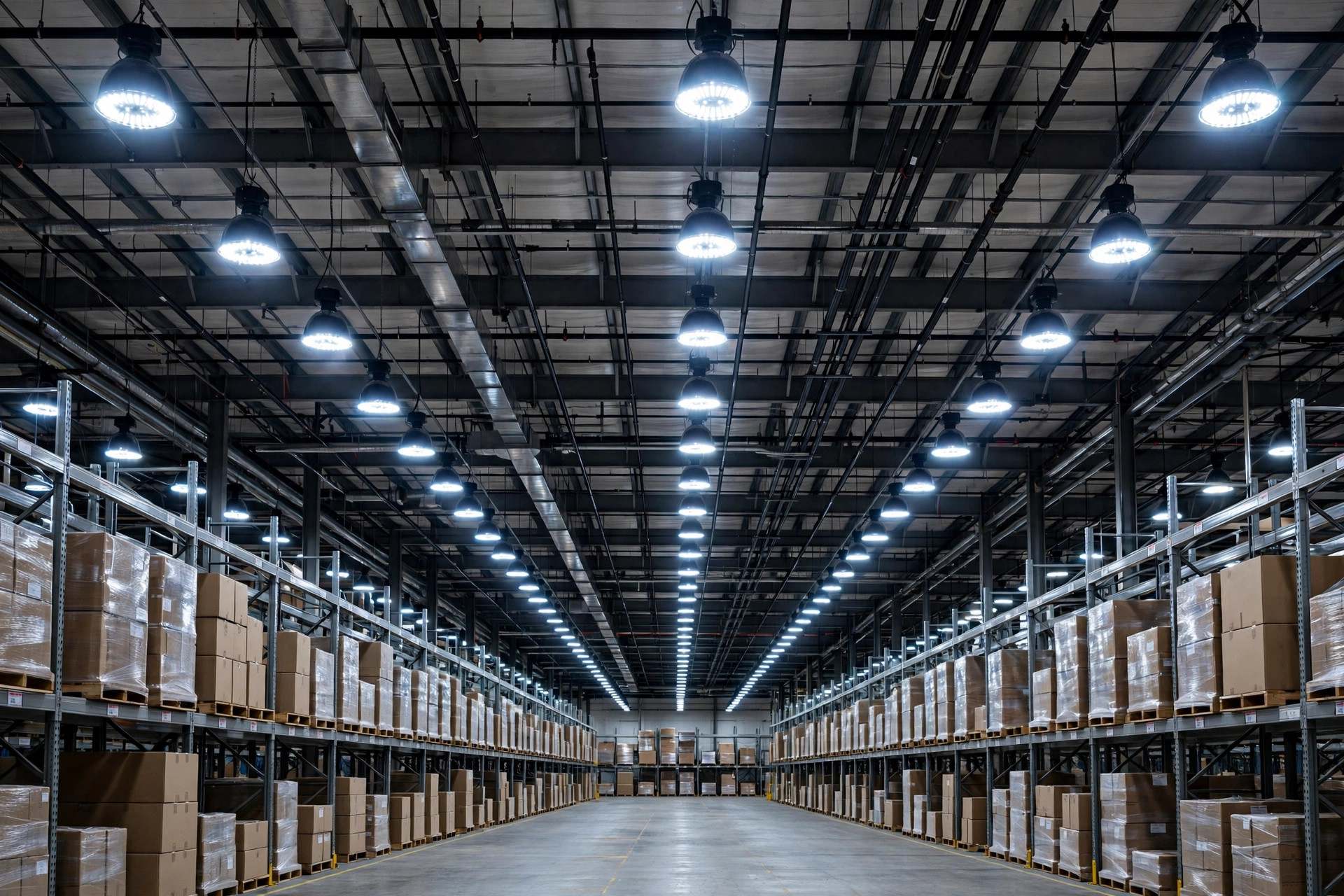
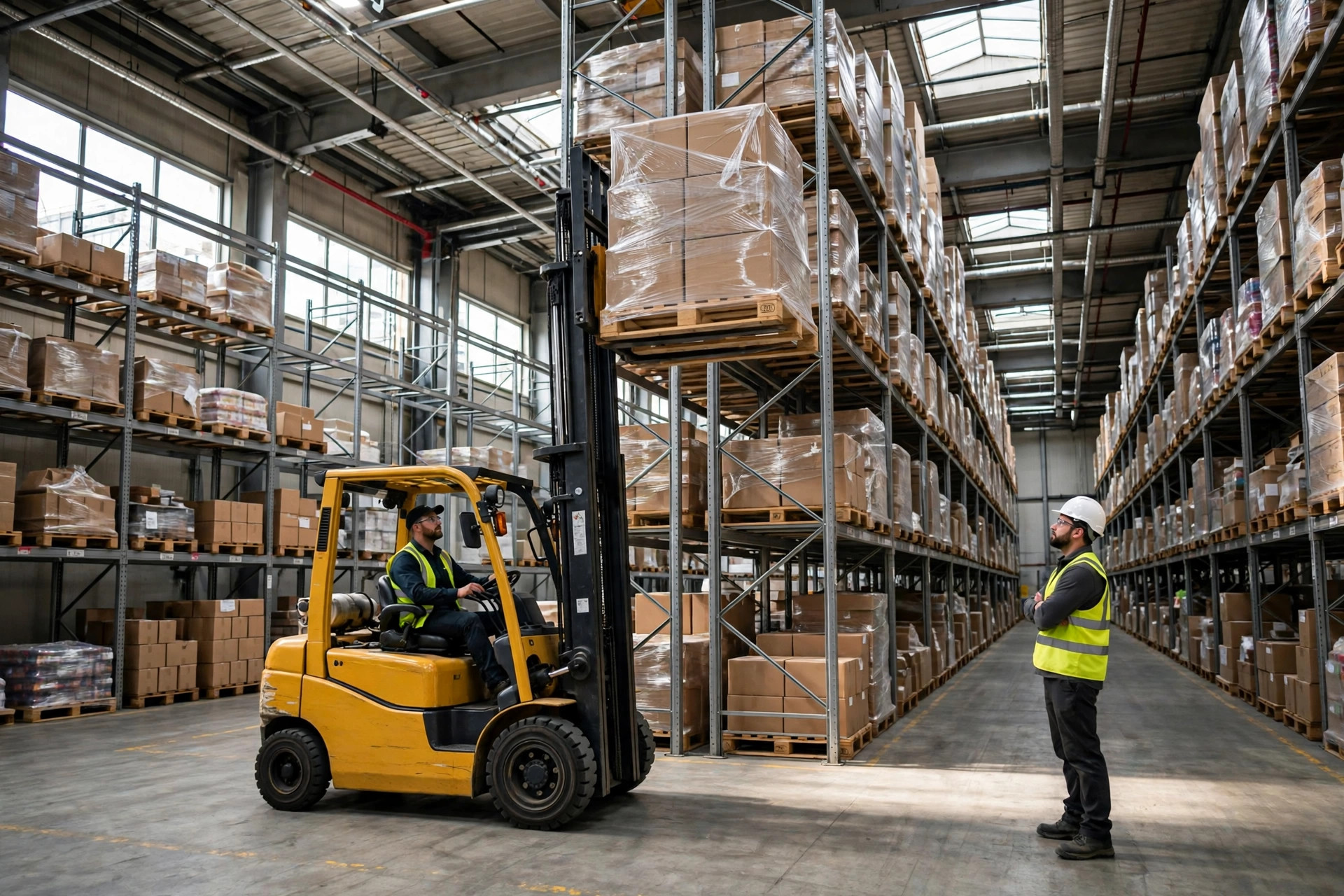
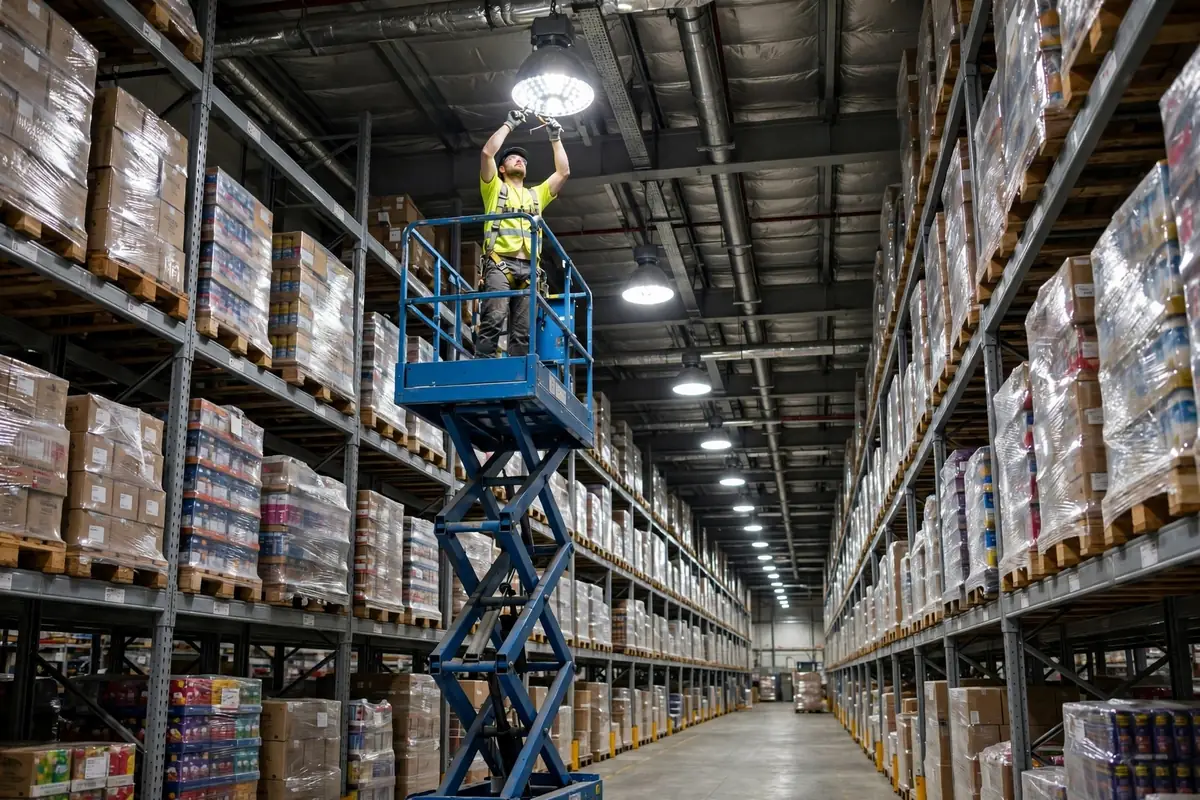
The building sits in Ontario, California: 50,000 square feet, 28-foot ceilings, 120 400-watt metal halide high bays burning 16 hours a day, 312 days a year. A 400W metal halide actually draws about 455W once you count the ballast. Multiply by 120 fixtures and the lighting load is 54.6 kW. At $0.14 per kWh, that is roughly $38,000 a year in electricity, before a single bulb is changed. Add lamp replacements, lift rentals and half-days of disrupted work, and maintenance quietly eats several thousand more. Know those two numbers first, because everything else in the payback math hangs off them.
Where the Warehouse LED Lighting Retrofit Cost Actually Gets Repaid
The verifiable part first. A 400W metal halide high bay is commonly replaced one-for-one by a 150W LED high bay, with equal or slightly better light. The metal halide starts at about 36,000 lumens and drops to roughly half that by 8,000 hours. A 150W LED still holds more than 18,600 lumens at the same age. On efficacy, DLC Premium LED high bays now deliver 130 to 170 lumens per watt; a metal halide system manages 70 to 80 lumens per watt after ballast losses, and it only gets worse with age.
For this warehouse, total lighting load falls from 54.6 kW to 18 kW, a 67% cut. Industry guides put typical savings at 50 to 70%, so this site lands squarely in the middle. Annual consumption drops by about 183,000 kWh, worth roughly $25,600 at $0.14 per kWh. Maintenance is the quiet second win: LEDs are rated for 50,000 hours or more, which at 5,000 hours a year is a decade of service, while metal halide lamps need swapping every year or two, each time with a lift and a crew. Energy plus maintenance saves this warehouse a little over $31,000 a year. That is real money, not a modeled promise.
| Item | 400W metal halide high bay | 150W LED high bay |
|---|---|---|
| Actual draw per fixture | 455W (with ballast) | 150W |
| Efficacy | 70–80 lm/W, declining with age | 130–170 lm/W (DLC Premium) |
| Output after 8,000 hours | Roughly half of initial | Largely maintained |
| Rated life | Lamp change every 1–2 years | 50,000+ hours |
| Start-up | Several minutes to warm up | Instant-on |
| Annual use, 120 fixtures (16h × 312 days) | ~273,000 kWh | ~90,000 kWh |
The Payback Math on Warehouse LED Lighting Retrofit Cost
The worked example below is an illustrative scenario, built on the Ontario warehouse above. Swap in your own electricity rate and operating hours and the formula still works. Fixtures plus installation at $300 per fixture all-in comes to $36,000 for 120 fixtures. Annual savings of $31,000 — $25,600 in electricity and about $5,400 in maintenance — gives a simple payback of $36,000 divided by $31,000, about 1.2 years, or roughly 14 months.
That sits at the fast end of the 1-to-3-year range quoted across industry guides, and the reason is operating hours. Run the same warehouse 8 hours a day, 250 days a year, and the annual electricity saving halves to about $13,000. Payback stretches toward three years on the same hardware. Hours of operation are the first lever on payback, and they matter more than the fixture price. A warehouse that runs two shifts will almost always clear the investment faster than a single-shift building with identical lights.
Rebates are the second lever, and I will not put a number on them here. Most US utilities offer incentives for fixtures on the DLC Qualified Products List, but the amounts vary by utility, by fixture tier and by year, and programs change. Budget the project assuming zero rebate and treat anything approved as a bonus. I have watched too many business cases collapse because the payback depended on a rebate that was cut or exhausted before the purchase order went out. Check your local utility's current published program before counting a dollar of it.
| Illustrative scenario: 120 fixtures | Value |
|---|---|
| Fixtures + installation | $36,000 |
| Annual electricity before retrofit | ~$38,000 |
| Annual electricity after retrofit | ~$12,500 |
| Annual electricity saving | ~$25,600 |
| Annual maintenance saving | ~$5,400 |
| Total annual saving | ~$31,000 |
| Simple payback (before rebates) | ~1.2 years |
Three Costs People Get Wrong
First, sensors and dimming. Swapping fixtures without adding controls leaves money on the table: aisles lit at full brightness with nobody in them, a night shift of three pickers under a fully lit warehouse. Occupancy sensors with dimming typically save another 15% on lighting energy. But here is the counter-intuitive part: sensors pay back far slower than the fixtures themselves, around 4.6 years in published modeling versus about a year for the lamps. My rule is to change every fixture, but put sensors only in low-traffic zones. Skip them in the main pick aisles, where lights cycling on and off distract people doing fast work.
Second, the one-for-one replacement tax. Copying the old fixture layout is the easiest option and the most wasteful. Metal halide layouts were spaced for lamps that lose half their output, so they carry spare fixtures as insurance. LEDs hold their output, so spacing can stretch and fixture counts can drop 10 to 15%. This warehouse ended up installing 108 fixtures instead of 120, with more even light than before. That took a photometric survey costing a couple of thousand dollars, and it saved twelve fixtures. Anyone who skips the survey to save time is paying for it in hardware.
Third, temperature. LEDs dislike heat and tolerate cold, which makes them excellent in cold storage and risky near a hot roof deck where summer temperatures pass 40°C and driver life shortens. Buying on lumens per watt alone, without checking the rated operating temperature, is how a warehouse ends up replacing drivers in bulk three years in and handing the electricity savings straight back to the repair crew. Get the warranty years and the lumen-maintenance commitment in writing. A verbal five-year warranty is worth nothing.
One more judgment call: do not flinch at DLC Premium fixtures costing 20 to 30% more than standard ones. They run 15 to 30 lumens per watt higher, draw less power for the same light, and sit in the better rebate tier. On total cost of ownership, the expensive fixture pays back faster. Comparing unit prices instead of total cost is the most common way this money gets wasted.
Back to Ontario: $36,000 invested, $31,000 saved every year, payback in about 1.2 years, and then roughly $30,000 a year in net savings for the better part of a decade. That answer holds only if three conditions are true: the lights burn at least 16 hours a day, electricity costs at least $0.12 per kWh, and the fixtures are on the DLC list. Lose any one of them and payback slides toward two or three years. Run your own warehouse through those three numbers before you sign anything.
By Lao Zhou, Logistics Cost Analyst