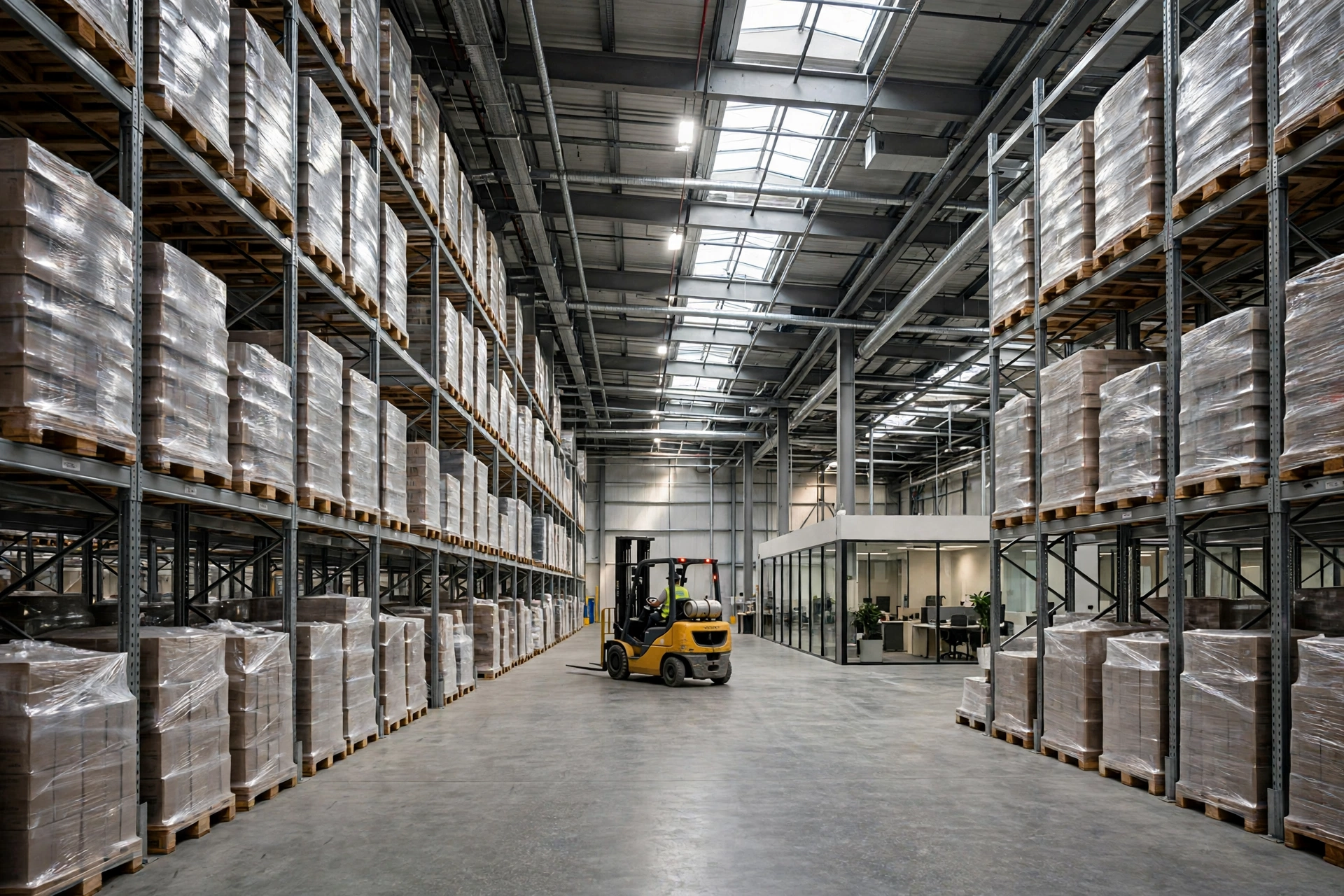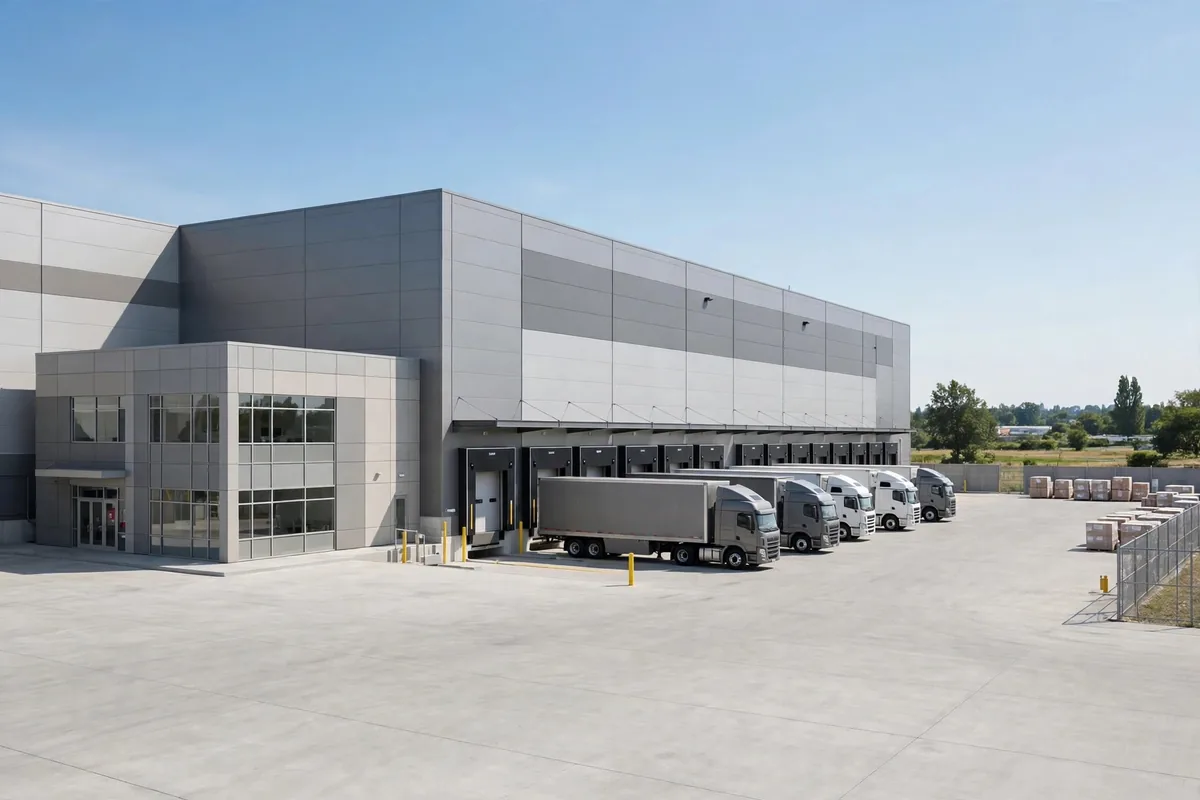
We had a client who signed a 50,000-square-foot warehouse outside Los Angeles in the fall of 2024 and walked out of the negotiation feeling like he had won. Base rent came in at $0.95 per square foot per month, five cents below the park next door, on a five-year term. Three months after move-in, he brought me the first annual reconciliation with a look I have seen a hundred times. Next to the rent sat a line he had barely glanced at during signing: common area maintenance, CAM charges of $2.80 per square foot per year — $140,000 a year. Add taxes and insurance, and his real cost per square foot ran almost 40% above the quoted rent. He asked me what the money was for. Parking lots, landscaping, exterior lighting, security, the gatehouse — all of it. He had negotiated the rent line and ignored the CAM line, and the CAM line is where a warehouse lease quietly takes your margin.
I have signed well over a hundred warehouse contracts as a 3PL sales director, and this is the pattern that repeats most. The landlord quotes a sharp base rent, the tenant celebrates, and the common area maintenance bill does its work year after year, out of sight.
What Your CAM Charges Actually Pay For
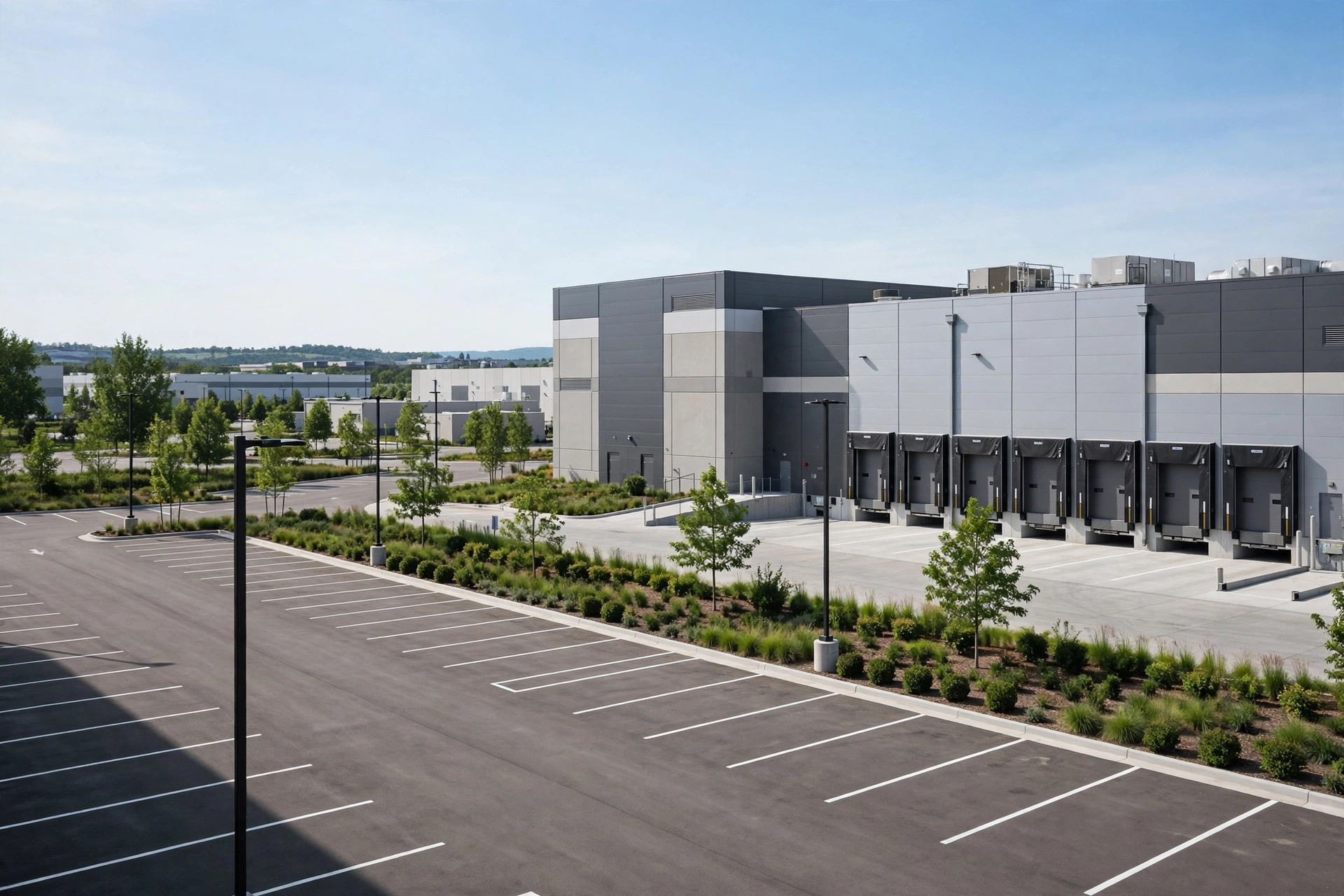
Most US warehouse leases are triple net, or NNN. Base rent is only one of four cheques you write. On top of it you pay your share of property taxes, building insurance, and CAM charges. CAM covers the parts of the property every tenant uses but no tenant occupies: parking lots and truck courts, landscaping and irrigation, exterior lighting, security patrols and cameras, common-area utilities, property management, striping and signage.
The arithmetic looks fair on the surface. Your pro-rata share equals your rentable square feet divided by the building's total rentable square feet, multiplied by the building's total CAM spend. Lease 50,000 square feet in a 200,000-square-foot building and your share is 25%. If the building spends $560,000 a year on common areas, you pay $140,000. The traps live in the definitions. Is the denominator rentable area or gross building area? Does the numerator include a slice of an office block you never use? When a neighbour moves out, does the landlord absorb the empty share, or does the lease "gross up" the costs as if the building were nearly full, pushing the vacant suite's share onto you? One word in that clause can move your bill by tens of thousands of dollars.
There is a second bite most tenants never spot. Rent is charged on rentable area, which is larger than the usable area inside your four walls — the difference is your slice of the common areas. The same corridor gets charged to you once as rent and once again through CAM charges.
The Math: A Cheap Rent That Costs More
The table below is an illustrative example, built from published market levels to show how the numbers move. It is not a quote for any specific building.
| Item | Option A: cheap rent, high CAM | Option B: higher rent, capped CAM |
|---|---|---|
| Rentable area | 50,000 sq ft | 50,000 sq ft |
| Base rent | $10.00 per sq ft per year | $10.80 per sq ft per year |
| CAM charges | $3.50 per sq ft per year | $2.00 per sq ft per year, capped |
| Taxes and insurance | $2.00 per sq ft per year | $2.00 per sq ft per year |
| Year-one total cost | $775,000 | $740,000 |
| Five-year total (rent up 3% a year, CAM up 5%) | About $4.3 million | About $4.05 million |
Option A wins the rent negotiation by 8% and loses the lease by $250,000 over five years. The whole gap sits in the CAM starting point and its growth rate. For context, industrial CAM typically runs $1.50 to $4.00 per square foot per year, and the US national average industrial asking rent reached $10.55 per square foot per year in the third quarter of 2026, according to JLL. Base rent escalation of 2% to 4% a year is standard in warehouse leases. CAM has no such guardrail unless you write one in: without a cap, an 8% or 10% annual jump is not a breach of contract, it is just a bad year for you.
Then there is the management fee, the quietest line of all. Landlords commonly add 10% to 15% on top of CAM for administration. Some apply it to the entire NNN load, including taxes and insurance — a fee on money the landlord merely passes through. On a $175,000 CAM bill, a 15% fee is $26,250 a year for administering costs someone else already incurred. Spread over five years, that is real money, and it never appears in the rent negotiation.
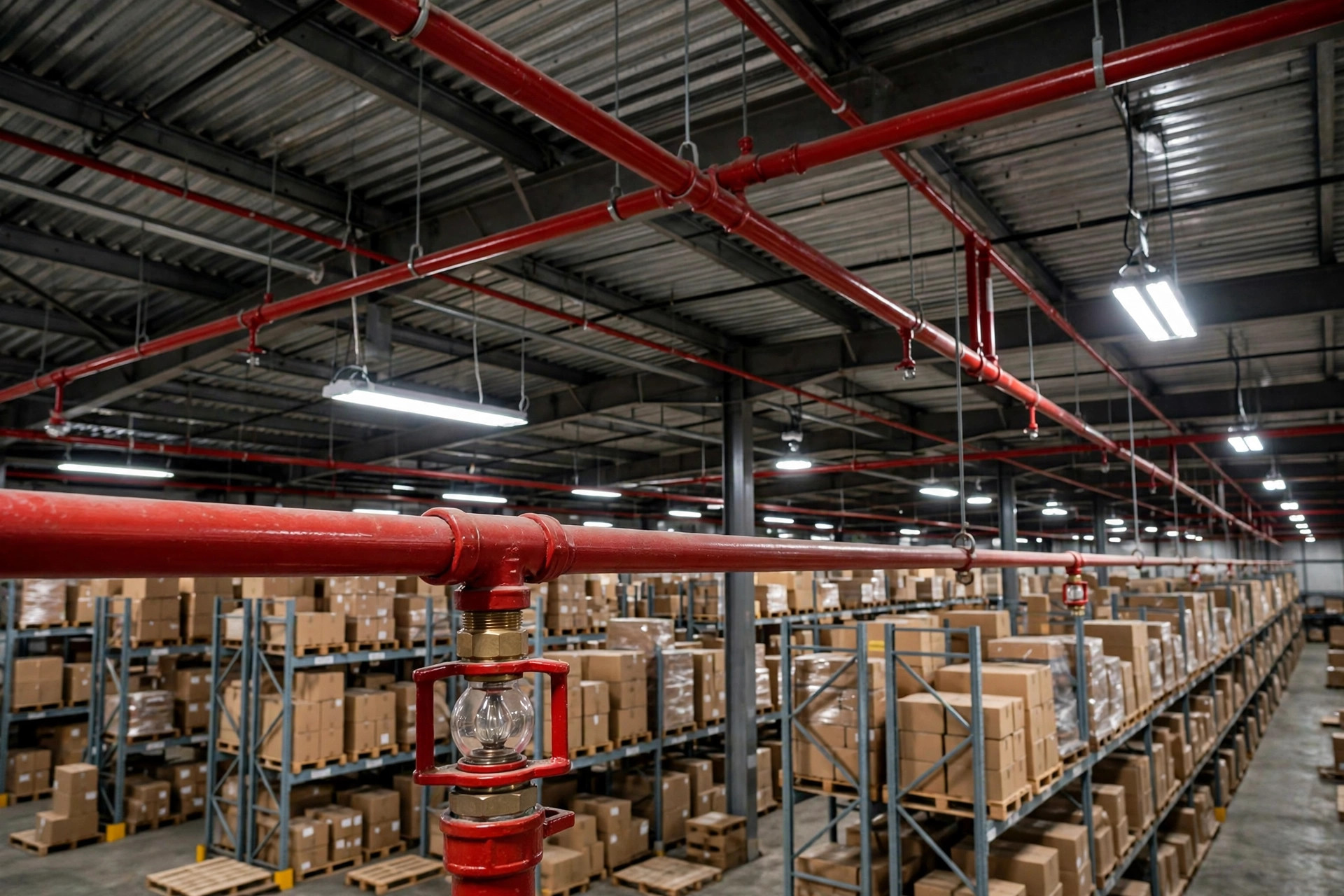
Here is the judgement that surprises first-time tenants: a freestanding single-tenant warehouse is not automatically cheaper than a multi-tenant park. The park's CAM charges look annoying, but at least the cost is shared. In a single-tenant building there is no line called CAM, so the landlord writes roof, pavement, and fire-system maintenance into your repair obligations instead, and the invoices arrive one by one. The total often exceeds the CAM bill you were trying to escape. Cheap never meant "no common area maintenance." Cheap means the common area maintenance is written down, itemised, and capped.
A Second Client, Caught by a Fixed CAM Rate in Dallas
Early in 2025, an auto-parts client in Dallas asked us to handle his renewal. His old lease carried a fixed CAM rate of $2.20 per square foot per year, unchanged for five years, and he considered it a good clause. The landlord's renewal offer raised fixed CAM to $3.60, citing rising labour and insurance costs. He was ready to sign. We asked him to hold off and request three years of CAM detail from the landlord first.
The detail told a different story. The park's actual CAM cost ran about $1.90 per square foot per year. The fixed rate of $3.60 was carrying nearly 50% of landlord margin on top of real cost. A fixed CAM rate buys certainty, and the price of that certainty is that you pay for the landlord's cost risk while never sharing in a cost decline.
We settled on a different structure: CAM back to actual costs, with controllable CAM increases capped at 4% a year, taxes and insurance billed separately and uncapped, a management fee of 10% applied to controllable CAM only, and an annual right to audit the books. The landlord pushed back at first and said nobody negotiates like that. I pointed out that his building had sat partly empty for two years and the park next door had just cut its asking rent. Three days later he signed. Leverage is a real alternative and a real knowledge of what the building costs to run.
Negotiating CAM Charges Before You Sign
Do not argue about whether CAM should exist. Argue about the definition, the measurement, and the ceiling. Before you sign, pin these down in the lease: a written list of what counts as CAM and what does not, with capital improvements, roof replacement, and the landlord's own marketing costs excluded outright; a fixed pro-rata formula with numerator and denominator on the same basis, so the lease cannot measure your space in rentable feet and the building in gross feet; a cap of 3% to 5% a year on controllable CAM increases, with taxes and insurance listed separately; a management fee charged on controllable CAM only, with its percentage capped; an audit right that lets you inspect the detail within 90 days of receiving each reconciliation, with overpayments recoverable; and a clear gross-up clause, so a neighbour's vacancy does not quietly land in your bill.
The landlord with the lowest quoted rent usually has the most expensive CAM. Compare total occupancy cost — base rent plus CAM charges plus taxes plus insurance, divided by usable area — and nothing else. Comparing rent alone is comparing advertising, not a contract.
Next time you sit down to negotiate a lease, ask these three questions. Can I see the CAM schedule and last year's actual bill? What is the cap on controllable increases, and what is the management fee charged on? How are audit rights and vacant-space costs written? Ask all three, and the landlord will know you have done this before.
By Susan, 3PL Sales Director.