Let me be blunt: most people leasing warehouse space in China obsess over the headline rent per square meter, and almost nobody asks the first question that actually matters — "what's the efficiency ratio?" The common area baked into your lease — the local concept is called 公摊面积, gongtan mianji, literally "shared apportioned area" — quietly eats your margin. Sometimes 10%, sometimes 20%, sometimes 30%. You only find out after you've signed.
Here's my verdict up front: before you sign any warehouse lease, ask two questions — "which area is the rent based on?" and "what's the real efficiency ratio?" If you don't ask these, every discount on the table is an illusion.
Two Pits I've Watched People Fall Into
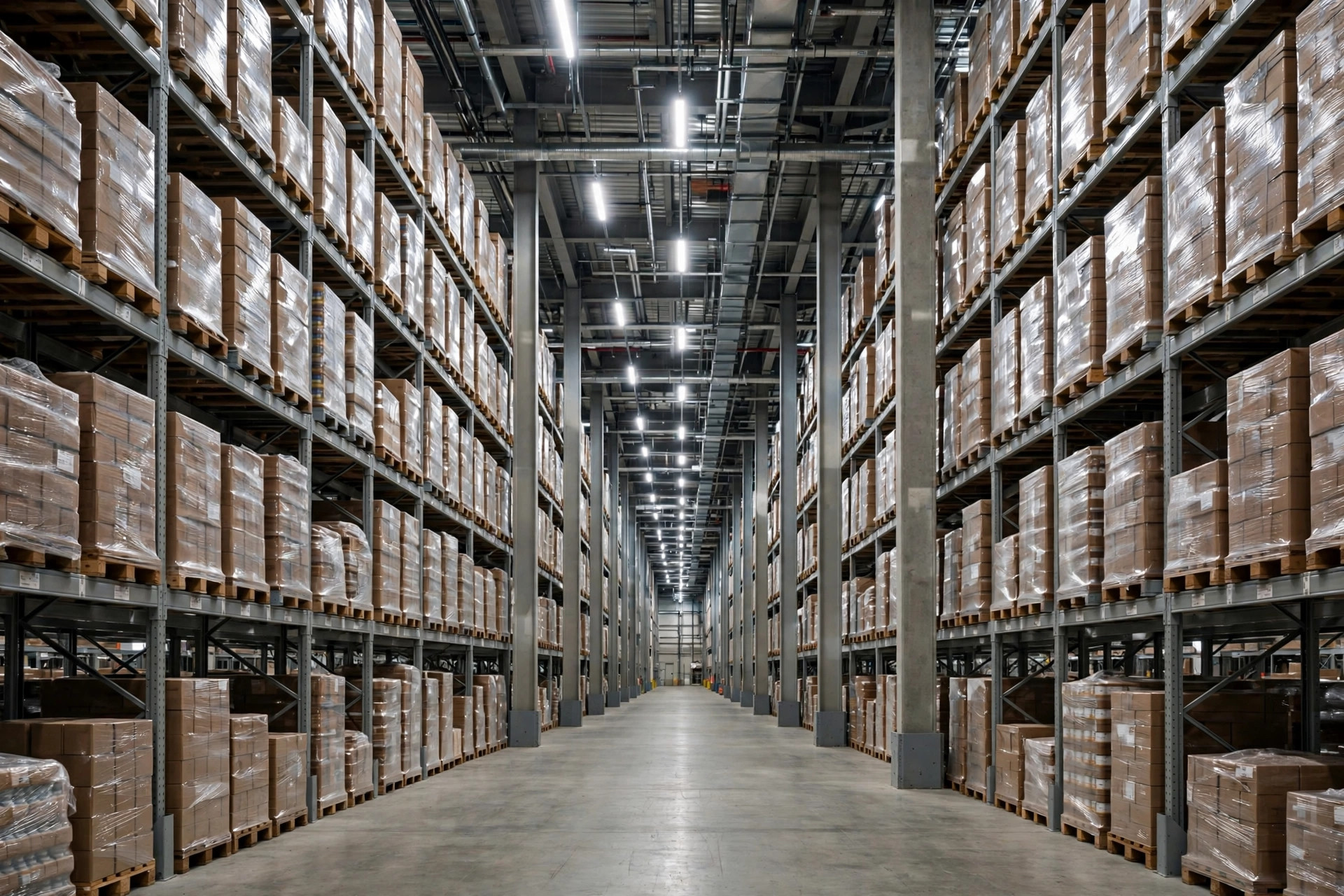
2023, Kunshan. A friend in e-commerce leased 8,000 sqm for a 3PL operation. The contract was crystal clear: 38 yuan per sqm per month. Sounds reasonable, right? After move-in he measured and discovered that of the contracted 8,000 sqm, only about 6,200 sqm could actually hold inventory — columns, fire lanes, equipment rooms, and the shared dock were all apportioned to him. An efficiency ratio of 77.5%. In other words, for every 4 sqm of rent he paid, 1 sqm went to corridors and columns.
The killer wasn't the extra rent. It was that his entire slotting plan was built on 8,000 sqm. When the goods arrived, he was short nearly a quarter of his planned pallet positions. Then peak season hit and the warehouse overflowed. The ugliest part came right before Singles' Day, when he had to emergency-lease 2,000 sqm next door at 1.6 times the long-term rate — plus temp labor, plus re-slotting everything from scratch. All told, the extra spend that year covered nearly half a year's rent. His words to me afterward: "If I'd asked about the efficiency ratio first, I'd have taken the more expensive quote."
2021, Dongguan. A 3PL was torn between two logistics parks. Park A quoted 30 yuan per sqm per month at a 78% efficiency ratio. Park B quoted 34 yuan at 92%. The owner's gut said A was cheaper by 4 yuan — on 5,000 sqm, that's 240,000 yuan a year saved. I told him to hold on and do one division first.
One Table That Shows What Shared Space Really Costs You
| Park A | Park B | |
|---|---|---|
| Headline rent (yuan/sqm/month) | 30 | 34 |
| Efficiency ratio | 78% | 92% |
| Usable space on 5,000 sqm contracted | 3,900 sqm | 4,600 sqm |
| True cost per usable sqm | 38.5 | 37.0 |
The formula is one line: true cost = headline rent ÷ efficiency ratio. The "expensive" Park B actually costs 1.5 yuan less per usable square meter — 90,000 yuan a year on a 5,000 sqm lease. The owner looked at the table and changed his mind on the spot. That's how the apportionment game works: it doesn't raise your price directly, it dilutes your space.
One more detail that trips people up: some parks quote on gross floor area, others on usable area. When comparing two offers, normalize to the same basis first, or you're comparing apples to oranges. Run the division on your phone calculator before signing — five seconds of work. And whenever a broker talks only about unit price and never volunteers the efficiency ratio, do the math yourself.
So Is a High Common Area Share Always a Trap?
This cuts both ways. I've seen too many people hear "25% common area" and shake their heads, then lease a standalone "zero common area" building — and end up paying more over the full term. Why? The park's common area charge covers security guards, cleaning, fire system maintenance, the shared dock, landscaping. Skip the apportionment and you pay for all of it yourself. A standalone building looks like 100% efficiency, but you're hiring your own guards, scheduling your own fire inspections, fixing your own dock levelers — and nobody maintains the road at your gate. Year after year, the miscellaneous spend often exceeds what the high-apportionment park would have charged.
Here's the counterintuitive part: the real trap of shared space was never "they overcharged you on rent" — it's "you planned your operation on the contracted area." A 10% rent premium is calculable. Losing 20% of your slots to columns and fire lanes, then overflowing and relocating mid-peak — that loss can't be calculated, and it hurts the most. The trade-off is honest: accept the higher apportionment and enjoy the park's shared services, or take the lower apportionment and carry every chore yourself. There's no free lunch, only bills you haven't done the math on.
Five Questions to Ask Before You Sign
- Which area is the rent based on — gross floor area or usable area? Get it written into the contract, in ink. Verbal doesn't count.
- What exactly is the efficiency ratio? Make them itemize the apportionment — shared dock, corridors, equipment rooms, each line — ideally as a contract appendix.
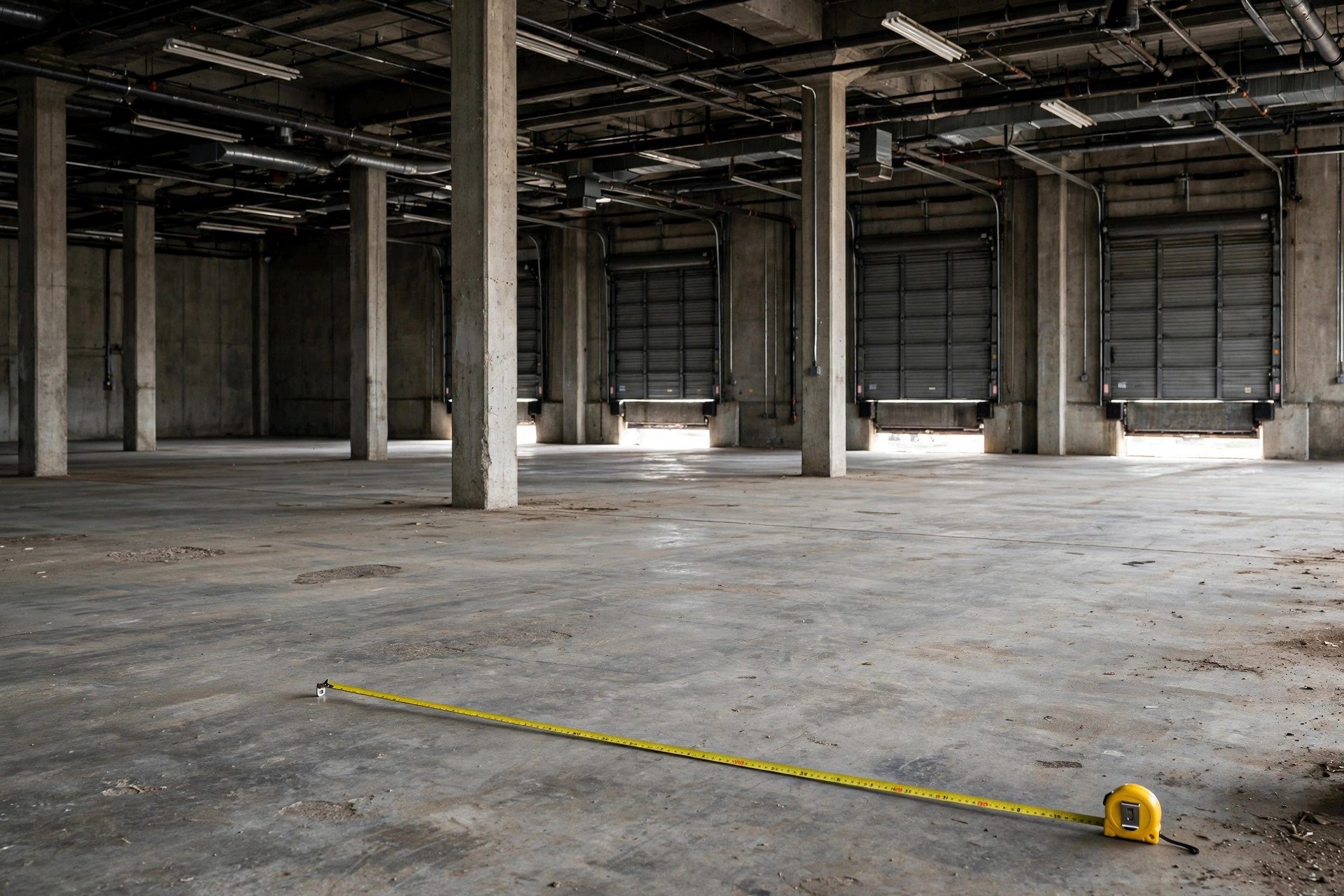
- How much do column spacing and fire lanes eat? These are the two most hidden chunks in warehouse apportionment. Measure them on the floor plan: one extra row of columns costs you a row of racking.
- When rent escalates, does the apportioned part escalate too? Many contracts say "adjusted on gross area," which means the common area rides along — a double increase.
- At move-out, which area governs the reinstatement obligation? Some landlords make you restore to original condition based on contracted area — space you never used for a single day, but you pay to restore anyway.
Three negotiation levers while you're at it. First, demand the apportionment breakdown as a contract appendix — a park that won't show its math gets a question mark. Second, ask outright whether they'll price on usable area instead; some parks will agree to close the deal, and asking costs nothing. Third, try to write a floor on the efficiency ratio into the contract — "not below X%, verified at handover" — so a big shortfall becomes grounds for compensation.
One piece of advice to close: next time a broker tells you "this is the lowest price in the city," ask him for the efficiency ratio first. If he hesitates, don't rush to sign.
By Lao Mi, Supply Chain Veteran (20 yrs)