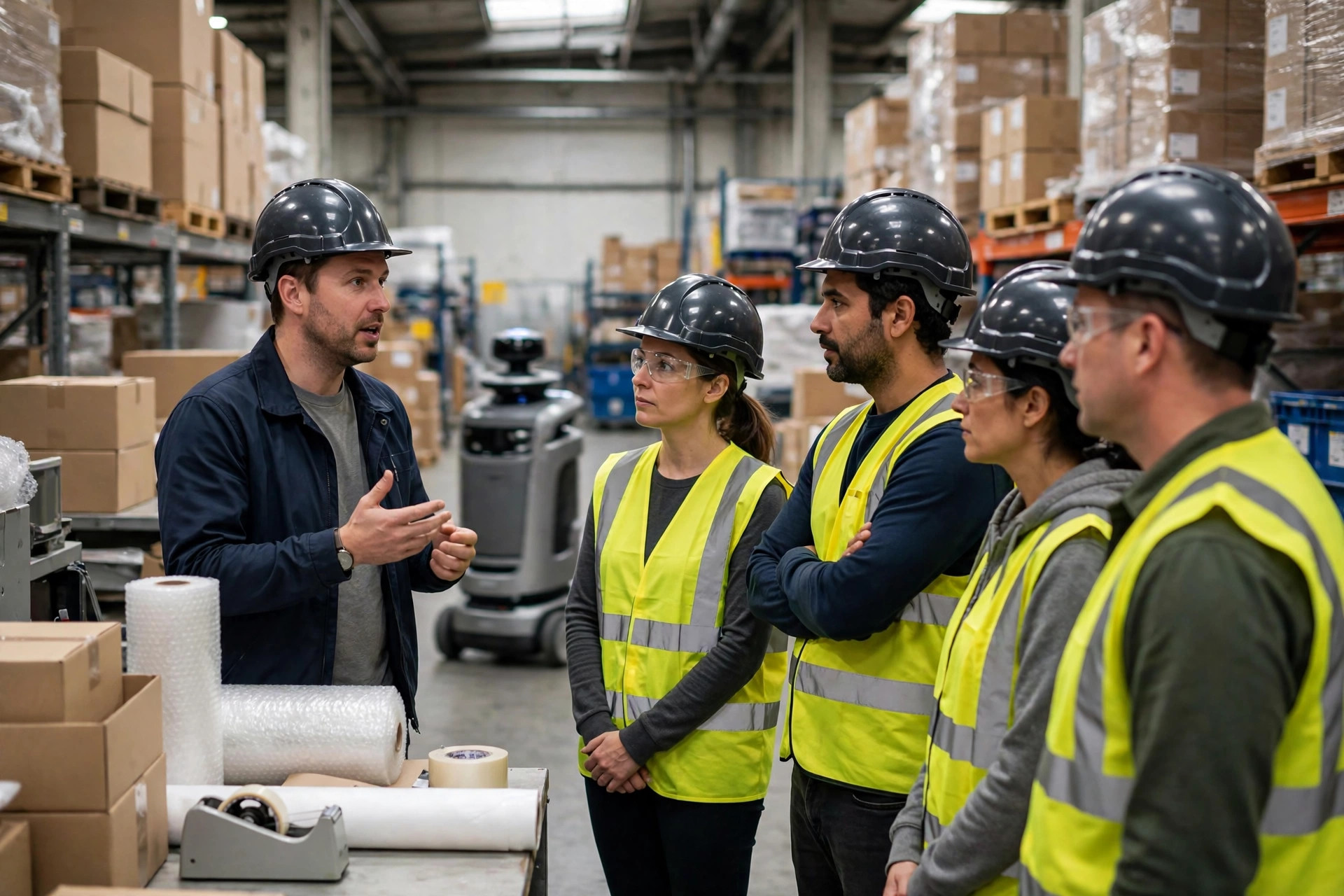
Let's start with the numbers. In 2025, a 3PL warehouse in eastern China deployed AI pick-path recommendations — software plus implementation totaled ¥860,000. Expected gain: 25% pick-efficiency lift, ~¥1.2 million a year in labor savings, payback in 7 months. The reality? Six months in, frontline picker adoption sat at 31%, efficiency was up 4%, and project ROI was negative. ¥860,000, effectively incinerated.
The technology wasn't the problem. The AI-recommended paths tested 18% shorter than veteran pickers' instincts. The problem was people: pickers figured "if I follow the AI and it's wrong, whose fault is it?" Walking your own route, a mistake is your own shaky hands. Walking the AI's route, a mistake is "listening to the machine" — a bigger blame. I've autopsied seven or eight failed warehouse ai adoption projects, and the cause of death is remarkably consistent: frontline workers aren't resisting AI. They're resisting blame.
Breaking down the ¥860,000 hurts more: ¥500,000 in software licenses, ¥360,000 in implementation consulting. The day the consultants left, the project manager posted "go-live success" in the group chat with a champagne emoji. Six months later, the adoption curve in the system backend slid from 68% in week one to 31% — workers voting with their feet, saying "the system's fine" while switching back to the old ways. Every yuan went to the system, zero to the people. That's the cause of death.
What the Resistance Is Really About: Three Layers of Employee Resistance
Most managers file resistance under "fear of job losses." Wrong. Job loss is a distant worry; blame is today's worry. I've broken down interview notes from three warehouses, and the reasons rank like this:
Layer one: fear of liability (over 60%). AI does the double-check, AMRs do the yielding, vision does the QC — every one of those means "I used to call it, now the machine calls it, but I still sign when something breaks." In September 2025, at a warehouse running AMRs, a veteran worker slapped the emergency stop and shut a robot down. His reason: "If it hits my freight, whose problem is that?" See? Workers don't want AI gone. They want a get-out-of-blame card.
Layer two: fear of falling pay. In piece-rate warehouses, if AI lifts efficiency 25%, does the piece rate drop 25%? Workers do that math faster than anyone. At one sortation warehouse, before vision inspection went live, workers spontaneously throttled themselves to 80% of normal pace. Not couldn't — wouldn't.
Layer three is actual job-loss fear. But frontline workers genuinely displaced by AI are rare; far more common is "the job changed and my skills didn't." That layer is the easiest to fix — training plus reassignment.
Two quotes from the interviews stuck with me. A pick-team lead with 8 years on the job: "When the machine's wrong, the boss yells at me, not at the machine." A Gen-Z packer: "AI has me packing 200 more parcels a day for the same pay — what's in it for me?" One wants immunity, the other wants a cut. Neither one mentioned fear of unemployment. What management discusses in meetings ("workers fear replacement") and what workers actually fear aren't on the same channel at all.
So step one of rolling out AI isn't buying a better algorithm. It's deleting the word "blame" from your workers' vocabulary.
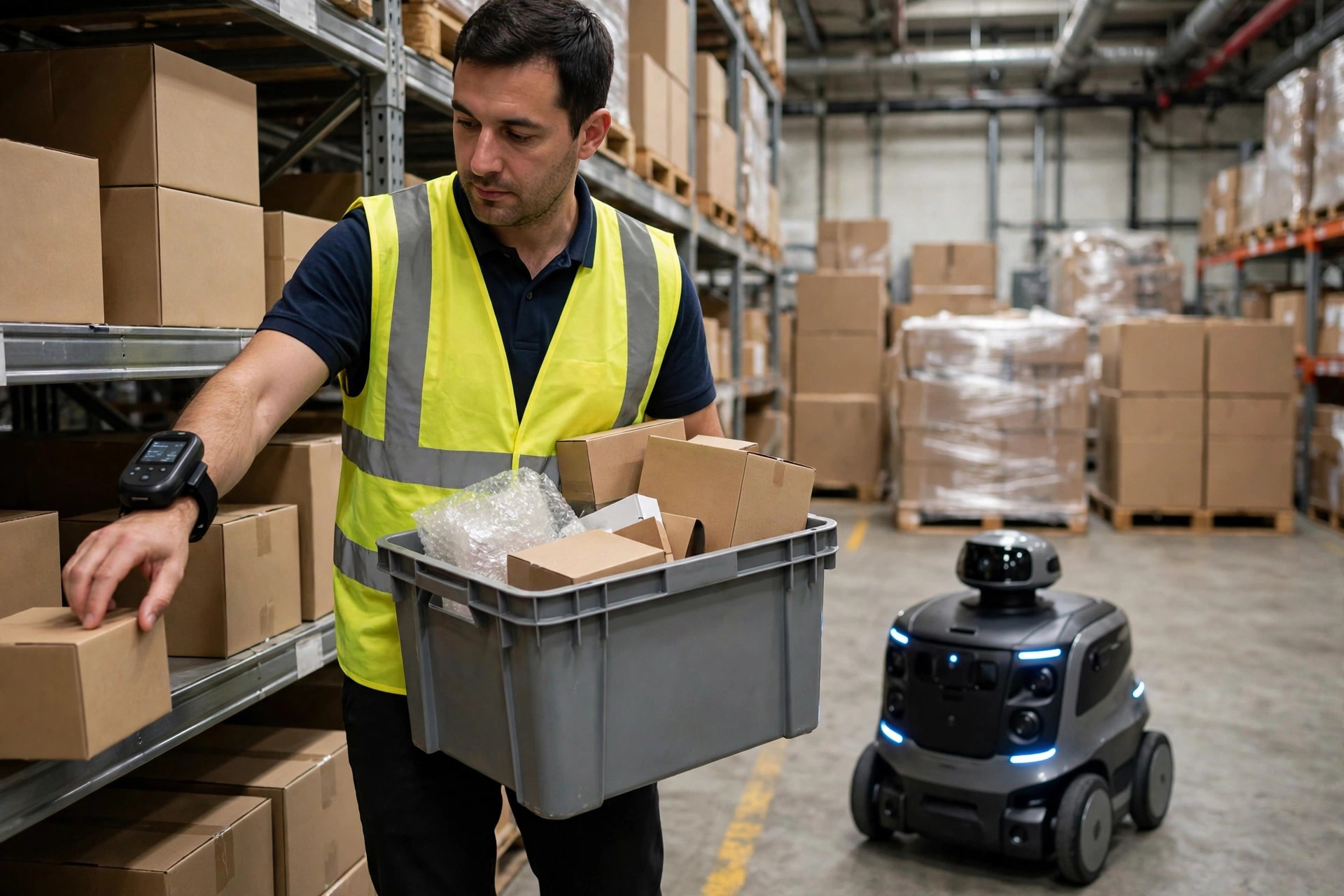
The Three-Step Rollout: Put the Money on Everyone's Table
Step one: immunity first, in writing. Announce at the kickoff meeting: where AI participates in a decision, errors are not charged to frontline workers — they're logged as "system optimization items." One warehouse went further: a "find-the-AI's-mistake" bounty for the first three months, ¥50 per validated report. Month one brought 200-plus reports, system iteration speed doubled, and workers flipped from "afraid the AI is wrong" to "hoping the AI is wrong." Remember: immunity isn't a cost. It's the cheapest marketing spend you'll ever make.
Step two: share the gains, down to the individual. Route 20–30% of AI savings back into a frontline bonus pool. Replay that ¥860,000 project: expected annual savings ¥1.2 million, ¥300,000 as bonuses, ¥1,500 more per person per month — adoption goes from 31% to 90%, payback from "never" to 8 months. Workers never resisted "higher efficiency." They resisted "higher efficiency with nothing in it for me." Sharing the money is the oldest human incentive there is.
How the bonus splits matters too — no flat egalitarianism. The structure I recommend:
| Bonus item | Share | Rule |
|---|---|---|
| Individual efficiency bonus | 50% | Ranked on AI-assisted efficiency; top 30% earn it |
| Shift attainment bonus | 30% | Whole shift paid when group adoption tops 85% |
| AI error bounty | 20% | ¥50–200 per validated AI error reported |
The elegance: the individual bonus creates separation, the shift bonus stops veterans hoarding tricks (they'll mentor newcomers because group attainment pays them too), and the bounty turns "nitpicking the AI" into legitimate income. All three point one direction: use the AI, and use it well.
Step three: veterans lead, the crew follows. Pick 1–2 respected old hands per shift, train them first, give them an "AI collaboration champion" title and stipend. When the veteran nods, the shift falls in line. When the veteran shakes his head, a hundred ROI presentations won't move anyone. In February 2026, a northern China warehouse did exactly this: won over 3 veterans first, and within two months all 200 workers were on board. Zero resistance at AMR go-live.
The counter-example: late 2025, a southern China warehouse deploying vision QC decided the three steps were "too slow" and went straight to KPIs — "shift leads lose performance pay if AI usage drops below 90%." One month later, 17 veteran workers had quit; recruiting and training replacements cost over ¥400,000, and usage fell to 22% anyway. The forced-rollout math: 2 months saved, 17 skilled hands lost, ¥400,000 extra spent, project delayed half a year. KPIs can mandate motions. They can't mandate hearts.
The Full Ledger: Rollout Investment vs. Resistance Cost
| Cost item | Amount (100-person warehouse, annual) |
|---|---|
| AI software + implementation | ~¥800,000–1,000,000 |
| Three-step rollout (bonuses + stipends + bounties) | ~¥350,000–450,000 |
| Successful rollout: annual labor + efficiency gains | ~¥1,100,000–1,400,000 |
| Failed rollout (30% adoption): actual gains | ~¥150,000–250,000 |
| Cost of resistance (the gap) | ~¥1,000,000/year |
See it now? ¥400,000 of rollout investment buys back a ¥1,000,000 gap. And the counter-intuitive verdict: the biggest cost in an AI project isn't the software — it's people not wanting to use it. ¥860,000 of software, one time. Resistance burns ¥1,000,000 of gains every year. Which is more expensive isn't close.
One cold-blooded caveat: not every warehouse should be doing AI right now. Under 3,000 orders a day, slow SKU churn, low labor-cost share — the math never worked there in the first place, and forcing it is money spent wrong. Run the breakeven first: annual savings ÷ (software + rollout investment) > 1.5 before you talk rollout. If it doesn't clear, go do ABC classification and slotting optimization honestly — the savings rival AI's.
Closing with a computable conclusion: before rolling out AI, compute three numbers — ① is the immunity clause in place (0/1); ② is the gain-sharing ratio set (20–30% recommended); ③ how many veterans are won over (at least 1 per shift). All three green before you sign the software contract. Don't reverse the order: win the people first, then the system. Get the people wrong and ¥860,000 is tuition. Get them right and it's an 8-month payback.
By Lao Zhou, Logistics Cost Analyst