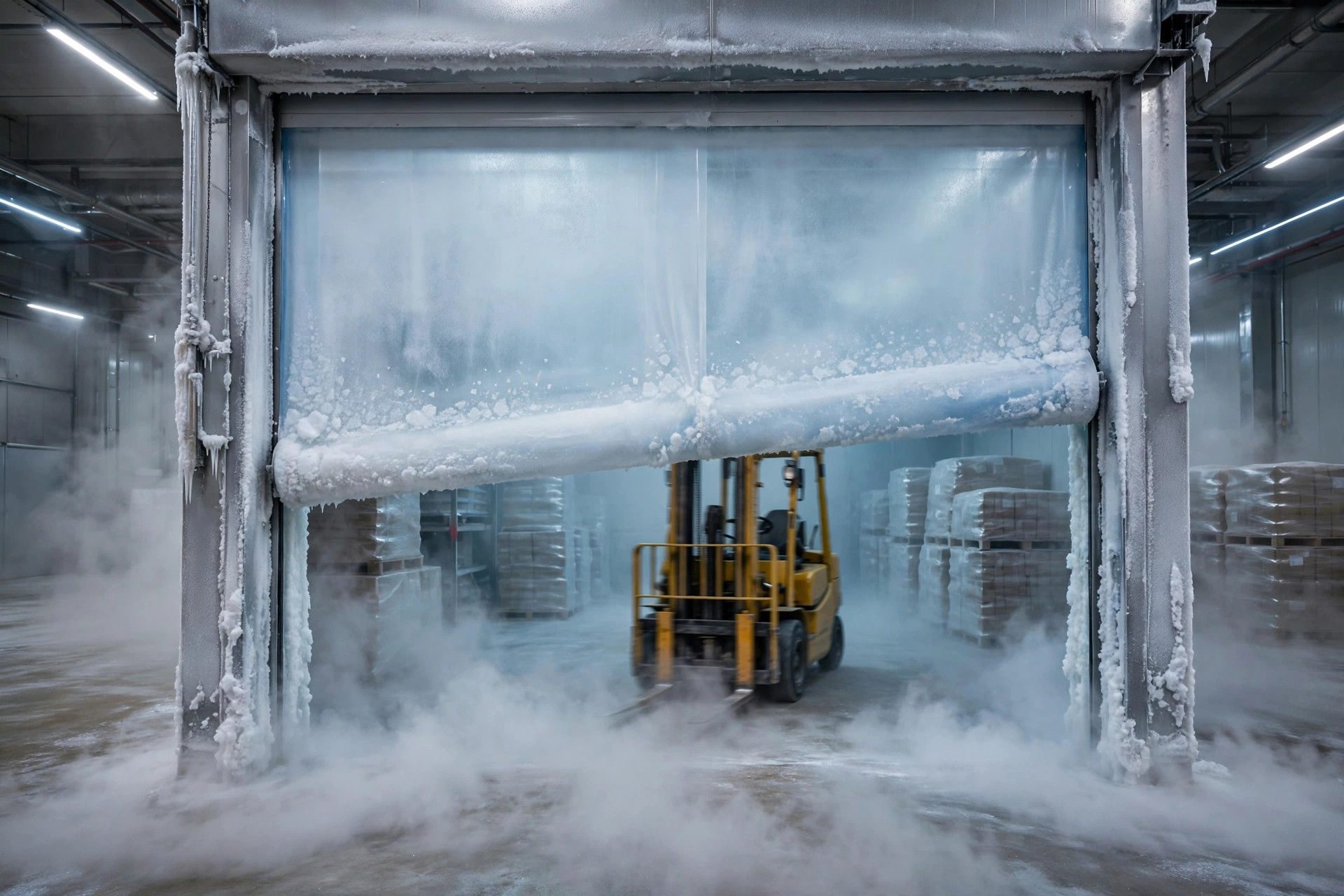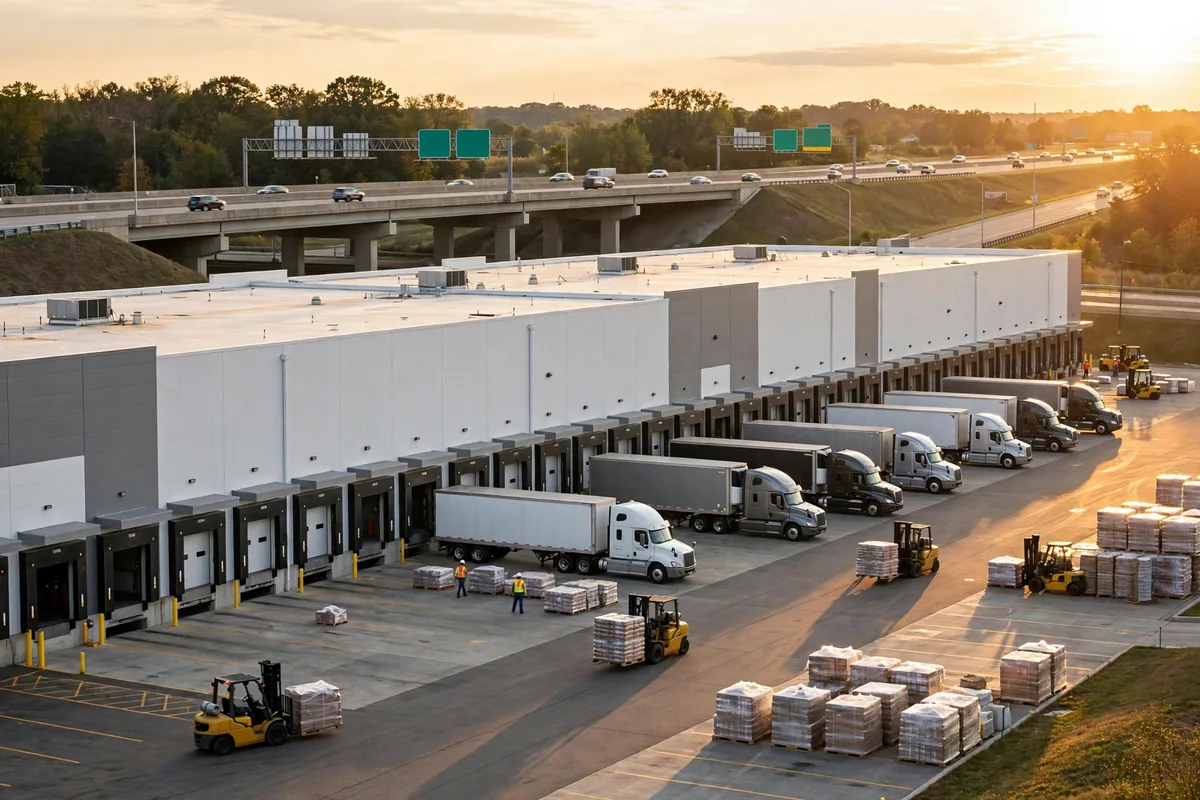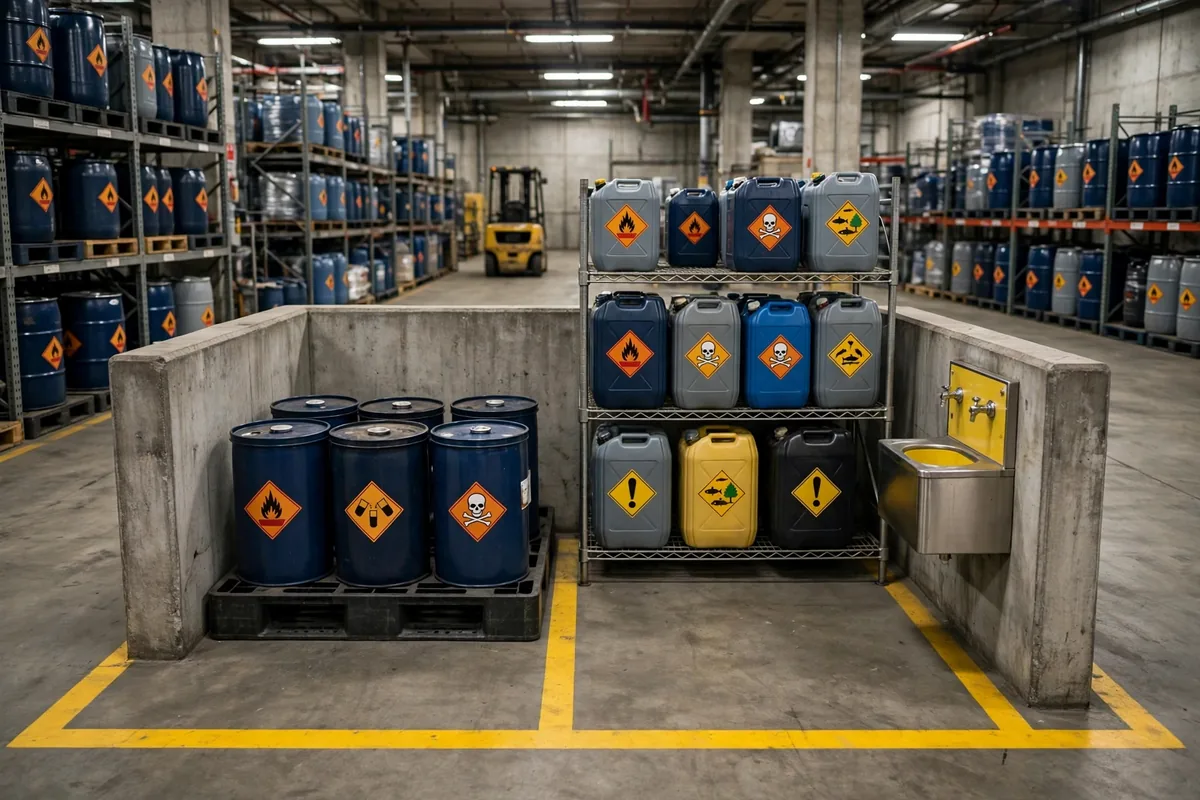
It was 2:15 on a Friday morning, peak season, and the night shift was already behind. Our hazmat storage area segregation was still just a plan on paper. I walked in to find our lead, Old Zhou, at the dock door with a delivery driver. The driver had two pallets of oxidizer on his truck with nowhere to go. Our receiver would not take them, because the only free space was next to flammable liquids. We had no fixed zone, no fixed rule. Just judgment calls, made tired, at two in the morning.
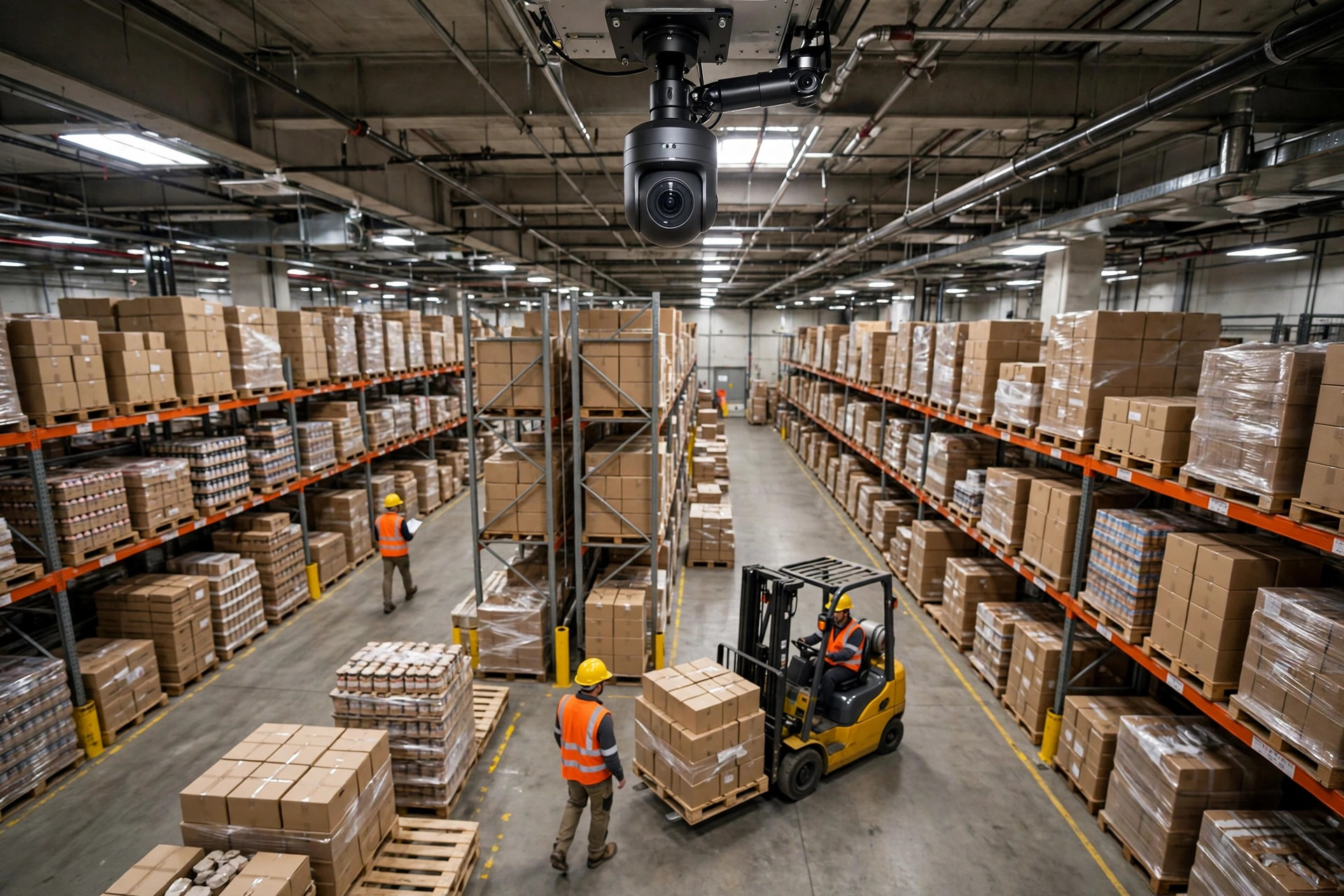
Our warehouse is a general-purpose building, a little over 20,000 square feet, about a hundred people on the roster, three shifts in peak season. We handle cleaners, paint, adhesives, and lithium batteries — products that do not belong next to each other. If you run a warehouse like that with no marked hazmat zone, you are one tired night away from the same argument at your dock door.
The first time it nearly went wrong for us, nobody got hurt, and that is exactly why it stuck with me. A new receiver, Lee, had put a pallet of corrosive cleaner on the third level of a regular rack, right beside a pallet of bleach. The paperwork was vague, the handover was rushed, and Lee thought it was ordinary cleaning product. Old Zhou caught it on his walk-through. I did not shout at Lee. If a good kid could make that mistake on a normal Tuesday, what would happen on a Friday night in peak season? We were lucky, not safe. So we stopped relying on luck.
Hazmat Storage Area Segregation Starts With Compatibility, Not Walls
Most managers hear "segregation" and think of walls, cabinets, and a big invoice. Let me be straight with you: that is the wrong starting point. The first step costs almost nothing. You list every hazardous product you actually hold, and group it by compatibility. Acids and alkalis do not go together, because mixing them can release a lot of heat. Oxidizers and flammables do not share a zone, because that is a fire and explosion risk. Chlorine-based compounds and ammonia must never meet, because together they can produce toxic chloramine gas. Those three rules are painted on our hazmat zone wall.
We did this the slow way. Old Zhou took two veteran pickers and spent two afternoons pulling every hazmat pallet out and regrouping it by label. Three people, two afternoons, more than forty pallets. It found three pallets stored wrong for weeks, including bleach sitting one pallet-space away from an ammonia-based cleaner. That work cost labor hours, not capital.
Only after the groups were settled did we pick a location: a corner at the far end of the building, about 40 feet by 26 feet, against the wall, away from pedestrian flow, electrical panels, and any ignition source. Your building will be different. Do not copy our corner. Copy the method: pick a spot where access can be controlled and traffic does not cut through.
What a Warehouse Hazmat Storage Area Actually Needs: Bunding, Ventilation, and Signs
Once the location was fixed, we had three jobs to do properly. The first was secondary containment, the bunding that catches a leak before it spreads. I will only quote the two rules we verified. Under the U.S. Environmental Protection Agency rule at 40 CFR 264.175, secondary containment for a hazardous waste storage area must hold 110 percent of the largest single container, or 10 percent of the total volume stored, whichever is greater. Under OSHA 29 CFR 1910.106 for flammable liquids, a diked area must hold at least 100 percent of the capacity of the largest tank it encloses. Do the math from there.
Here is how we applied them in our own warehouse. We built a bund about six inches high around the zone, coated the floor to resist seepage, and stocked absorbent pads and socks by the entrance. Our largest drum was 55 gallons, so 110 percent of that is 60.5 gallons. Our bund holds far more than that. A bund is not a decoration. Once a month, the night crew walks it, looks for cracks, and checks that the drain is blocked. That check is on the roster for the first Monday night shift of every month.
The second job was ventilation. We installed two exhaust fans and run them around the clock, with a sign on the door that says the fans stay on. I am not going to give you a universal air-change number here, because there is not one that fits every warehouse and every product mix. That number has to be worked out for your own site with a qualified professional, and you should check the latest official guidance before you commit to a figure. One hot summer, someone switched a fan off at night because of the noise. By morning the zone smelled wrong, and the whole crew worked half a day in masks. After that, the switch went under a lock, and only the supervisor and Old Zhou hold a key.
The third job was signage and training, and this is where most warehouses underinvest. We marked the zone with yellow-black tape and floor lines, hung a zone board on the wall, and put a small sign in front of each group saying what it is and what it must never sit next to. Training does not happen in a classroom. A veteran walks a new hire through the zone in their first week and explains what to do in a leak: leave the area, report it, and do not try to mop it up yourself. Then the new hire has to repeat it back. We have not had a mixed-storage incident in more than two years.
The Cost of a Hazmat Storage Area: Our Warehouse's Real Numbers
So what does hazmat storage area segregation cost? Split the number in two: the one-off build, and the ongoing cost of keeping it honest. The table below is our warehouse's own bill from that one retrofit. It is not a price list. Your quotes will differ by location, size, and contractor, so get real quotes before you budget.
| Option | What our warehouse paid | Who it suits |
|---|---|---|
| Simple corner zone: bunding, coating, tape, and signs | Under $20,000 | Fewer than 20 hazmat pallets |
| Separate room: steel walls, dedicated exhaust, explosion-proof lights | About $50,000 | 30 to 40 hazmat pallets year-round |
| Outdoor hazmat shelter: standalone shelter, bunding, fire protection | About $90,000 | A lot of flammable liquid, no safe distance indoors |
We chose the first option. Under $20,000, with the bunding and floor coating taking the biggest share. People ask why we did not go straight to a separate room. My judgment was simple: getting the grouping right mattered more than building a prettier wall. A beautiful room with mixed storage inside is still a failure, just a more expensive one.
Here is the counterintuitive part most budgets miss. The most expensive part of a hazmat zone is usually not the hardware. It is the people: the night shift a month when Old Zhou walks the bund with his crew, the extra half day of training for every new hire, and keeping one veteran who understands hazmat on the floor during peak season. None of that shows up on a contractor's quote. Without it, the hardware is just a stage set.
There is also a trade-off nobody likes to talk about. The bigger you make the zone, the easier it is to manage, and the more pallet positions you lose. We gave up more than sixty regular pallet positions to carve out that corner. Someone suggested shrinking the zone to win back twenty positions. I said no. Tight pallet space can be solved with overtime or a short-term overflow rental. One mixed-storage incident can shut the whole building down.
What we do now is fixed, and it is written on the wall by the zone entrance. First, hazmat is grouped before it goes to a rack, and if the grouping is wrong it does not go up. Second, the bund is checked once a month, on the roster, not on memory. Third, the fans run around the clock, and the switch stays locked. Fourth, no new hire works alone in the zone until a veteran has walked them through it. Four rules. That is the whole system.
If you have not built your zone yet, do not start by asking for quotes. Spend two afternoons listing what you hold and grouping it by compatibility. When you finish, you will know what you actually need to spend. Do not wait for a 2:15 a.m. argument at your dock door to tell you that your hazmat storage area segregation is overdue.
By Chen Feng, Warehouse Operations Manager