It was 2:40 in the morning. Six of us on night shift, and I had just closed my eyes when the radio went off.
"Chen, Zone C. We've got a hazmat spill. Forklift clipped a drum of cleaning solvent."
I ran over and found a pale yellow puddle creeping toward the floor drain, the forklift driver standing next to it holding two rags. One thought: forget what the stuff is called. Stop it from moving first.
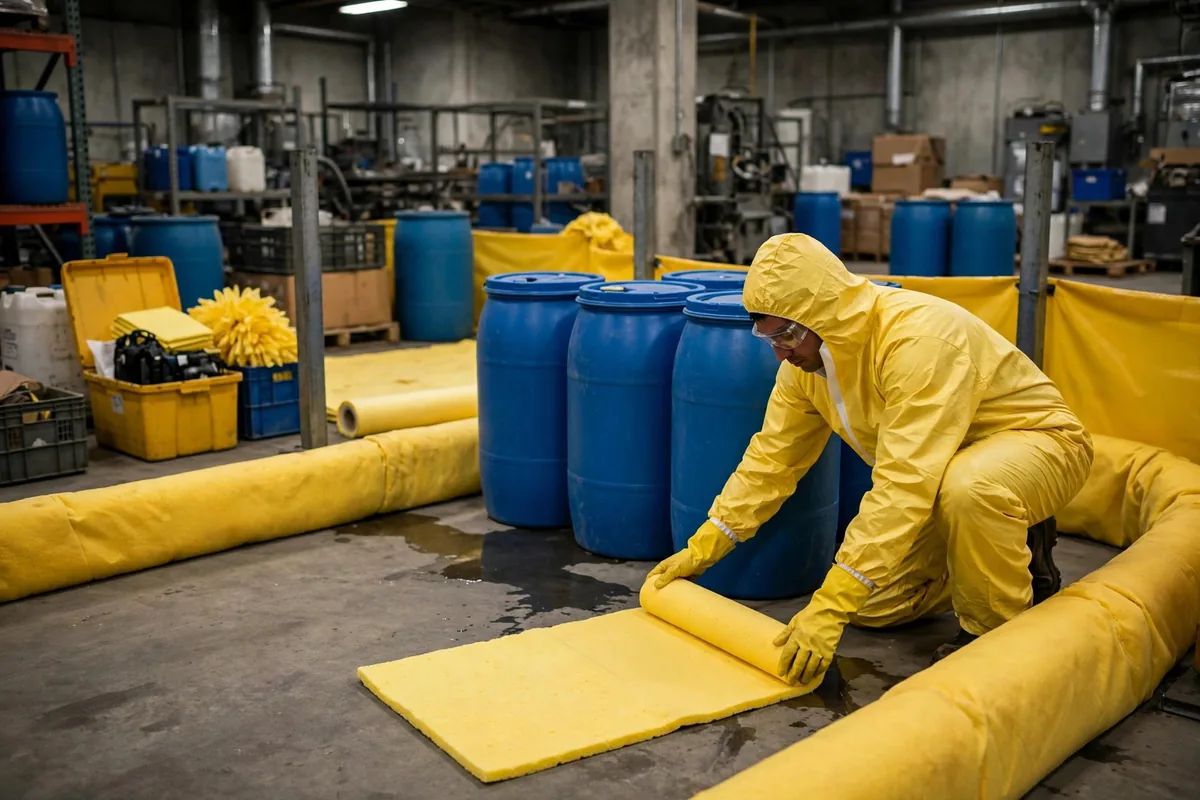
We got lucky that night. It was a water-based cleaner, twenty-some liters, still two meters from the drain. Two guys rolled out the berm, circled the spill in under a minute, laid down absorbent pads, and ten minutes later the floor was basically dry. But my shirt was soaked through. If that drum had held something else, or twice the volume, that night would have ended with reports, a stopped line, and people asking questions.
A warehouse hazmat spill is the thing nobody wants to talk about, because talking about it feels like jinxing yourself. But when it happens, what saves you is not courage. It is whether the kit is in the cabinet, whether you can reach it, and whether your crew knows the first step without thinking. This is how we run it in our warehouse now — absorbent pads, berms, containment drums, chemical gloves, item by item.
Hazmat Spill First Move: Contain, Then Soak It Up
Most people's first instinct is to grab something and start soaking. That is wrong. Liquid on a floor moves. You will never absorb faster than it spreads. You have to fence it in first, make it stop, and then clean it up at your own pace.
Our rule is three words in order: berm, then pads, then drum.
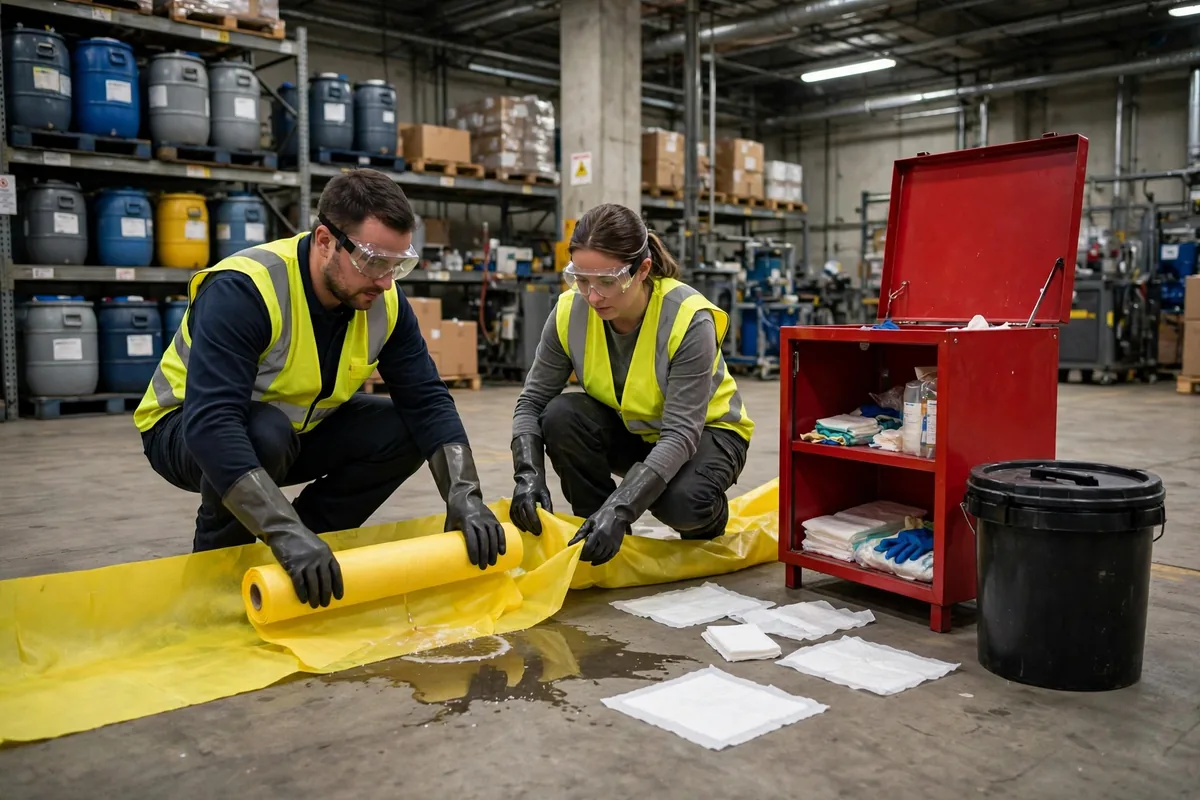
A berm is that soft, sausage-shaped barrier that sits coiled beside the emergency cabinet. You pull it out and it makes a ring. That night, two young guys each grabbed an end and had the spill circled in thirty seconds. Absorbent pads come in two kinds: flat sheets for the floor, and socks for cracks, doorways, and wrapping around the base of a drum. A saturated pad is heavy and it drips. It goes in the containment drum.
One more detail: the floor drain. Every hazmat zone in our warehouse has a drain cover hanging on the emergency cabinet door, red handle, impossible to miss. First step in a spill: cover the nearest drain. Three seconds of work. Last summer, a warehouse down the road skipped that step, liquid got into the storm drain, and the cleanup crew brought three trucks and shut the place down for two days. Three seconds would have stopped it.
Chemical gloves and goggles are not optional either. Someone always thinks a small spill does not need gloves, grabs the drum bare-handed, and ends up with a rash and a week off work. Wearing gloves is not being timid. Our rule now: gloves, goggles, mask — all three on before you step into a spill area. The veterans grumbled at first. Now it is habit.
The Spill Containment Kit List Lives on the Cabinet Door
A kit list fails in two ways: nothing at all, so you go hunting when it matters; or a mountain of stuff piled in a corner. Our way: stock by zone, stock by volume, and tape the list inside the cabinet door, checked every month by a named person.
This is the actual setup in our Zone C hazmat cabinet right now. One cabinet covers one zone, about forty drums at a time, two people on patrol.
| Item | Quantity | Where it sits | Checked |
|---|---|---|---|
| Berm, 1.2 m | 4 | Bottom shelf, pull-out | Monthly |
| Absorbent pads | 30 sheets | Middle shelf, stacked by pack | Monthly |
| Absorbent socks | 8 | Middle shelf, on hooks | Monthly |
| Containment drum, 120 L, lidded | 2 | Beside the cabinet, lids on | Quarterly |
| Chemical gloves | 10 pairs | Top shelf, sized separately | Monthly |
| Goggles and masks | 6 each | Top shelf, sealed bags | Monthly |
| Drain covers | 2 | Inside cabinet door, red handle | Monthly |
| Shovel, dustpan, warning tape | 1 set each | Hooked beside the cabinet | Monthly |
One cabinet like this costs a few thousand yuan to set up, and consumables run a few hundred per replacement, once or twice a year. Sounds like a lot until you compare it with calling in an outside cleanup crew — several thousand per visit before they even start, not counting the stopped line. And a full day of downtime costs more than ten cabinets.
Here is the counterintuitive part: more absorbent pads is not better. We made that mistake too. We once bought two hundred sheets and stacked them in the cabinet. Six months later the bottom ones were damp and clumped, and they tore apart when you pulled them. Now we keep it lean: the cabinet holds enough for one medium spill, and the rest lives in the store room, with the location written on the cabinet door. Use it, log it, restock it the same day. It has to be ready to use.
Placement matters as much as quantity. The cabinet cannot be far from the hazmat zone — far away means it does not exist. But it cannot sit right against the drums either, because a fallen drum can block the door. Ours stands three to five steps from the zone entrance, the aisle kept clear, glow strips on the door so you can find it in the dark. We learned that position the hard way. The first cabinet stood at the far end of the zone, and in a drill it took forty-plus seconds to run there and back with a berm. By then the liquid had spread three meters.
Spill Response in Three Levels, and Drills That Practice Failing
Not every spill gets the same response. We sort ours into three levels, printed on the cabinet door and in the new-hire manual. This is our internal working rule. What counts as reportable, when to evacuate, and what a given substance requires — that comes from the SDS and local regulations. I do not invent regulation numbers or limits here.
| Level | Our internal call | Who handles it | First move |
|---|---|---|---|
| Level 1, small | A few liters, one puddle, safe to approach | Two people on shift | Berm it, cover the drain, absorb, drum it |
| Level 2, medium | About a drum, spreading fast, smell obvious | Shift team plus me | Ventilate, clear people, contain, then report |
| Level 3, large | Out of control, strong fumes, unknown substance | Everyone out | Do not touch it. Seal the zone, call it in, wait for the pros |
The point of the levels is that nobody has to make a judgment call standing in a puddle. Level 1, you work. Level 2, you call for help first. Level 3, you walk away.
One more word on drills, because most warehouse drills are theater. We do four a year, and at least two are unannounced. One night at 2 a.m., the alarm went off and the three guys on duty froze for half a minute before anyone remembered where the berm was. I changed one thing: moved the berm from the bottom shelf to the middle shelf, at hand height. A drill is not for looking good. It is for failing early, on purpose.
Our review format is three sentences. One: which move was slow. Two: which item was hard to reach. Three: what changes next time. Every change goes in a small notebook on the cabinet door, and the next drill starts by reading it. Last year we made seven changes: a handle added to the drain cover, gloves sorted by size, the containment drum swapped for one on wheels. None of them big. All of them real.
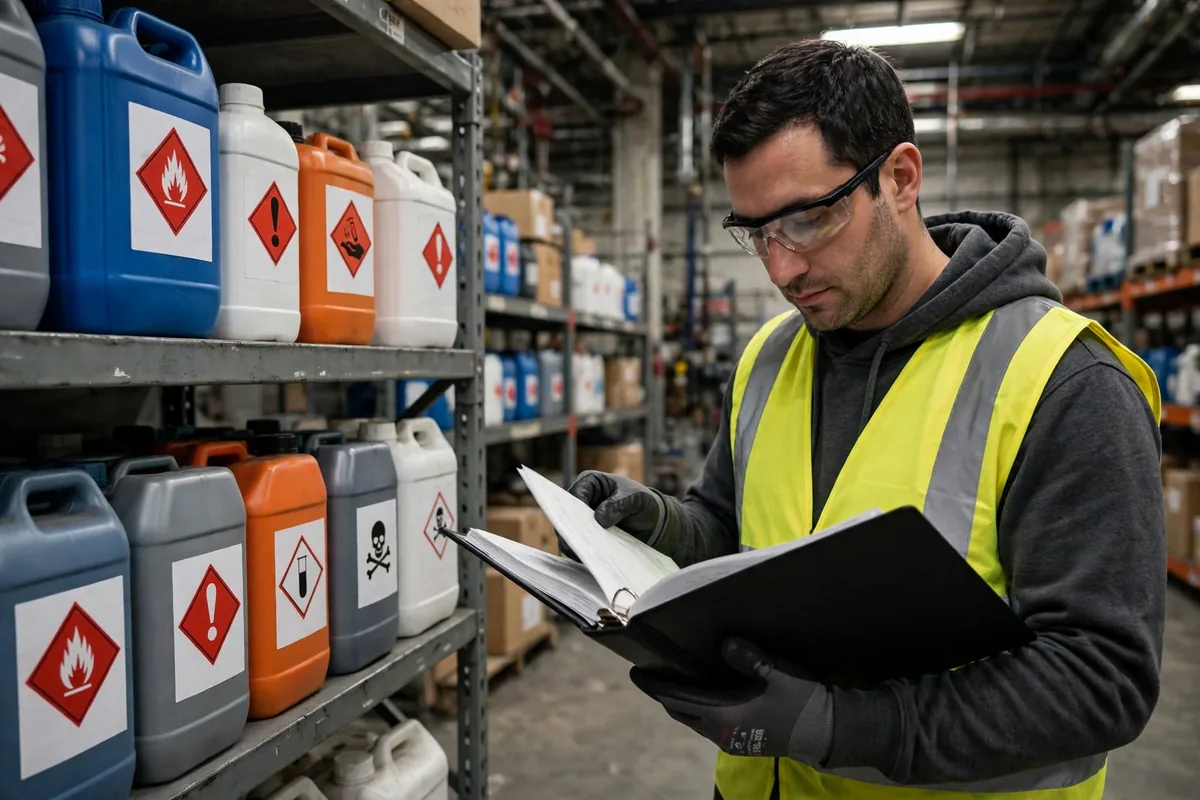
And the SDS. Every chemical that comes in, the SDS arrives first — a copy in the folder at the zone entrance. When something spills, read what the SDS says to do. If you are not sure, do not push through. I have told new hires a hundred times: unsure means ask, unsure means step back, never show off. A spill can be cleaned. A hurt person cannot be undone.
Tomorrow, go look at your own emergency cabinet. Is the berm where it belongs? Are the pads dry? Are there enough gloves? Five minutes.
By Chen Feng, Warehouse Operations Manager