A warehouse chemical spill response plan is tested in the first three minutes, not in the audit meeting. Pads, socks, berms, gloves and waste bags look like clutter until a drum splits. Think of it as insurance with a visible premium: a few thousand dollars of kit against a cleanup that can run ten times that.
Spill Response Starts With Spread, Not With Shopping
Most warehouses buy spill response gear backwards. They ask which brand first. The right first question is different: if the largest container in this bay fails, how far will the liquid travel before anyone touches it?
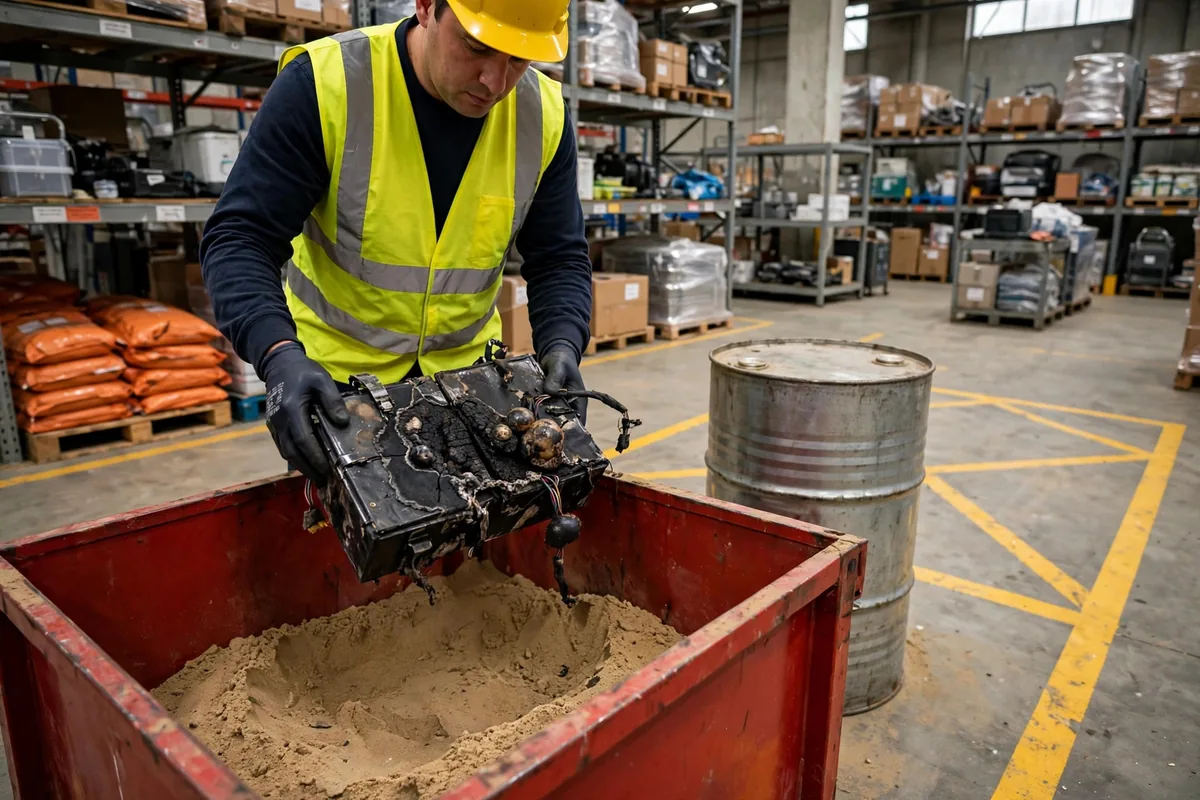
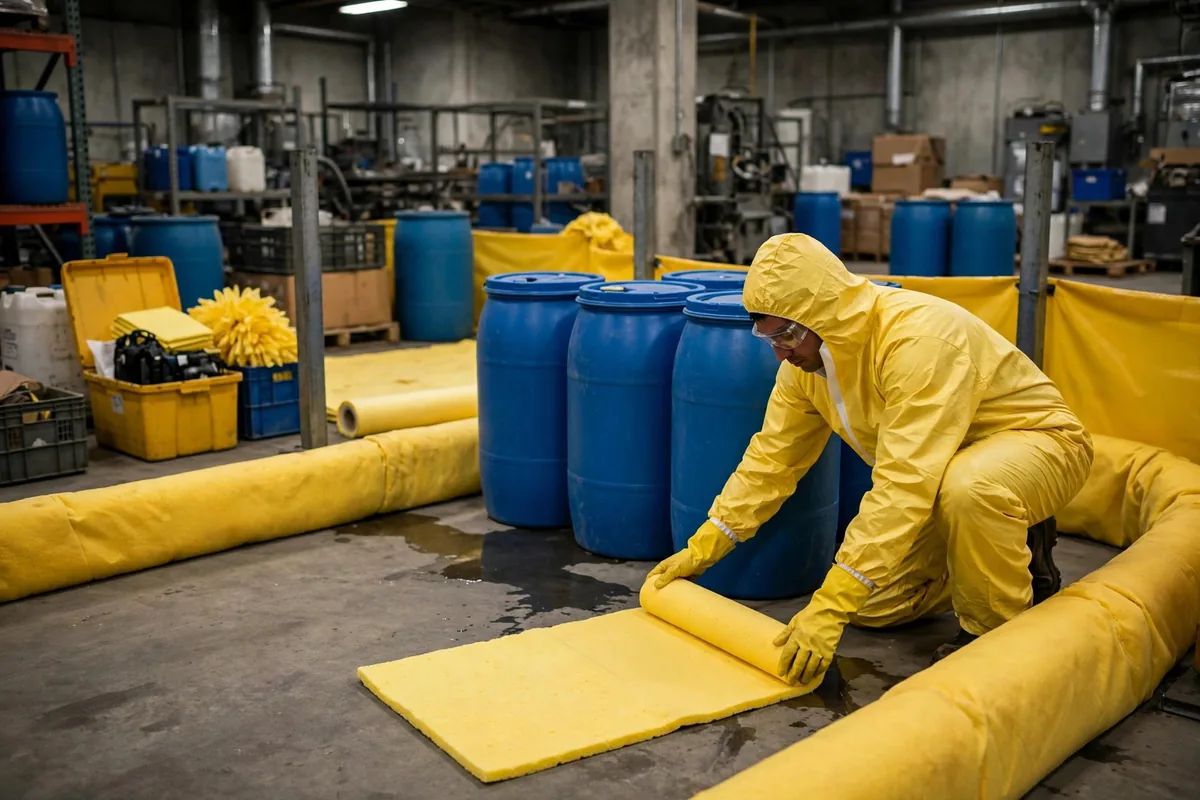
Two scenes make the point. Illustrative example one: in June 2024, a third-party warehouse in eastern China had a 1,000-litre container whose valve was clipped by a forklift. The operator reached for a mop. Liquid crossed two pallet positions in three minutes and reached a drain in eight. Illustrative example two: in January 2025, a northern auto-parts warehouse had a 208-litre drum of cutting fluid slip from racking and crack. The operator laid two 3-metre socks in a semicircle downhill, then pads inside the ring. The spill stayed inside about four square metres and cleanup finished in 18 minutes. The difference was sequence: contain first, absorb second.
That sequence also exposes a piece of pseudo-demand: the super-pad that absorbs ten times more than a normal one. The laboratory numbers are real, and misleading. Polypropylene data sheets measured under standard conditions report up to about 25 times the material's own weight in oil, a heavy-duty commercial range advertises more than 12 times, and natural organic absorbents typically manage 3 to 15 times.
Size from capacity instead. A 5-litre pail needs a kit rated for 5 to 7 litres of uptake; a single 55-gallon drum, about 208 litres, needs a 20 to 30-litre kit only for a partial puncture, and a 55-gallon kit to handle the whole drum; a 1,000-litre container needs a 95-gallon-class kit or larger, plus a berm and drain covers. The U.S. Occupational Safety and Health Administration standard 29 CFR 1910.120(j)(1)(vii) requires suitable quantities of proper absorbents where spills, leaks or ruptures may occur. My working rule is 1.2 to 1.5 times the largest single container's volume in total absorbency.
Chemical Spill Absorbents: Three Types, One Hard Boundary
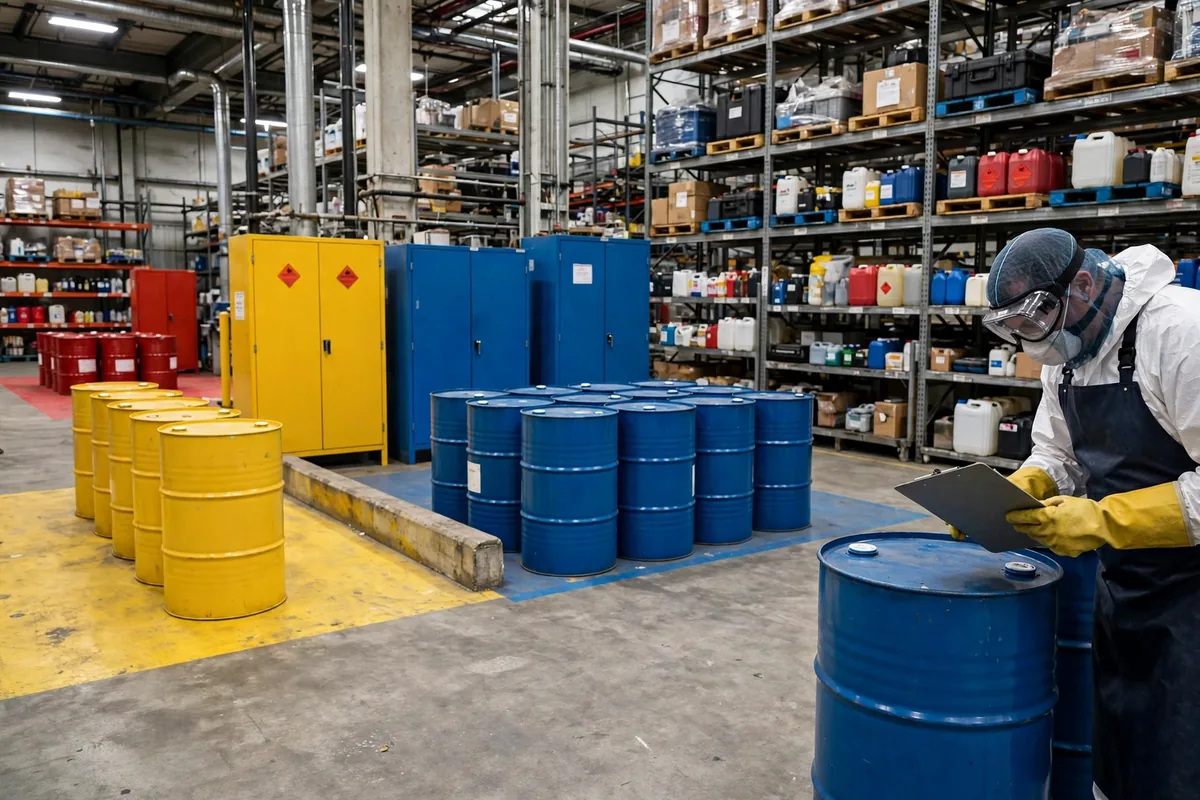
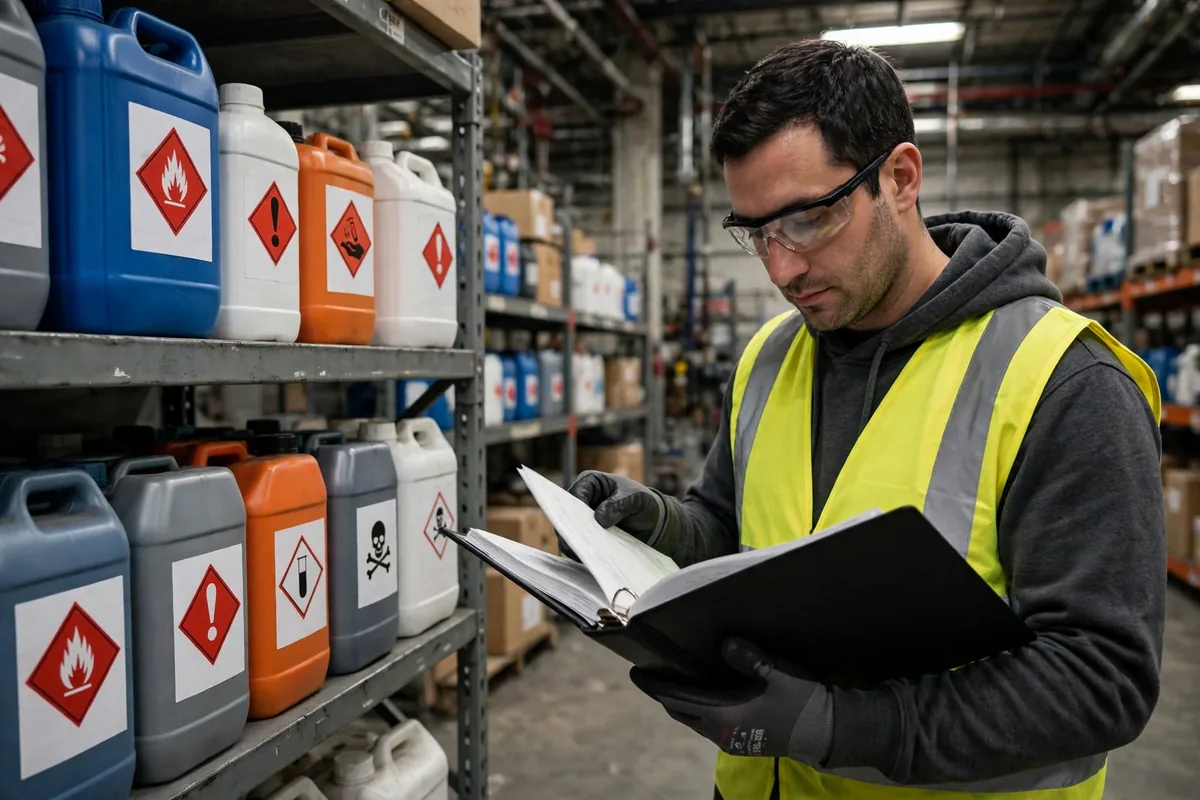
Absorbent pads fall into three types, and the boundary between them is chemistry, not thickness. Universal pads, usually grey, absorb oil, water and water-based liquids, and suit the first minutes when the substance is still unknown. Oil-only pads, usually white, absorb oil while repelling water, which makes them right for outdoor areas, wet floors and oil spills. Chemical pads, usually yellow, resist acids, alkalis and aggressive solvents, and belong where acids, bases and solvents are stored. The selection table is one line long: what is leaking?
Think of it as choosing a blade. A kitchen knife cuts meat, but it rolls its edge on bone. A universal pad on concentrated acid can be eaten through in minutes, and the liquid it absorbed leaks back onto the floor. An oil-only pad on a water-based liquid is a sieve trying to hold water.
Here is the counterintuitive part: thicker is not automatically faster. A thick pad holds more per piece, but a thin pad wets out and conforms to the floor in seconds.
Buy on cost per litre absorbed, not on price per carton. Hypothetical figures: kit A costs $250 and is rated for 60 litres; kit B costs $330 and is rated for 95 litres. Per litre, A costs about $4.17 against B's $3.47.
| Kit configuration | Best for | Rated uptake (hypothetical figures) | Weak point |
|---|---|---|---|
| Small bucket kit | 5-litre pails, maintenance drips | About 20 litres | Cannot handle a whole drum |
| Drum kit | Single 208-litre drum area | About 75–110 litres | Liquid still spreads without a berm |
| Container kit plus berm | 1,000-litre containers, chemical zone | About 360 litres or more | Takes floor space, berm needs inspection |
Use the table to match your largest container, not to copy the numbers. The figures are illustrative; confirm real uptake from the supplier's test data before ordering.
Spill Response Berms: Size to 110%, Check Against a Forklift Wheel
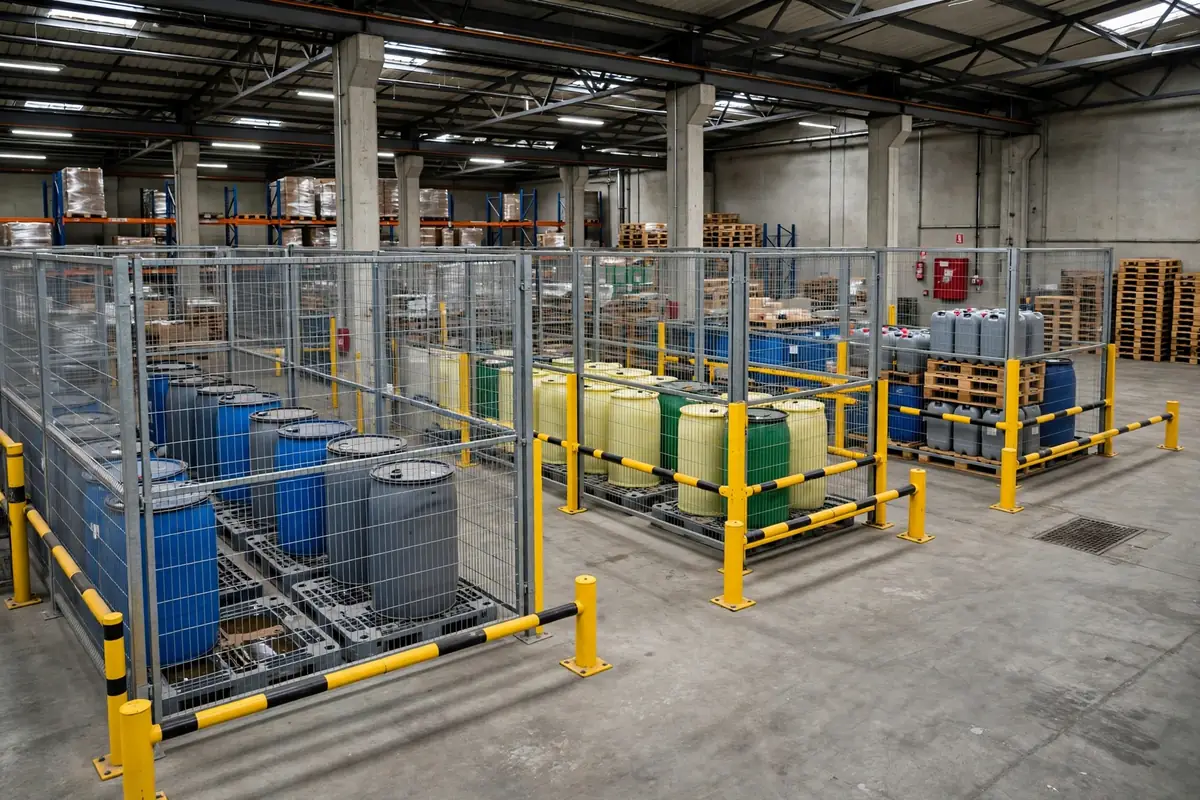
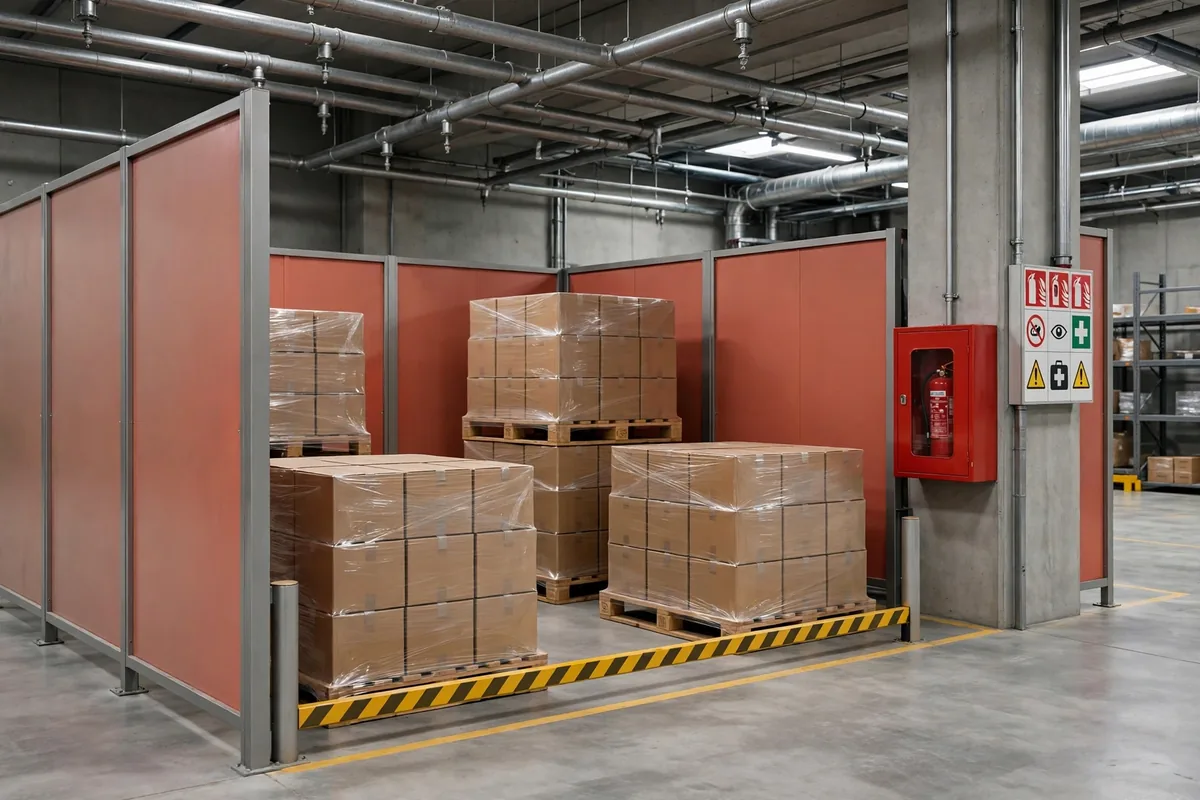
The berm is the item most often sized wrong. Under the U.S. Environmental Protection Agency's Spill Prevention, Control, and Countermeasure rule, 40 CFR Part 112, secondary containment must hold the entire contents of the largest single container plus sufficient freeboard to contain precipitation, and the industry rule of thumb for that freeboard is 110 percent of the largest container's volume. A 1,000-litre container needs at least 1,100 litres of effective berm capacity; a 208-litre drum needs at least 229 litres.
The arithmetic on paper is always right. The installation is where it goes wrong. First, effective capacity is not rated capacity: pallets and drums inside the berm displace volume, so a berm rated at 1,200 litres with two pallets inside may hold barely more than 1,000 litres. Second, berm height has to survive a forklift wheel. A wall too tall gets crushed on entry; too low, and a surge overtops it. Third, an outdoor berm has to account for rain. A storm can leave a yard berm half full before any spill happens, and the 110 percent margin is already spent.
Material compatibility decides whether the berm survives its own spill. Polyvinyl chloride berms are vulnerable to aromatic solvents, which can swell and crack them, while polyurethane berms handle oil well but fail against some strong solvents. Check compatibility against the chemical inventory before ordering, and use fixed berms for permanent storage and portable berms for docks and temporary work.
The Checklist, the Bill, and the Maintenance Traps
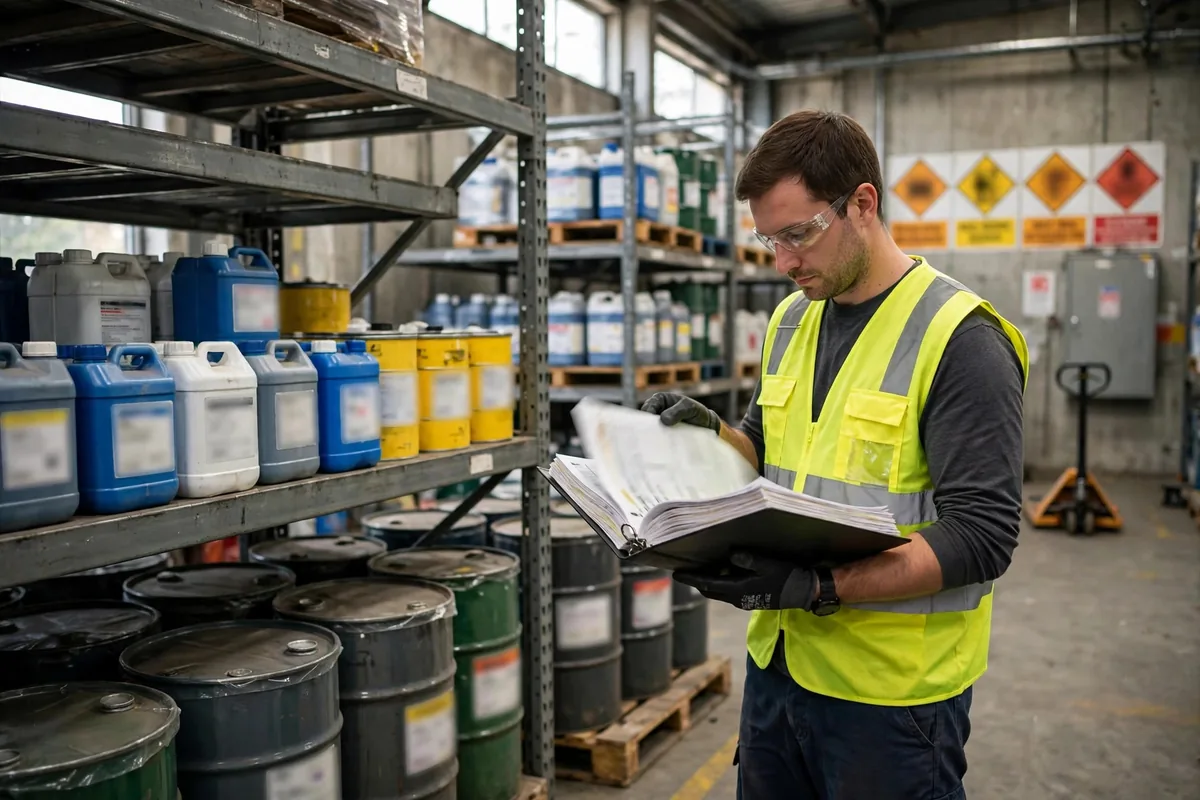
A list only counts when it is written down. For a small to medium chemical zone holding 208-litre drums and 1,000-litre containers, with quantities as hypothetical figures to rescale against your largest container: six absorbent socks, 3 metres each; 100 thin sheets; four pillows; 40 chemical pads; one berm sized to 110 percent of the largest container, plus one spare portable berm; two drain covers; four sets each of nitrile gloves, goggles and chemical aprons; one non-sparking shovel and dustpan; 20 hazardous waste bags with ties and labels; one flashlight; and the safety data sheet folder inside the cabinet door.
Now run the full-life bill. Hypothetical figures: a drum kit costs about $350, annual pad top-up about $170, berm depreciation about $110 a year, and drills plus training about $210 a year, for an annual total near $840. Whether the money is well spent comes down to one number: how many minutes it takes your site to ring-fence its largest container if it fails completely. Under five minutes, the $840 is a premium. Over fifteen, it is a placebo.
Maintenance holds more traps than purchasing. Pads hate damp storage: a torn carton or a roof leak leaves them saturated with water, and oil capacity drops to zero, so keep the cabinet off the floor and dry. Gloves and chemical suits have shelf lives, and the dates belong in a register with quarterly checks. A portable berm folded for months cracks along its creases; unfold it every quarter, fill it with water, and watch it for ten minutes. Run two drills a year, one on day shift and one on night shift. The night drill exposes the real gaps, because fewer people are on site and anyone who does not know the cabinet location will spend two minutes just finding it. Restock within 24 hours of any use, and log who took what, how much, and when.
There is no perfect spill response configuration, only a passing grade. Can the largest container be ring-fenced? Can the absorbency cover it? Can the materials survive the chemical? Can the night shift find the kit?
By Da Liu, Automation Engineer