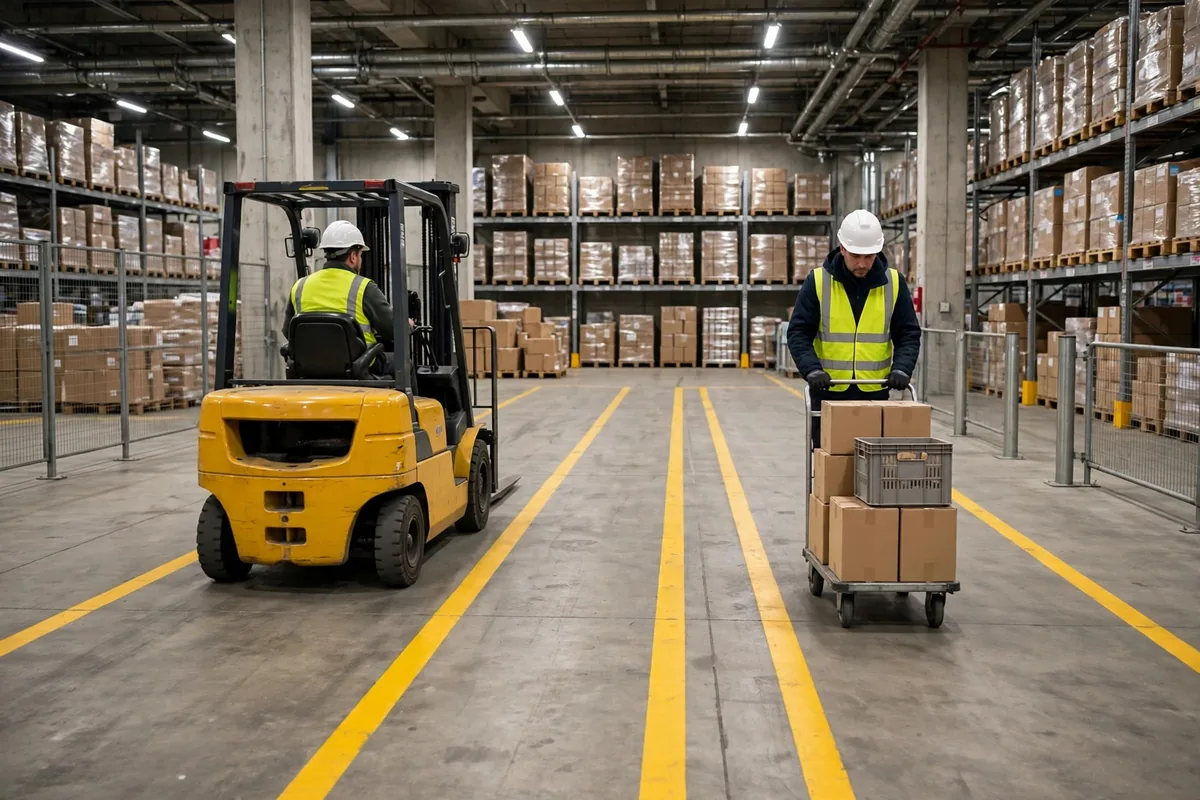
Let me be straight with you about forklift tire selection: at 6:30 on a Monday morning, just after the night shift handed over, I walked into the warehouse and heard a forklift squealing through a turn.
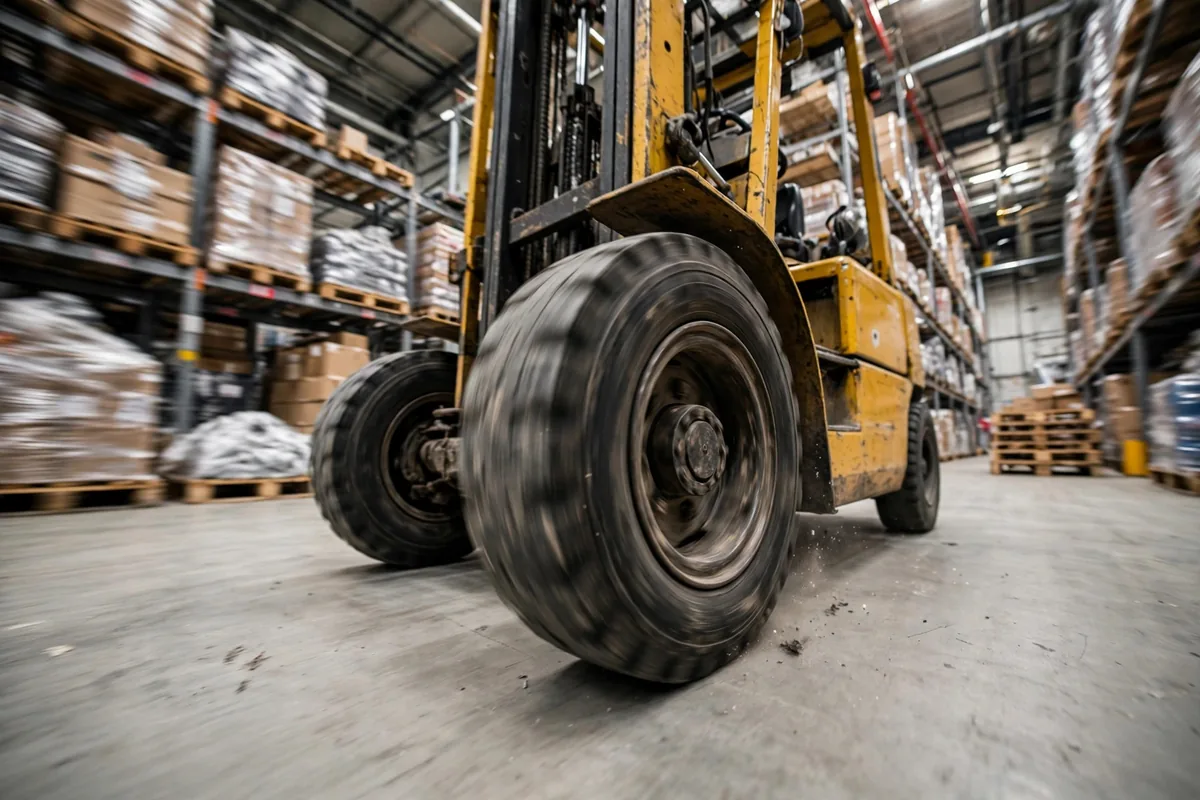
It was the week before peak season. A driver named Li was taking a 2.5-ton truck up to a high rack, and as the truck turned, the worn side of the tire slipped. The floor mat near the rack almost got dragged along with it. Li got down, looked, and found the tire edge frayed and the tread nearly smooth. I told the shift lead right there: this truck is not doing high-rack work today. Change the tire first.
Brothers in this trade know the pattern. Nobody looks twice at forklift tires until something goes wrong, and when it does, it is never just about the tire.
Forklift Tire Selection Starts With the Floor, Not the Price
A lot of warehouses pick tires the wrong way around. They ask the price first, then ask how long the tire lasts. That order is backwards.
The first question is always: what floor does this truck run on every day?
Epoxy floors are the fussy ones. They are smooth and easy to scuff. A hard tire that brakes sharply or spins in place will leave black marks, and over time the coating itself wears through. Repairing that floor costs far more than a set of tires.
Concrete floors are tougher, but dusty, with joints everywhere. A tire that is too soft chews at the edges over time. A tire that is too hard passes every jolt straight into the truck and the driver, and after a full day the driver's back knows it.
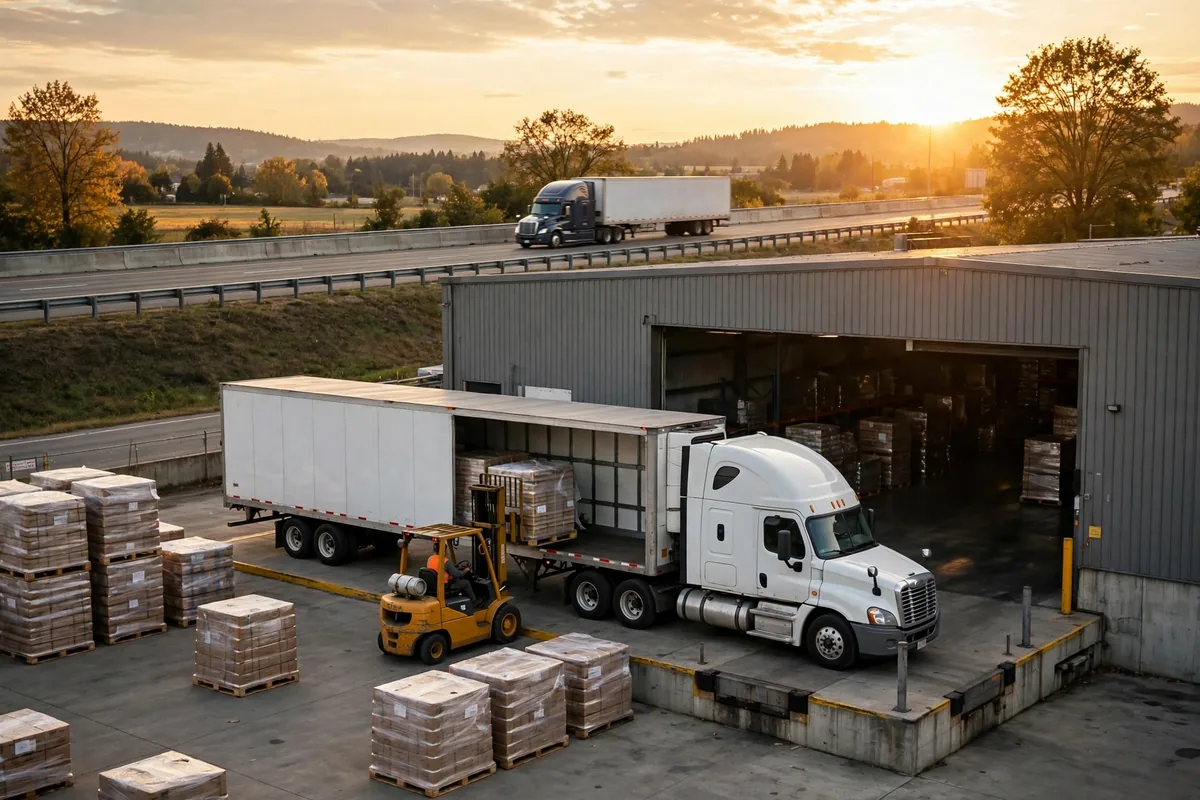
Outdoor yards are the hardest of all. Rain makes them slippery, stones are everywhere, the surface is uneven, and there are ramps to climb. A tire chosen only for indoor performance will show its weakness outside very quickly.
So my rule is simple: floor first, then load and shift pattern, then price. Once the floor is fixed, the real choice usually narrows to one or two options, and most of the argument goes away.
Solid, Pneumatic, and Polyurethane Tires Side by Side
Here is the short version first, then the detail.
| Tire type | Best floor | Strengths | Weaknesses | Where I use it |
|---|---|---|---|---|
| Solid | Indoor concrete, floors with debris | Cannot be punctured, no blowouts, wears slowly | Poor shock absorption, hard on floors, tiring for drivers | Indoor heavy-load trucks on two shifts |
| Pneumatic | Outdoor yards, uneven ground | Good shock absorption, steady grip, comfortable | Puncture-prone, needs regular pressure checks | Outdoor loading and ramp work |
| Polyurethane | Epoxy floors, smooth indoor floors | No black marks, rolls easily, protects the floor | Chips on stones and potholes, not for heavy outdoor loads | Epoxy warehouses, narrow aisles, high-rack picking trucks |
Solid tires are the ones most crews know best. Their one big virtue is toughness. Iron filings, pallet nails, warehouse debris: a solid tire keeps rolling and will not leave a truck stranded halfway through a shift. The downside is just as real. They are hard. The truck shakes, the load shakes, and the driver's wrists and back feel it by the end of the day. They are also hard on floors, and on an epoxy surface the black marks and wear build up over months.
Pneumatic tires are the opposite trade. The air cushion absorbs shocks, grips well on uneven outdoor ground, and is far kinder to the driver. But one nail or sharp piece of metal can stop a truck for half a shift, and air pressure is a management job, not a one-time setting. Too low and the tire drags and wears fast. Too high and it rides hard again. If nobody in the crew owns the pressure check, half the benefit disappears.
Polyurethane tires are now the default in many epoxy warehouses, and for good reason. Their biggest advantage is a clean floor: no black marks, light rolling, and a truck that feels easy to drive. But they have a temper. Potholes and stones chip the tread edge, and they are not built for heavy outdoor loads. Push them hard outside and their life drops fast.
Here is the counterintuitive point: the most expensive tire is not always the most expensive choice. A polyurethane tire may cost more upfront, but in an epoxy warehouse it can save more in floor repair and cleaning time than the tire itself costs. Put that same tire on a rough outdoor yard and frequent replacements will make the total bill higher. Always price the whole job, not one quotation.
Wear Signs: Do Not Wait These Out
Whether a tire needs changing should come from signals, not gut feeling.
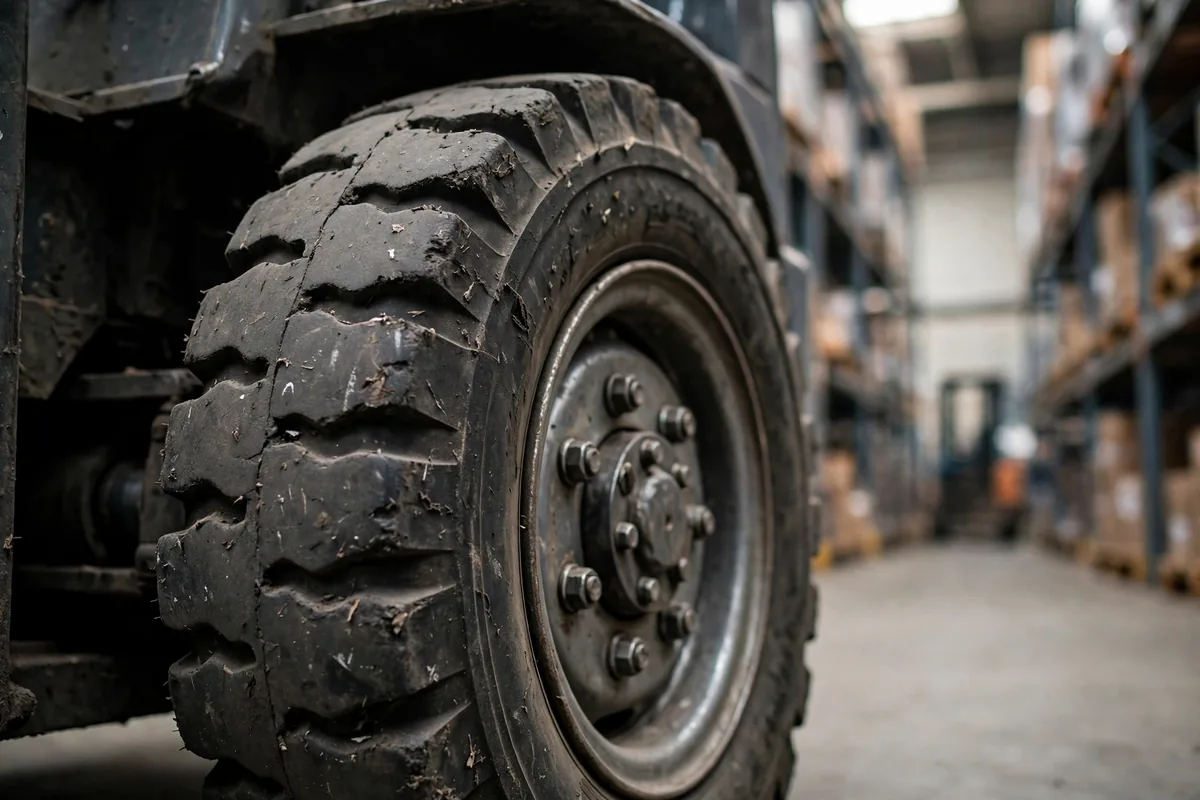
The first signal is a smooth tread. Run your hand across it: if the middle band is shiny and slick, and the truck slips when the floor is wet, it is time. Do not wait until a turn cannot be braked safely. By then it is no longer a tire problem.
The second signal is the tire edge: fraying, cracking, or chunking. Solid and polyurethane tires show this most. Once a chunk comes off, the truck vibrates, and the load on the rack sways with it. Seeing a chunk is not a reason to "run it a few more days." It goes straight onto the change list.
The third signal is the driver. Vibration, a shaking steering wheel, a longer stopping distance: drivers feel these first. In our warehouse we have a rule. If a driver reports the same truck twice, the shift lead has to go and look at it in person. Most tire problems are found by drivers before they are found by management.
The fourth signal is the floor itself. More black marks on epoxy, more crumbling on concrete: before blaming the floor contractor, check whether the tires are wearing unevenly. A worn tire makes the floor its first victim.
One management lesson took us a while to learn: do not change only one tire on an axle. A new tire next to an old one differs in height and hardness, the truck pulls to one side, and the driver spends the whole shift correcting it. That is hard on the truck too. We now change them in pairs on the same axle, log any old tire still fit for spare duty, and scrap the rest instead of stacking them in a corner.
What We Settled On: The Right Tire per Truck, Checked Every Shift
After a few rounds of trial and error, this is the system that stuck in our warehouse, and other crews can borrow it directly.
First, assign tires by truck, not by one blanket rule. Narrow-aisle and high-rack trucks in the epoxy warehouse run polyurethane. Heavy indoor trucks on concrete run solid tires. Outdoor loading and ramp trucks run pneumatic tires, with one named person responsible for pressure checks. Each truck carries a small card stating its tire type, so nobody has to dig through records at change time.
Second, check tires every shift, not once a month. Before the shift starts, the driver walks around the truck: tread, edges, and pressure for pneumatic tires. Problems get logged on the spot, and the shift lead schedules the fix the same day. Once a month we do a full-warehouse sweep and change everything due in one batch, instead of discovering a pile of overdue trucks right before peak season.
Third, keep a change log: which truck, when, what tire, and how long it lasted. Over time that log tells you the real service life of each tire type in your own warehouse. The next purchase decision then comes from your own numbers, not from a sales pitch.
Fourth, do not ignore how the driver feels. The same truck on the right tire leaves the driver less tired at the end of the day, and fewer mistakes follow. Scheduling and morale may look unrelated to tires, but they are not. A driver on a comfortable truck damages less freight and has fewer near misses. That is real money too.
So here is my reminder to fellow managers: when you choose forklift tires, do not start with one quotation or one wear rating. Walk your own floor first. Is it epoxy or concrete, indoor or outdoor? Then look at the load and how many shifts the truck runs. Floor, load, and shift pattern will settle most of the decision for you. Get the tire right and the truck runs smoothly, the floor stays in good shape, and the driver goes home less worn out. That is what actually saves money.
By Chen Feng, Warehouse Operations Manager