Let me tell you, nobody looks twice at forklift tires until one of them puts a truck out of service for half a day.
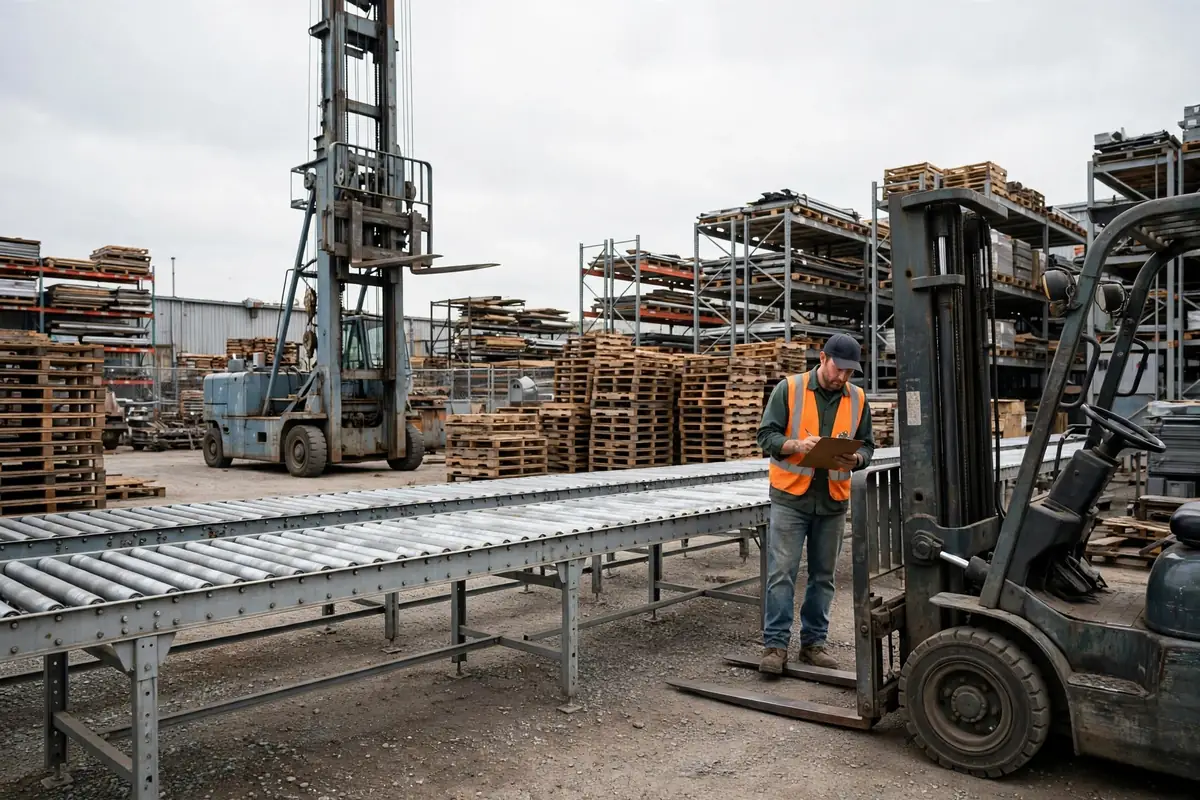
A couple of autumns back I was waiting to load at a building-materials warehouse in California when I saw a forklift parked crooked in the yard, its left front tire flat against the ground. The driver was crouched beside it on the phone, and the dispatcher on the other end was shouting that a load had to be out by three and two customer trucks were already waiting at the gate. That truck had picked up two punctures in one morning. The yard was scattered with nails and shredded pallet strapping, and pneumatic tires on that kind of ground are like walking barefoot over a nail board. Between the tow and the wait for a replacement, four people stood around doing nothing for three hours. That is the moment most operations start doing the math on tires. They should have done it a year earlier.
Forklift tire selection comes down to three bills, and you have to add all three. The first is energy. The second is puncture downtime. The third is floor damage. Look at the price of one tire alone and the cheapest option always wins. Add the three bills together and the cheapest option is usually the most expensive one.
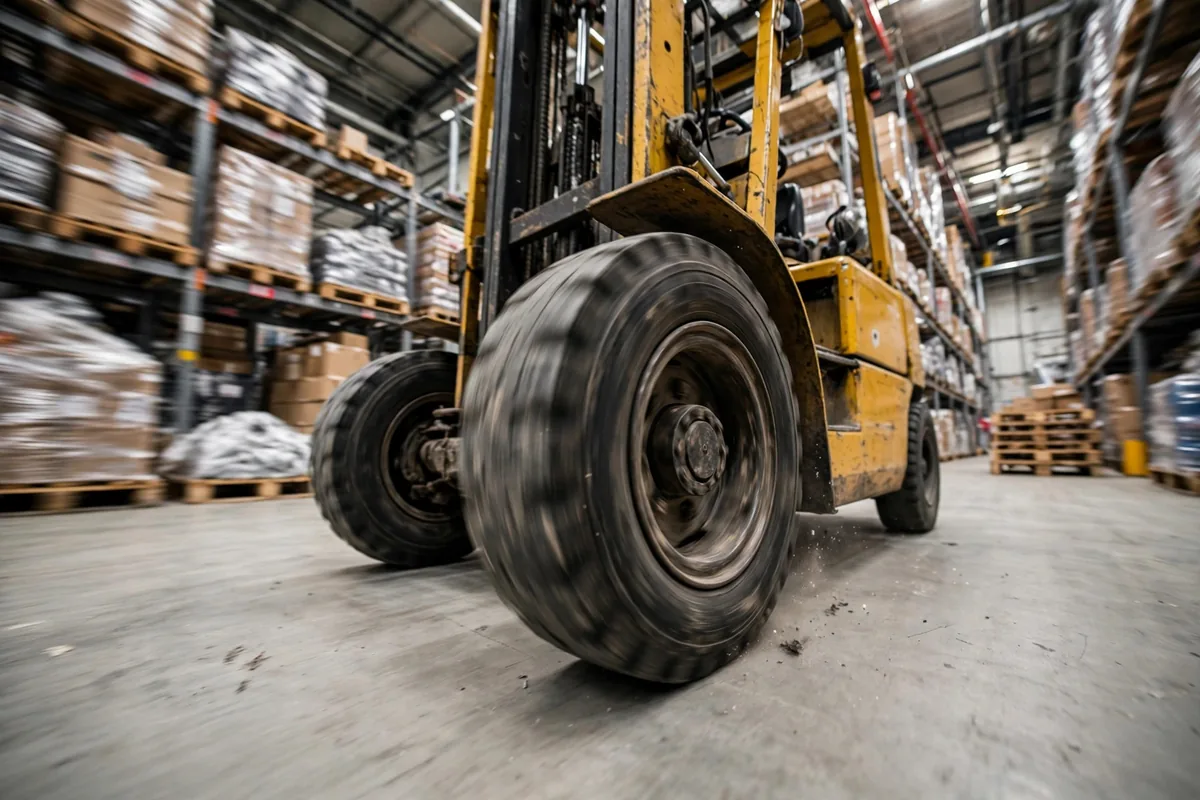
Start with energy, because tires eat fuel and battery quietly. A pneumatic tire is soft. It grips well and rides comfortably, but its rolling resistance is high, and on an electric forklift you can see it over a quarter: the same truck, the same shifts, noticeably more battery burned than on press-on solid tires. Polyurethane goes the other way. The compound is hard and rolling resistance is low, so an electric truck runs longer on a charge, which is why so many light-duty electric warehouse trucks run on polyurethane. Solid tires sit in the middle: less resistance than pneumatics, more than polyurethane, and tough as anything. After all these years on the road, my rule of thumb is simple. The softer the tire, the harder the truck works. The harder the tire, the more the truck saves, but the ride gets rougher, and the shock you save on energy comes back as wear on the chassis and on the driver.
The second bill is puncture downtime, and it is the one people underestimate most. A pneumatic tire picks up a nail and you are looking at half an hour for a repair if you are lucky, half a day if you are waiting on parts or an outside service call. Run the numbers as a worked example: assume a forklift costs about $60 an hour once you count the operator and the equipment, and a two-hour stoppage costs $120 in direct losses, before you count the delayed orders behind it or any late penalties. Two punctures a month and you are near $3,000 a year, all of it tuition paid for choosing the wrong tire. Solid and polyurethane tires have no air to lose, so that bill drops to zero. That is why lumber yards, recycling centers, and building-materials yards put up with a rougher ride and run solid tires: there are nails everywhere. On a clean indoor concrete floor, the puncture risk is low to begin with, so this bill barely matters.
The third bill is floor damage, and it is the one that gets left out of the math most often. Solid tires are hard, the contact patch is small, and the pressure is concentrated. Run heavy loads on an epoxy floor long enough and you will see fine cracks and worn grooves. Polyurethane is harder still and even less forgiving on thin floors. Pneumatic tires are the gentlest on the surface because they spread the load. I have seen a food warehouse switch everything to solid tires for durability and then pay for a floor repair six months later that cost more than three full sets of tires. The floor is an asset too. Whatever the tires saved, the floor took back.
Forklift Tire Selection by Surface: Where Each Type Belongs
No tire type is better than the others in the abstract. There is only the right tire for the ground under it. Pneumatic tires suit outdoor and mixed surfaces and uneven ground. They absorb shock and grip well, and their weakness is sharp debris. Solid tires suit yards with nails and scrap metal, indoors and out, and they last the longest: published reference ranges put solid resilient tires at roughly 3,000 to 5,000 hours, pneumatics at about 1,000 to 2,500 hours, and cushion press-ons at about 2,000 to 4,000 hours. Polyurethane suits light-duty electric equipment on smooth indoor floors, with a reference range around 3,000 to 5,000 hours or more, and roughly double the life of a rubber cushion tire in the right light-duty application. But it wears fast under heavy use, and it has no business outdoors.
Before you ask about price, answer three questions. Does the truck run indoors or outdoors? Is there metal debris on the ground? Is the work heavy or light? Answer those three and the choice mostly makes itself.
A Decision Table for Forklift Tire Selection
| Surface and workload | First choice | Why | Watch out for |
|---|---|---|---|
| Smooth indoor concrete, light electric trucks | Polyurethane | Low rolling resistance, saves battery, long life | Not for heavy loads, thin floors, or outdoors |
| Smooth indoor floor, medium to heavy loads | Cushion press-on | No punctures, long life, tight turning | Harsh ride; check floor loading on thin slabs |
| Mixed indoor-outdoor, occasional debris | Solid pneumatic | Handles both worlds, puncture-proof | Highest upfront price; compare current list prices, subject to the latest official pricing |
| Rough outdoor ground, gravel, dirt | Pneumatic | Best shock absorption and grip | High puncture risk; keep a spare and a repair process ready |
| Floors regularly exposed to chemicals or cleaners | Polyurethane | Better chemical resistance than rubber | Indoor light duty only; it is not a universal tire |
I have handed that table to plenty of fleet supervisors. Follow it and you will rarely go wrong. The expensive mistakes all come from people who look at price and never look at the ground.
Here is the counterintuitive part: the most expensive tire is not always the cheapest to own, and the cheapest tire is not always the most expensive. Polyurethane costs more per tire, but on a light-duty electric truck its long life and lower energy use can make its hourly cost the lowest of the three. Pneumatic tires cost the least per tire, but in a nail-strewn yard two punctures a month in repairs and downtime will swallow the price difference before the quarter is out. Judge the whole service life, not the line on the quote.
When to Replace Forklift Tires
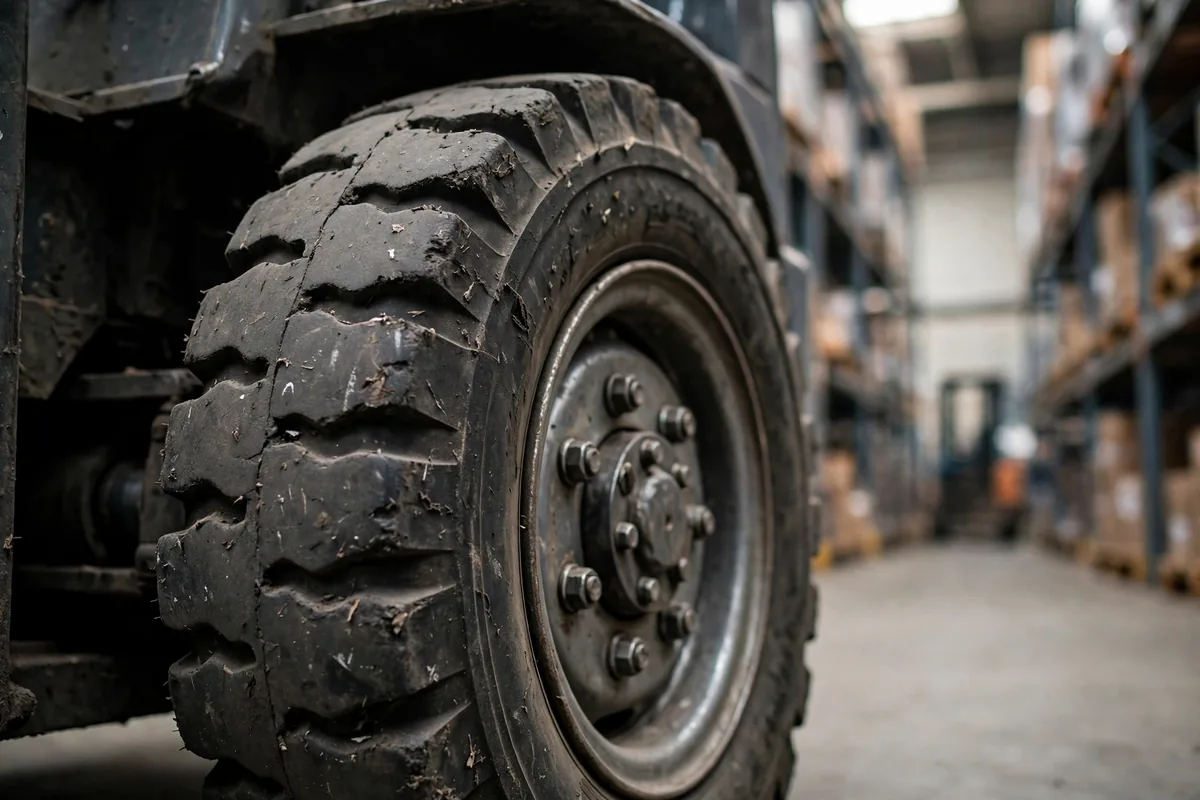
The replacement signals are three. First, the wear line. Cushion and solid tires carry a molded wear indicator near the steel band, sometimes called the 60J line. Once the rubber wears down to that line, the tire is done. The rubber below it is structural base, not usable tread, and running past it wears wheel bearings, axles, and drivetrain mounts. Second, chunking and cracking. Missing chunks, sidewall cracks, or flat spots mean replace now, in pairs, by axle, because one new tire and one old one will pull steering and stability off balance. Third, on pneumatics, the tread itself. When the tread pattern is gone, the sidewall is dry-rotting, or the tire will not hold pressure, it is time.
One old habit is worth keeping: before the new tires go on, sweep the ground and find the nail that killed the old ones. Otherwise the new set will be flat again in three days. I have watched that happen more than once.
Tires are like people. They do not mind hard work. They mind being put in the wrong place. Look at the ground first, the workload second, and the price last. Get that order backwards and the money you saved on tires comes back as downtime and floor repairs, with half a day of everyone's time thrown in for free.
By Shifu Zhao, Trucking Veteran (15 yrs)