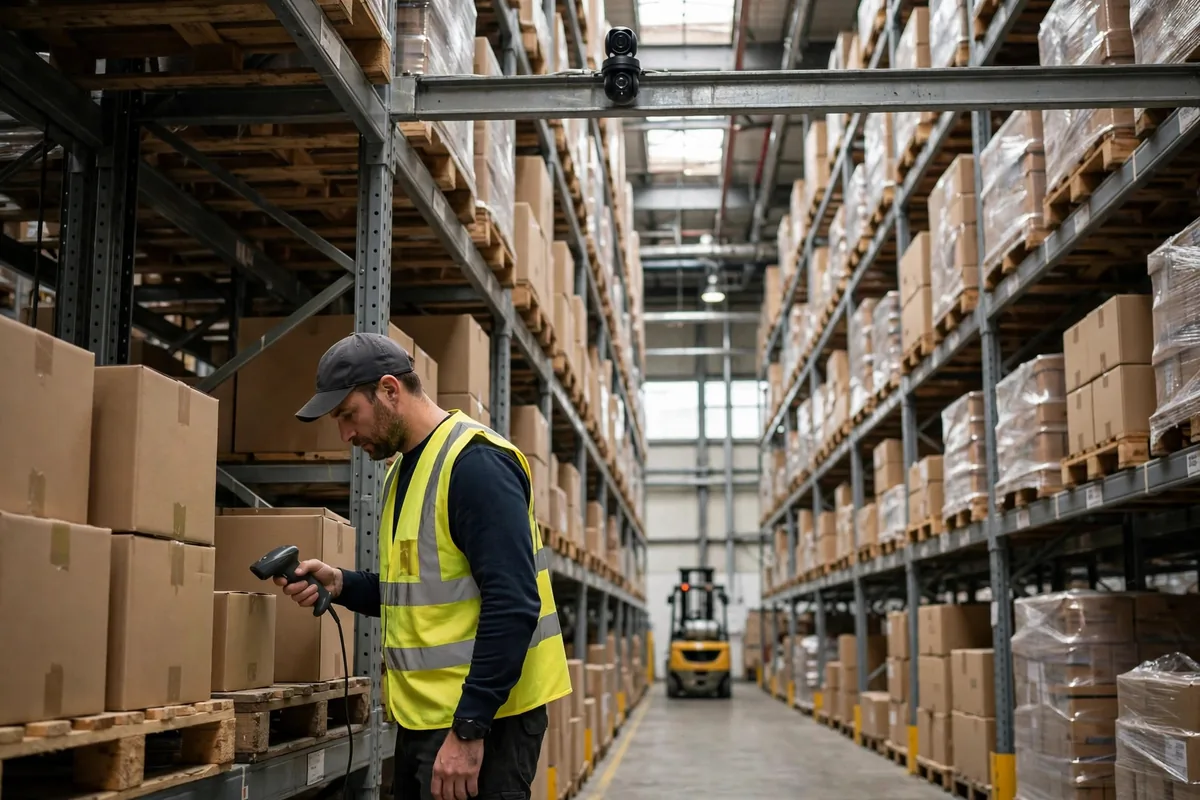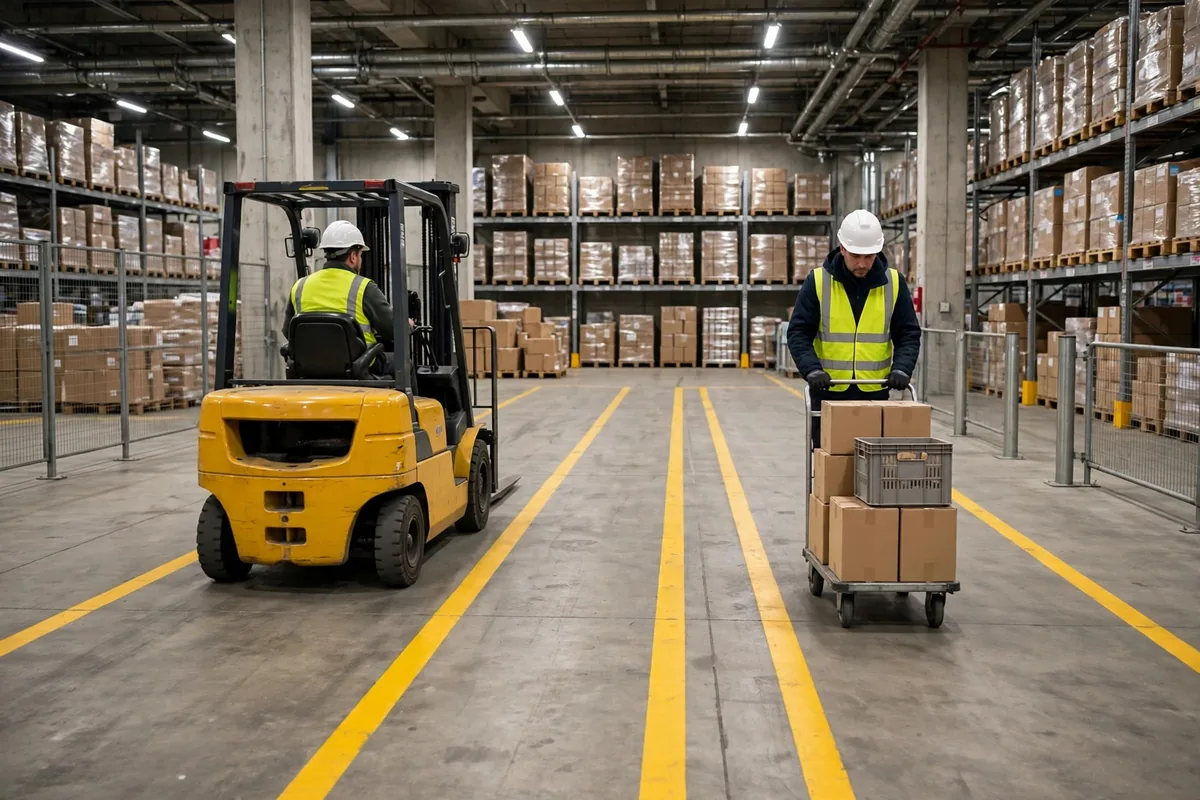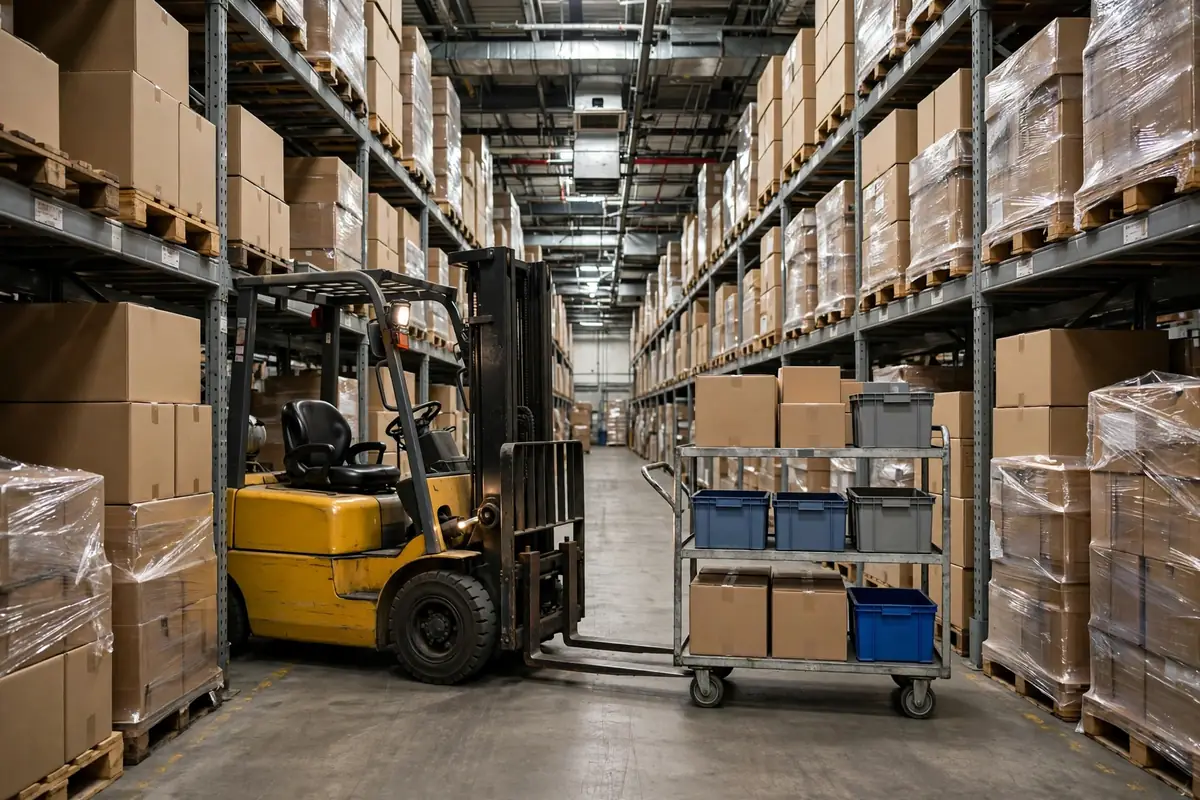
Let me tell you something. After all these years on the road, the thing I dread most is not a traffic jam on the highway. It is pulling into a warehouse to unload and watching a forklift picker traffic conflict unfold in the aisle. Last month, at one warehouse, I watched a forklift come around the corner of an aisle carrying two pallets, while a young picker walked toward him wearing earphones and staring at his pick list. They were two steps from hitting each other. The driver slammed the brakes, the pallets wobbled, nothing fell, nobody got hurt — but the kid went white in the face.
A warehouse forklift picker traffic conflict like that happens in almost every warehouse. The forklift needs to replenish and put stock away, the picker needs to grab goods and ship orders, and both of them are using the same aisle. Nobody yields, and in the end everybody is slower. Today I will tell you about three old-fashioned fixes: time-zoning, lane splits, and a one-way loop. They cost almost nothing, but you have to actually enforce them.
Time-Zoning: Fix a Forklift Picker Traffic Conflict by Splitting the Clock First
The most effective fix is time-zoning. At one warehouse we visit all the time, 8 a.m. used to be chaos: forklifts replenishing, pickers starting their shifts, and receiving trucks arriving, all three groups squeezed into one aisle. Then the manager laid down a hard rule: replenishment only before 7 a.m. and during lunch break, and from 8 to 11:30 the aisles belong to the pickers. The forklift drivers cursed him for the first week, saying there was not enough time to replenish. The manager did not budge. He added two early-shift hands, and within two weeks the pick rate actually went up.
Before the change, a picker had to dodge a forklift three or four times a day, and each dodge cost at least ten minutes. Dodge back and forth all day and you have lost close to an hour. After time-zoning, the pickers stopped ducking and weaving, they moved freely, and the numbers went up on their own. On the replenishment side, the racks were full by 7 a.m., so pickers never had to stand around waiting for stock. Split the clock, and both sides are happy.
The manager told me later he was not sure the rule would hold. He worried replenishment would fall behind and the drivers would revolt. But within two weeks, replenishment accuracy actually improved — before, the forklifts spent half the morning stopping and yielding, and by the end of the day they had stocked less than they do now. Split the time, and the work flows better.
Lane Splits: People Walk Here, Trucks Drive There
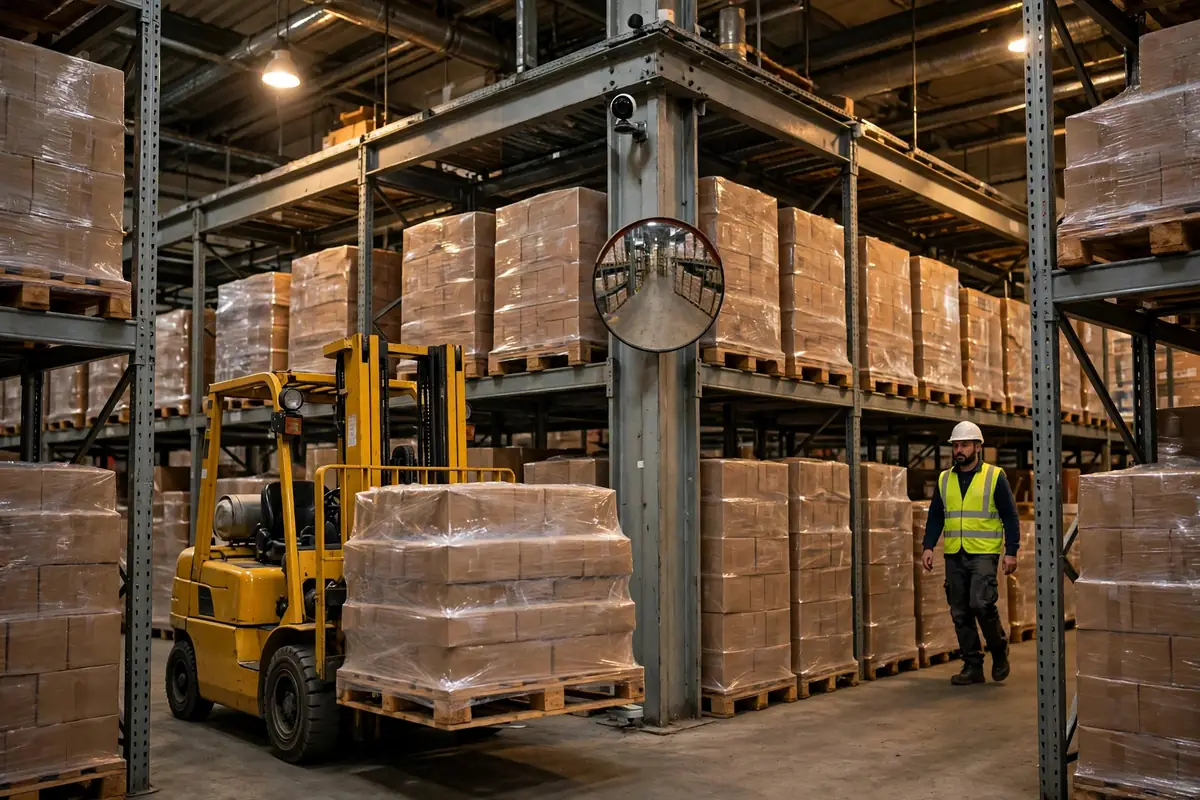
The second fix is lane splits: paint lines on the floor, people walk in the pedestrian lane, trucks drive in the vehicle lane. It sounds simple, but the details are everything. The lines have to go where the pickers naturally walk — you cannot make people take a detour just to satisfy your paint job. At every crossing, paint a zebra-style walkway, and forklifts must stop there. And here is an old trick: hang a big mirror at the end of each blind aisle, so the driver checks the mirror before turning a corner he cannot see around.
One of our customer warehouses spent less than two thousand yuan on paint and mirrors, and hard braking in the aisles dropped sharply within three months. Painting lines is cheap, but the effect is real — people know where to walk, drivers know where to drive, and nobody has to guess which way the other person is about to dodge. The worst thing you can do is paint the lines and then ignore them. Three months later the paint wears off, nobody repaints it, and you are back where you started.
One more rule that warehouse added later: no earphones in the aisles. That kid who nearly got hit was wearing his when it happened, so the manager made it a rule — one ear open at all times. The pickers grumbled for a week, then they all agreed: your life is worth more than your music.
The One-Way Loop: Drive a Little Farther, Argue a Lot Less
The third fix is a one-way loop: turn the warehouse's main arteries into one-way lanes, so forklifts only travel in one direction around the building. The drivers hated it at first, because each loop adds a hundred meters or so. But do the math. On a two-way aisle, two forklifts meeting head-on means one stops and one yields, half a minute gone each time. Meet twenty or thirty times a day, and you have lost fifteen minutes. On a one-way loop there is no meeting at all, and that extra hundred meters costs about a minute.
More importantly, the pickers know the forklift can only come from one direction. They stop looking over both shoulders, they relax, and their hands get faster. And there is one more benefit: fewer arguments. When two forklifts met head-on, nobody wanted to yield, and the horns went off like a war. With one-way traffic, there is nothing left to argue about. Drive a little farther and the whole aisle runs smooth. That is a good deal.
Three Old Fixes Together End the Forklift Picker Traffic Conflict
| Fix | What it costs | What it costs you | What you get |
|---|---|---|---|
| Time-zoning | Almost nothing | Replenishment shifts must change | The quietest aisles |
| Lane splits | Paint and mirrors, a few thousand yuan | Pickers walk a few extra steps | Hard braking drops fast |
| One-way loop | Almost nothing | Forklifts drive farther | No head-on meetings, faster flow |
Any one of these fixes alone only solves half the problem. When time-zoning is not enough, lane splits back it up. When people ignore the painted lines, the one-way loop covers for it. That warehouse I mentioned ended up using all three: replenishment before 7 a.m., the aisles belong to pickers during the day, pedestrian lanes painted on the floor, and the main arteries made one-way. Three months later, the pick rate was up by roughly ten percent, and the hard braking and shouting were basically gone.
A lot of people think the answer is more signs, more paint, more meetings. But no sign in the world can control two people who show up in the same aisle at the same time. The root of the conflict is not attitude, it is timing — the forklift and the person arrive together, and there is nothing anybody can do about it. Split the time first, then talk about paint. Get the order backwards, and no amount of money will help.
There is an old saying: sharpening the axe does not slow down the chopping. The minutes you save in the aisle turn straight into orders shipped. I have driven for fifteen years and been inside hundreds of warehouses. The ones with clean aisles always ship well. The ones where forklifts and people fight over the road every day always fall apart at peak season. Next time you walk into a warehouse, do not look at the racks first. Look at the aisles. If the forklift and the picker each have their own lane, that warehouse is going to be just fine.
By Shifu Zhao, Trucking Veteran (15 yrs)