Last October, the owner of a 3PL warehouse in Ontario, California pulled me aside with a question about forklift battery lithium vs lead acid. He ran 14 counterbalance trucks on two shifts, with 12 lead-acid batteries rotating through a charging room, and somebody still had to water them at night. A sales rep had told him lithium would run eight years with no maintenance, which sounded great, until the quote arrived: one lithium pack cost about as much as two and a half lead-acid ones. He wanted a straight answer. I told him to forget the quote for a minute and tell me how many hours a day each truck actually runs. That sounds like dodging the question. It is the line that decides the whole purchase.
Think of it like buying a car by looking only at fuel economy and never asking how many miles you drive a year. Battery life is measured in cycles, not calendar years. The industry ranges I cross-checked across several vendor guides are consistent: lead-acid delivers roughly 1,200-1,500 cycles, lasting 3-5 years with good care, while lithium iron phosphate delivers roughly 3,000-5,000 cycles, lasting 8-10 years. Lithium costs roughly two to three times as much up front, and lasts roughly two to three times as long. Looked at that way, neither side wins. The difference shows up in how you use the truck.
Forklift Battery Lithium vs Lead Acid: Start With Shifts, Not Specs
A single-shift warehouse is a different business from a two-shift one, even with the same trucks. One shift, six to eight hours a day, leaves the whole night for charging, and the old lead-acid rhythm fits perfectly: about eight hours to charge, about eight hours to cool, and the battery is full again by morning. Switching that warehouse to lithium mostly saves watering and maintenance labor, which does not add up to much in a year, so payback stretches out. Published vendor estimates put payback at roughly 2-4 years for multi-shift operations and 4-6 years for single-shift ones. That gap is not a sales pitch. It is arithmetic driven by utilization.
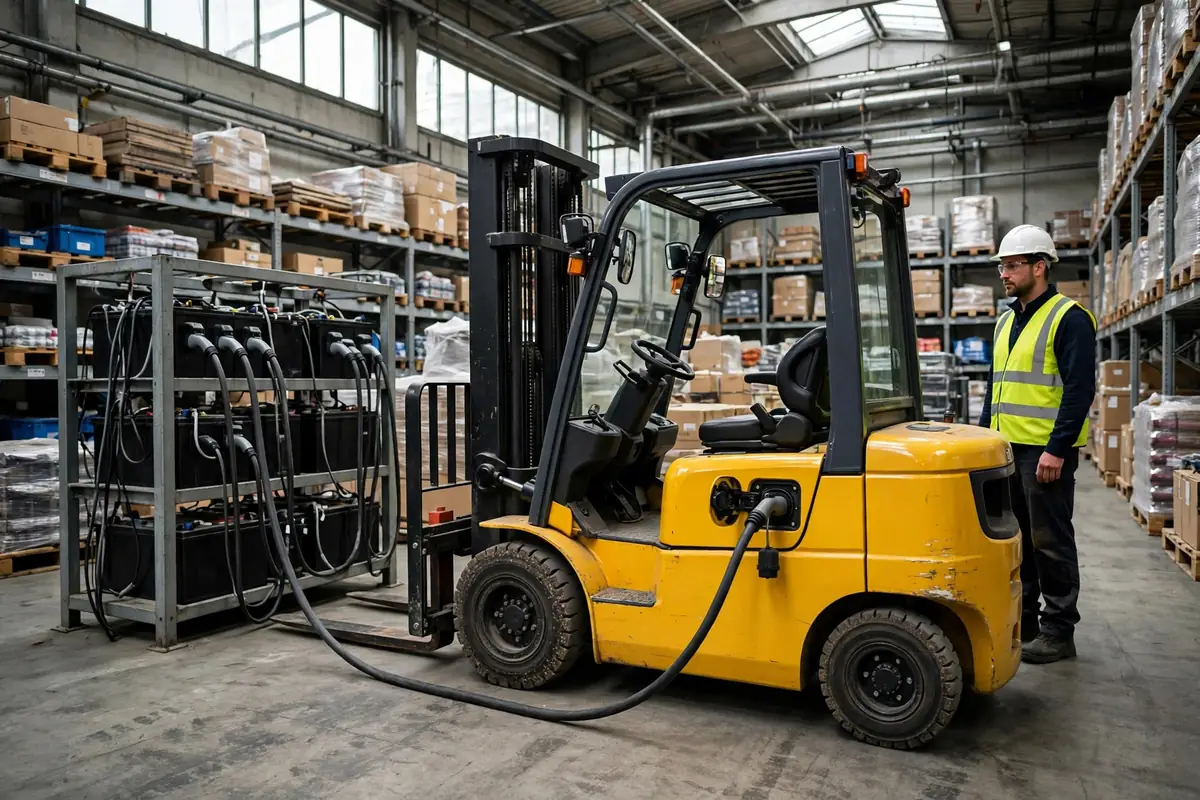
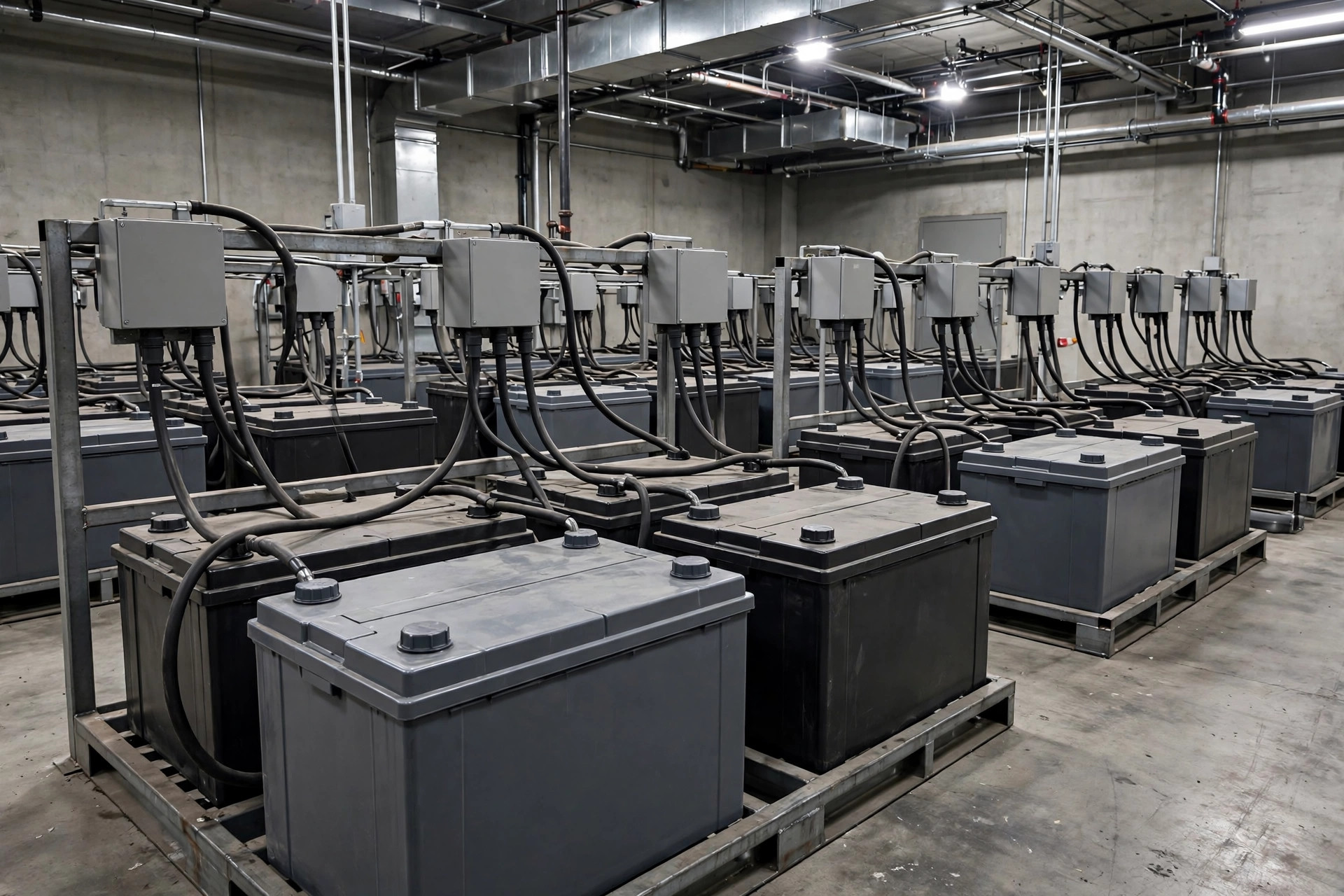
Run two shifts and the forklift battery lithium vs lead acid picture flips. In 2024 I worked with an e-commerce warehouse in the Inland Empire running 32 trucks on two shifts, with overtime in peak season. The lead-acid rule is 8 hours of work, 8 hours of charging, and 8 hours of cooling, so one battery can only serve one shift. Running two shifts meant double the batteries, a charging room full of racks, and 15-20 minutes per swap with a dedicated operator. After switching to lithium, drivers plugged in for half an hour at lunch and kept running. No swaps, no spares, and half the charging room became staging space. The owner told me the saving was not the electricity bill. It was the swap operator's wages and the rent on that room.
A third kind of warehouse gets talked into lithium most easily, and needs it least: plenty of trucks, each running only three or four hours a day. That fleet might log fewer than 300 cycles a year per battery, so a lead-acid pack may never reach its cycle limit in five years. Paying for lithium longevity there is like buying a race fuel tank for a car you drive 20 kilometers a day. When a rep talks about cycle life, ask how many cycles you actually run in a year. If you cannot use the life, the life is worth nothing.
The Real Cost of a Forklift Battery Hides in the Charging Room
Most buyers weighing forklift battery lithium vs lead acid calculate two lines: the purchase price and the electricity. Those are the two least important lines. Charging efficiency runs about 80-85% for lead-acid and about 95% for lithium, which works out to tens to a couple of hundred dollars per truck per year. Real money across a fleet, but not the deciding money. That sits in three other places.
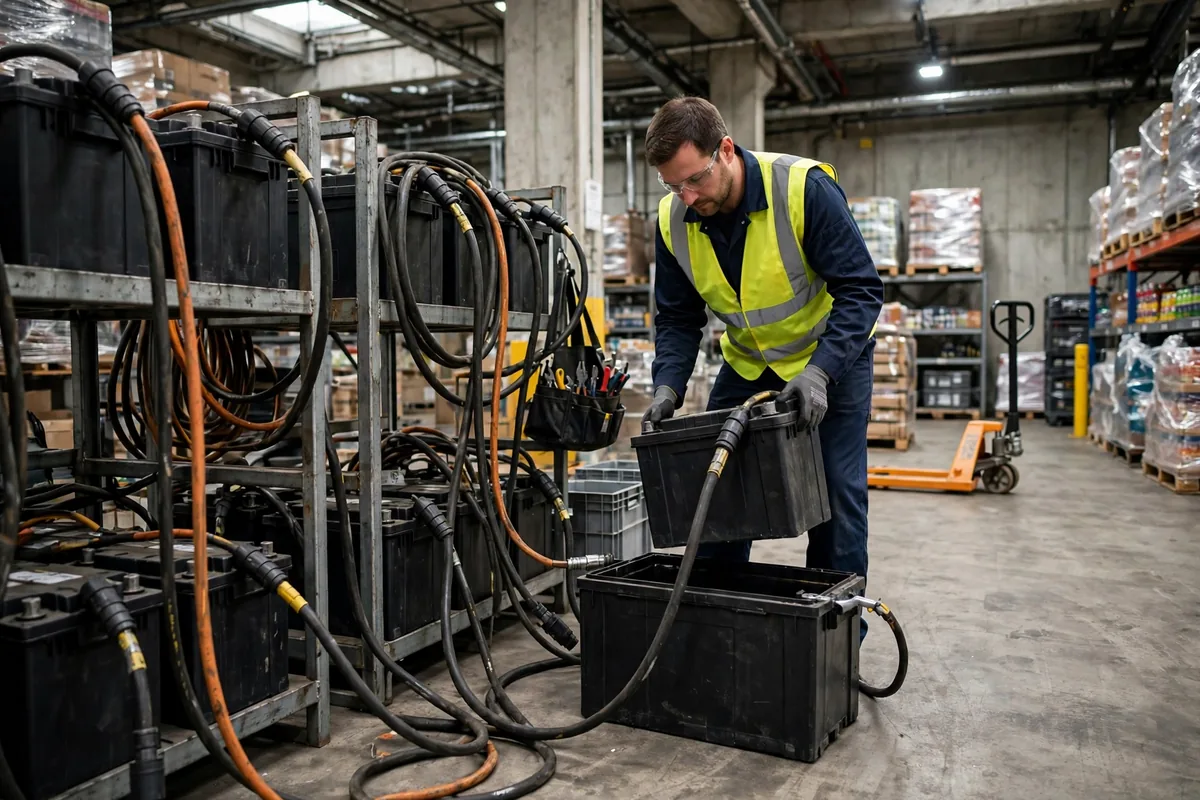
The first is watering and swapping labor. Lead-acid needs regular watering, terminal cleaning, and equalization charges. Small jobs, but they accumulate fast. One vendor estimate puts lead-acid maintenance at dozens of hours per battery per year, against almost none for lithium. A 20-battery fleet is looking at more than a thousand hours a year. At 25 dollars an hour, that is twenty to thirty thousand dollars a year. That is not a number I invented; it is the vendor's maintenance-hour range multiplied by a local labor rate, and you should redo it with your own timesheets.
The second is spare batteries and floor space. Multi-shift lead-acid needs a second set of batteries plus a ventilated charging room. Lithium needs one battery per truck and chargers that can sit near the work area. I have seen a cold-storage warehouse where lead-acid packs faded so fast in sub-zero temperatures that two or three trucks would not start on a winter morning. Lithium handled the cold far better, and cold storage deserves its own line in the calculation.
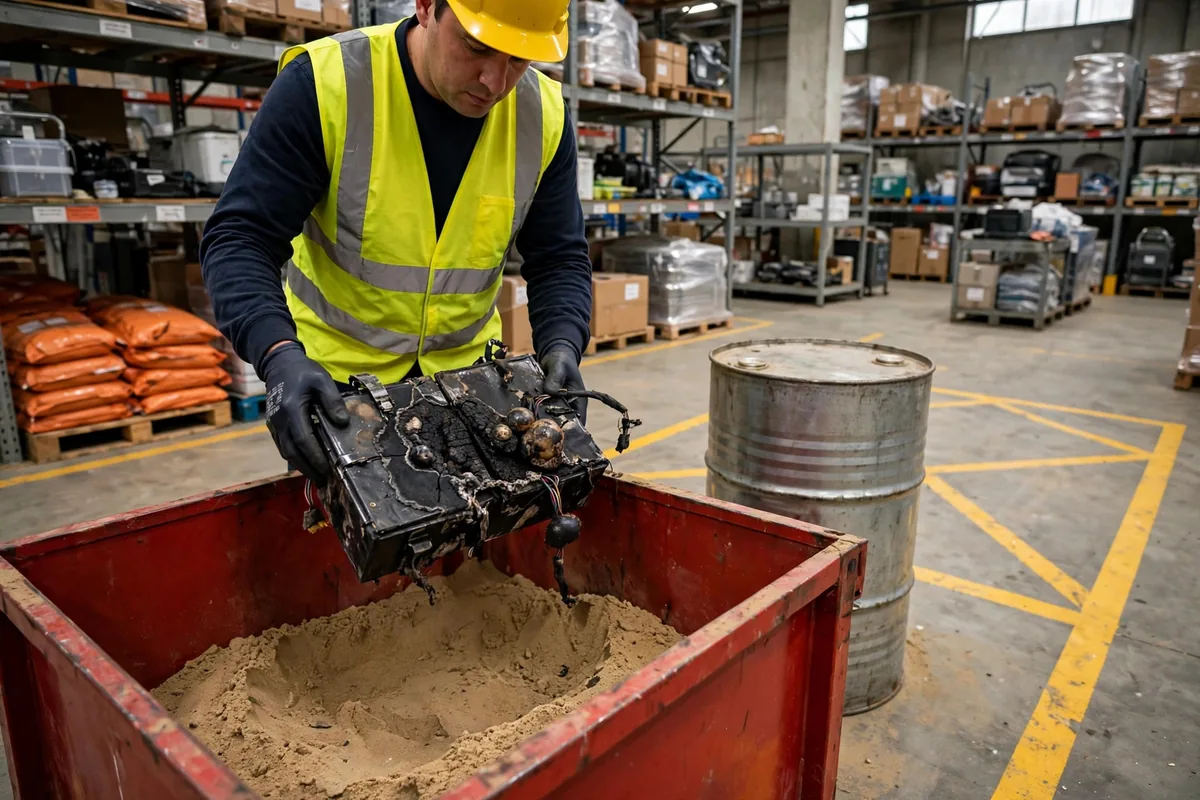
The third is risk and fine print. Lead-acid holds sulfuric acid, leaks need cleanup, and charging releases hydrogen that needs ventilation. Lithium is sealed, with no watering and no acid. But lithium has its own trap: battery management systems vary widely, and warranty wording matters more than headline price. I have seen a quote 20% cheaper than the competition with a warranty of only three years, which made it the more expensive pack over its life. Check whether the warranty is written in cycles or in years, and what capacity loss counts as a claim.
| Factor | Lead-acid | Lithium (LFP) |
|---|---|---|
| Cycle life | About 1,200-1,500 cycles | About 3,000-5,000 cycles |
| Calendar life | 3-5 years | 8-10 years |
| Full charge | About 8 hours, plus about 8 hours cooling | About 1-2 hours, no cooling needed |
| Opportunity charging | Not recommended, shortens life | Designed for it, 15-30 minutes tops up a useful amount |
| Routine maintenance | Regular watering, terminal cleaning, equalization | Nearly none, periodic connection checks |
| Charge efficiency | About 80-85% | About 95% |
| Upfront price | Lower | Roughly 2-3 times lead-acid |
Every number in that table is a commonly published industry range, not a specification for one brand or model. Use the range to negotiate, and confirm the exact figures against the warranty document for the pack you are actually buying.
One Number Decides Whether the Lithium Switch Pays
After all of that, the dividing line comes down to one number: how many hours a year each truck runs. A rough rule of thumb used across the industry is 1,500 hours a year. Below that line, single shift and light duty, lead-acid is probably the cheaper choice. Above it, multi-shift and heavy duty, lithium pays back noticeably faster. That line is not a law. It is a ruler for a quick read, and a warehouse sitting near it should redo the calculation with its own labor cost and floor rent.
Here is a worked example, labeled as an assumed scenario: that Ontario 3PL with 14 trucks on two shifts. Lead-acid needs 28 batteries plus a charging room; lithium needs 14 batteries plus a few chargers. Using published price ranges of about 3,000-5,000 dollars per lead-acid pack and about 6,000-25,000 dollars per lithium pack, taking mid-range values, adding one lead-acid replacement inside five years against none for lithium, plus the annual maintenance labor difference, the two totals come out close over five years, with lithium pulling ahead from year six. That is an assumed scenario, not a quote. Run it again with your real prices and the answer may be completely different.
The counterintuitive part is this: most of the money lithium saves is not in electricity and not in the battery itself. It is in the system you stop feeding around lead-acid: the swap operator, the watering cans, the ventilated charging room, the spare battery racks. None of those show up in a battery quote, and all of them cost money every day. Flip it around, and a single-shift warehouse that switches to lithium loses for the same reason: it pays for life and speed it will never use.
So my advice is blunt. Count three things before you sign anything: hours per truck per day, cycles per year, and what watering and swapping cost you in labor each year. Put those three numbers on the table and the answer usually writes itself. If you land near the line, do not convert the whole fleet at once. Convert the two or three hardest-working trucks, run them for a quarter, and let the data decide the rest. Two trucks in a trial tell you more than ten sales presentations.
By Da Liu, Automation Engineer