Let me give you the verdict first: for a high-bay warehouse with 12 meters of clear height, ESFR is the only sprinkler choice. I'll stand behind that statement all day.
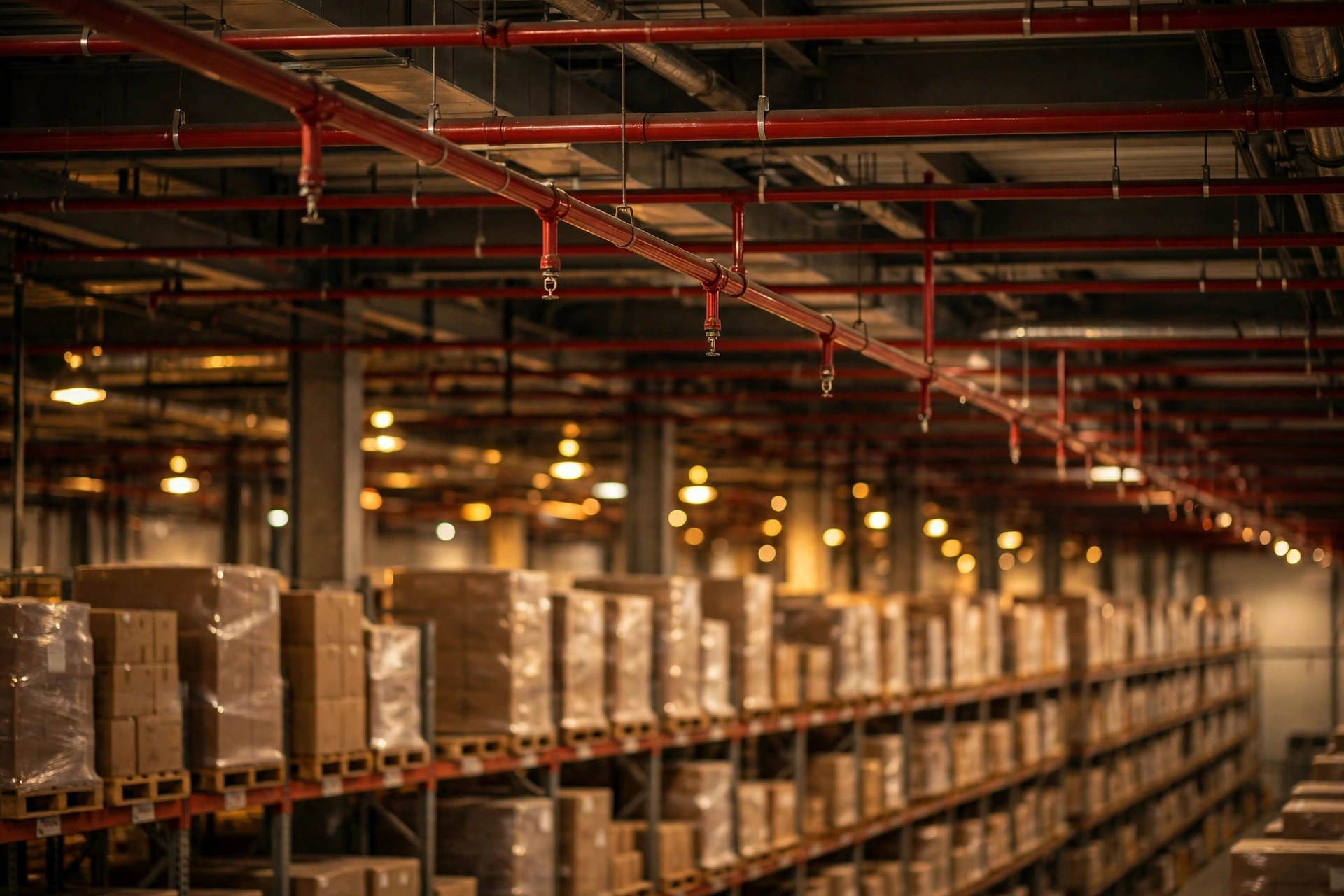
Now, two sides to this. ESFR is expensive — genuinely expensive. It demands a much larger water supply, which means a bigger pump room, larger pipe diameters, and sometimes on-site water storage. The upfront cost runs well above a standard sprinkler system. But at 12 meters, if a fire starts mid-rack, water from ceiling-level standard heads has to fight its way down through layers of racking and product. By the time it reaches the fire, there's not much punch left. ESFR works on a different logic: early suppression, fast response — overwhelming water volume that kills the fire while it's still small. At this height, picking anything else is negotiating with physics.
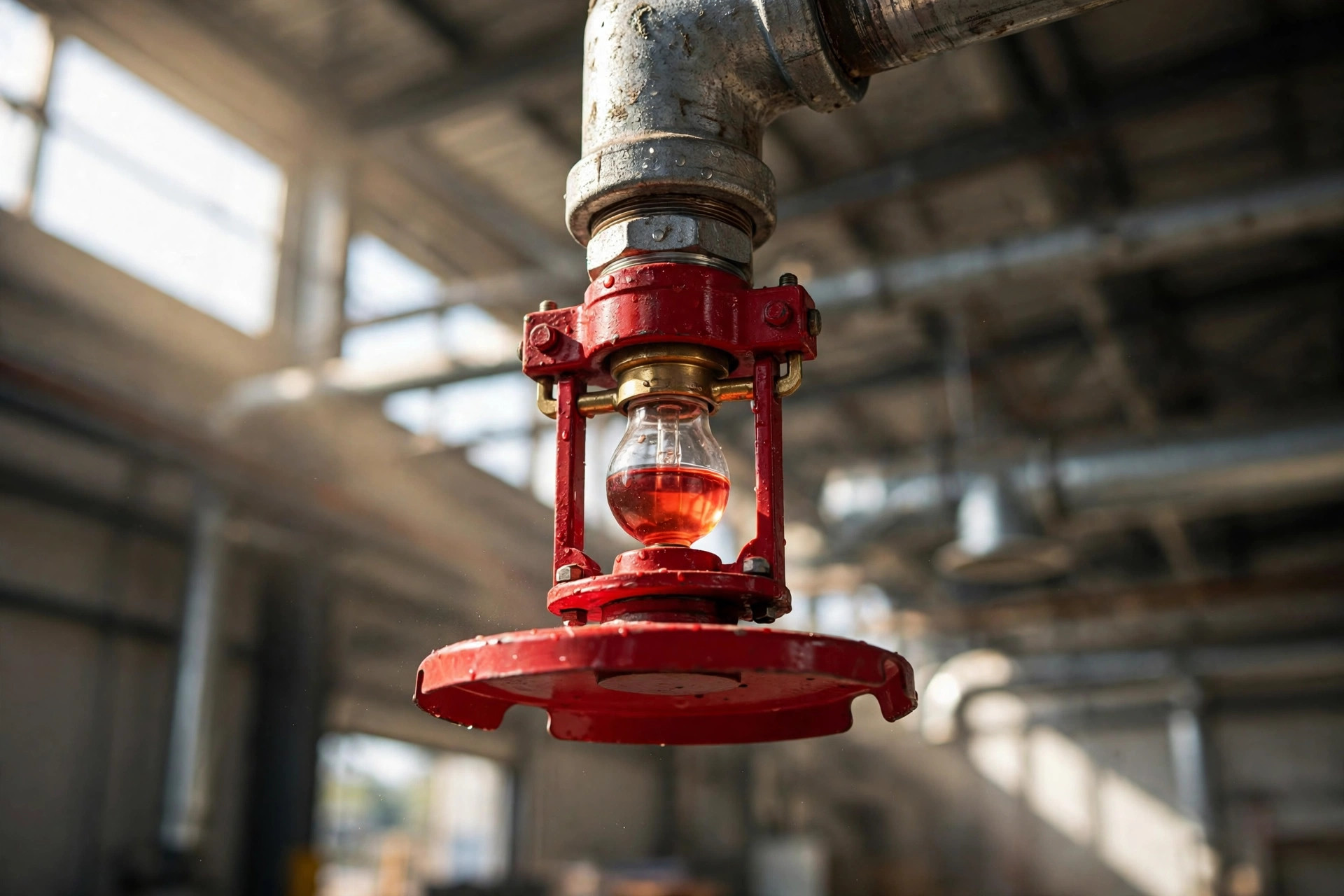
ESFR stands for Early Suppression Fast Response. The name tells you the whole philosophy: don't wait for the fire to grow, drown it in its crib.
Where does the money actually go? Not the sprinkler heads — those are the cheap part. The money goes to water. Municipal supply usually can't deliver the flow and pressure ESFR needs, so you're building a pump room, upsizing pipes, and adding storage. Civil work plus equipment. That's why owners choke when they see the first quote: a handful of sprinkler heads can't cost that much — and they don't. The water system does.
But here's the trade-off nobody mentions: that same overwhelming water volume is also ESFR's hidden cost. If a head discharges accidentally, the water damage is on a different scale than a standard head. One false trip can soak half the building. So a warehouse with ESFR needs to be more careful about temperature ratings and preventing accidental activation. That's the deal — you buy fire-killing power with water volume, and the price is a smaller margin for error. There's no free lunch in fire protection either.
I've watched too many people try to economize on fire protection. The endings all rhyme. Here's one I saw up close.
The warehouse that saved on sprinklers and paid double at inspection
In 2023, a 3PL doing e-commerce fulfillment in California's Inland Empire leased a new high-bay building with 12-meter clear height, planning to move several thousand daily orders in. The fire protection contractor offered two options: ESFR done right the first time, or standard ceiling sprinklers plus in-rack heads threaded through every rack level. The second option came in nearly thirty percent cheaper. The owner did the math — the savings would buy two new forklifts — and picked the cheap one.
Construction went smoothly, three months, done. Then came the fire inspection. The AHJ — the authority having jurisdiction, the one person whose opinion actually matters — walked the building and rejected the system outright: at this clear height and storage density, standard sprinklers with in-rack heads don't provide adequate protection; it had to meet the highest standard for high-piled storage. A correction notice landed, which meant tearing it out and starting over.
The retrofit took two months of downtime. Rent kept running. Customer freight had to be shuttled through a temporary warehouse, and the peak-season stocking plan fell apart. When the final bill came in, the rework cost more than ESFR would have cost in the first place. The owner told me later: "Lao Mi, the money hurt, but those two months hurt more — we almost lost a major client, and you can't put a number on that."
That's the cruelest rule of sprinkler selection: the risk of the cheap option never shows up on installation day. It shows up on inspection day. You think you're saving on sprinklers; what you're actually doing is betting the fire department will accept your design. At 12 meters, they generally don't negotiate.
There's a second lesson, and it's about insurance. In 2024, another owner — slightly lower clear height, so his standard-plus-in-rack system did pass inspection — thought he was the success story. Then the insurance carrier came for its underwriting survey. The surveyor reviewed the sprinkler design and gave him a choice: upgrade the system, or pay a higher premium. He chose the premium. Over three years, the extra premium exceeded what he had saved on sprinklers. Every dollar saved on fire protection got paid back to the insurer with interest.
The real math: what ESFR costs versus what it's worth
Pits covered, let's do the accounting. Here's the honest side-by-side:
| ESFR | Standard sprinklers + in-rack | |
|---|---|---|
| Upfront cost | High — big water demand, pump room and pipe upgrades | Low — the quote can run 20–30% cheaper |
| Piping complexity | Simple, mostly ceiling-level | Complex, pipes threaded through every rack level |
| Day-to-day maintenance | Easy — heads are on the ceiling, forklifts can't reach them | Painful — in-rack heads are a forklift's favorite target, and getting clipped is routine |
| Rack layout flexibility | High — rearrange racks or add levels without touching sprinklers | Rigid — move a rack and the sprinklers move with it, then re-inspection |
| Inspection risk | Low — the standard answer for high-bay | High — 12 meters gets scrutinized hard |
| Insurance | Carriers generally prefer it | Possible premium loading, sometimes coverage issues |
Note: specific water volumes, pressures, and head spacing follow the current NFPA 13 edition and your local fire department's requirements — I won't quote standard details here.
Hidden inside that table is a trade-off most people miss: ESFR decouples the fire system from the racks. You can rearrange layouts and change product mix without redoing fire protection. With in-rack sprinklers, the fire system grows out of the racking — move the racks and everything moves. For e-commerce and 3PL operations where the product mix changes every year, how much is that flexibility worth? Run the numbers yourself.
And the maintenance row deserves a second look. In-rack heads getting clipped by forklifts — I hear about it several times a year. One broken head means depressurizing the system for repair and moving product out of the way. The head itself is cheap to fix; the labor and downtime aren't. ESFR heads live on the ceiling where forklifts can't reach them. That one design detail pays for itself many times over.
Then there's the invisible ledger: in-rack piping runs inside the racking, where pallet jacks and hand carts bump into it during daily cycle counts and replenishment. I know a warehouse where in-rack piping got knocked loose twice in three years, each time requiring an emergency water shutdown. A system with constant small failures wears down an operations team. ESFR piping lives up high, out of sight and out of mind — you might go a decade without thinking about it. The best fire protection system is the one you forget exists.
Three things to do so you don't learn this the hard way
First, don't design this yourself. Hire a fire protection contractor with high-bay experience in your area, and take the preliminary design to the fire department for a pre-submittal conversation. Acceptance criteria vary by jurisdiction; one early conversation saves two months of rework. Pre-consultation is free. Rework is not.
Second, for the actual NFPA 13 requirements — water volumes, pressures, spacing — go by the current edition on NFPA's official site, not by a contractor's "this is how we've always done it." Standards get updated. What passed five years ago might not pass today. That's non-negotiable.
Third, bring your insurer into the conversation early. Too many owners remember insurance after the system is installed, then the carrier demands changes and they're negotiating from a weak position. ESFR usually sails through underwriting, but confirm the terms before you build, not after the policy arrives.
Fire protection is the only system in a warehouse where you pay good money and hope to never use it. And precisely because you hope to never use it, everyone's tempted to economize on it. But twenty years in this business has taught me the pattern: every dollar saved on fire protection gets paid back double — at inspection, at insurance renewal, or in rework.
For a 12-meter high-bay, ESFR is expensive for good reason. Spend the money now and spend it well, or keep it and spend double later. Your call.
By Lao Mi, Supply Chain Veteran (20 yrs)