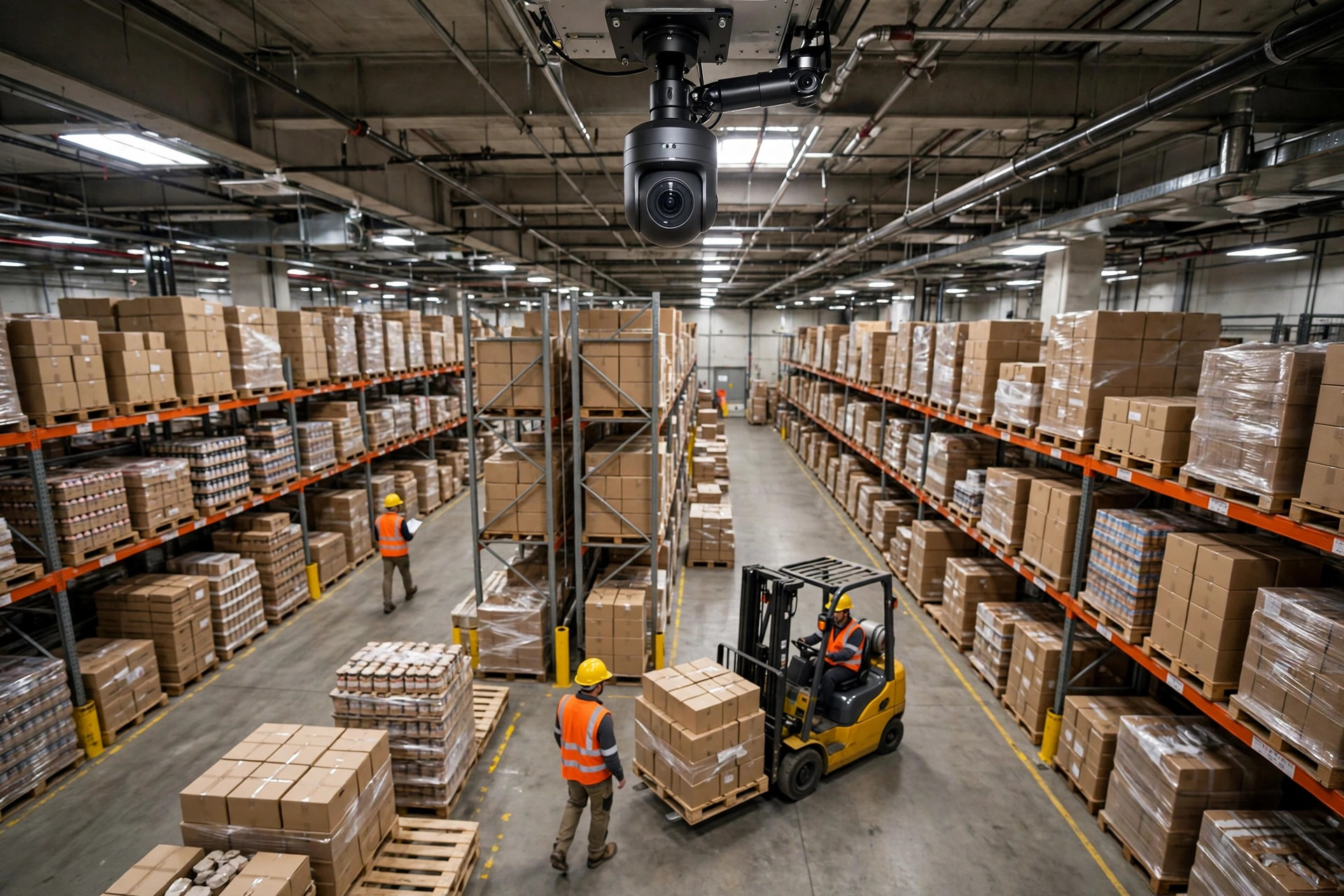
Here is the verdict up front. Warehouse fire drill frequency is not a contest to see who can drill the most, and it is not a once-a-year box to check either. The real question is whether the night shift can get out on its own when nobody is there to direct traffic. I have seen too many warehouses run a beautiful daytime drill, everyone assembled in three minutes, and then at night, when a smoke alarm actually goes off, one person is up on a forklift and another is dozing in the office, and nobody can remember where the muster point is. Put plainly, drills exist for your weakest shift, not for your strongest one to perform.
There are two sides to this. One side is compliance: required frequency, records, and participation vary by local fire authority and insurer, so check the latest official requirements for your jurisdiction rather than copying another warehouse. The other side is reality: passing the compliance bar does not mean people can actually get out. The problem is not the frequency number but that every drill happens in daylight, at full staffing, with advance notice — a rehearsal, not a drill.
What warehouse fire drill frequency really costs, starting with the night shift
I have seen too many managers price drill frequency from one side only. They price the daytime shutdown. A full drill stops work for thirty minutes to an hour, and in peak season that hour is real money, so frequency gets squeezed down to once a year, on a quiet afternoon, and everybody is happy. But that math leaves out the other side. A fire at night is no less likely than one during the day, yet the night crew is a fraction of the daytime headcount, and their reaction time is longer. Twenty people in daylight remind each other and move together. Three people at night are each doing their own job. When the alarm sounds, someone has to figure out whether it is real or false, find the radio, and decide which door to take. Time burns away in those small decisions.
Picture an illustrative scenario: a night shift of three, one on a forklift in high-bay, one counting freight at the dock, one doing paperwork in the office. At 2 a.m. the alarm sounds. The driver must park, lower the forks, kill the engine, then walk to the muster point — two or three extra minutes alone. The office worker confirms the alarm location and radios the other two, then the three meet and count heads. The whole sequence takes more than twice as long as the daytime version. The figures are illustrative, but the extra time is real, and a night drill exists to find it, not to pretend it away.
So I set drill frequency by shift, not one warehouse-wide number. The day shift gets full drills covering every employee, and the night shift gets its own separate drills, with notice only that one will happen sometime that month, never the exact time. Give people the exact time and the drill becomes a rehearsal: they memorize the route and forget it the next day. As for how many times a year, I will not hand out a universal number — local codes and insurance terms differ, so check the latest official requirements for your jurisdiction. On top of that baseline, my working rule is one or two extra drills for the night shift alone, practical advice, not a legal requirement.
Price the whole thing, not half of it. A night drill is cheap in direct cost, since volume is low at night and the shutdown costs little. The real cost is managerial hassle: someone has to show up at 2 a.m. to run it, record it, and debrief it. Plenty of warehouses know the night shift needs drilling; nobody wants to be the one to come in at night to run it. But that hassle is traded against a real incident, measured in injuries and days of shutdown, and the two sides are not in the same league. You save a little managerial inconvenience and gamble the escape capability of your weakest shift.
Three places the night shift usually fails in a fire drill
The first failure point is a roster that says who is on duty but not who does what in an evacuation. Daytime has shift leads and safety officers, and the chain of responsibility is clear. At night there is often just a roster with names on it. It does not say who counts heads, who kills the power, or who does the last sweep. When the alarm sounds, everyone assumes someone else is counting, and nobody counts. The fix is simple and costs nothing. Write the evacuation roles directly onto the night roster, name one muster point leader per shift, rotate the person but never leave the role empty.
The second failure point is doors and aisles. The exits people use during the day may be half-locked at night for security, and the shortcut someone walks every day may be blocked by pallets during the drill. In one illustrative scenario, an employee running from the pick area to the muster point found the usual aisle half blocked by a row of outbound pallets, and the detour added more than a minute. The detour itself is not the problem. The problem is that the aisle looked open during the day and was not open at night. My rule is that a night drill must use the doors and aisles actually in use at night. Never clear a special route for the drill that nobody walks on a normal night. A drill should test the real state, not the ideal one.
The third failure point is communication. During the day, a shout carries. At night, with few people around, a dead radio battery, a phone left charging, or forklift noise can mean a call goes unanswered. A drill has to test communication too. Can everyone be reached within the first minute after the alarm, and what is the backup plan when someone cannot be reached? The backup plan can be crude, like a designated meeting spot for anyone who cannot be contacted. A crude plan that has been practiced beats a sophisticated plan that has never been tested.
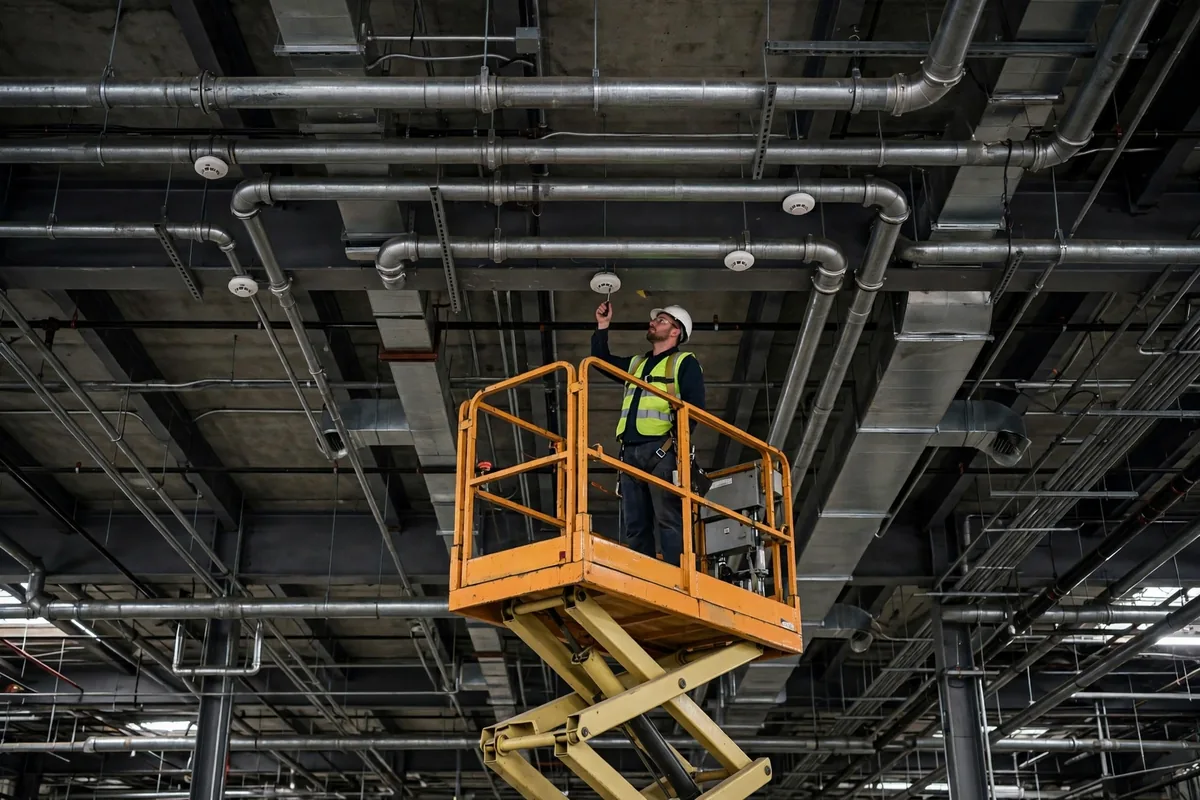
What these three failure points share is that none of them is an equipment problem. They are management problems, and a warehouse fire drill that never tests them is testing the building, not the people. Equipment can be bought. Management can only be worked out drill by drill. Plenty of warehouses buy the best smoke detection and sprinklers and then cut corners on the duty roster, which is money spent in the wrong place.
A muster point is not a circle painted on the ground
The muster point looks like the simplest item on the list. Paint a circle, hang a sign, done. In practice it causes the most trouble. First, location: far enough from the building, clear of fire lanes and loading areas, lit well enough at night? That needs a site walk, not a drawing. Second, the headcount: counting is not counting heads, it is checking names. If one of three is missing, the other two need to know who, and where that person was last seen. Third, what happens after assembly: where do people shelter, and where do they wait for instructions? If the drill never covers that, people will drift away in a real incident.
My practice is to walk the muster point every quarter with the night crew, for real, starting from each person's actual workstation and running the headcount procedure. Then debrief on the spot: where did someone take a detour, where did the route jam, whose route was longest. Fix it there and then, and walk it again until every person on the night shift can describe their route and name the muster point leader without thinking. That sounds strict, but escape is one of those things where a strict standard is not a bad thing. A warehouse fire drill should end at the muster point, not at the door.
So here is the question I will leave you with: when was your warehouse's last night drill, and were the night people actually working, or called to stand near the muster point in advance and wait? If the latter, you did not drill the night shift — you drilled a shrunken daytime shift. A real night drill should make a manager lose a little sleep, because it tests the weakest link, and the weakest link is the one tested first when something goes wrong.
By Lao Mi, Supply Chain Veteran (20 yrs)