Excerpt: A warehouse emergency order priority queue is not "whoever shouts loudest ships first." It is a gated green lane with an entry rule, a grading system, and a daily cap — and this guide gives you the checklist to run one without wrecking normal orders.
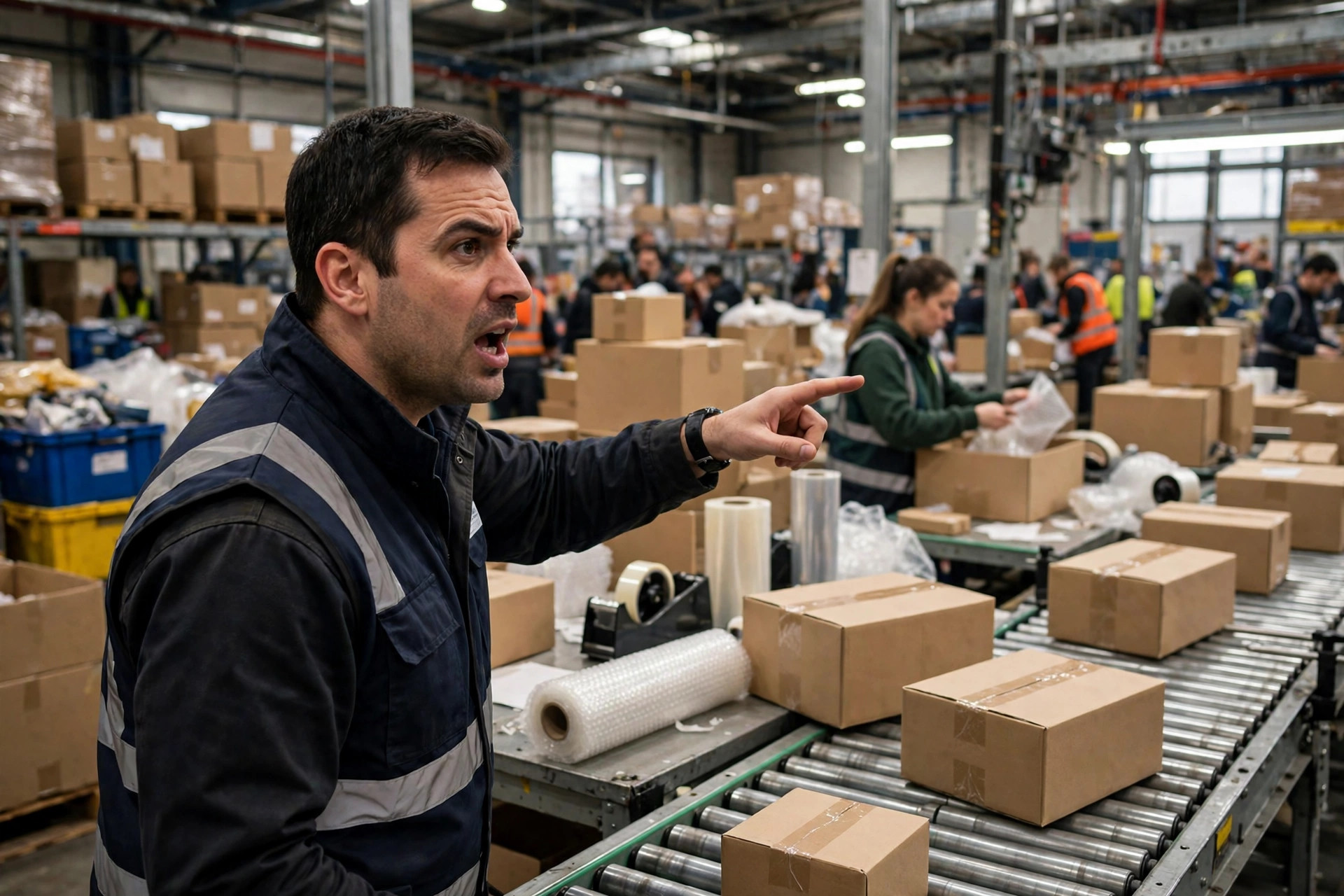
The conclusion first: you can open a green lane, but only if it has a gate. An ungated rush lane does not save one customer; it turns one customer's emergency into everyone's chaos. I have watched warehouses treat "urgent" as a spoken label, where a phone call is enough to jump the queue, and the result is always the same — pickers interrupted five or six times a day, on-time rates for normal orders sliding, and the urgent customer not even feeling well served, because when everything is urgent, nothing is.
Warehouse Emergency Order Priority Queue Step One: Define "Urgent" in Writing
The first job in any warehouse emergency order priority queue is to define urgent as a standard, not a feeling. I recommend recognizing only four categories: orders feeding a stopped production line, time-critical medical or emergency supplies, orders with contractual penalties for lateness, and orders where a promised cutoff has already been made and missing it creates a clear, specific loss. Everything else — "important customer," "the boss asked" — goes through the normal flow, or through a rush-approval path that is explicitly not the green lane.
In May 2023, an electronics-components warehouse near Suzhou learned this the hard way. Sales had flagged more than a dozen orders as urgent, all justified as "key account." Pickers worked the flags in order, and the one order genuinely feeding a stopped line ended up behind the rest. The line waited half a day. I have seen this exact failure three times, and the root cause is always the same: the definition of urgent lives in someone's mouth instead of in the system. If the definition is not written down, the priority is just paper.
Warehouse Emergency Order Priority Queue Step Two: Who Approves, and How Many Per Day
A green lane needs two gates: an approver and a daily cap. Keep approvers to two or three people who can see the whole day's order picture, not sales staff who only see their own accounts. Set the cap by working backward from capacity. As a worked example: if picking capacity is two thousand lines a day, a five to ten percent cap means one hundred to two hundred rush lines. An urgent order beyond the cap either waits for tomorrow's allowance or goes to a higher approver, with the reason recorded.
In March 2024, a consumer-electronics warehouse near Shenzhen put this rule live: rush orders required approval in the system by the operations manager, and the system checked the day's remaining allowance automatically, bouncing anything over the cap. Sales complained in week one that the process had slowed down. By week two, on-time rates had recovered, because pickers finally stopped switching tasks every half hour. The value of a green lane is not speed alone. It is predictability: approved orders really do ship on time, and unapproved orders know where they stand.
The Execution Checklist for a Warehouse Emergency Order Priority Queue
A green lane that actually runs has to pass every item on this checklist. Skip one, and it will show up on the floor:
- At intake, validate the urgency category. Anything outside the four categories does not enter the lane, and the rejection reason is logged.
- At approval, check the day's allowance. When the allowance is used up, the lane locks, and over-cap orders need higher approval.
- Build rush picks as their own wave. Do not inject rush lines into a normal wave already in progress and break its rhythm.
- When a picker receives a rush task, the system also shows the expected delay for the orders being displaced. Nobody on the floor should have to guess.
- Before dispatch, recheck the carrier cutoff and pickup time. A rush order that misses the truck is no better than a rush order that was never prioritized.
- At day's end, review three numbers: rush on-time rate, delay distribution for displaced orders, and the number of over-cap approvals.
The most commonly skipped item is the fourth. Displaced orders do not disappear; they are simply late, and how late they are, and whether that lateness breaks a customer promise, must be visible on the floor. Invisible delays become customer complaints, and by then "we had a rush order" is no longer an explanation anyone accepts.
The Counter-Intuitive Truth: More Rush Orders Mean Slower Output Overall
Many managers assume that opening the rush lane wider shows customers they care. The opposite is usually true. In September 2024, an apparel warehouse in Shanghai let its rush share reach about thirty percent during a promotion. Pickers switched tasks so often that travel time and search time both rose, and total daily output fell by more than ten percent compared with a normal day. The mechanism is switching cost: every insertion is a task switch, and a switch produces no shipments, only disruption.
So the cap on a warehouse emergency order priority queue is not a guess. It is calculated: start from daily picking capacity, estimate how much capacity one switch costs, and work backward to how many switches the day can absorb. Beyond that number, the lane stops rescuing emergencies and starts manufacturing them. It is better to let one rush order queue than to let the whole floor go chaotic on its behalf.
A Three-Level Grading Table Is Enough
| Level | Definition | Service commitment | Approver |
|---|---|---|---|
| Level 1: Line-stop and emergency | Stopped production line, emergency supplies, contractual penalty risk | Picked and shipped within the shift | Operations manager |
| Level 2: Promised cutoff | Cutoff already promised, clear loss if missed | Prioritized within the day's waves | Shift lead, countersigned by operations manager |
| Level 3: Customer rush request | Customer wants it early, no specific loss | Inserted between normal waves, never interrupting a wave in progress | Shift lead |
Three levels are enough. Five or eight levels only give the floor more room to haggle, and you end up back at "whoever shouts loudest ships first." Post the table on the floor, and make it a dropdown in the system, not a free-text field. Free-text urgency reasons can say anything, which means they can justify anything, which means they justify nothing.
The Test of a Good Green Lane
Judge a green lane by two numbers together: the on-time rate of rush orders, and the on-time rate of normal orders after displacement. When both hold steady, the lane is working. When only one holds, the other will eventually push back. Write the definition into the system, size the cap from real capacity, and put displaced-order delays where everyone can see them. Then the lane can keep running shift after shift, instead of depending on someone shouting across the floor every time an emergency arrives.
By Lin Xiao, WMS Implementation Consultant