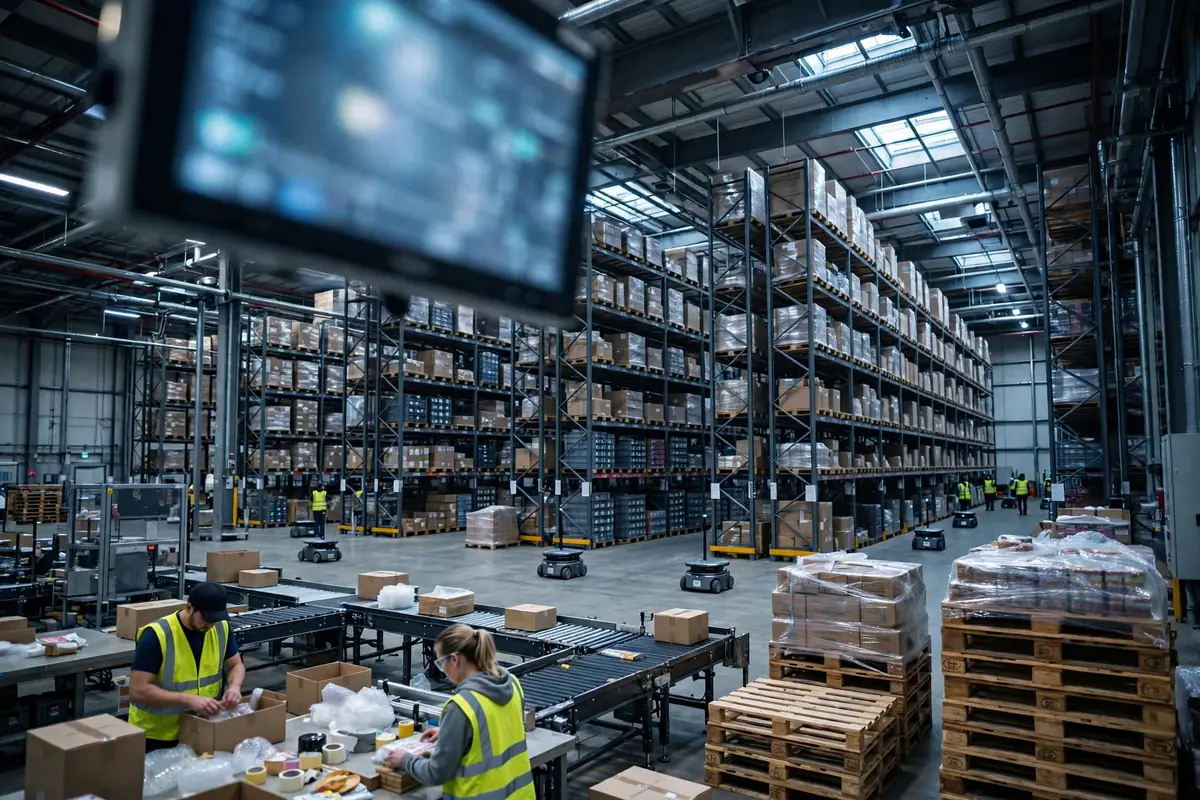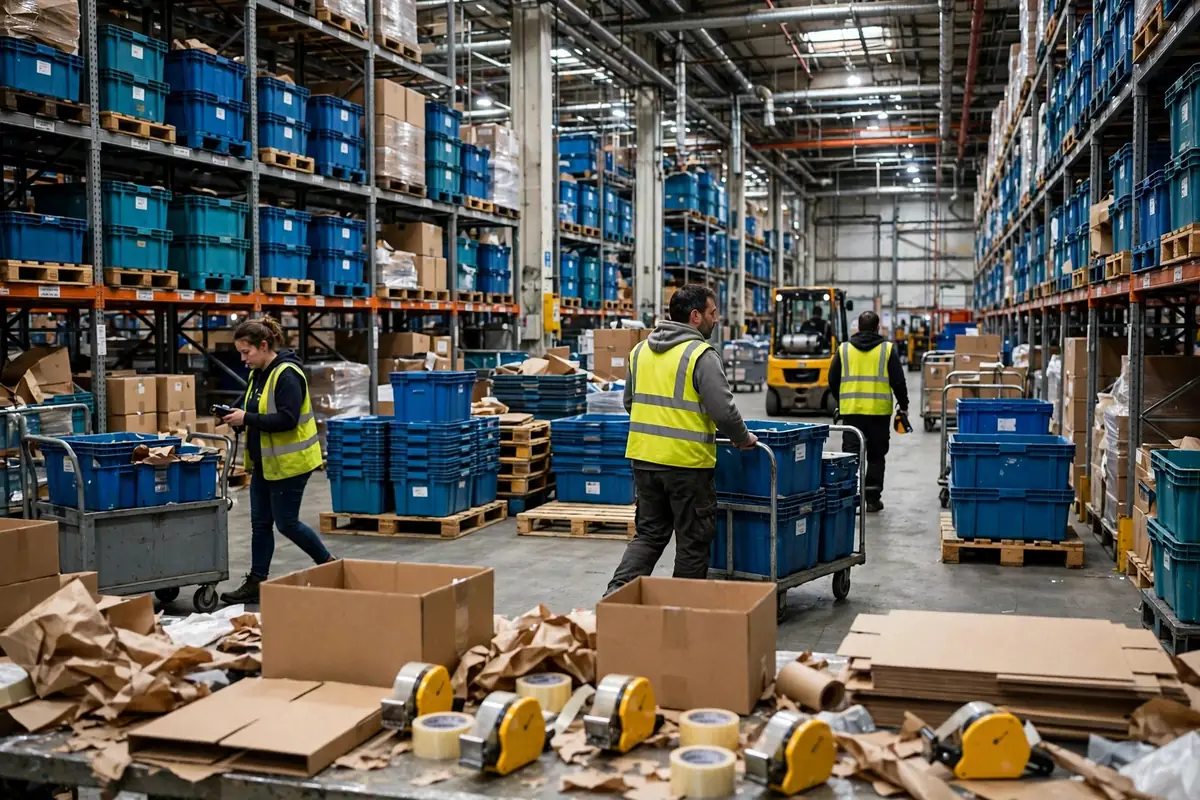
Let me start with an embarrassing night. That night was my first real lesson in wave picking vs cluster picking. The week before a big sales event in November 2023, our little warehouse — under 20,000 square feet — suddenly took 900-plus orders in a day. I copied the big warehouses and ran wave picking: build a wave, pick in bulk, sort it back to orders, then pack. The flow chart looked beautiful. At 11 p.m. I was on the floor with two packers, hunting for the right pair of socks in a mixed pile of goods. Wave picking was not wrong. Our order profile was simply wrong for it. A small warehouse like ours cannot afford that kind of money, and definitely cannot afford that kind of time.
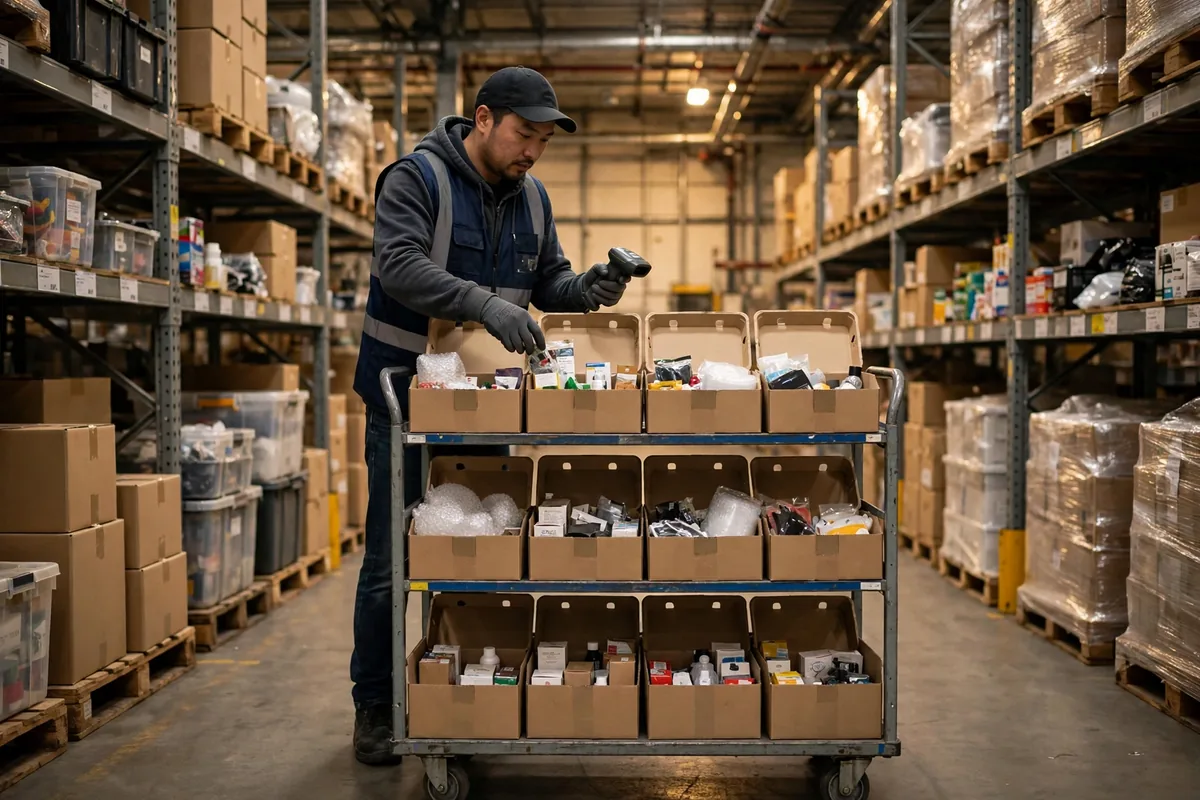
After that I switched to cluster picking — one person, one cart with a dozen totes, picking a dozen orders in a single walk, coming back ready to pack. The rest of that week actually went smoothly. This piece is about wave picking vs cluster picking without the vendor talk: not which one is more advanced, but which one fits your orders.
Wave picking vs cluster picking: it is the order profile that decides
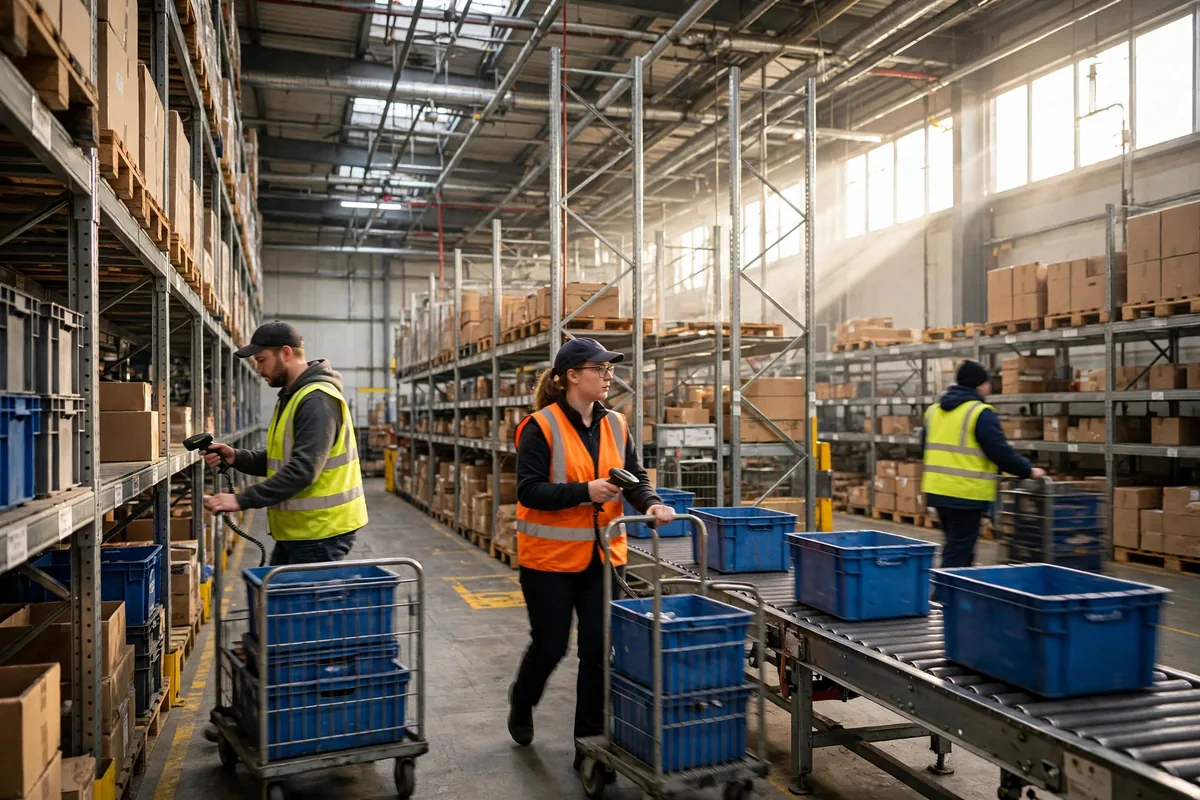
In plain language: wave picking groups a batch of orders into a wave, picks the total quantities by SKU or zone, then sorts everything back down to individual orders in a second step. Cluster picking sends one picker out with a multi-compartment cart to pick several orders at once, already separated into totes, so there is no second sort.
What decides between them is not warehouse size. It is order structure. After my floor-sitting lesson I made a rough table and taped it opposite the packing bench:
| Order trait | Wave picking fits better | Cluster picking fits better |
|---|---|---|
| Items per order | Multi-item, multi-line, 5+ items common | Single-item or 2-3 items typical |
| SKU overlap | High, bestsellers dominate, one walk picks for many orders | Low, long-tail, every order looks different |
| Daily volume | High enough to build waves quickly | Small to mid volume, waves take too long to fill |
| Cut-off pattern | Batch dispatch is fine | Orders must flow out continuously |
| Second sort | You have a sort wall and staff for it | No space and no hands for a second sort |
In March 2024 I looked at a friend's phone-accessory warehouse doing about 400 orders a day, roughly 80% of them single-item — one phone case, one order. A vendor had sold him wave logic. He waited until afternoon to fill a wave, picked in bulk, then sorted 400 times, and his error rate was ugly. Switching to cluster picking — a cart, twelve orders per walk, pick straight into the order tote, label and pack on return — deleted the second sort entirely. He bought no system. He bought carts and totes.
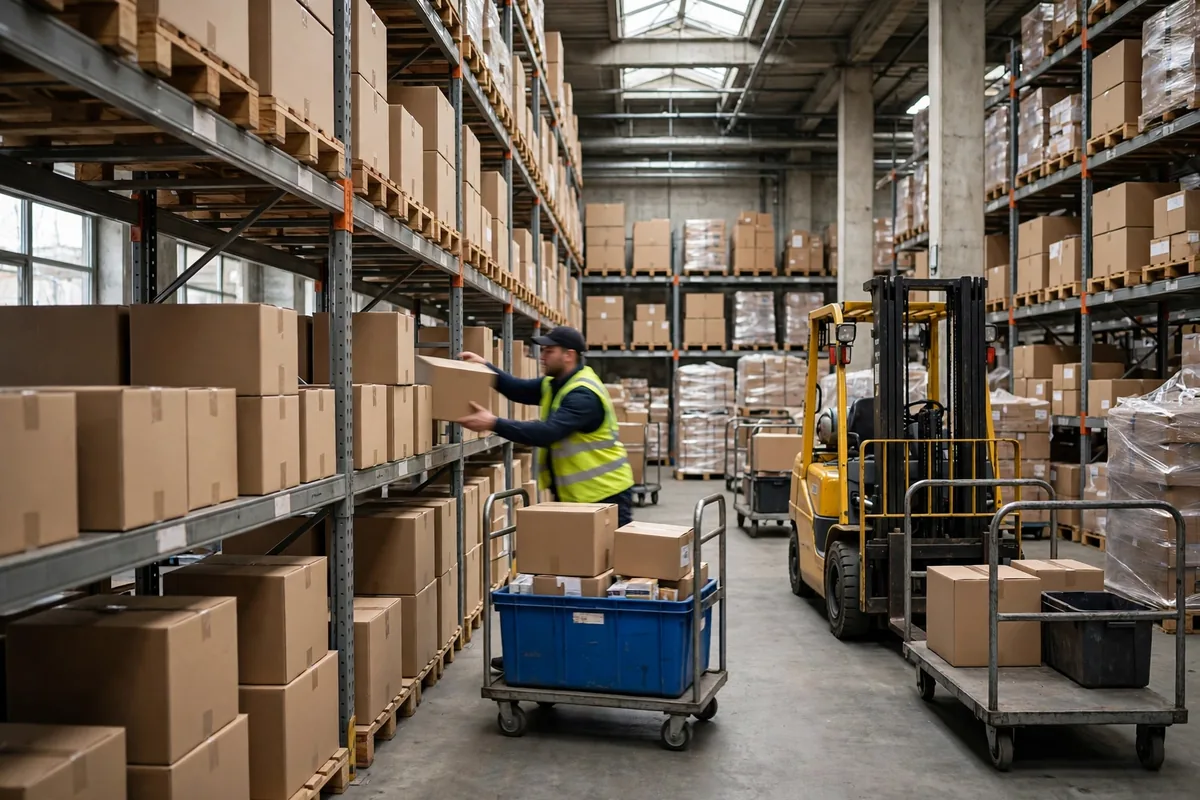
The opposite case is a home-storage seller I know whose average order runs six items, with bestsellers making up about 60% of picks. On a cluster cart her compartments filled instantly and the same storage box had to be split across a dozen totes at every stop. Her warehouse belongs on wave picking: pull bestsellers in bulk, sort them in batch, and move on.
The counterintuitive point is this: cluster picking looks low-tech, but for a single-item-heavy small warehouse, the second sort it eliminates is exactly where most errors and labor hide. Wave picking's advantage is scale. Without scale, every step in the wave is pure cost.
Running cluster picking with no WES: the scrappy version
Someone will ask — doesn't cluster picking need a WES to assign compartments and direct the path? The enterprise version does. A small warehouse has its own way of living, and the scrappy version works if you get three things right: grouping, tote-to-order discipline, and a path that does not zigzag.
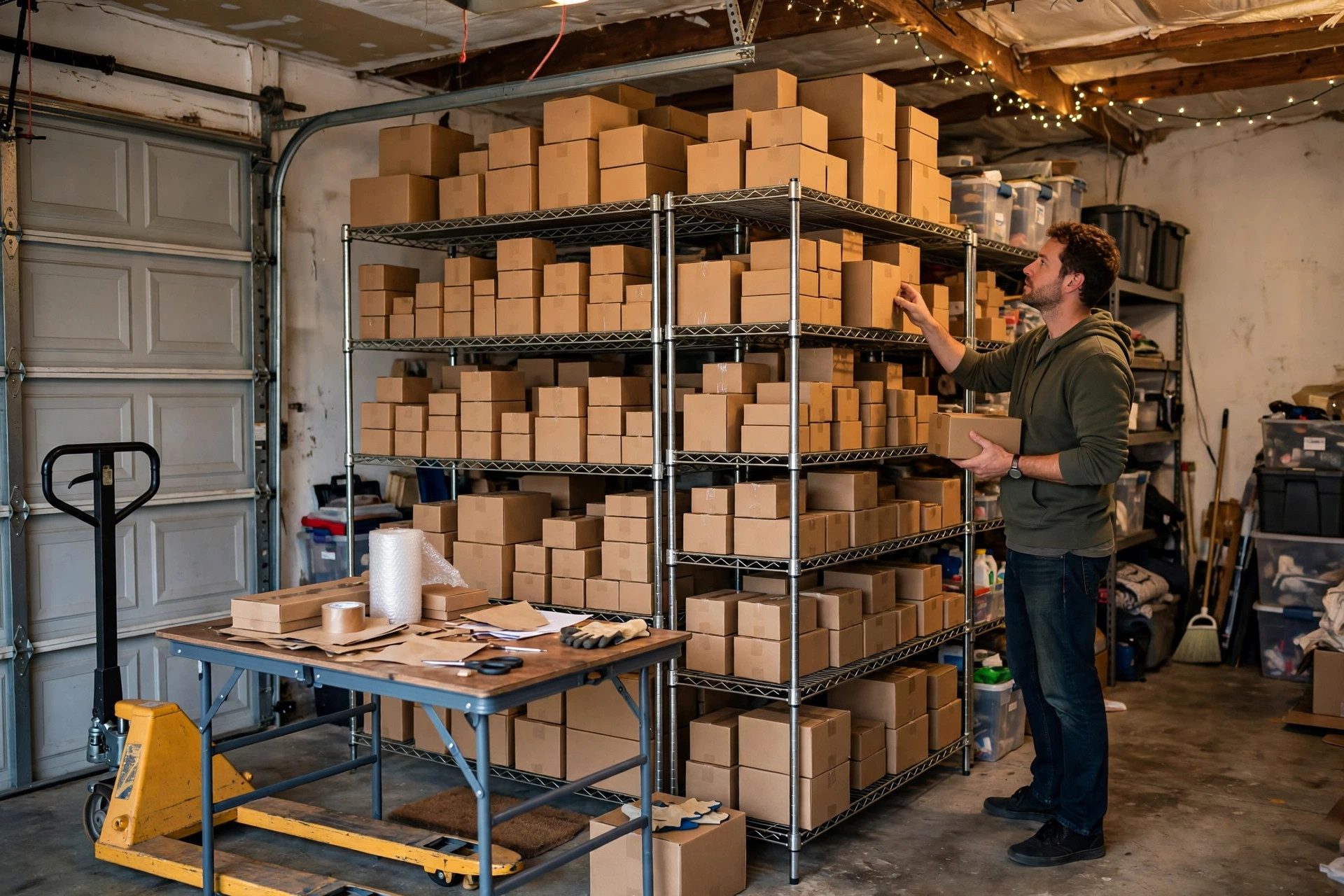
Here is my setup. First, use a plain spreadsheet or whatever print function your basic tool already has, group orders twelve at a time in location sequence, and print one pick list in walking order. The list order is the route. Second, our carts are second-hand supermarket carts with dividers welded in to make twelve compartments, each numbered to match an order on the list, with the label pouch already in the tote. Pick one, place one, check the count as you place it. Third, treat bestsellers separately: keep fast movers in the golden zone nearest packing, grab them once as the cart passes, and never let long-tail orders drag bestsellers on a tour of the whole building.
During the two coldest weeks of winter 2023 — we were too cheap to run the heating properly — that setup carried us through about 700 orders a day. Were there errors without scan verification at every step? Yes. Nine wrong orders in the first week, mostly look-alike phone cases and socks landing in the wrong tote. So I added a dumb rule: say the order's last digits and the compartment number out loud as you place each item. Errors dropped to under two a week. Packing still does a final scan check, so what slips through picking gets caught before it ships.
That error math matters. Cluster picking moves order separation upstream into the walk. You save the labor and floor space of a second sort, but you also move the error risk upstream — one item in the wrong compartment is one wrong shipment. Wave picking concentrates errors in the sort step, where a dedicated checker is easier to place. So if a small warehouse runs cluster, the pack-station check is not optional. Skip it, and one return shipment hands back everything you saved.
Wave picking vs cluster picking: when to switch back
I give other small operators three observable signals instead of a complicated model.
First, watch items per order. When your orders drift from single-item toward multi-line — bundles and kits push the average past four or five items — cart compartments start overflowing and one order needs two trips. Cluster's advantage is gone. That is the moment to consider waves, or a hybrid: bestsellers and bulky items on waves, long-tail small items still on cluster carts.
Second, watch how long a wave takes to fill. When volume is high enough that a solid wave of similar orders builds within half an hour, the waiting cost of wave picking disappears and its scale advantage finally pays. Before that point, forcing waves is how you end up on the floor at 11 p.m. looking for socks, like I did in 2023.
Third, watch your people. With three to five all-rounders, cluster picking's one-person closed loop saves endless coordination. Once you actually have dedicated sorters and dedicated packers, a wave pipeline has the staffing to turn. Do not switch because a software deck told you to. Switch because your order profile and your headcount changed.
Wave picking vs cluster picking is not a ranking. It is a fit question. Big-warehouse systems were fed by big-warehouse volume; transplanted into a small building, they become overhead. Warehouses like ours survive not by having advanced equipment, but by making every step pay for itself. A cart, some totes, and a list printed in location order — picking accurately, picking fast, and carrying no idle steps — is enough. Small warehouses have their own way of living: survive first, upgrade later.
By Xiao Ma, Small Warehouse Founder