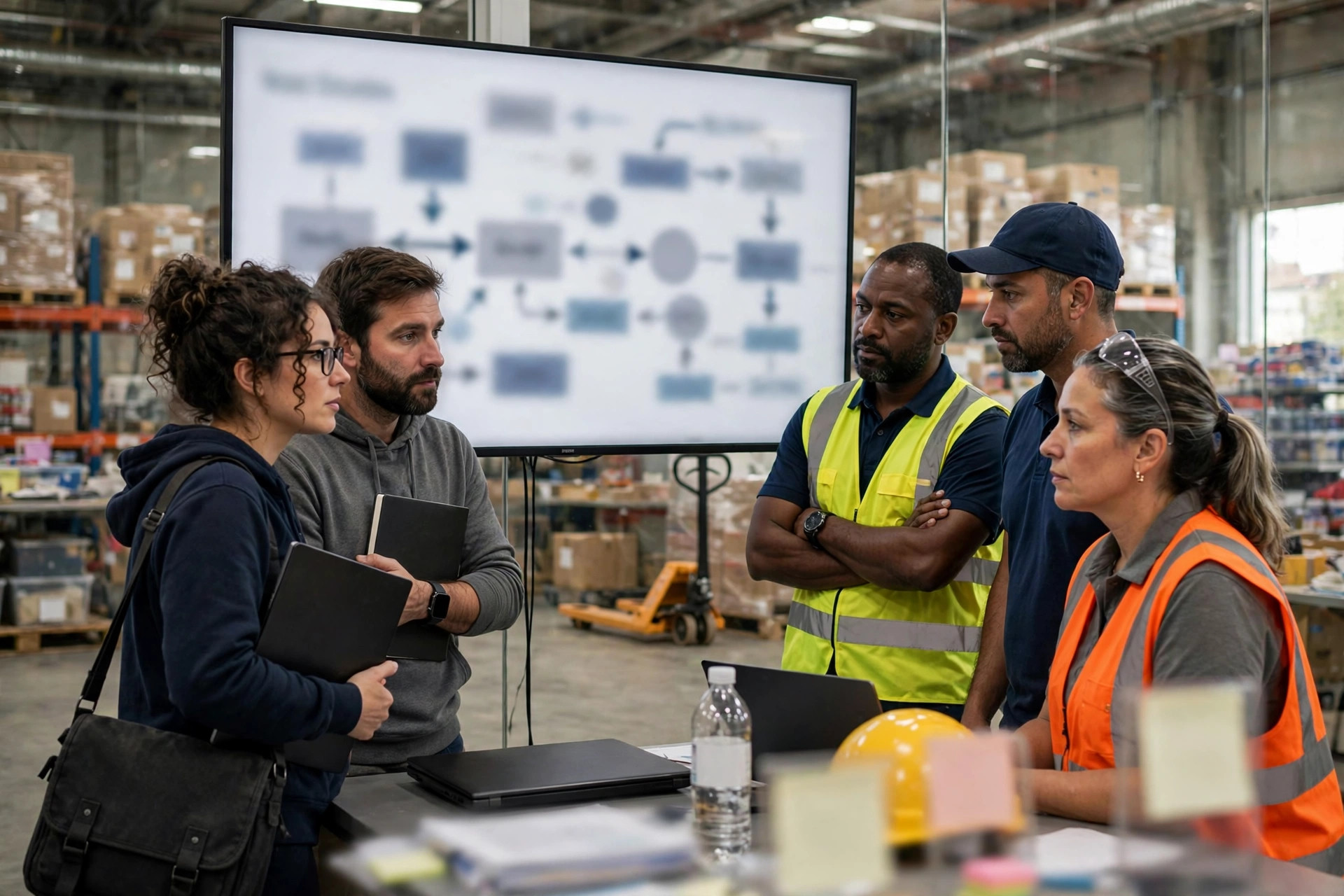
If a warehouse were a restaurant, the WMS would be the manager who takes orders, tracks inventory, and decides what gets served. The WES would be the head chef at the pass, sequencing cooks and runners so every dish lands at the right table at the right time. Both of them manage "getting food out," but at entirely different levels. The boundary between them keeps coming up because automation keeps moving into the warehouse, and scheduling work people used to do is being handed to software. The question is who the warehouse should listen to when both systems claim they can manage tasks.
The phenomenon itself is not complicated. The WMS manages inventory and orders: where goods sit, how much is left, which order ships first, how pick paths are sequenced. The WES manages task orchestration and equipment execution: breaking a wave released by the WMS into specific moves, deciding which AMR goes first, which conveyor stops, which aisle opens. The division used to be clean, because there was little equipment. As automation deepened, the division blurred. Conveyors, lifts, AMRs, and robotic arms all work at once, and someone has to decide priorities, clear jams, and reroute around failures. The WMS cannot answer those questions, because it cannot see equipment in real time, and it was never designed for millisecond-level scheduling.
Where WES and WMS Overlap
The capability boundary falls roughly like this: inventory accuracy, order management, wave strategy, and slotting belong to the WMS; real-time equipment status, task sequencing, path conflicts, and conveyor flow control belong to the WES. The overlap concentrates in three areas — wave execution, task assignment, and exception handling — and these three are exactly where buyers most often end up paying twice.
Waves are the classic overlap. The WMS decides how a wave is cut: by cutoff time, by carrier, by order priority. The WES decides how a wave runs: which tasks go first, which order gets protected when equipment runs short, which batch waits when a conveyor jams. When the two logics disagree, a familiar oddity appears: the system shows the wave as released while half its tasks sit queued waiting for equipment. The WMS says it already released the work. The WES says it sequenced by priority. The people on the floor just wait.
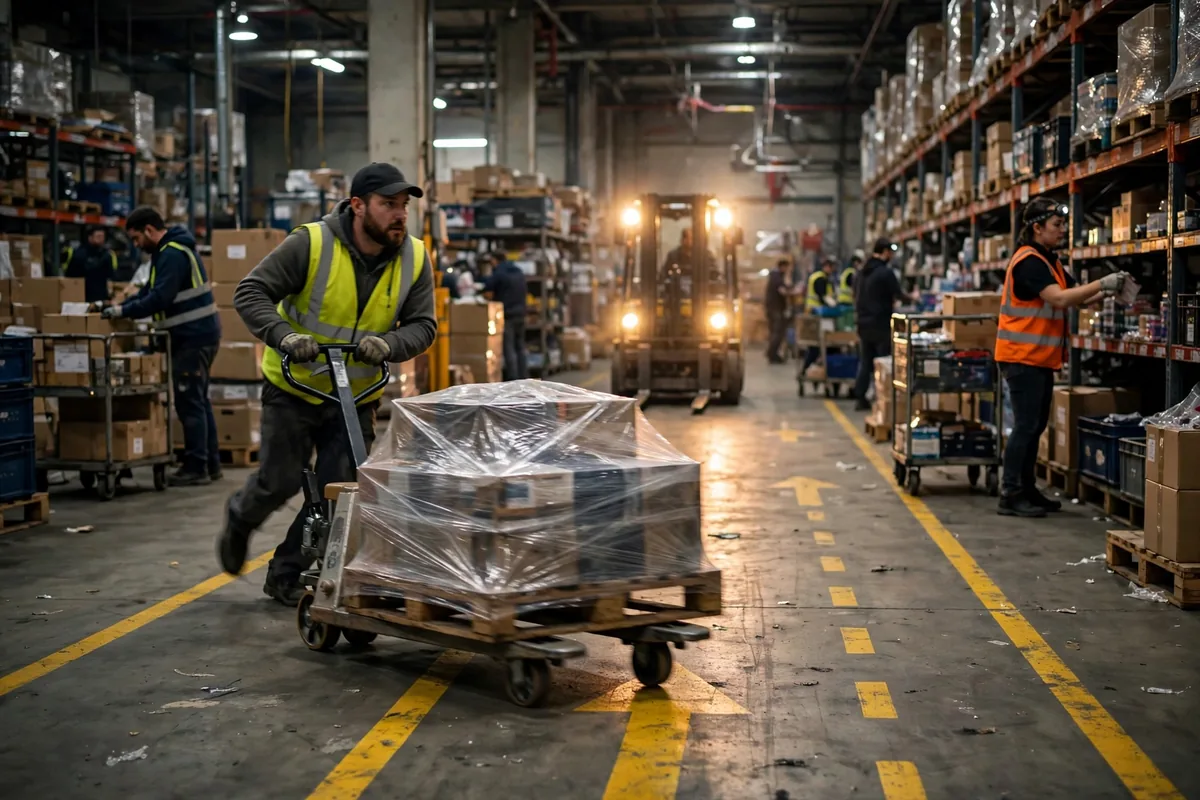
Task assignment overlaps more quietly. In a manual warehouse, assignment belongs to the shift lead. In a semi-automated warehouse, the WMS pushes tasks to people or machines. In a fully automated warehouse, the WES owns all real-time assignment. The dividing line is not on a feature list. It is in response time: decisions that need to happen in seconds or less belong to the WES; decisions that can wait minutes or a shift belong to the WMS. Judged only by feature checklists, both systems appear able to "assign tasks." The difference only becomes visible once the operation is running.
Exception handling is the third overlap, and the most underestimated. The WMS handles business exceptions: stockouts, cancelled orders, changed ship-to addresses. The WES handles execution exceptions: equipment stoppages, conveyor jams, low AMR batteries. The two kinds convert into each other constantly — one failed AMR is an execution exception until it blocks an entire aisle and the wave cannot finish. Without an agreed rule for who takes the exception first, the problem bounces between the two systems until someone on the floor resolves it over the radio.
Three Warehouse Types, Three WES and WMS Configurations
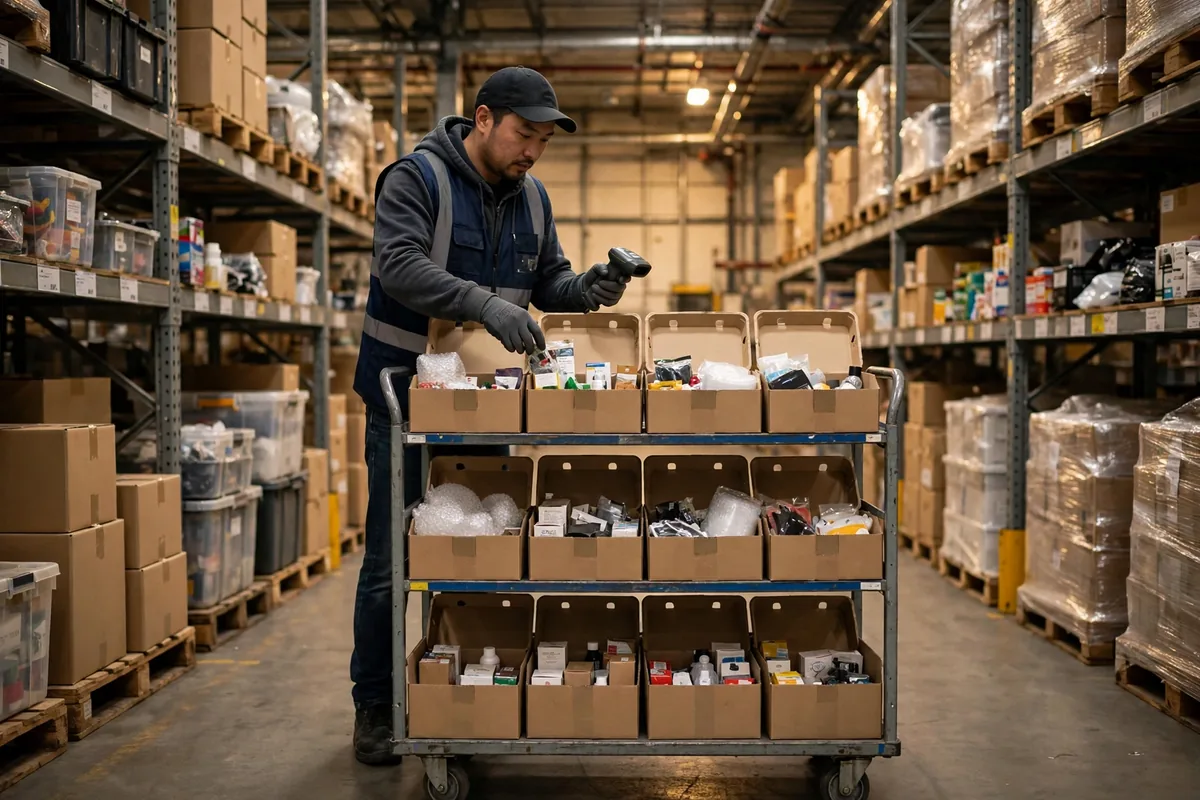
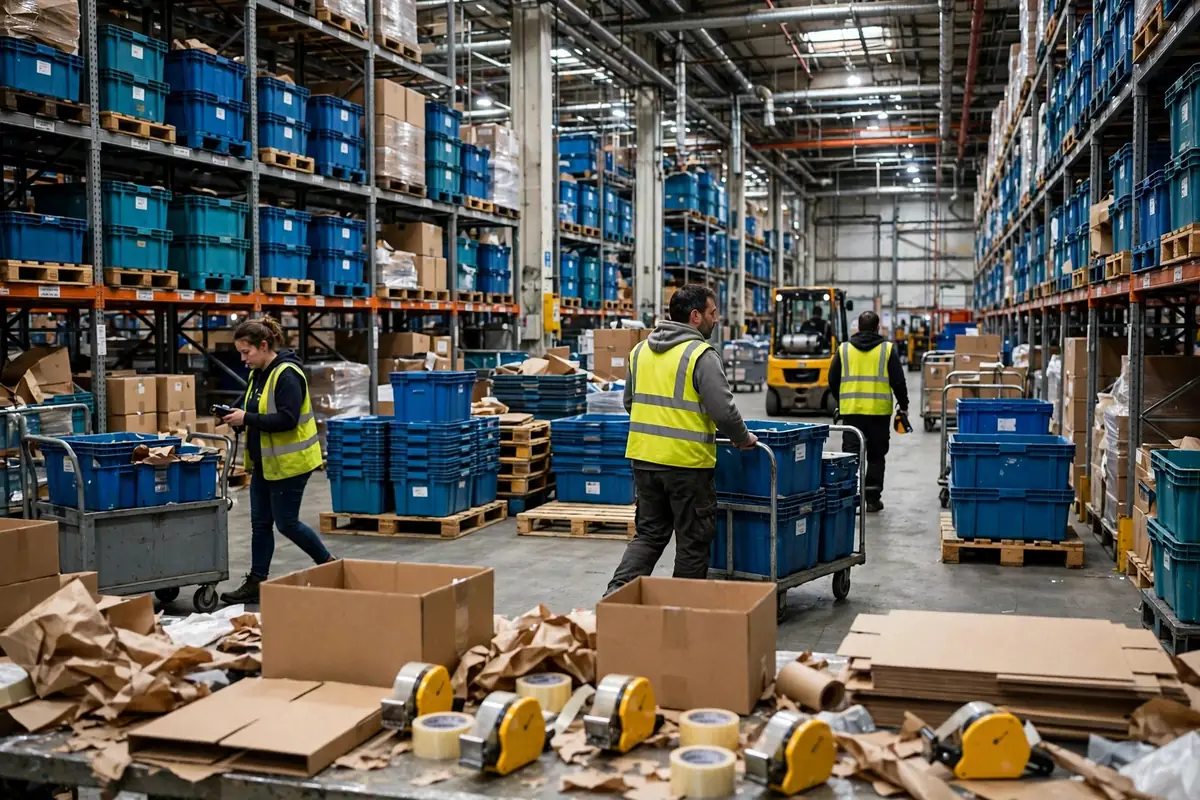
In a manual warehouse, or one with very little automation, the WMS alone is usually enough. People execute tasks, the shift lead schedules, and the system only needs to issue tasks correctly and keep inventory accurate. Adding a WES there mostly buys a system with nothing to orchestrate, while maintenance costs arrive on schedule anyway.
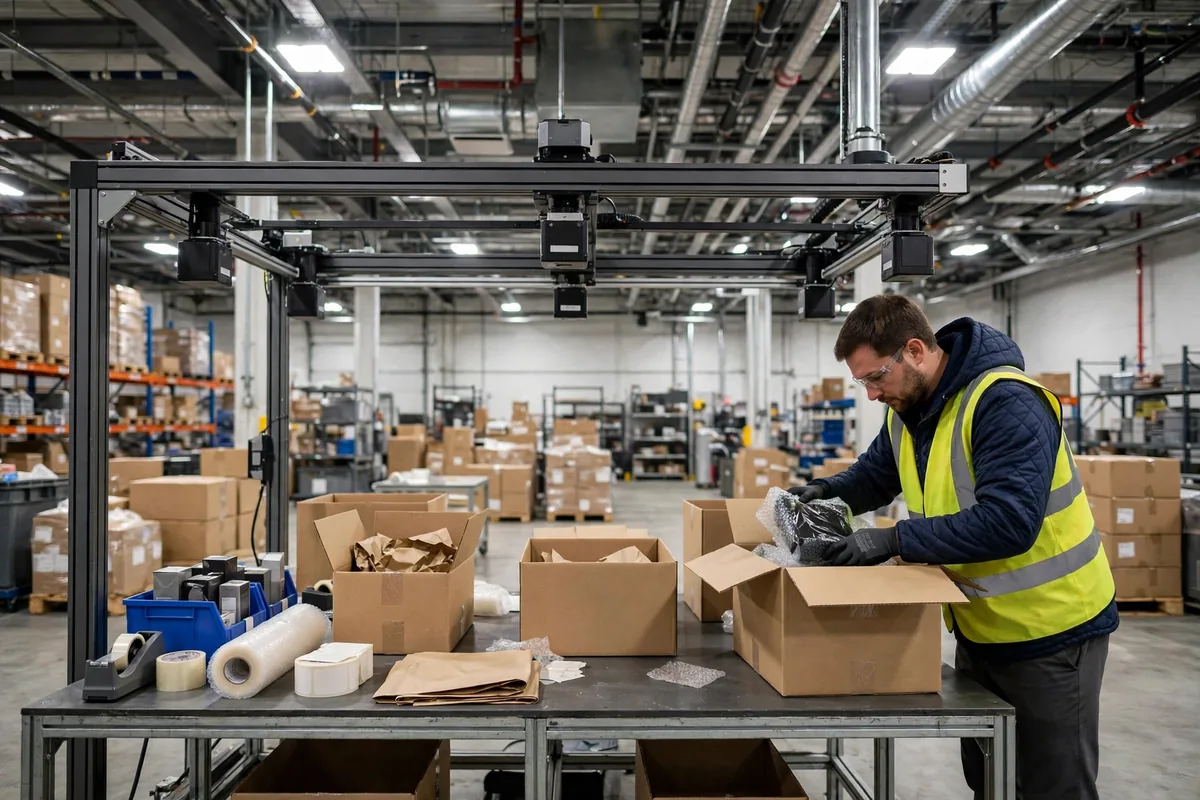
The semi-automated warehouse is where the division gets subtle. There are some conveyors, a lift or two, perhaps a handful of AMRs, but picking is still largely manual. With only one or two machines, the WMS's own simple scheduling may suffice. Once machines start waiting on each other and queues form, the WES has a reason to exist. The test is concrete: has the floor ever seen machines waiting on each other? If yes, evaluate a WES seriously. If not, there is no hurry to buy one.
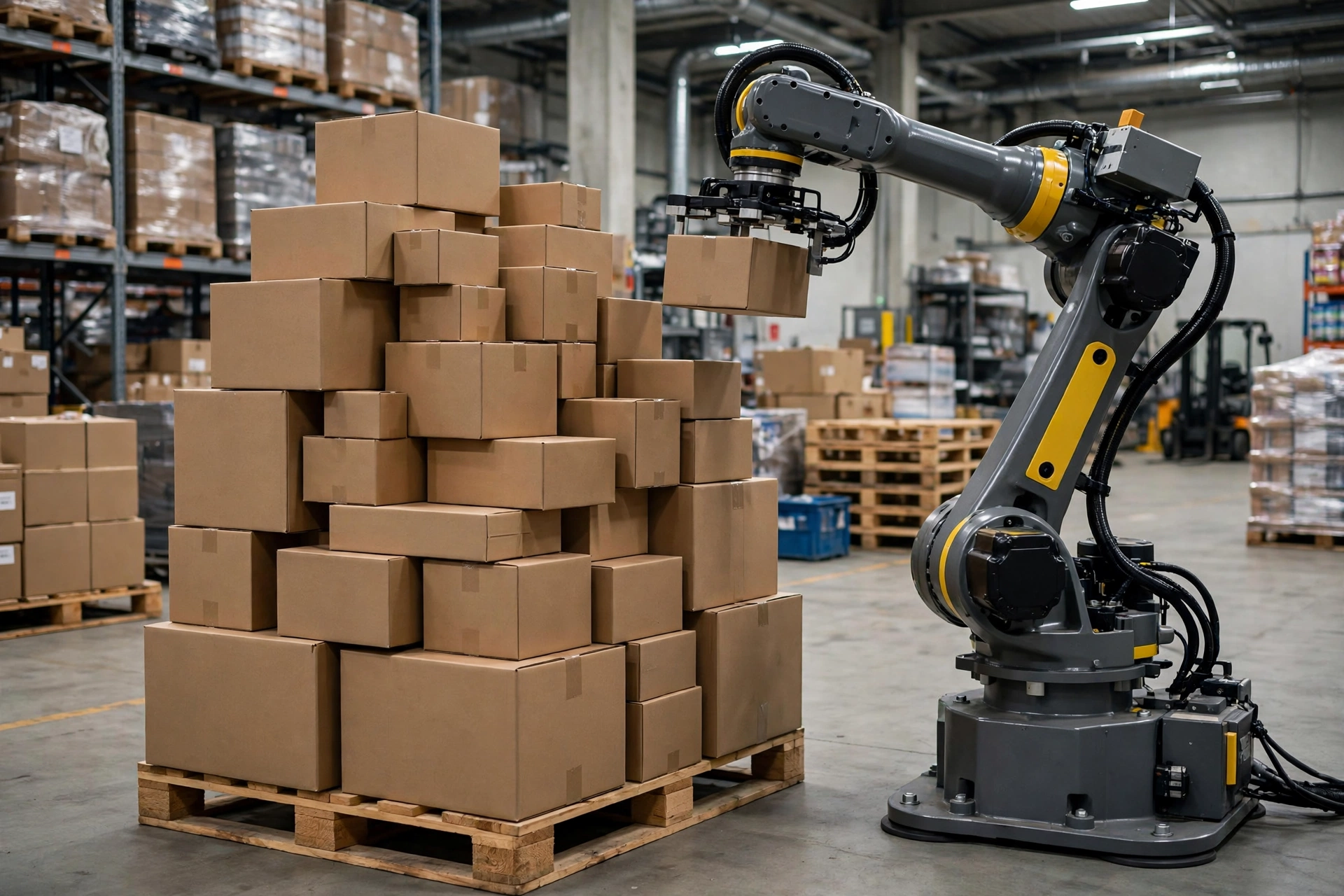
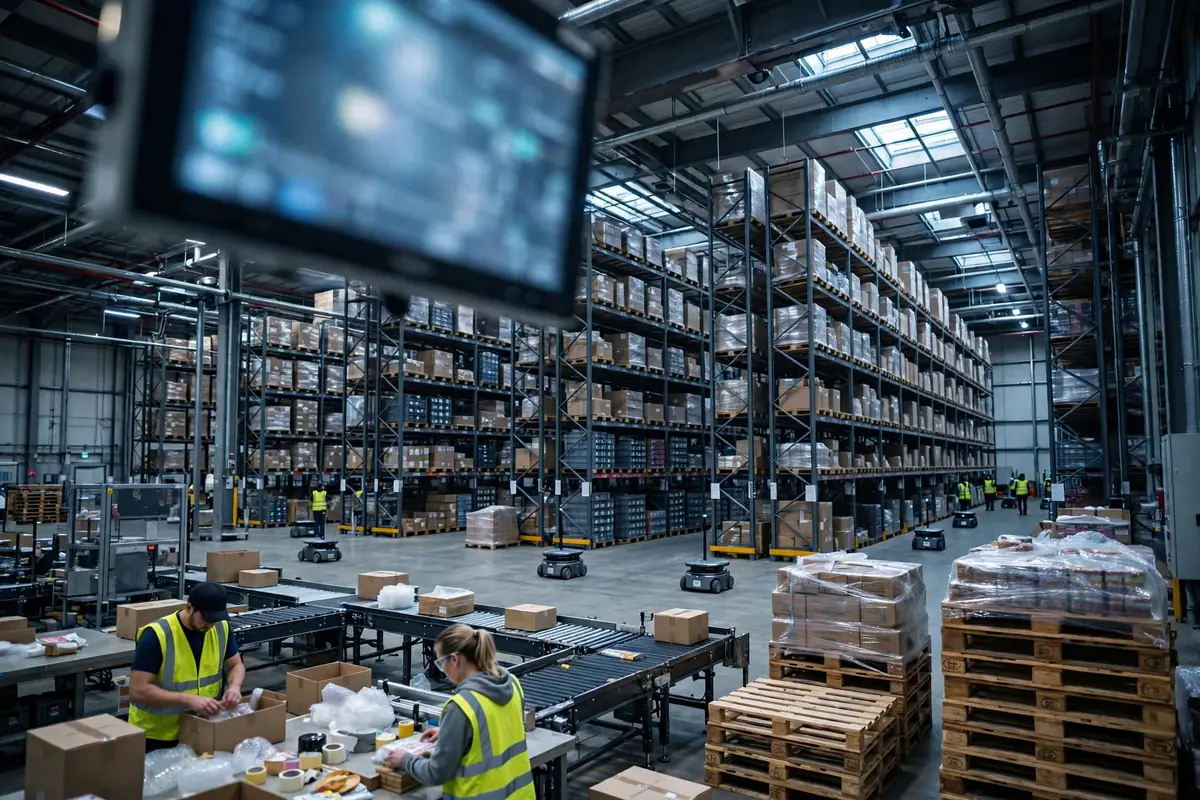
A fully automated warehouse can hardly avoid a WES. Dozens of AMRs, thousands of locations, conveyors and lifts moving together — the real-time scheduling complexity exceeds what a WMS was designed for. The WMS keeps inventory, orders, and wave strategy; the WES takes over the execution layer. Here the interface between the two decides whether go-live succeeds: one that passes tasks but not status leaves the WES scheduling blind.
The table below compresses that logic into a decision framework; the figures are illustrative only, not any vendor's pricing:
| Warehouse type | WMS | WES | Signal to watch |
|---|---|---|---|
| Manual | Required | Usually unnecessary | Shift lead schedules; no equipment queues |
| Semi-automated | Required | Add when equipment coordination conflicts appear | Conveyors or AMRs waiting on each other |
| Fully automated | Required | Required | Dozens of machines working simultaneously |
The cost math follows the same framework. A WES costs more than its software license: interface development, integration testing, and ongoing operations all add up. As an illustrative example, a WES project in a semi-automated warehouse can run into the hundreds of thousands of dollars for software and implementation, with annual operations on top. If it only solves scheduling problems the WMS already handles, that money went to the wrong place. In the other direction, a fully automated warehouse that skips the WES saves a one-time investment and pays for it in chronic efficiency loss — one jammed conveyor, and the whole building waits for someone to clear it on foot. Buying double and buying wrong cost in opposite directions.
The Cost of Buying Double, and of Buying the Wrong WES and WMS Mix
Buying double has visible costs: two systems can both dispatch tasks, interfaces grow complicated, every incident starts with half a day spent deciding whose system is at fault, and every upgrade has to be tested on both sides. The quieter cost is organizational: floor supervisors gradually lose track of which screen to watch, then stop watching either, and go back to the radio.
Buying wrong costs later rather than sooner. Everything looks fine at go-live, and the scheduling bottleneck only appears when volume rises and the machine count grows. Adding a WES at that point means changing the heart of a running warehouse, and the integration and cutover cost far more than fitting it from the start, on a longer timeline.
One counterintuitive point deserves to stand on its own: a WES is neither a decoration for automation nor an upgrade of the WMS. It is a product of division of labor — needed when execution complexity exceeds both human scheduling capacity and the WMS's design target. If a warehouse's execution complexity has not reached that point, forcing in a WES does not make the warehouse more advanced. It only makes the system more complex. The most common misjudgment in technology selection is treating "more advanced" as "more suitable."
The boundary question, traced to its roots, is really two questions stacked together: a genuine technical trend — automation pushed real-time scheduling work that people used to do onto software — and a commercial reality, vendors expanding their product lines into each other's territory. Anyone selecting systems needs to see both at once.
Looking ahead, three things are worth watching. First, the interface is becoming the real dividing line: whether the WMS and the WES can exchange task and equipment status in real time matters more than either feature list. Second, WES capability is sinking to finer granularity, from whole-line scheduling down to single-machine orchestration, so the boundary will keep moving. Third, as AMR and conveyor prices keep falling, semi-automated warehouses will keep multiplying, and the fuzzy middle ground will only get bigger. These judgments share a timeline of three to five years, as equipment spreads and interfaces standardize.
So where does the warehouse execution system end and the WMS begin? Not in any feature comparison table — in the execution complexity of your warehouse. Below the threshold, the WMS can manage alone. Above it, the WES has to take the stage. And the signal that the threshold has been crossed is something people on the floor usually feel before anyone measures it: machines waiting on each other, exceptions bouncing between systems, the shift lead's radio no longer enough. What number belongs in each cell of that framework will differ from warehouse to warehouse — which is precisely what makes it worth watching.
By Dr. Chen, Supply Chain Researcher